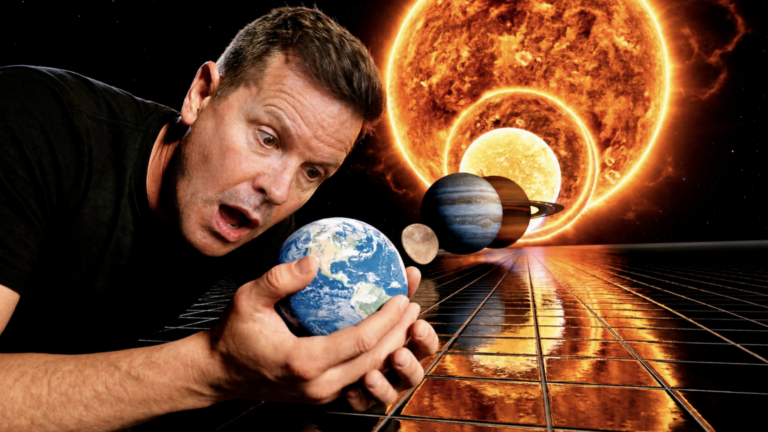
Making sense of the universe often has less to do with picturing it accurately and more to do with accepting how badly our everyday intuition fails once distances get involved. Shrink Earth down to a small sphere just 12 centimeters wide, and the rest of the Solar System immediately becomes nearly impossible to picture on that same scale. Jupiter alone would stretch past a meter across, while the Sun would balloon to a size that no longer fits comfortably within the same mental comparison at all.
This simple exercise reveals something worth sitting with. Scale in space is never just a matter of large versus small, it unfolds in layers that escalate so dramatically that each new step feels like stepping into an entirely different category of existence altogether.
Jupiter: The Giant Protector
Jupiter holds the title of largest planet in our Solar System and ranks among the most influential objects shaping it, with a volume so vast that more than a thousand Earths could fit comfortably inside it. Its significance, though, reaches well beyond raw size alone.
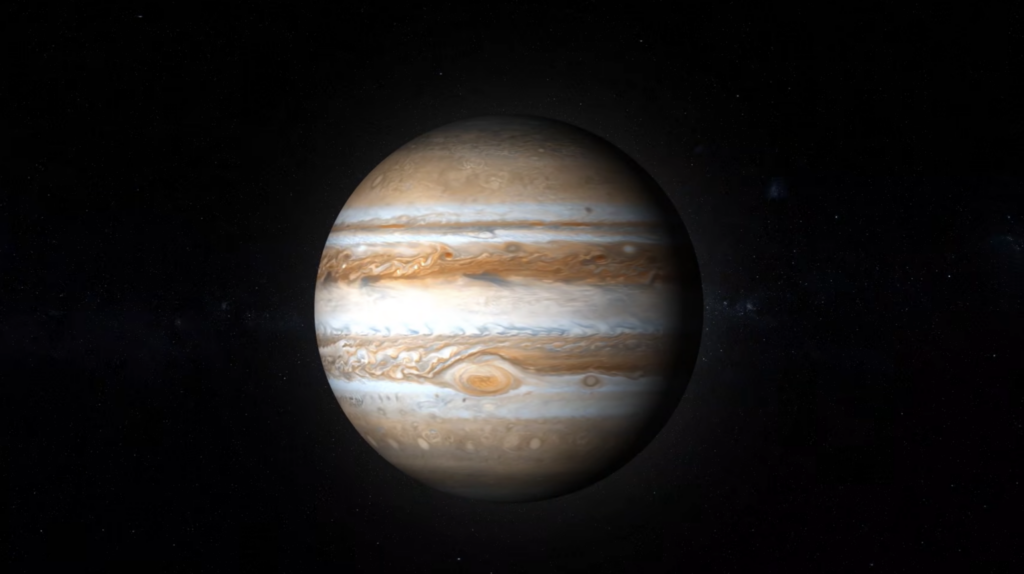
Its immense gravity functions almost like a cosmic gatekeeper, deflecting or capturing comets and asteroids that might otherwise drift into the inner Solar System, likely reducing the number of catastrophic impacts Earth has faced across billions of years as a result.
Jupiter also plays a quiet role in keeping planetary orbits stable across the system. Without that influence, orbital behavior over long stretches of time could grow considerably more chaotic. And yet, despite all this importance, Jupiter remains fairly modest compared with what exists beyond our own planetary neighborhood.
ROXs 42Bb: A Planet That Blurs Definitions
Sitting hundreds of light years away lies ROXs 42Bb, an object that genuinely blurs the line separating planets from stars, carrying nearly nine times Jupiter’s mass and landing in a category that resists any tidy standard definition.
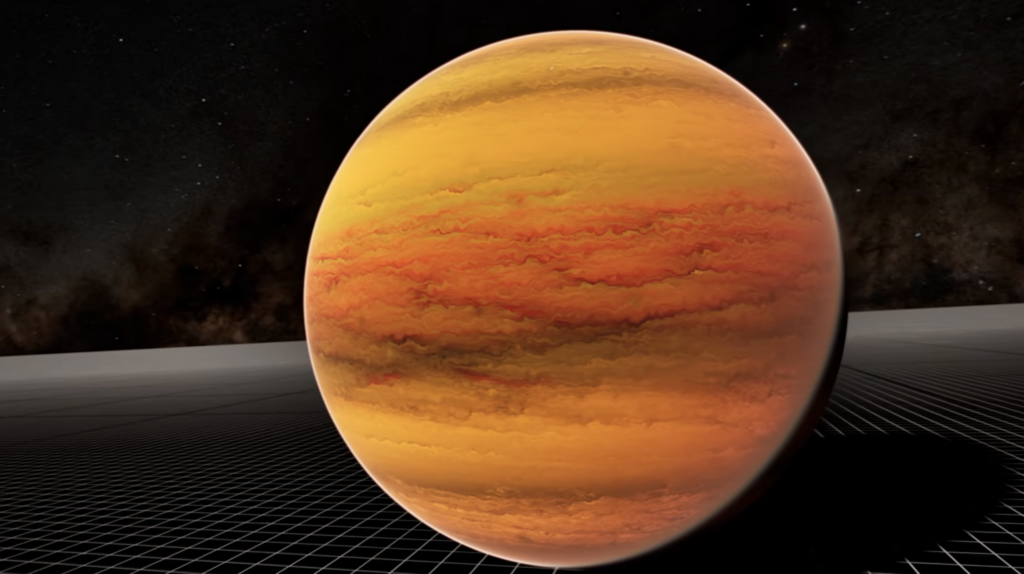
It lacks the mass needed to sustain nuclear fusion the way stars do, yet it grew far too large to resemble a typical planet formed around a star. More likely, it formed directly from collapsing gas, similar to a failed star that never fully ignited, with its faint glow coming from leftover heat rather than any active fusion process.
TOI 849 b: The Exposed Core of a Giant
Not every strange world out there is an oversized gas giant, some are simply what remains after one. TOI 849 b appears to be the exposed core of a once massive planet that lost its outer layers entirely.
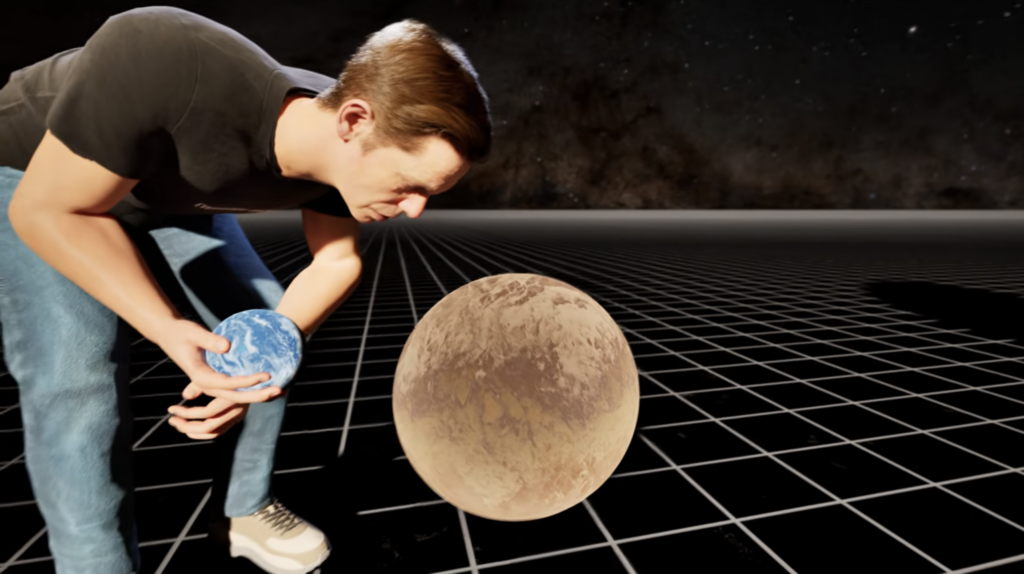
What remains behind is a dense, rocky body considerably larger than Earth, though still limited compared with true gas giants. This object hints at a natural boundary within planetary formation itself, rocky worlds simply cannot expand endlessly, while gas giants can keep growing far larger given the right conditions.
The Sun: The Anchor of Our System
Sitting at the heart of our Solar System, the Sun contains more than 99 percent of the entire system’s mass, with a diameter reaching around 1.4 million kilometers, dwarfing every planet by an enormous margin.
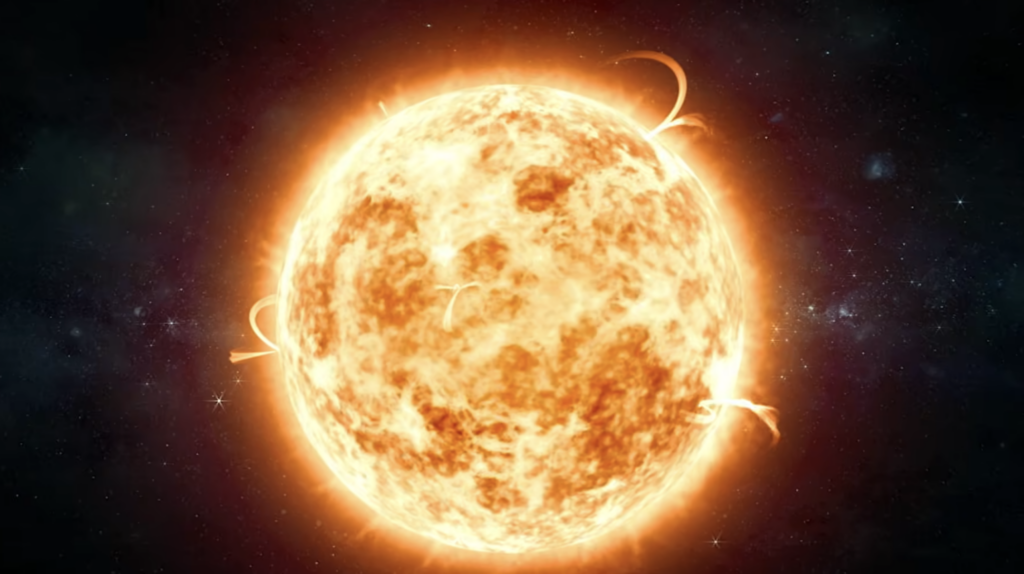
Deep within its core, nuclear fusion continuously transforms hydrogen into helium, releasing staggering amounts of energy in the process. That same energy makes life on Earth possible, while also serving as a reminder of just how powerful and volatile stellar objects genuinely are.
Sirius A: A Nearby Stellar Upgrade
Among the brightest stars visible from Earth, Sirius A stands out for being noticeably larger and more luminous than our own Sun, with its relative closeness making it appear especially brilliant in our sky despite not ranking among the largest stars in the galaxy overall.
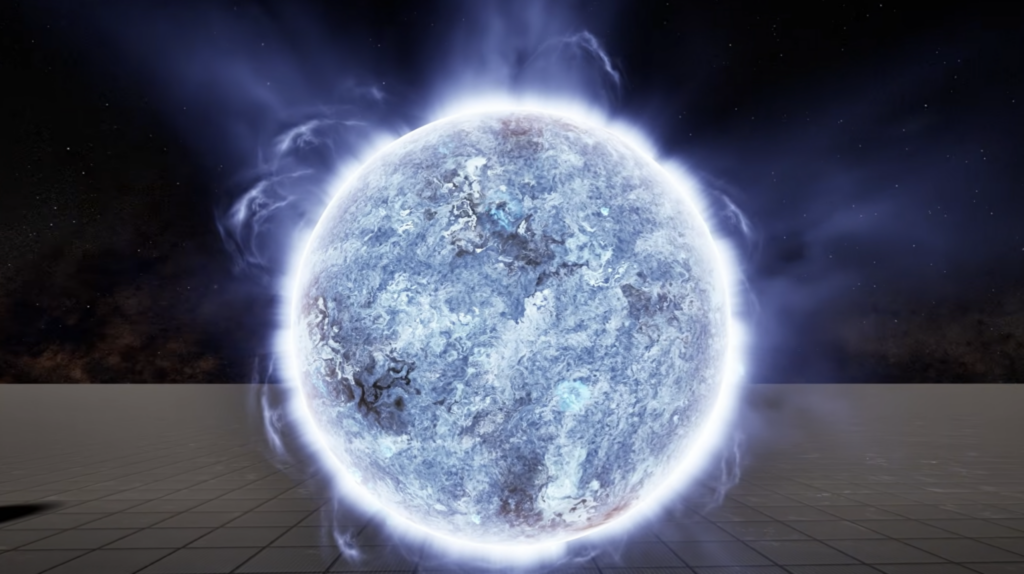
Even with its added brightness and size, Sirius A still fits comfortably within a middle tier of stellar objects overall, illustrating just how much variation exists among stars long before reaching truly extreme scales.
Pollux and Arcturus: Stars in Transition
Stars swell dramatically as they age, and Pollux offers a clear example of that phase already underway, having grown considerably beyond the size it held during its earlier main sequence years.
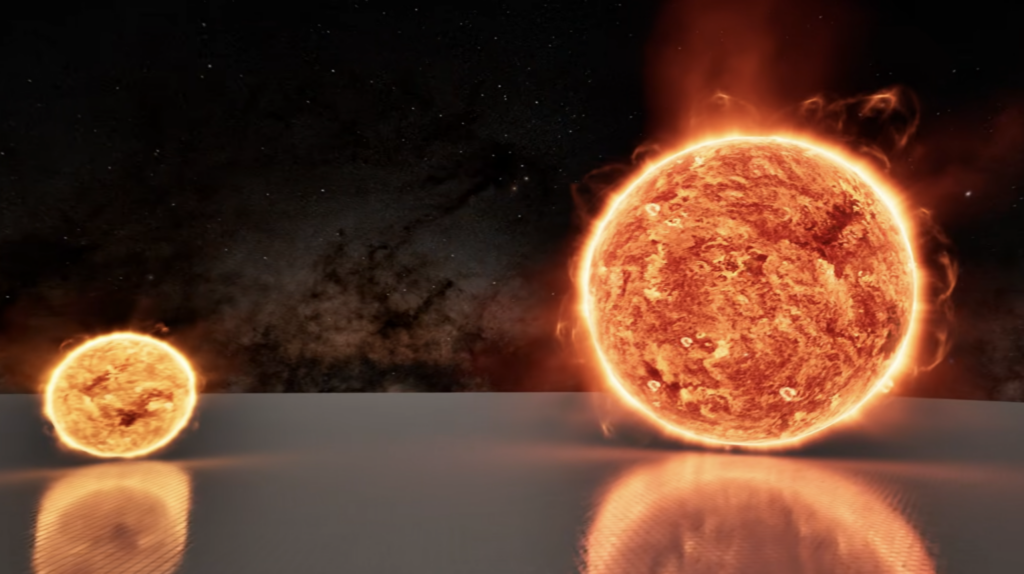
Arcturus pushes that same evolutionary process even further along. Together, these expanding giants demonstrate that a star’s size is never fixed permanently, but shifts dramatically over time as internal fuel runs low and its structure gradually pushes outward.
Betelgeuse and Stephenson 2 18: The Upper Limits of Stars
Certain stars grow so extreme in size that they push against the very limits of stellar physics as we understand them. Betelgeuse stands as a striking example, large enough that placing it at the center of our Solar System would mean engulfing entire regions of it.
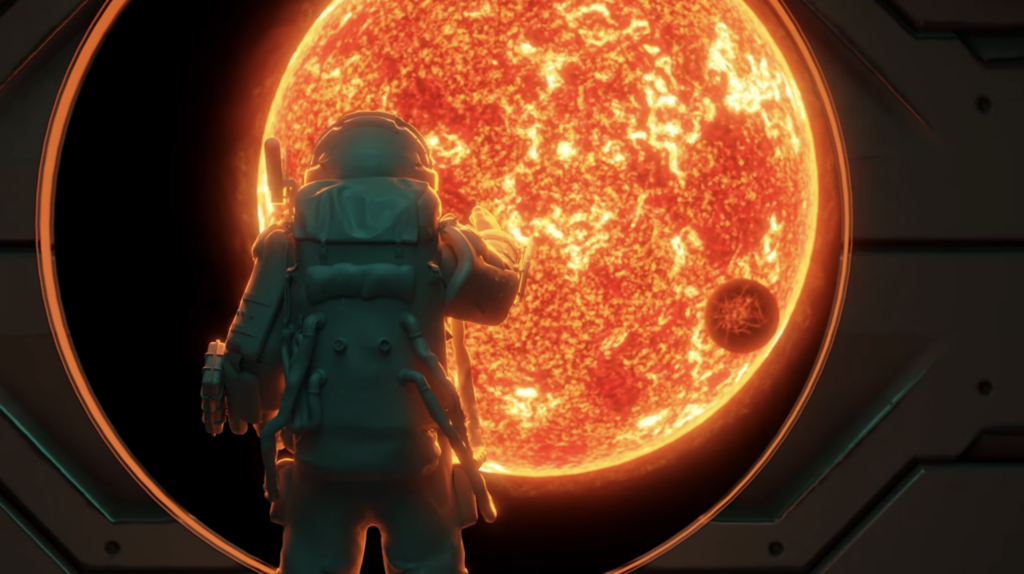
Even larger still is Stephenson 2 18, ranking among the most enormous stars ever identified, its scale so vast that it forces us to reconsider what equilibrium even means for a star at that size, where stellar lifespans grow unstable and comparatively brief next to smaller, steadier stars like our own Sun.
Galaxies: Cities of Stars
Moving beyond individual stars entirely, galaxies form the next major layer of cosmic structure. The Milky Way alone spans roughly 100,000 light years and holds hundreds of billions of stars, each accompanied by its own collection of orbiting planets.
Nearby, the Andromeda Galaxy is steadily approaching our own in a slow motion collision that will reshape both galaxies across billions of years. Some galaxies dwarf even that scale, with IC 1101 stretching millions of light years across and containing staggering numbers of stars and black holes within it.
Cosmic Structures on the Largest Scale
At the very largest scales we can observe, galaxies do not scatter randomly through space but instead organize into enormous interconnected networks.
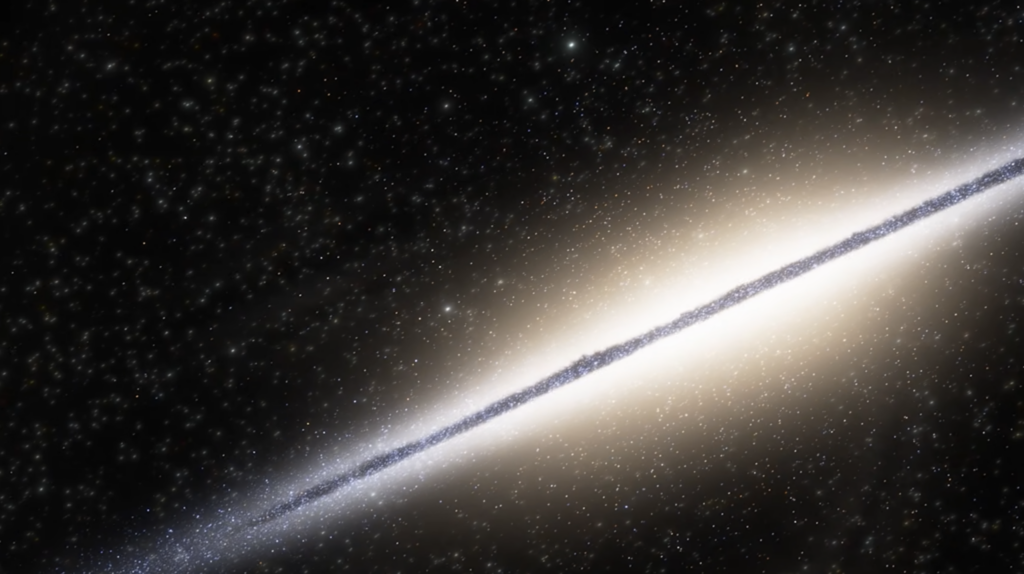
Structures like Quipu link together entire clusters of galaxies across distances stretching beyond a billion light years, while even larger formations such as the Hercules Corona Borealis Great Wall span billions of light years, challenging much of what current models assume about how the universe actually formed.
Formations of that magnitude suggest there may still be unknown forces quietly influencing how the cosmos continues evolving over time.
From planets to stars to entire galaxies and beyond, every level of the universe offers its own definition of scale, starting with worlds that feel familiar and expanding steadily into structures so immense they push far past the edges of human imagination.