Take a look around wherever you’re sitting. Your phone, the walls, the air, your own body. None of the material in any of it existed when the Universe began.
That’s not a poetic flourish. It’s literally true. Almost everything that makes your life possible showed up much later, built piece by piece over billions of years.
The Universe didn’t start with stars or planets or galaxies. It didn’t even start with atoms. What came first was so alien that nothing about it would look familiar to us at all.
THE FIRST MOMENTS
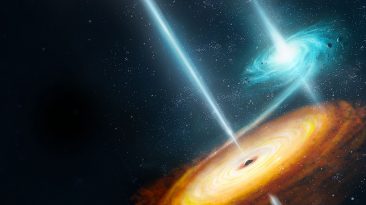
Around 13.8 billion years ago, everything began in a state of extraordinary heat and density. What caused it, and whether anything existed beforehand, remains genuinely unknown.
What we do know is that once expansion started, it moved fast. Within fractions of a second, the Universe ballooned outward at a rate that’s difficult to picture, and temperatures ran so high that matter as we understand it simply couldn’t hold together.
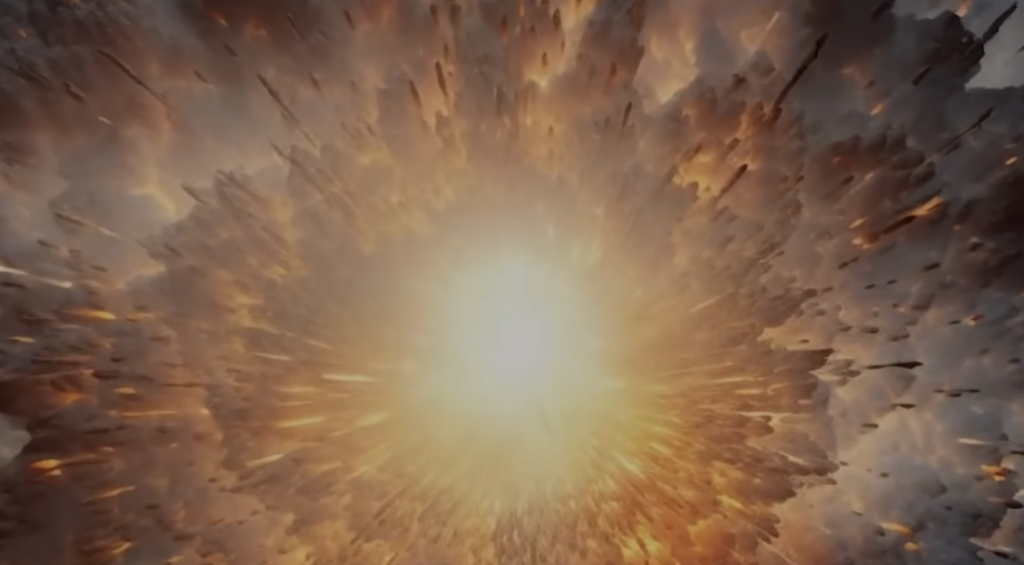
The first pieces appeared almost immediately, though. Quarks and photons emerged out of that raw energy, and as things expanded and cooled, those particles began combining into protons and neutrons.
A few minutes in, the first simple elements formed. Hydrogen and helium became the dominant material of the young cosmos, and everything built afterward would come from them.
And yet, for all that activity, the Universe was still completely dark.
WHEN LIGHT FINALLY HAD A HOME
The next stage took hundreds of millions of years, and it was mostly gravity doing patient work.
Vast clouds of hydrogen and helium gathered across space, and as gravity kept squeezing them inward, they grew denser and hotter.
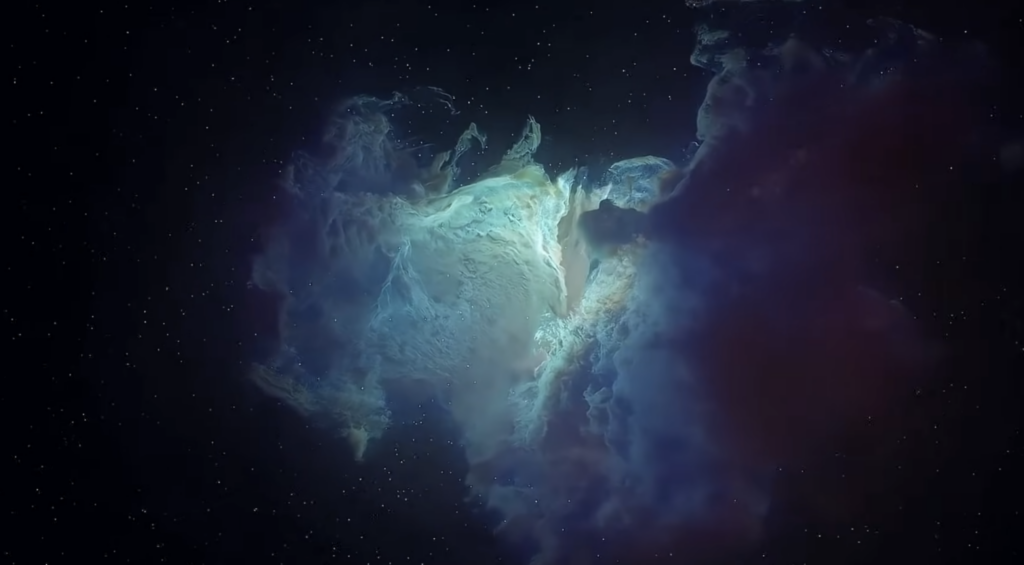
Eventually the cores of some clouds hit temperatures in the millions of degrees, and nuclear fusion kicked in.
The first stars lit up.
They weren’t much like our Sun. Many were enormous and burned through their lives quickly. Others were far smaller and would keep shining for lengths of time that make our Sun look brief.
The important part is what they were doing inside. Stars turned out to be factories, forging elements that had never existed anywhere before.
THE AGE OF GALAXIES
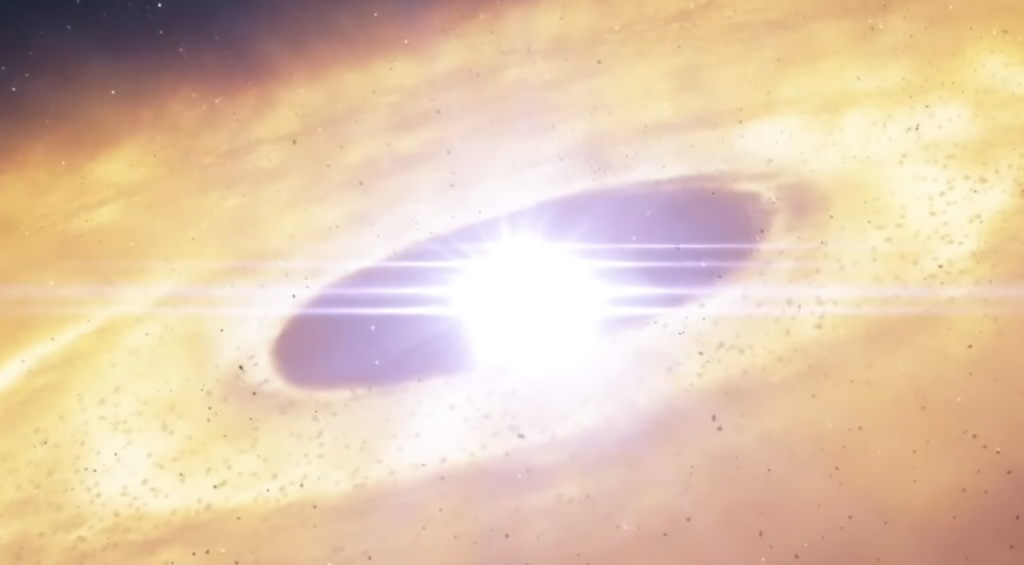
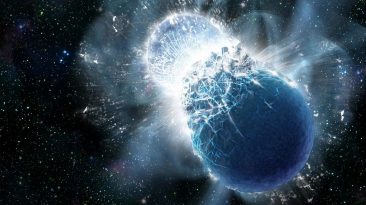
Stars don’t tend to stay solitary. Gravity pulled them together along with gas, dust, and dark matter, assembling galaxies, and those galaxies then collided and merged into clusters that rank among the largest structures we know of.
Meanwhile the earliest stars started dying, and they went out violently, exploding as supernovas and throwing their newly made elements across space.
That mattered enormously. Without those explosions, the materials needed to build rocky planets and living things would never have been available.
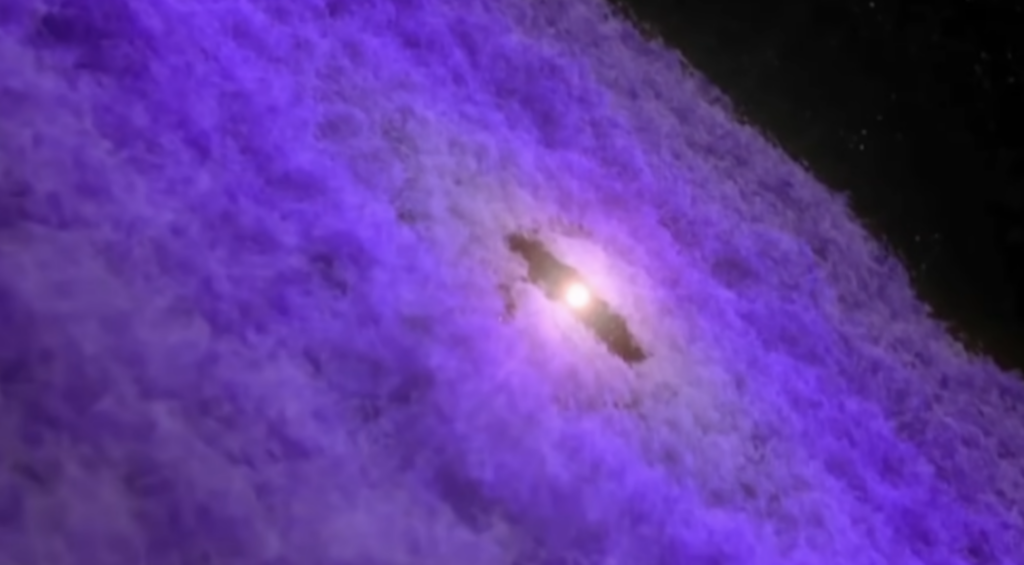
Dark matter shaped all of it too, quietly. Nobody has observed it directly, but its gravity appears to have guided how galaxies formed and how the largest structures in the cosmos arranged themselves.
Step by step, things were getting more complicated.
THE ARRIVAL OF OUR COSMIC HOME
About 9 billion years ago the Milky Way was coming together, with Andromeda and others taking shape alongside it.
Then roughly 4.6 billion years ago, one unremarkable cloud of gas and dust collapsed under its own gravity.
That was our Sun.
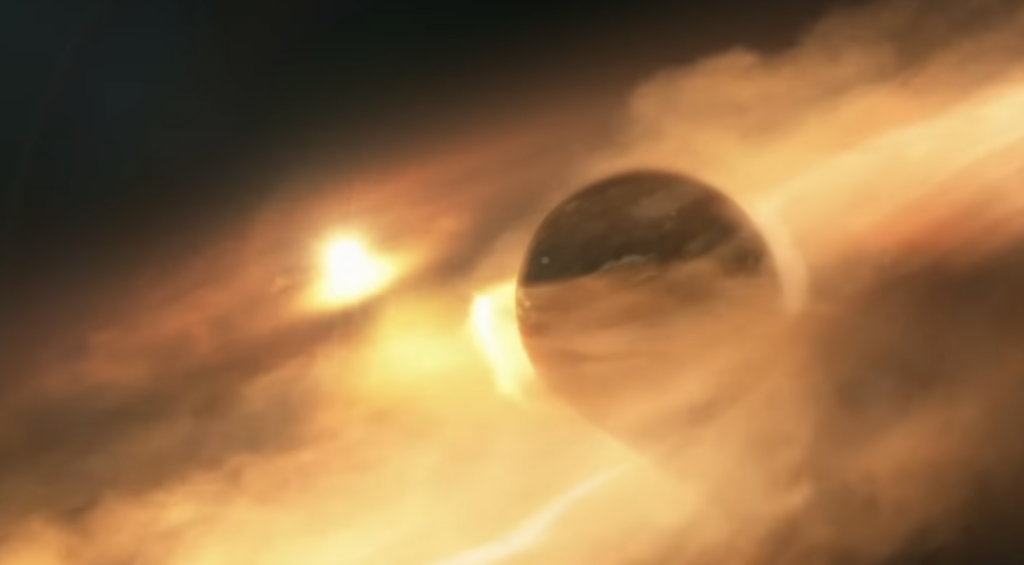
The leftover material around it started clumping. Tiny particles became rocks, rocks became planetesimals, and planetesimals eventually became worlds.
One of them was Earth.
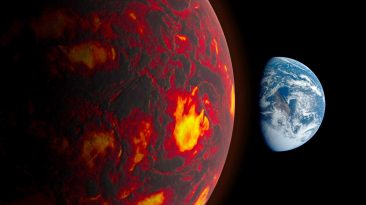
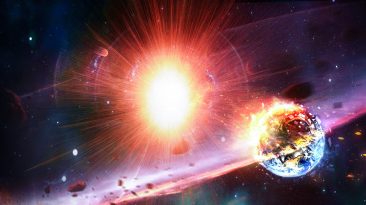
It was a rough neighborhood early on, with young planets crashing into each other while competing for material. At some point a Mars sized object called Theia struck Earth, and scientists think that collision is where our Moon came from.
Out of all that violence, the Solar System we recognize slowly settled into place.
WHEN THE UNIVERSE BECAME ALIVE
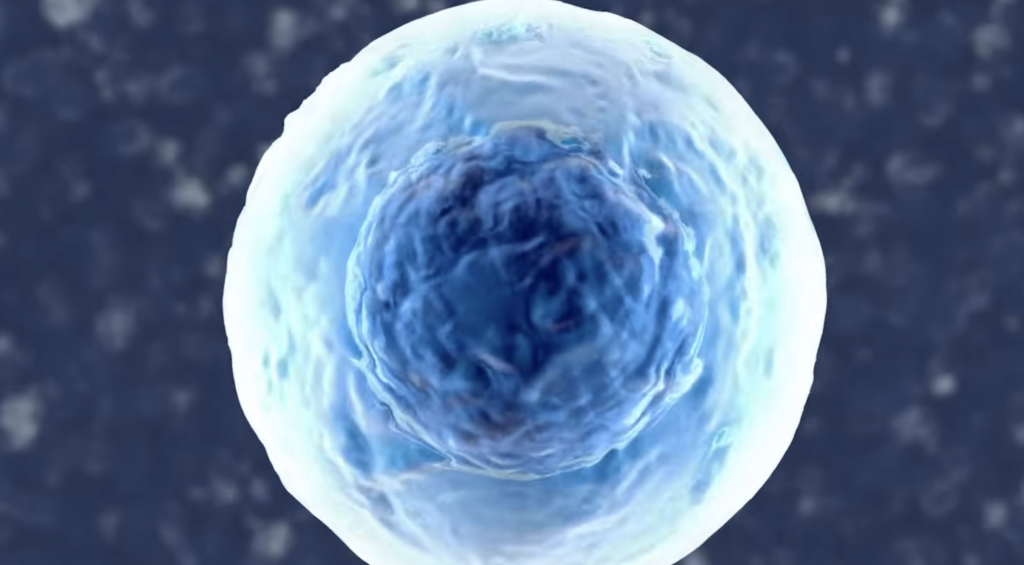
For billions of years there were stars and planets and nothing else. No life anywhere we know of.
Then, on this one planet, simple microscopic organisms appeared.
They changed everything, though it took an unimaginably long time. Oxygen built up in the atmosphere, complex organisms evolved, and oceans, continents, and climates rearranged themselves over and over.
THE ROAD TO TODAY
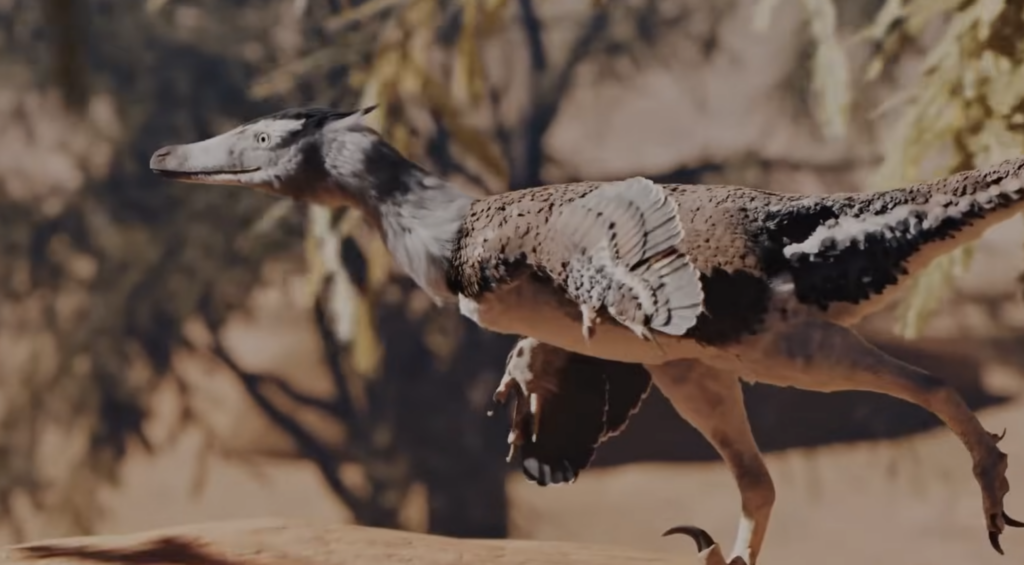
Mass extinctions kept resetting the board. Continents wandered. Dinosaurs rose and disappeared. Mammals spread out and diversified until one of them started asking where it had come from.
On a cosmic timescale, humans showed up seconds ago.
Which brings up the thing that actually stays with you about all this. It isn’t the age of the Universe. It’s the patience of it.
The stars that made the atoms in your body died billions of years before Earth existed. Every element around you was assembled through an enormous chain of events that had no idea you were coming.
You’re not observing that history from outside it. You’re one of the most recent things it produced.