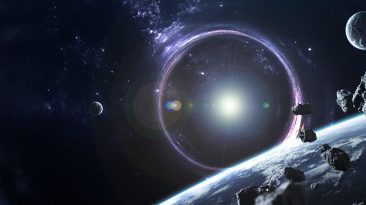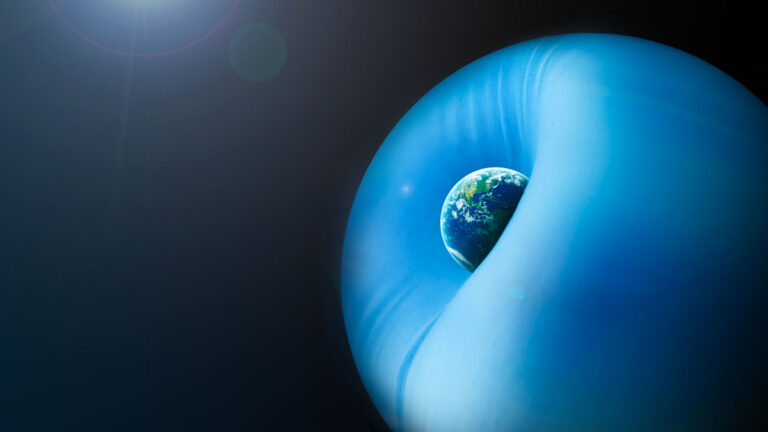
Imagine looking up at the night sky and seeing a bright blue planet where the Moon should be. At first, it would look like a beautiful cosmic event. But then astronomers would realize something terrifying: Uranus was no longer staying in its distant orbit. The ice giant was moving directly toward Earth.
Uranus normally sits about 3 billion km (1.9 billion mi) away from our planet, quietly orbiting the Sun at the edge of the Solar System. But if something powerful knocked it off course, the consequences would be unlike anything humanity had ever experienced.
A planet suddenly changing its path would be almost impossible under normal conditions. But in this hypothetical scenario, Uranus would begin racing through space, heading toward Earth’s orbit at an incredible speed.
Scientists would quickly realize the danger. A collision with a planet more than 14 times the mass of Earth would not be a normal disaster. It would completely reshape our planet and the Solar System around us.
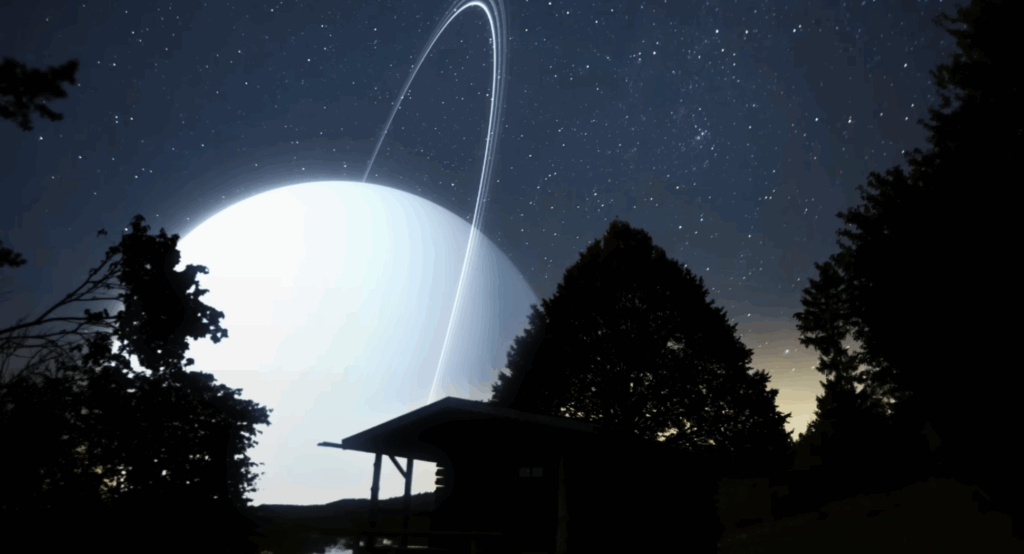
As Uranus approached, it would become one of the brightest objects ever seen in Earth’s sky. The blue ice giant would grow larger every night, eventually appearing similar in size to the Moon before becoming an enormous presence above the planet.
But Uranus would not be the only threat coming our way.
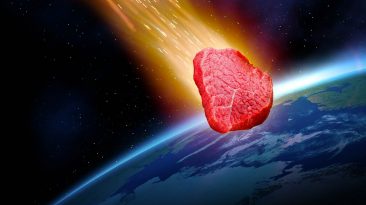
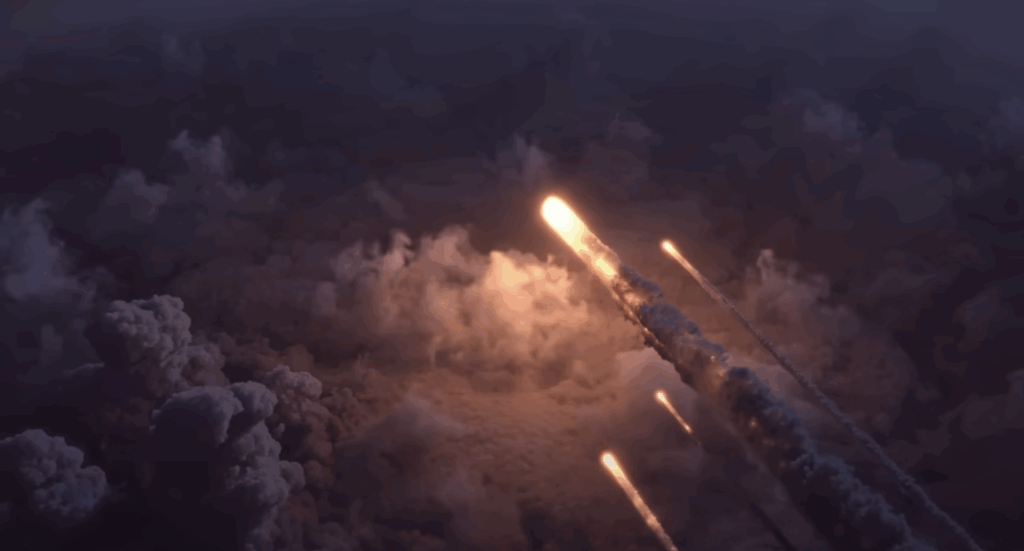
On its journey through the Solar System, the planet’s massive gravity would disturb objects around it. Passing through regions filled with smaller space rocks could send asteroids and debris flying toward Earth.
Some of these asteroids could be hundreds of kilometers wide, far larger than the asteroid that ended the reign of the dinosaurs. Instead of a few shooting stars, the sky could become a dangerous storm of incoming space objects.
As Uranus moved closer, its gravity would begin pulling on Earth itself. The effects would be devastating. Massive tides would sweep across oceans, earthquakes would shake the planet, and volcanic activity could increase as Earth’s interior responded to the enormous gravitational forces.
Then there would be Uranus itself.
The planet’s atmosphere contains hydrogen sulfide, the same chemical responsible for the smell of rotten eggs. If Uranus somehow surrounded Earth, our planet would be exposed to an atmosphere completely different from the one that supports life today.
And the ice giant would not arrive alone. Uranus has 27 known moons, and they would follow their planet into this chaotic encounter. These moons could become additional sources of destruction as gravity pulled them into unstable paths.
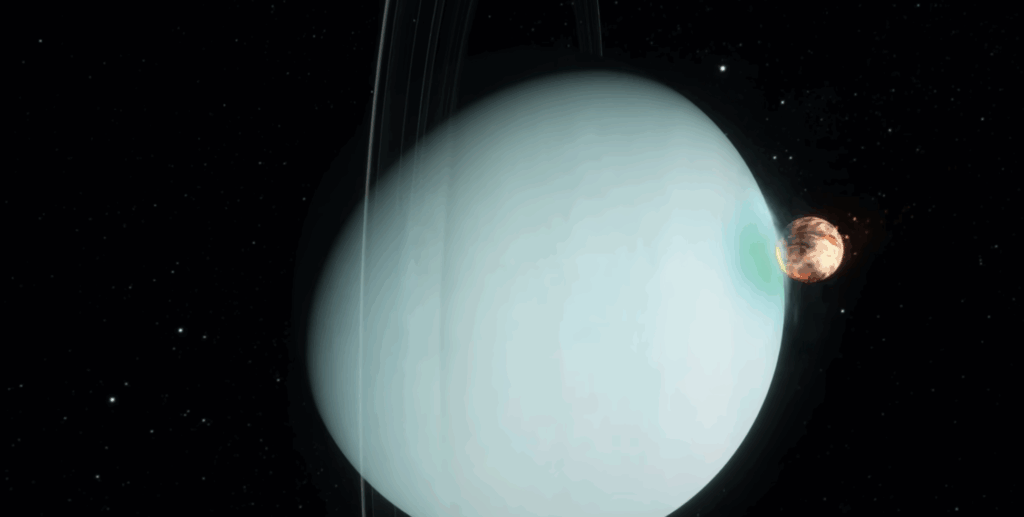
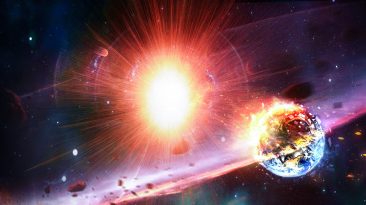
Eventually, Earth would be transformed beyond recognition. Uranus is so massive that it could capture our planet into a new orbit, turning Earth into another moon of the blue ice giant.
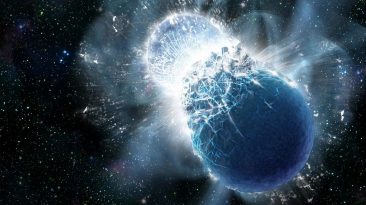
But Uranus itself has experienced a similar event in the past. Scientists believe a massive collision billions of years ago may have knocked the planet onto its unusual sideways rotation. Today, Uranus is the only planet in the Solar System that spins almost completely on its side.
A new impact with Earth could dramatically change Uranus once again, altering the planet forever.
Of course, this scenario is purely hypothetical. Uranus is safely locked in its distant orbit, and there is no danger of it heading toward Earth. But if the impossible happened, the meeting between our worlds would create one of the most extreme events the Solar System has ever witnessed.