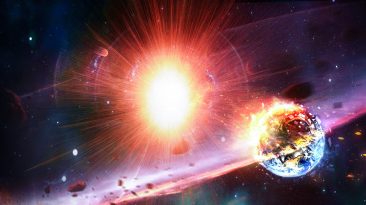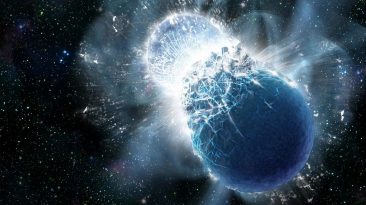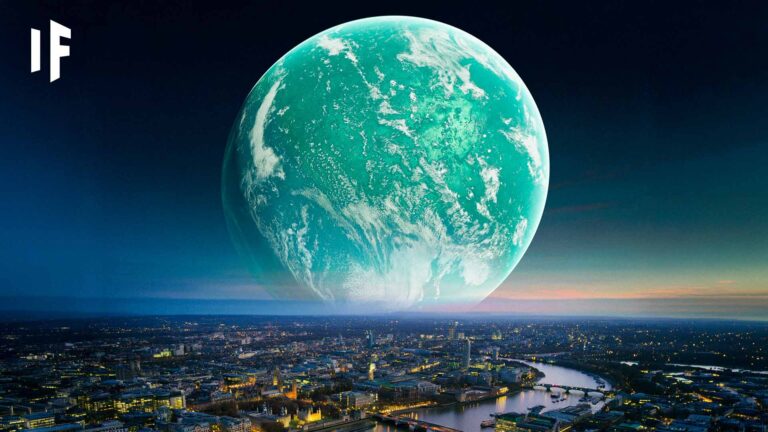
If our Moon suddenly vanished, Earth would already face dramatic consequences. But replacing it with entire alien worlds would take things to an entirely different level. Some of these exoplanets might look breathtaking in our sky, glowing brighter and larger than anything humans have ever seen.
Yet behind that beauty would be catastrophic tides, violent earthquakes, and even planetary collisions. Here’s what life on Earth would be like if some of the most famous exoplanets took the Moon’s place.
Proxima Centauri b
Proxima Centauri b is the closest known potentially habitable exoplanet, orbiting just over four light-years away. Roughly Earth-sized but far more massive than the Moon, it wouldn’t behave like a gentle satellite if it appeared in lunar orbit. Instead, Earth and Proxima b would begin orbiting each other, forming a binary planet system that wobbles around the Sun. The gravitational pull would trigger colossal tides many times stronger than today’s, flooding coastlines and reshaping continents.
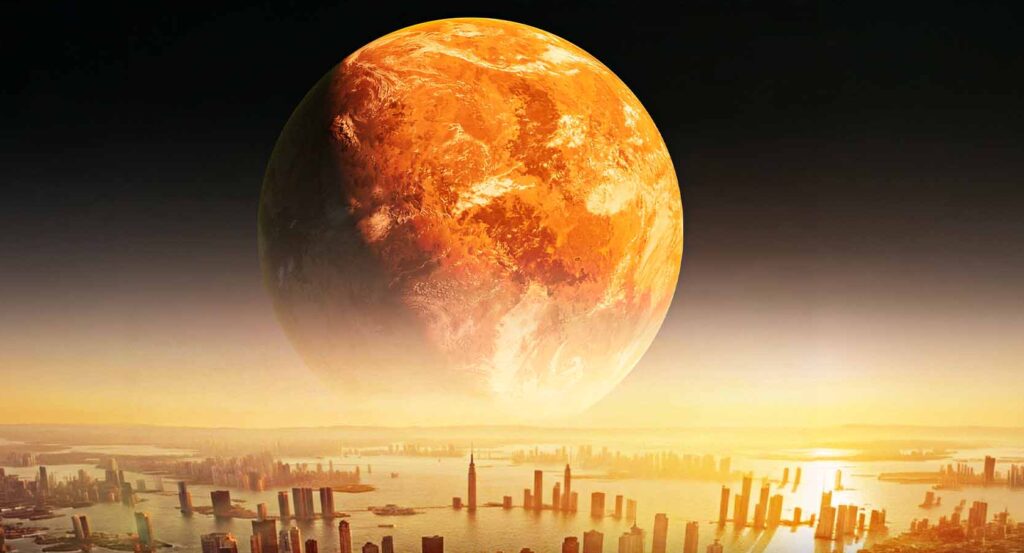
Over time, Earth’s rotation would slow dramatically, stretching a single day to weeks or even months. That would disrupt weather patterns and global temperatures, forcing ecosystems and human civilization to adapt rapidly. Ironically, Proxima b itself would benefit from the move, receiving more sunlight and potentially becoming a warmer, more habitable world. The view in the sky would be stunning, but life on Earth would become far more unstable.
Kepler-22 b
Kepler-22 b is one of the most famous habitable-zone planets ever discovered, but it’s far larger than Earth, and vastly heavier than the Moon. If it replaced our natural satellite, it would dominate the sky, possibly shining brightly if its surface is covered by oceans. Yet its enormous mass would generate tidal forces far beyond anything our planet has experienced, unleashing mega-tsunamis, powerful earthquakes, and widespread volcanic eruptions.
Earth and Kepler-22 b would likely spiral into a gravitational dance, potentially destabilizing their orbits over time. Even if humanity survived the constant disasters, the long-term outcome could be a collision between the two worlds. While the planet might eventually settle into a stable orbit around the Sun, Earth would almost certainly not survive the process. What begins as a beautiful new “moon” would quickly become an existential threat.
55 Cancri e
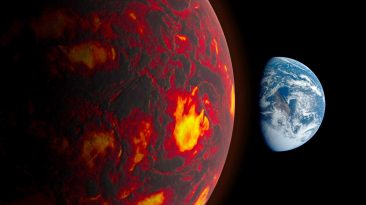
55 Cancri e is a super-heated rocky planet where temperatures can melt rock into vast oceans of lava. If this blazing world replaced the Moon, it would appear enormous and faintly glowing in the sky. But its intense gravity would subject Earth to relentless tidal stress, triggering constant earthquakes and volcanic eruptions. Over time, Earth could become tidally locked to this new planetary partner, always showing the same hemisphere toward it.
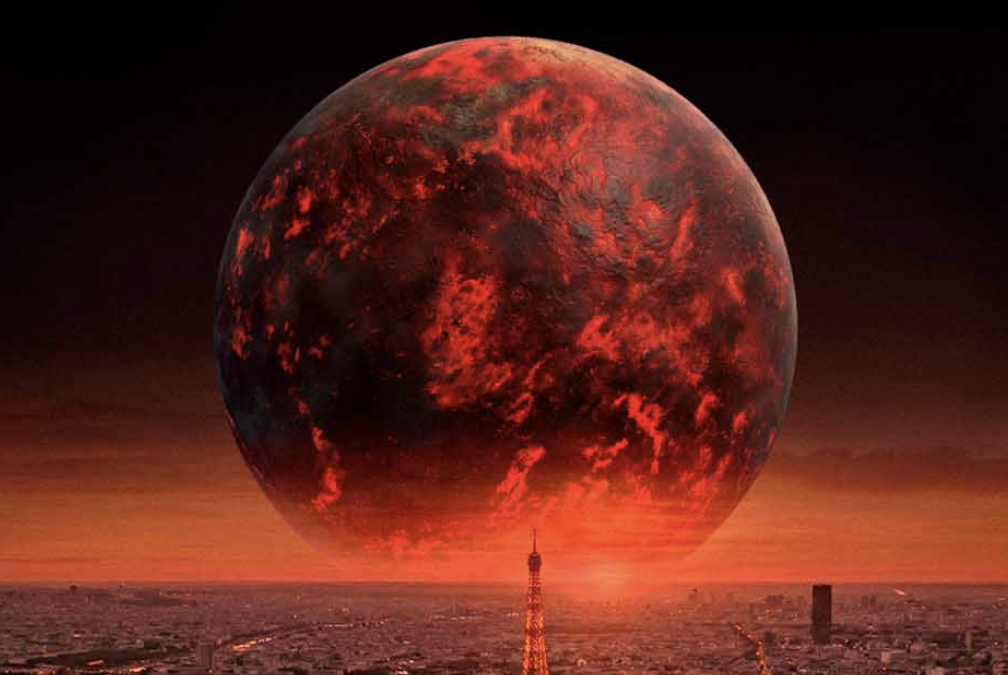
Meanwhile, 55 Cancri e would gradually cool as it moved farther from its original star, potentially solidifying its molten surface. Still, it would remain an uninhabitable, hostile world. For Earth, the gravitational chaos alone could devastate ecosystems and infrastructure, making survival extremely difficult. The dramatic view would be overshadowed by near-continuous geological turmoil.
Beta Pictoris b
Beta Pictoris b is an enormous young gas giant still glowing with leftover heat from its formation. If it replaced the Moon, it would span the sky, blocking stars and turning nights into a constant twilight. Its immense gravity would quickly dominate Earth, effectively turning our planet into its satellite. The resulting tides would be colossal, with walls of water sweeping across continents while the crust flexed under constant stress.
Volcanic eruptions and shifting fault lines would transform Earth into a geologically violent world, similar to Jupiter’s moon Io but on a planetary scale. Meanwhile, the giant planet itself would struggle with the intense sunlight at this distance from the Sun, possibly losing some of its outer atmosphere. Over time, the gravitational chaos could destabilize the inner Solar System, affecting even neighboring planets. It would be the ultimate worst-case scenario.
WASP-12 b
WASP-12 b is a scorching gas giant stretched into an egg-like shape by its star’s gravity. If it suddenly appeared at the Moon’s distance, it would fill much of the sky, an enormous dim globe looming overhead. Its gravitational pull would be catastrophic, generating mega-tsunamis and powerful quakes that could tear Earth’s crust apart. In this scenario, Earth would effectively become a moon of the giant planet.
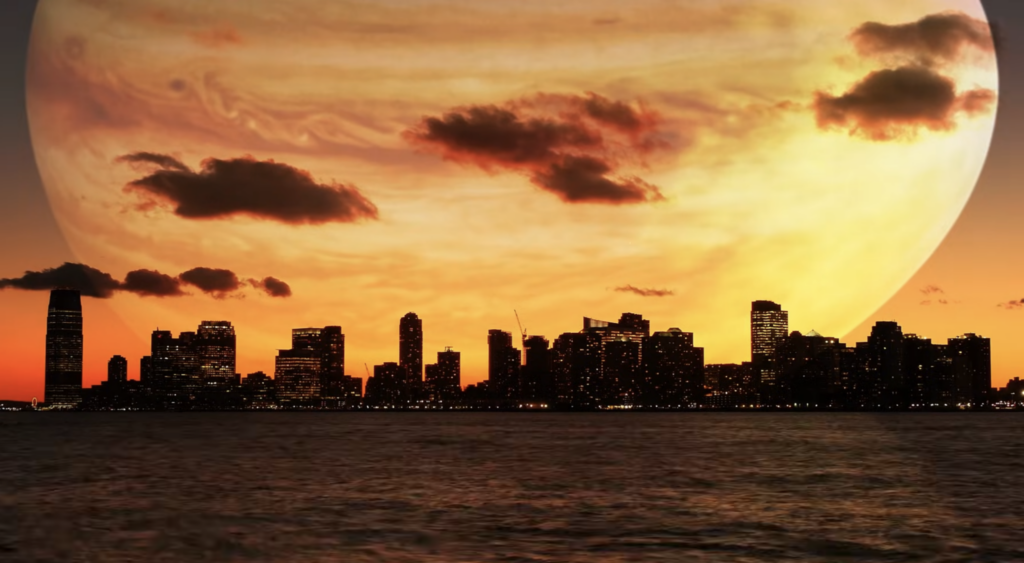
Frequent eclipses caused by WASP-12 b blocking the Sun would plunge parts of Earth into darkness, further disrupting climate systems. With tides reshaping coastlines and tectonic stress shaking the planet, human civilization would likely collapse quickly. Among all the possibilities, this hot Jupiter would rank as one of the most destructive replacements for our Moon.