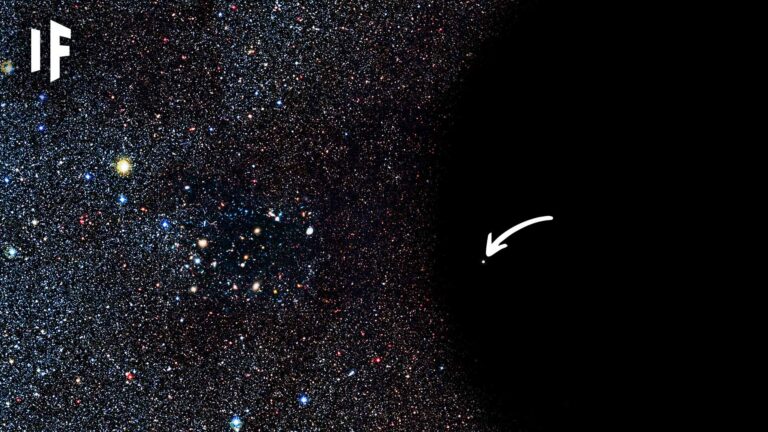
Imagine drifting through space in a place so empty that you wouldn’t see a single star, planet, or galaxy in any direction. This is the Boötes Void, one of the largest known empty regions in the Universe, often called the Great Nothing.
The Boötes Void lies about 700 million light-years from Earth in the Boötes constellation. To understand how far that is, consider that the Andromeda Galaxy, our closest major galactic neighbor is only 2.5 million light-years away. The Void is roughly 280 times farther. Even if traveling at the speed of light were possible, the journey would still take 700 million years. With today’s technology, it would take more than a trillion years, making the trip essentially impossible.
This massive region is also incredibly large. The Boötes Void stretches about 330 million light-years across. Even at light speed, reaching its center from the edge would take around 165 million years. Its size is so enormous that billions of Milky Way sized galaxies could fit inside it.
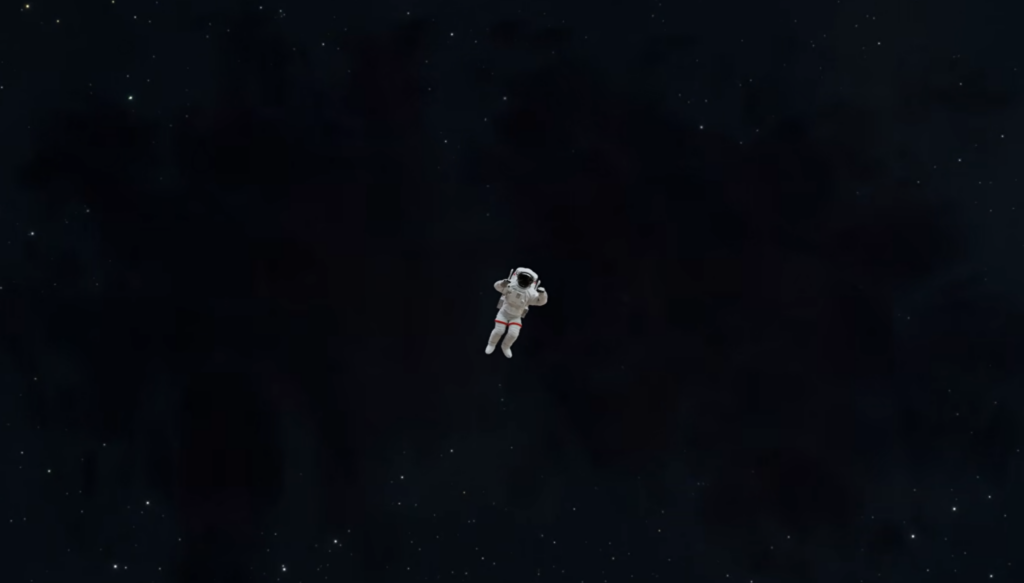
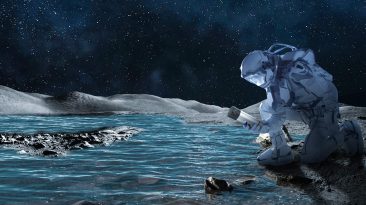
Entering the Void wouldn’t feel like falling into anything dramatic. There would be no sudden pull or drop – Just Emptiness.
You would float in microgravity, exactly as you would in deep space. The difference is that here, there are almost no nearby stars or galaxies to provide light or reference points. To the naked eye, the sky would appear completely black in every direction.
The temperature would be close to the coldest possible in space, around 3 Kelvin (−270°C). Without powerful instruments, you wouldn’t be able to tell whether you were moving or standing still. Losing your ship or lights would leave you totally disoriented, drifting endlessly with no sense of direction.
Despite its name, the Boötes Void is not perfectly empty. Scientists estimate that around 60 galaxies exist within it, but in such an enormous space, they are incredibly isolated, like a handful of fish in an entire ocean. The chance of encountering one by accident would be almost zero.
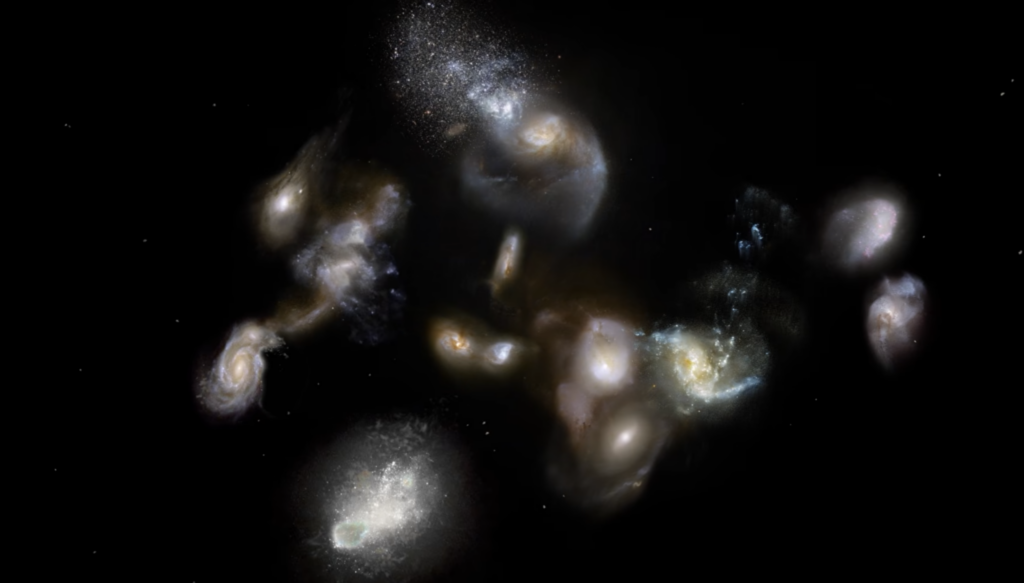
Astronomers discovered this vast emptiness in the late 20th century while mapping the distribution of galaxies. Their work revealed that the Universe isn’t evenly filled with matter. Instead, galaxies form a cosmic web of filaments and clusters, leaving huge gaps between them. These gaps are called voids, and they may make up around 80% of the Universe’s volume.
The Boötes Void is the largest of these known regions, a reminder that space is not just big, but overwhelmingly empty. If someone were somehow stranded there, they would experience endless darkness, silence, and isolation, drifting through the most extreme emptiness nature has to offer.
And that’s what makes the Boötes Void so fascinating. In a Universe filled with billions of galaxies, there are still places where there is almost nothing at all.