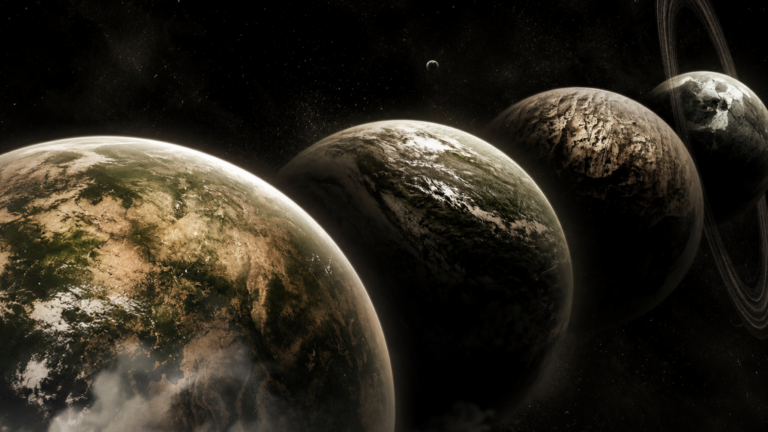
Imagine standing in your kitchen, unable to decide what to eat. Should you pour a cup of coffee or make a sandwich? In everyday life, you eventually choose one option. But what if you didn’t have to choose at all? What if somewhere else, another version of you made the opposite decision? According to one of the strangest ideas in modern physics, every possible outcome could exist at the same time, each in its own separate universe.
It sounds like science fiction, but it is based on a real scientific interpretation of quantum mechanics known as the many worlds interpretation. If it were true, reality would be far more bizarre than anything we experience.
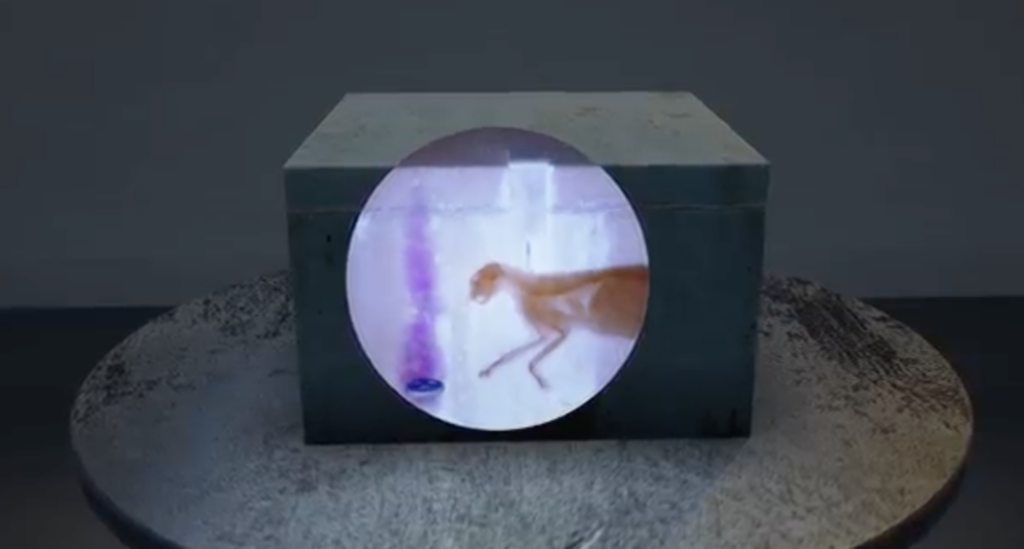
To understand the idea, it helps to start with one of the most famous thought experiments in science: Schrödinger’s cat.
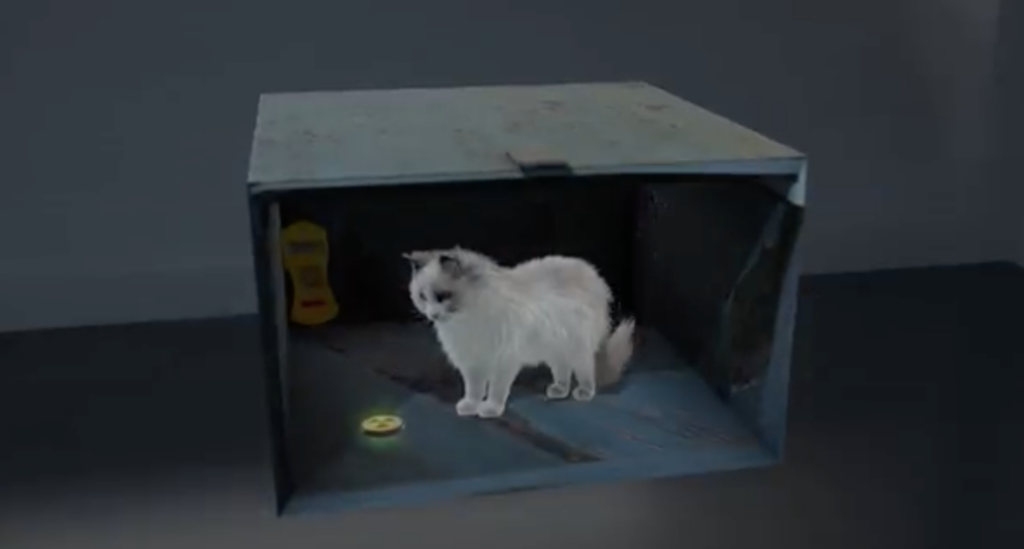
In this hypothetical experiment, a cat is sealed inside a box with a tiny amount of radioactive material, a Geiger counter, and a vial of poison. If the radioactive atom decays, the detector triggers the poison, killing the cat. If it does not decay, the cat survives. Until someone opens the box, quantum mechanics suggests the atom exists in a combination of both decayed and undecayed states.
Because the cat’s fate depends on the atom, the cat is also described as existing in a strange combination of being both alive and dead until an observation is made. No real cats were ever harmed. The experiment was simply designed to illustrate how unusual quantum mechanics can be.
This strange behavior comes from something called quantum superposition. Tiny particles such as electrons do not always behave like everyday objects. Before they are measured, they can exist in multiple possible states simultaneously. Only when a measurement occurs does one outcome become visible.
Most interpretations of quantum mechanics say the other possibilities disappear the moment a measurement is made. But the many worlds interpretation offers a completely different explanation.
Instead of the unused possibilities vanishing, every outcome actually happens.
The universe splits.
If you decide to drink coffee, another branch of reality exists where you chose the sandwich instead. If an electron spins one way, another universe forms where it spins the opposite way. Every quantum event with multiple possible outcomes creates new branches of reality.
According to this idea, the process began shortly after the Big Bang. Around 13.8 billion years ago, the young universe contained countless quantum particles constantly interacting. Every possible outcome would have created another branch, producing an unimaginably large collection of parallel universes.
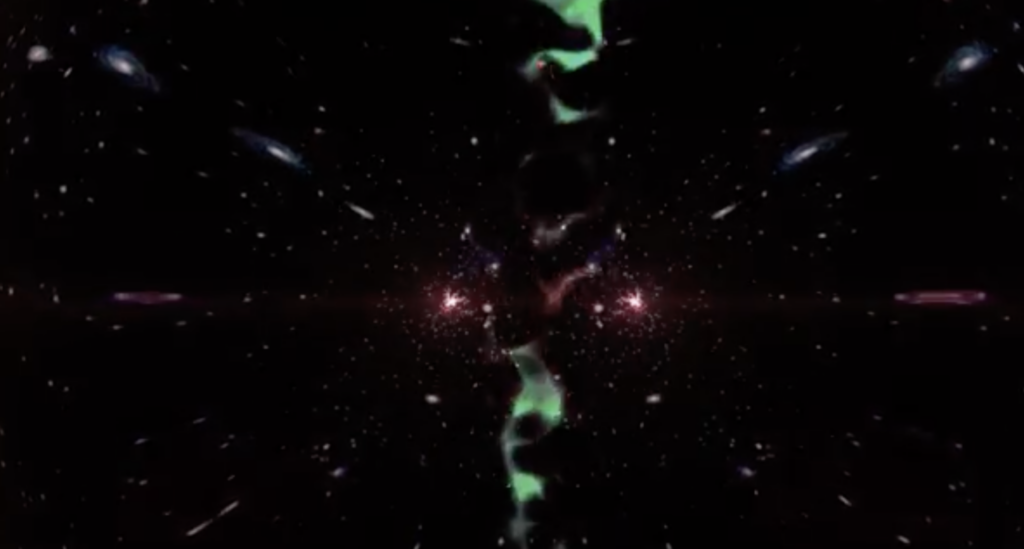
That means there could be realities where your life turned out completely differently.
In one universe, you accepted a different job. In another, you moved to another country. Somewhere, you became a famous scientist, an Olympic athlete, or perhaps never pursued your dreams at all. There may even be branches where you were never born because your parents made different choices long before you existed.
The possibilities quickly become impossible to count.
But if the universe really splits, what happens to you?
Each version of you would continue living in its own branch, completely unaware of the others. From your perspective, nothing unusual would happen. You would simply experience the outcome that unfolded in your reality, while countless alternate versions of yourself experienced different futures elsewhere.
The important detail is that these branches never reconnect.
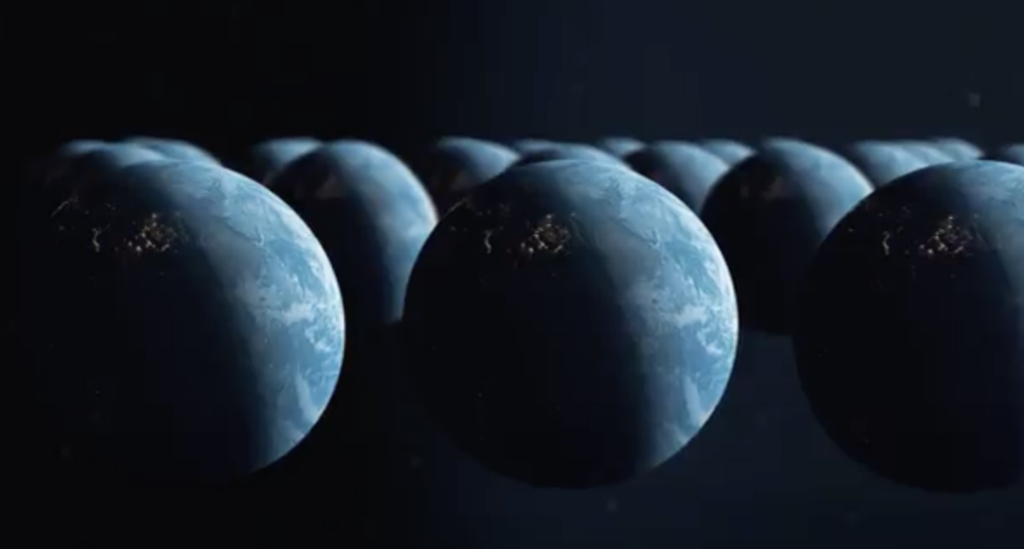
Even if parallel universes exist, current physics offers no evidence that we could communicate with them, travel between them, or even detect them. Once a branch forms, it evolves independently forever. No portal suddenly opens between realities, and there is no way to choose the version of life you prefer.
This is why the many worlds interpretation remains one of several competing explanations for quantum mechanics. It is mathematically consistent, but there is currently no experimental proof that these parallel universes actually exist.
Still, it remains one of the most fascinating possibilities in modern science. If the universe truly tears itself into new branches every moment, then reality is far larger than we can imagine. Every decision, every quantum event, and every possibility could be creating another version of existence.
For now, though, we only experience one path through the cosmos. Whether countless other versions of us are living different lives somewhere beyond our reach remains one of the greatest unanswered questions in physics.