When you look back through the evolutionary history of life on Earth, it’s important to remember it’s always been a game of survival. And only the fittest species survive.
That would mean that, of all the dinosaur species that ever existed, not all of them would survive the millions of years of natural selection to still be around today. But let’s see if a couple of our most famous prehistoric friends make it through this genetic gauntlet.
Starting at the top of the food chain. One of the greatest apex predators of all time, the Tyrannosaurus Rex.
Many millions of years ago, a T-Rex would have used some of its highly sophisticated senses to hunt prey. These beasts likely had a range of vision similar to, or better than, hawks and eagles.
The science suggests that throughout the T-rex’s evolution, their sight improved as their facial structure became narrower and their eyes grew larger. After many more millions of years of evolution, their vision might have improved to unfathomable levels. Instead of spotting prey hundreds of meters away, they could see their next meal several kilometers in the distance.
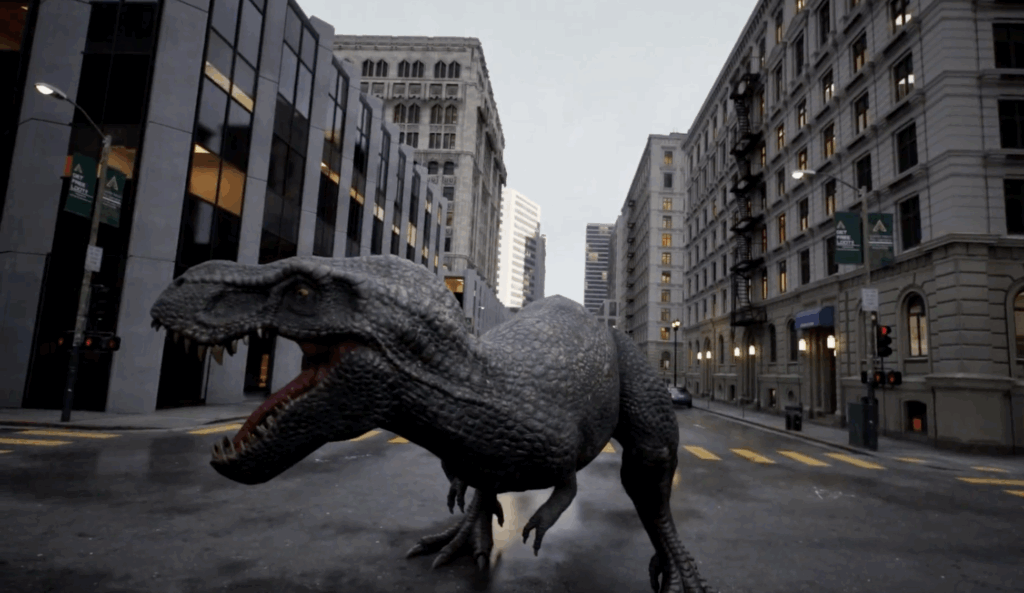
But what about other parts of their bodies? Besides their notoriously tiny arms, the T-Rex was a towering figure, standing just under 4 m (13 ft) tall. Over time, natural selection might have favored T-Rexes with longer, more muscular arms. By now, they might have developed better agility and range of motion to become even more formidable predators.
And they wouldn’t be the only predators that may have become even more dominant over time. Velociraptors were famous for their speed, agility, and hunting techniques.
Now, in terms of dinosaurs that already dominated the skies, the aviation skills of pterodactyls would have also continued to develop and improve. By the time they went extinct, these creatures were the largest known flying animals with wingspans ranging from 2 to 11 m (6.5 to 36 ft).
If they continued to adapt to our planet’s changing atmosphere and geographical shifts, who’s to say these gigantic flying reptiles wouldn’t have continued to grow? Imagine a day in the park ruined by a surprise visit of one or more pterodactyls the size of a small building. Now, that’s something you’d have to worry about.
Not all dinosaurs would have evolved to become bigger, badder predators. OK, maybe gentle giants like the Brontosaurus could have continued growing in size. But they might have developed other features to make them less vulnerable to predators.
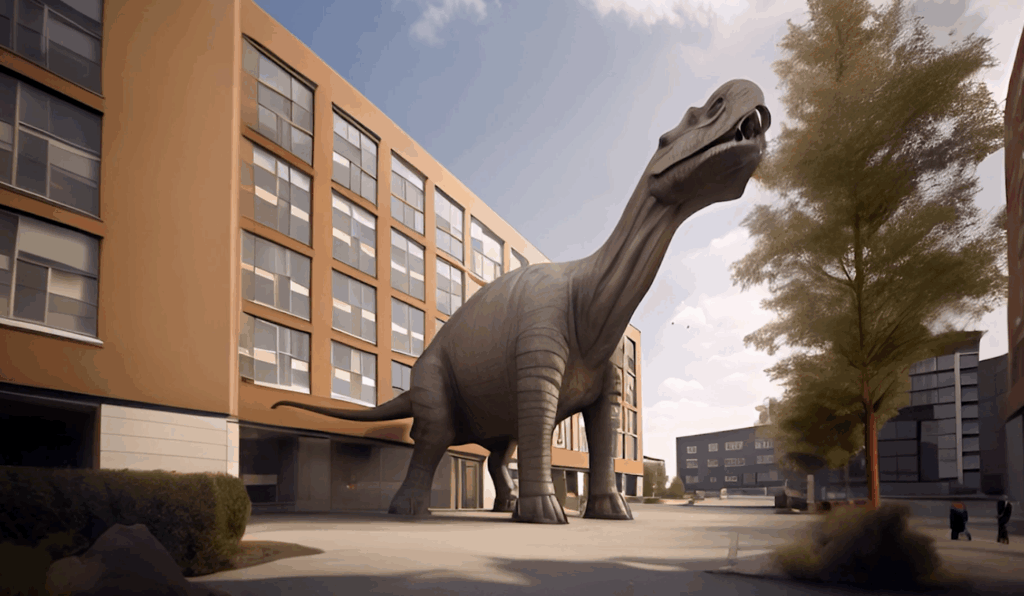
For example, their skin. Natural selection may have favored those with increasingly thicker outer layers that could withstand the powerful bites of creatures like the T-Rex. Or whatever it is that the T-Rex would be known as now.
Like with the animal species, there would be so many enormous environmental changes between their eras and now. The Brontosaurus was a herbivore. And as plant species underwent their own evolutionary process, these dinosaurs would likely have developed more complex digestive systems similar to mammals.
Natural selection would have likely favored genes that would make us smaller and faster to avoid being eaten. And with the possibility that we’d be living among other highly intelligent species like raptors, our social structures might be completely different, too.
Evolution is a mysterious puzzle that only time knows the answers to. If we reverse the course of one event like the collision of Chicxulub, there’s basically no limit to how different your world could be today.