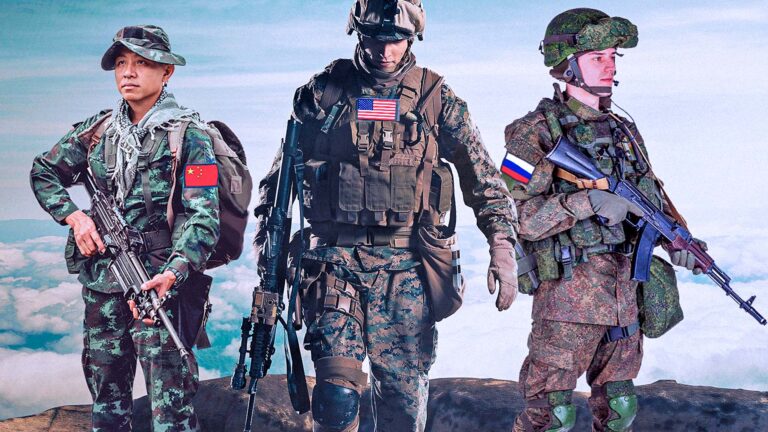
Whenever people imagine World War III, the question is always the same: who would win? The United States, Russia, or China are usually seen as the three most powerful military forces on Earth. Each possesses enormous armies, advanced technology, and enough firepower to change the course of history.
But despite their strengths, the reality is that a global war between these nations would almost certainly have no true winner.
The United States has long maintained the world’s largest military budget, spending more on defense than the next several countries combined. That funding has allowed it to build one of the most advanced armed forces ever assembled, complete with stealth aircraft, aircraft carriers, missile defense systems, satellites, drones, and cutting edge technologies that continue to evolve every year.
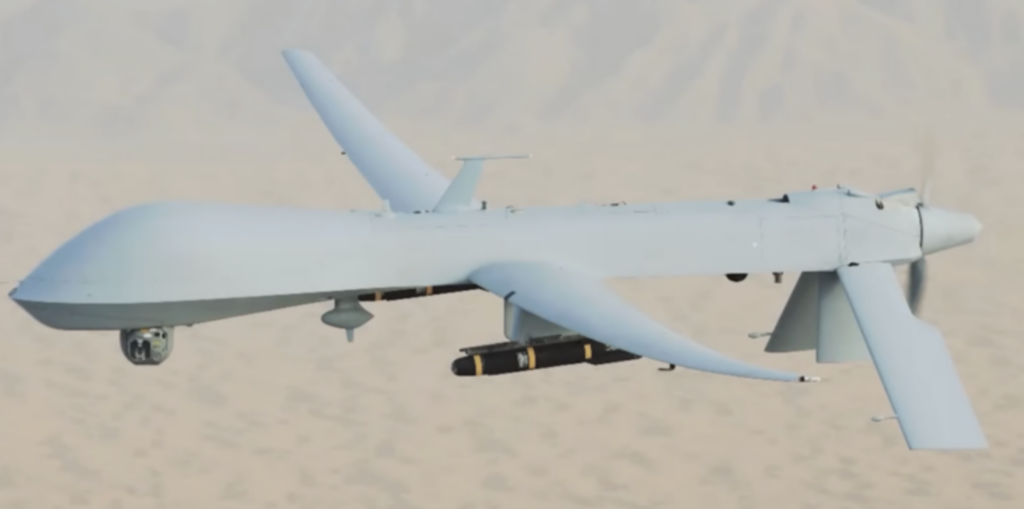
Its military also benefits from decades of combat experience and a worldwide network of bases capable of deploying forces almost anywhere on the planet.
Russia remains one of the world’s most formidable military powers despite having a smaller economy. Its armed forces have invested heavily in advanced missile systems, powerful tanks, submarines, and long range weapons designed to challenge even the strongest opponents.
Russia has also developed unconventional military technologies, including specialized underwater weapons and even trained marine animals to help protect important naval facilities. More importantly, it possesses one of the world’s largest nuclear arsenals, giving it an ability to inflict catastrophic damage even under the worst circumstances.
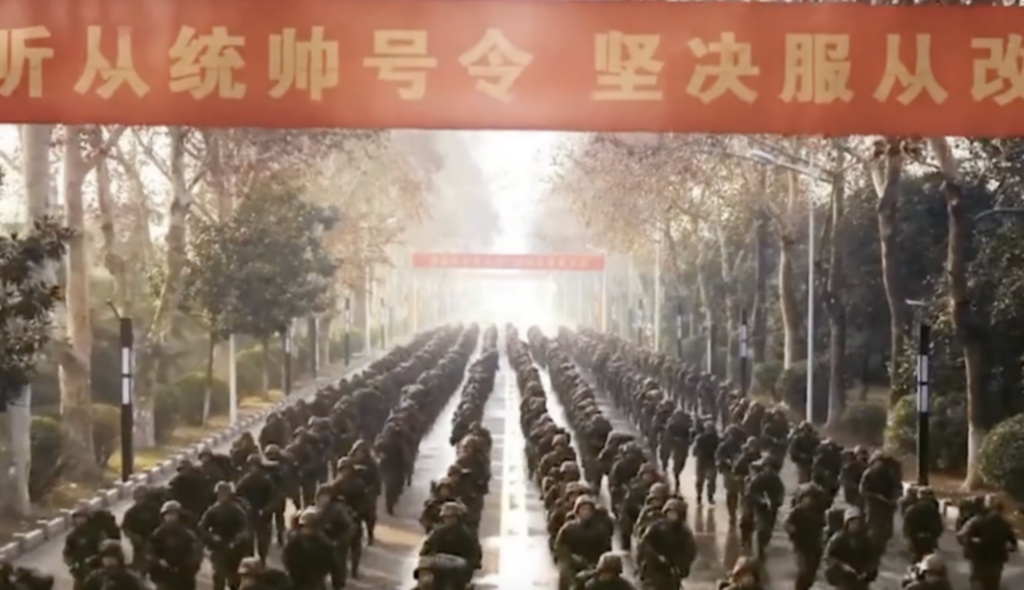
China has transformed its military faster than almost any nation in modern history. With more than two million active personnel, it fields the largest standing army on Earth. Massive investments in advanced fighter jets, warships, drones, cyber warfare, and missile technology have turned China into a military superpower.
It has even constructed artificial islands in the South China Sea to strengthen its strategic position and expand its military reach across the region.
Looking only at military size and equipment, each nation has impressive advantages. The United States operates the largest collection of military aircraft in the world, with thousands of fighters, bombers, transport planes, helicopters, and carrier based aircraft. Russia maintains one of the largest missile forces on the planet, while China continues to expand its fleet of modern aircraft and unmanned systems at an extraordinary pace.
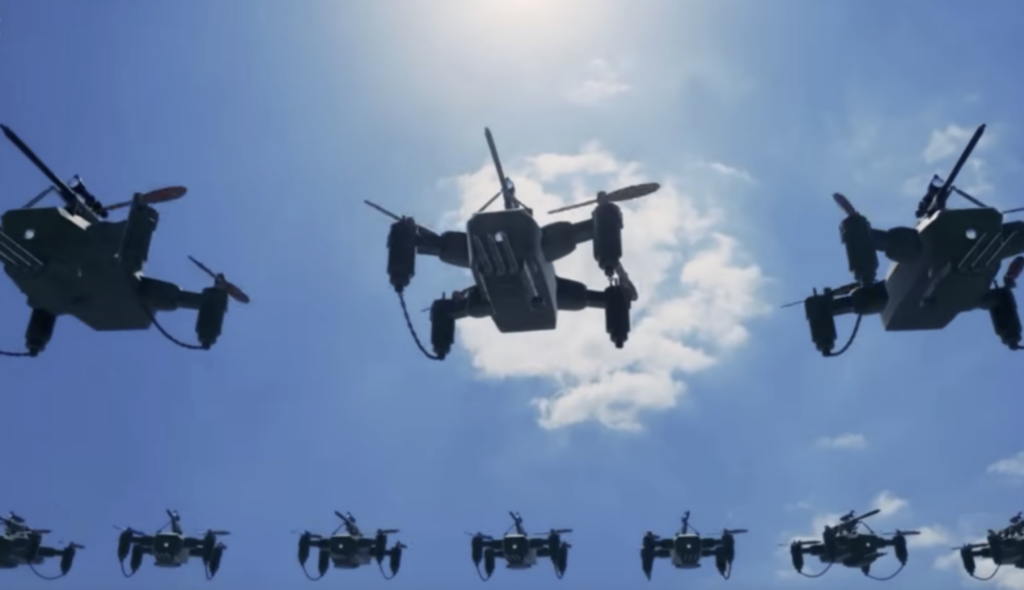
Technology has become just as important as troop numbers. Modern wars are no longer fought solely with soldiers on the battlefield. Satellites, artificial intelligence, cyber attacks, electronic warfare, drones, and precision guided weapons now play a critical role in determining military success. Every major power continues investing billions to gain an advantage in these rapidly developing fields.
Alliances would also shape the outcome of any global conflict. The United States maintains defense partnerships with dozens of countries across Europe, Asia, and North America, allowing it to coordinate military operations with many of the world’s strongest armed forces. Russia and China have strategic relationships with several nations as well, creating the possibility that a regional conflict could quickly expand into a much larger war involving multiple continents.
Yet none of these advantages guarantee victory.
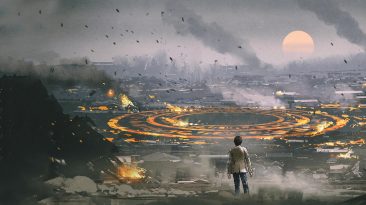
The greatest reason is nuclear weapons. The United States, Russia, and China all possess nuclear arsenals capable of destroying entire cities within minutes. A large scale exchange would cause devastation on a level never before seen in human history. Even countries that avoided direct attacks would suffer from collapsing economies, disrupted food supplies, damaged infrastructure, radioactive fallout, and global environmental consequences.
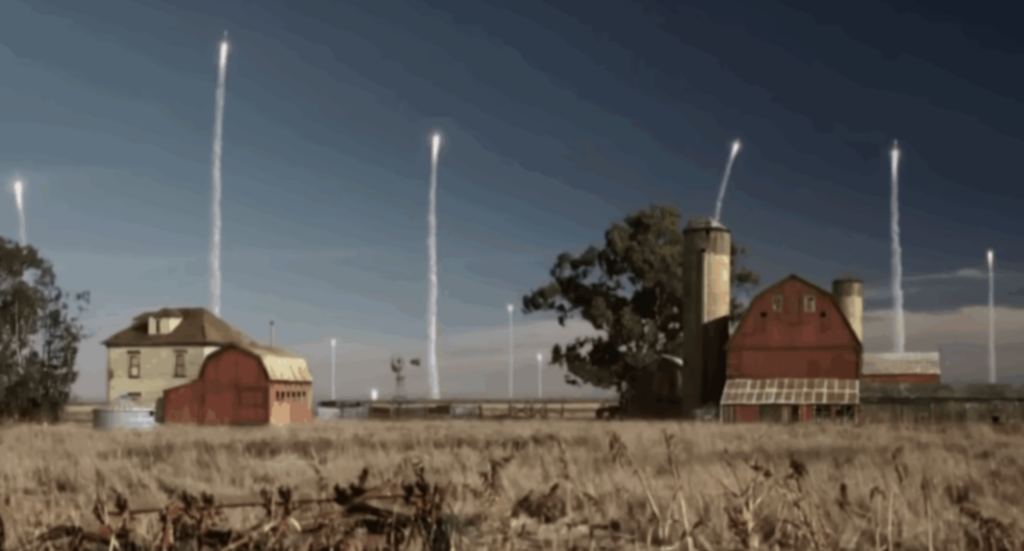
Scientists have warned that a major nuclear war could trigger what is known as a nuclear winter. Smoke from burning cities could block sunlight for months or even years, lowering global temperatures, damaging agriculture, and creating widespread famine across much of the world. Billions of people could face shortages of food, clean water, medicine, and electricity regardless of which side they supported.
Even without nuclear weapons, a world war would cripple international trade. Modern economies depend heavily on global supply chains for energy, electronics, medicine, transportation, and food production. Ports would close, factories would shut down, financial markets would collapse, and shortages would spread rapidly across every continent.
Cyber warfare would make matters even worse. Power grids, communication networks, banking systems, hospitals, airports, and transportation infrastructure could all become targets. Entire countries could lose access to electricity, internet service, and financial systems before traditional battles even begin.
History has shown that wars between major powers rarely produce clear winners. They leave behind destroyed cities, shattered economies, and generations forced to rebuild. A conflict involving today’s military superpowers would unfold on a scale far beyond anything the world has experienced before.
In the end, the question is not which country would win World War III. With nuclear weapons, advanced technology, and a deeply interconnected global economy, every nation would pay an enormous price. The real lesson is that in a conflict of this magnitude, victory would be almost impossible because the cost would be far greater than anything anyone could ever truly win.