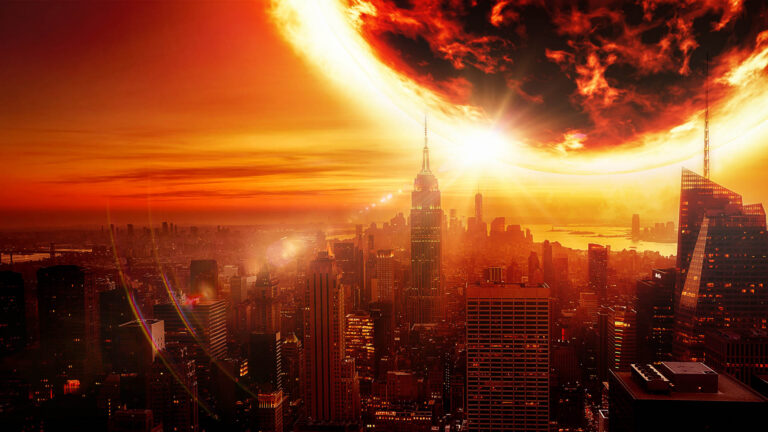
Somewhere billions of years down the line, our Sun will begin its final transformation, swelling first into an enormous red giant before eventually collapsing into a compact stellar remnant. Anything still alive within the Solar System at that point would be fighting for survival every step of the way. So what does that slow death actually look like? Could humanity find somewhere else to go? And what would the Solar System itself resemble in its closing chapters?
For roughly 4.6 billion years now, nuclear fusion inside the Sun has powered everything in our cosmic neighborhood, converting hundreds of millions of tons of hydrogen into energy every single second. Fuel like that, however, is not limitless. Researchers estimate the Sun sits at roughly the midpoint of its life, leaving something like 5 billion years before major changes truly begin.
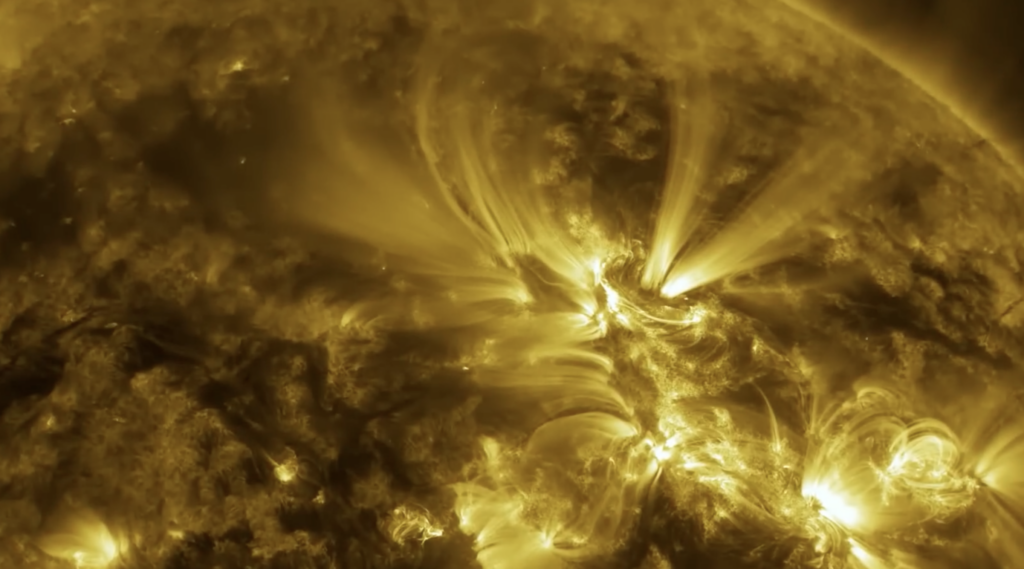
As hydrogen steadily runs low, helium starts building up inside the Sun’s core, a shift that gradually makes the star grow brighter, increasing in brightness by about 10 percent with each passing billion years. Eventually that internal pressure will force the outer layers outward, transforming the Sun into a red giant far larger than the star we know today.
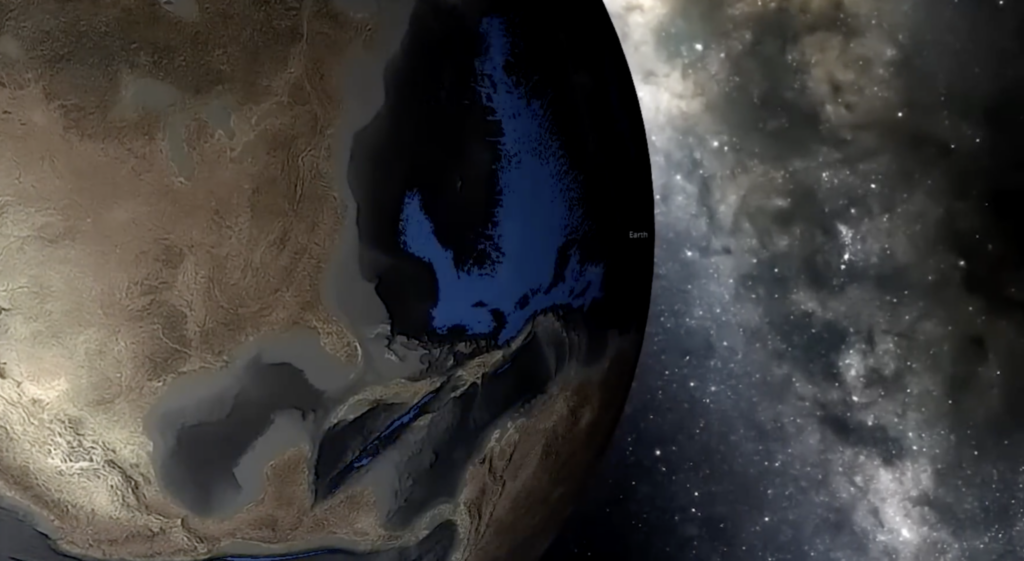
Long before any of that fully unfolds, Earth will already be in serious trouble. Somewhere around 1.5 billion years from now, the Sun’s rising brightness could set off runaway global warming, pushing temperatures upward until the oceans start evaporating away entirely. As those conditions worsen, the habitable zone, the narrow region where liquid water can actually exist, would drift steadily outward, moving away from Earth and closer toward Mars.
Mars could end up serving as humanity’s first real refuge at that stage. Turning it into somewhere with breathable air would demand extensive terraforming, but the planet itself might remain workable for life across billions of years. Even so, that safety would not last forever either.
Around 7.5 billion years out, the Sun will finally burn through its hydrogen supply and shift toward fusing helium instead. As it balloons into a full red giant, Mercury would be destroyed outright, Venus would lose its atmosphere before eventually being consumed entirely, and Earth itself might end up little more than a scorched, lifeless husk, with Mars growing far too hot to sustain anything living either.
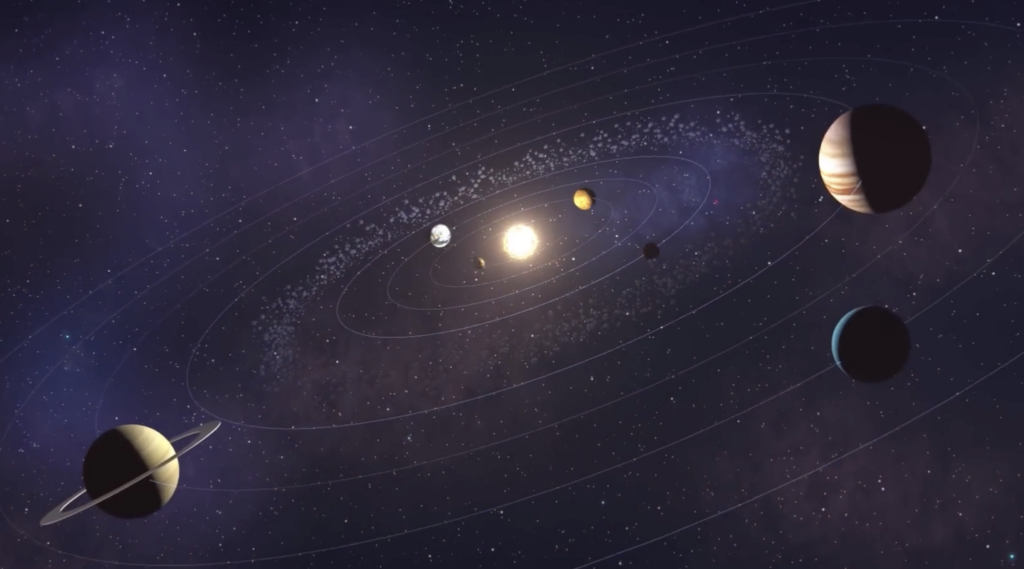
By that point, Europa, one of Jupiter’s largest moons, could become humanity’s best remaining option. As solar heat continues climbing, Europa’s thick icy crust may melt away, forming a vast ocean across its surface. For hundreds of millions of years, this far flung moon could serve as a temporary sanctuary from the chaos closer to the Sun.
Eventually the Sun would reach its absolute peak size, blazing thousands of times brighter than it appears today, and conditions could turn unbearable even far out in the Solar System. At that point humanity might be forced to relocate once more, this time toward distant dwarf planets scattered across the Kuiper Belt, where temperatures could finally resemble something close to what Earth once offered.
Around 10 billion years from now, the Sun would finally exhaust its remaining fuel entirely, growing unstable and shedding its outer layers out into space. What remains behind afterward is a white dwarf, a dense stellar core roughly the size of Earth, still emitting powerful radiation despite producing far less heat than before.
That shrinking star would push the habitable zone yet again, making survival anywhere in the Solar System increasingly unlikely. Continuing on as a civilization at that point would likely require settling planets orbiting entirely different stars altogether.
Given enough time, even that white dwarf would cool completely. After trillions upon trillions of years, it could theoretically become a black dwarf, a dark, frozen stellar remnant, though none have ever actually been observed since the universe itself is not yet old enough for one to exist.
So should you somehow live long enough to witness the Solar System’s true ending, you would be watching one of the single greatest transformations in all of cosmic history unfold. Thankfully, that final chapter for the Sun remains billions of years away from beginning.