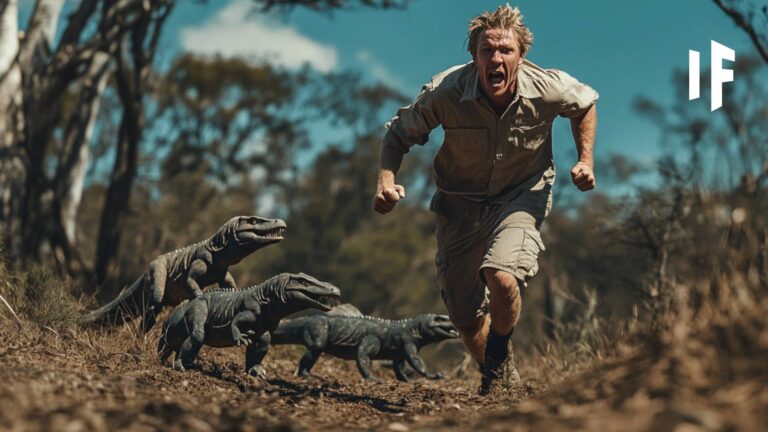
Take a modern human and drop them into Australia around 100,000 years ago. No claws, no armor, no venom, no speed worth mentioning. Just soft skin and a decent brain.
Now surround them with lizards five meters long, snakes that crush kangaroos, and a marsupial predator built to disembowel prey with a single claw.
By every reasonable measure, our ancestors should not have lasted. Between 126,000 and 12,000 years ago they shared this continent with all of it, and somehow they came out the other side.
1. Diprotodon, the Giant Herbivore
The largest marsupial that ever lived measured 3.8 meters long, stood 1.8 meters high, and weighed as much as a car. Its enormous head carried banana sized incisors capable of processing up to 100 kilograms of leaves, branches, and shrubs daily.
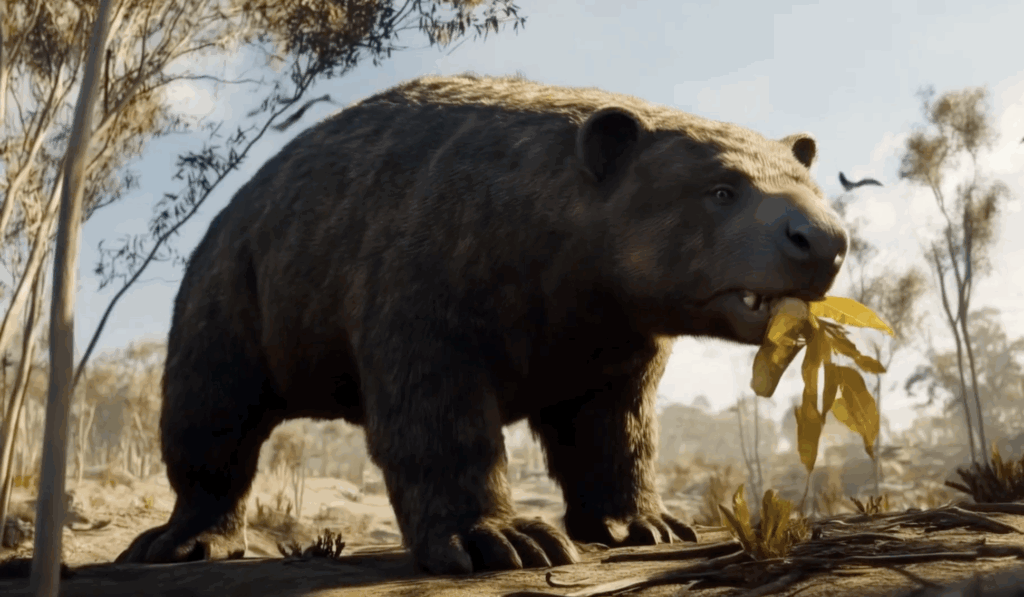
Its skull was lightened by air pockets, letting it lift that massive head efficiently. Far from a threat, this gentle giant shaped the ecosystem by dispersing seeds across enormous distances.
Diprotodons ranged widely and may have migrated seasonally, and those migrations may have guided human movement too. Watching them was a reliable way to find grazing land and water.
2. Megalania, the Nightmare Lizard
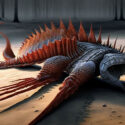
The largest land based lizard in history reached 5 meters and weighed over half a ton.
A carnivore hunting mammals, birds, and reptiles, it came equipped with backward curving teeth and toxic saliva, which made it a devastating ambush predator.
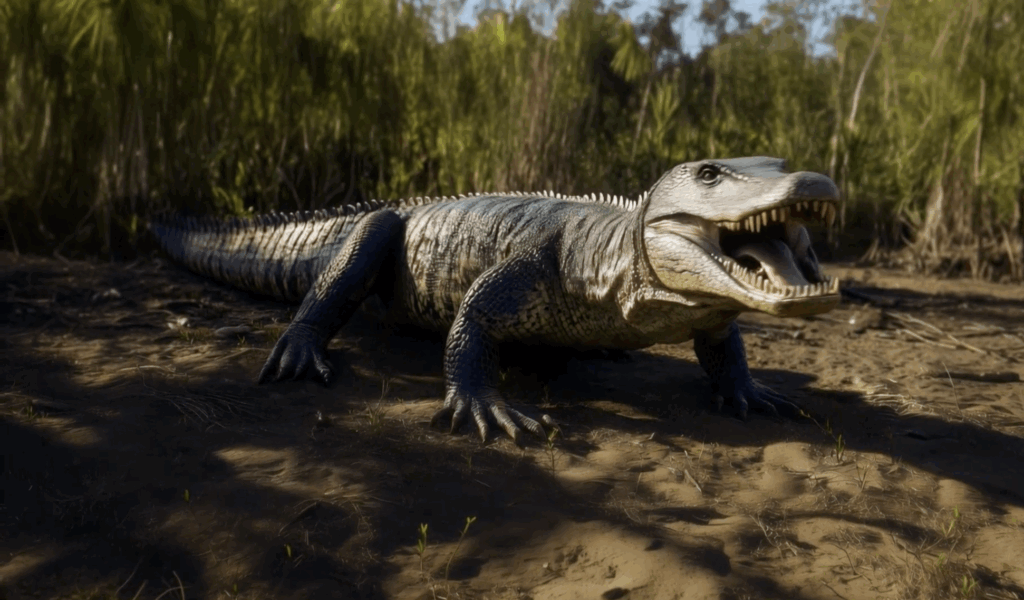
Its closest living relatives are the Komodo dragon and the Perentie lizard, and neither comes close to that size. Living alongside Megalania meant never fully relaxing in forest or grassland, and tracking its movements was likely a survival skill rather than curiosity.
3. Wonambi, the Giant Snake
Between 4 and 6 meters long, this constrictor ambushed prey like kangaroos and wallabies at watering holes.
It carried no venom and needed none, since its coils could suffocate a victim outright.
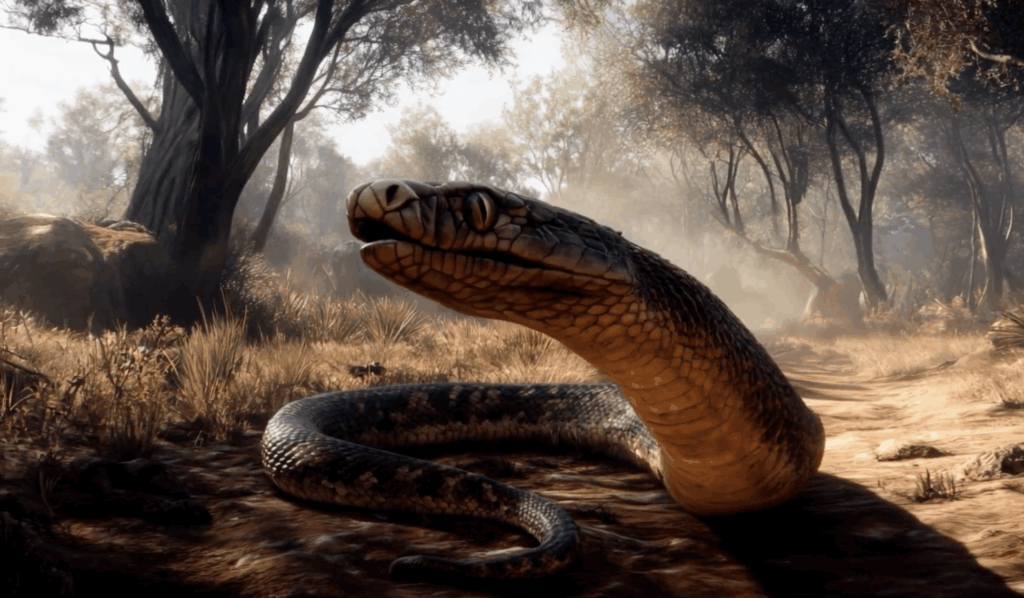
Scientists believe humans may have contributed to its extinction, which removed one lethal predator from an already crowded list. Before that, it turned every essential water source into a gamble, and avoiding it taught early humans a great deal about stealth.
4. Thylacoleo, the Marsupial Lion
A carnivorous marsupial with the strength of a 250 kilogram lion, armed with sharp incisors, enlarged cheek teeth, and an enormous claw designed for disemboweling prey.
It was not fast, and it did not need to be. As an ambush hunter it could bring down almost anything in the Australian wilderness.
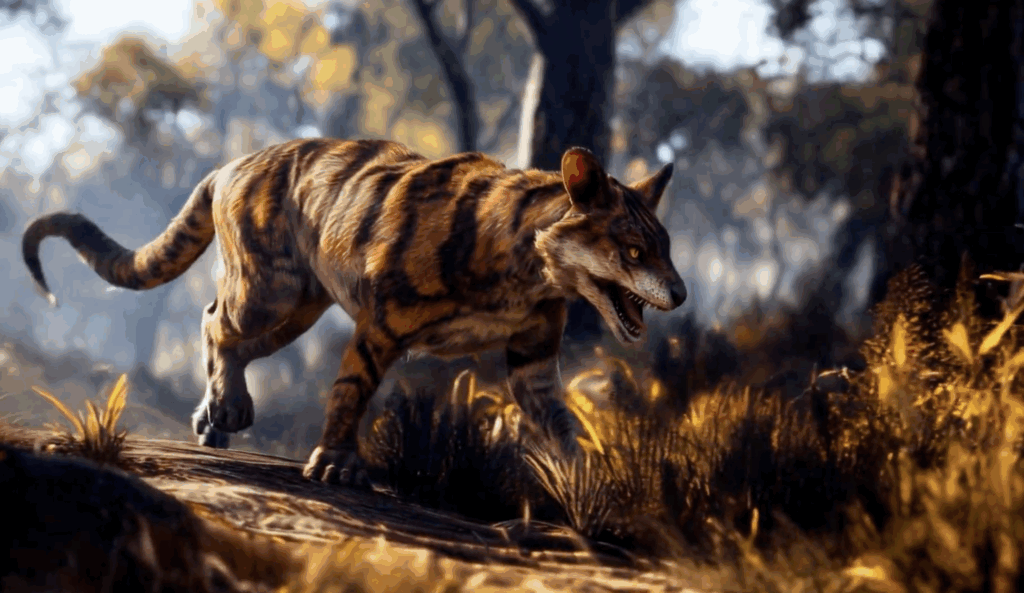
Its diet occasionally included plants, eggs, and bone marrow, but humans were firmly on the menu. Surviving encounters demanded strategy and cooperation, and evidence suggests early humans studied its hunting patterns specifically to stay out of its way.
5. The Thunderbird
Standing over 2 meters tall and weighing up to 240 kilograms, the thunderbird could not fly but ran fast and hit hard.
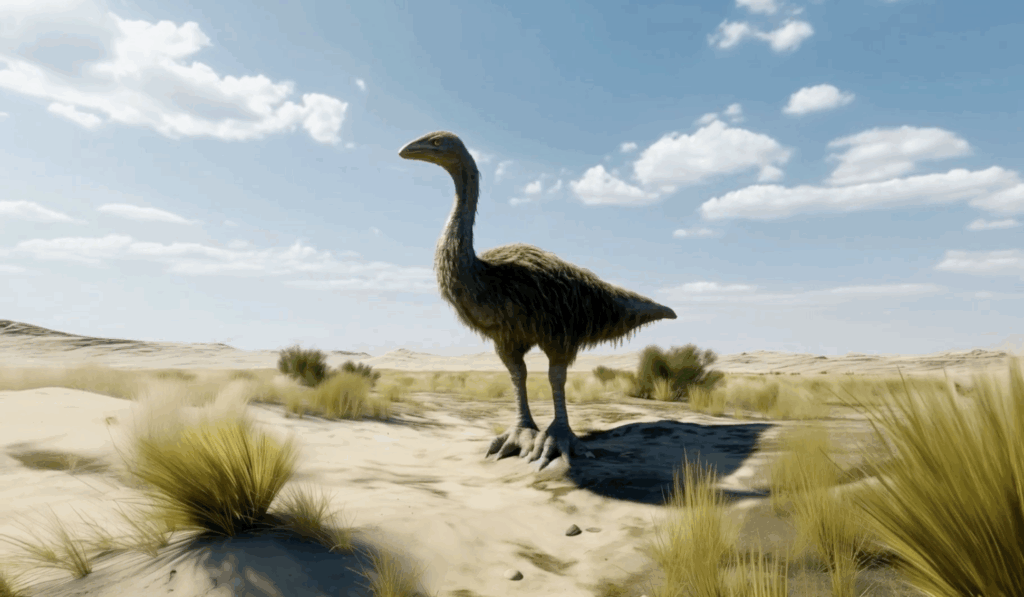
Fortunately it was probably a herbivore. Its eggs weighed over 1.5 kilograms, offering clues about its diet and behavior, and its descendants are alive today as ducks and geese.
Herbivore or not, provoking something that size was a serious mistake, and tracking its movements helped humans read seasonal food supplies and environmental shifts.
6. How Humans Actually Survived
Fire and tools carried them through. Early Australians used sharpened bones, spears, and nets both to defend themselves and to hunt, while shelters built from rock and bone kept out predators and weather alike.
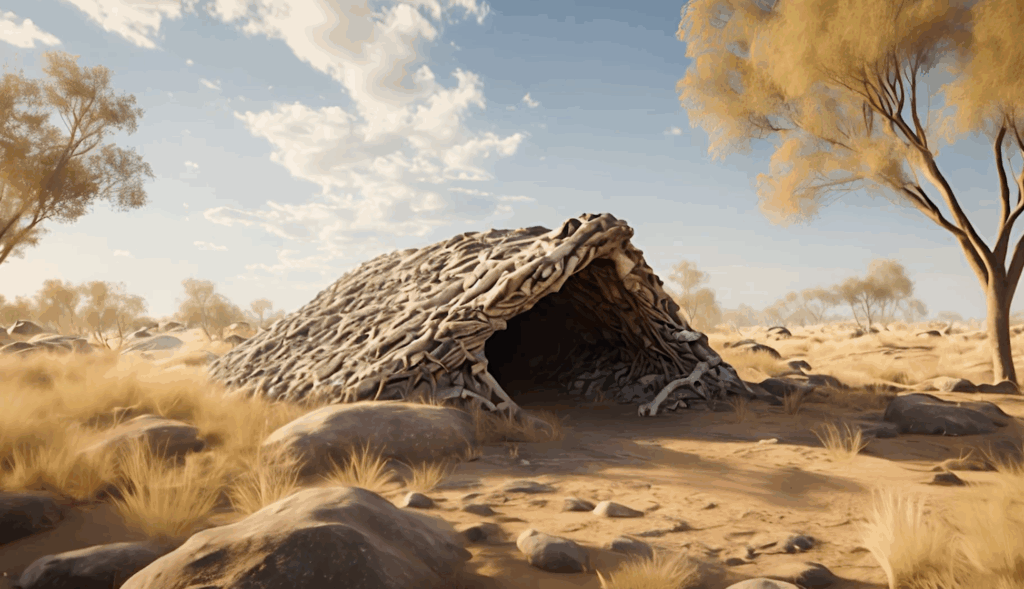
Coastal regions offered savanna like climates with reliable water, while inland deserts were harder but opened migration routes across exposed land bridges.
The decisive advantage was social. Cooperation let groups share knowledge and resources, and communication and planning mattered more than strength ever could.
7. What Killed the Megafauna
Humans reached Australia around 65,000 years ago as a new apex predator, and the Blitzkrieg theory argues rapid hunting wiped the megafauna out.
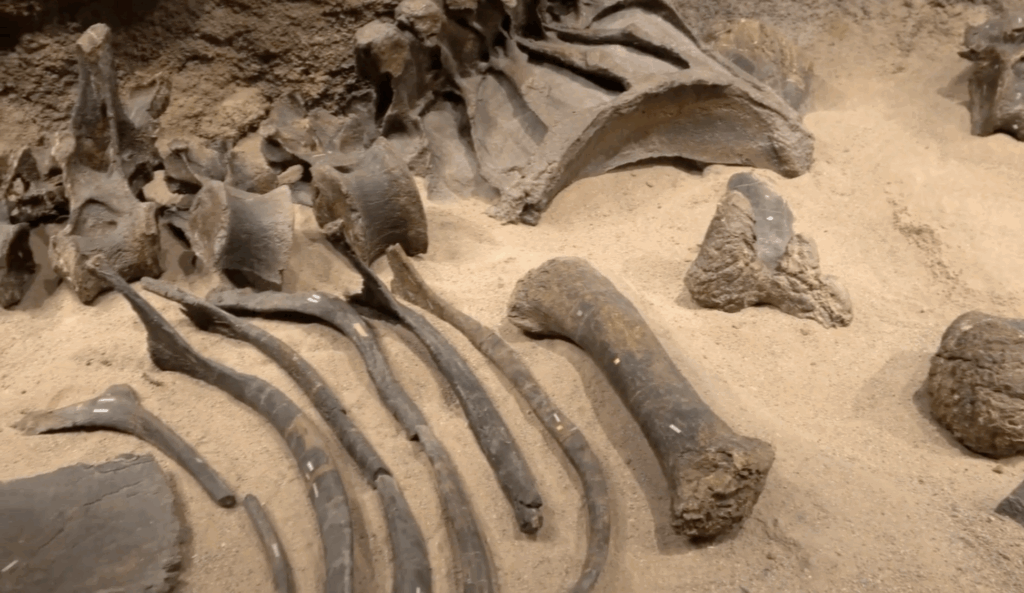
The evidence complicates that. Many species coexisted with humans for up to 30,000 years, which points toward climate change at the end of the last Ice Age as a major driver, with warming and drying habitats squeezing these animals steadily.
Habitat loss combined with hunting likely accelerated the collapse. When it finished, ecosystems had transformed and the softest species on the continent was suddenly the one in charge.