The Moon weighs about one eightieth of what Earth does. That is why it can hang there for billions of years, tugging gently at our oceans, doing nothing worse than shifting the tides.
Now replace it with something roughly 95 times more massive than our entire planet.
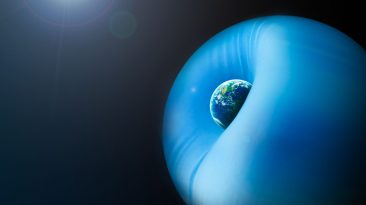
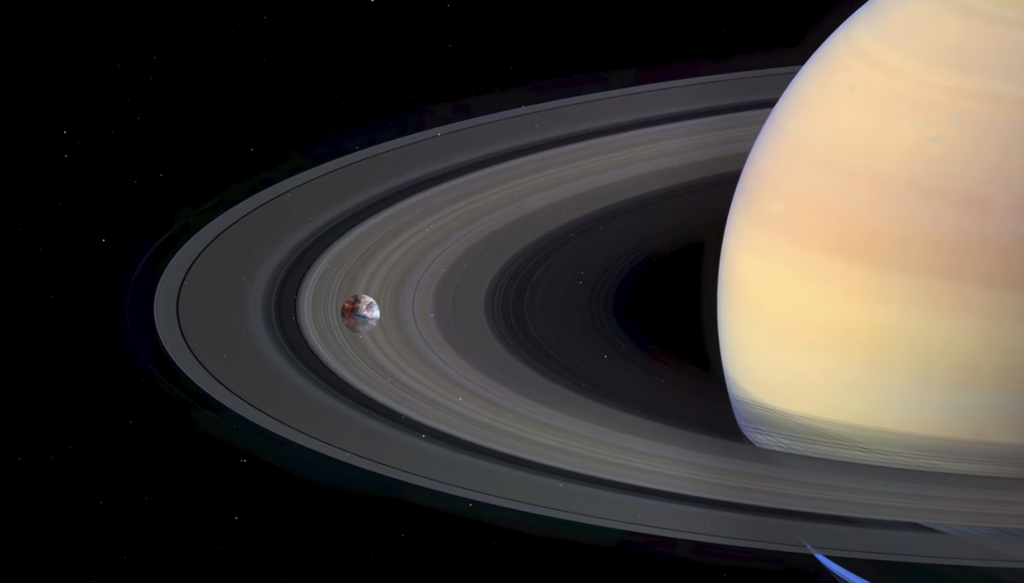
Saturn, parked at the same distance, would not be a bigger Moon. It would be the end of everything we consider normal.
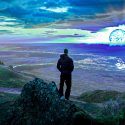
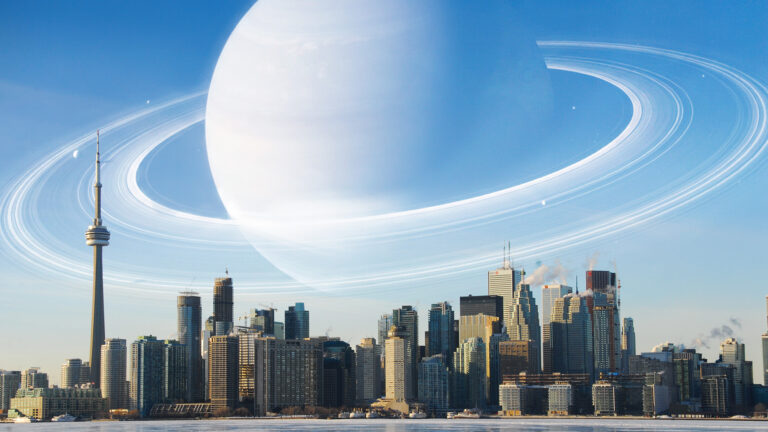
Picture stepping outside one evening to find the Moon gone and the ringed giant hanging in its place, so enormous you can trace its bands and rings with the naked eye.
For a few seconds it would be the most beautiful thing humanity has ever witnessed.
Then the panic would start, and the oceans would move first.
The Moon creates tides by pulling gently at our water. Saturn’s gravity would be incomparably stronger, and water across the planet would begin behaving in ways nothing in history prepares us for.
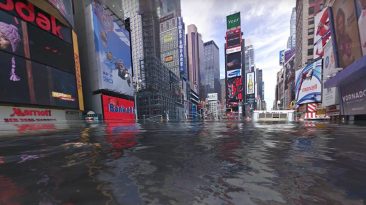
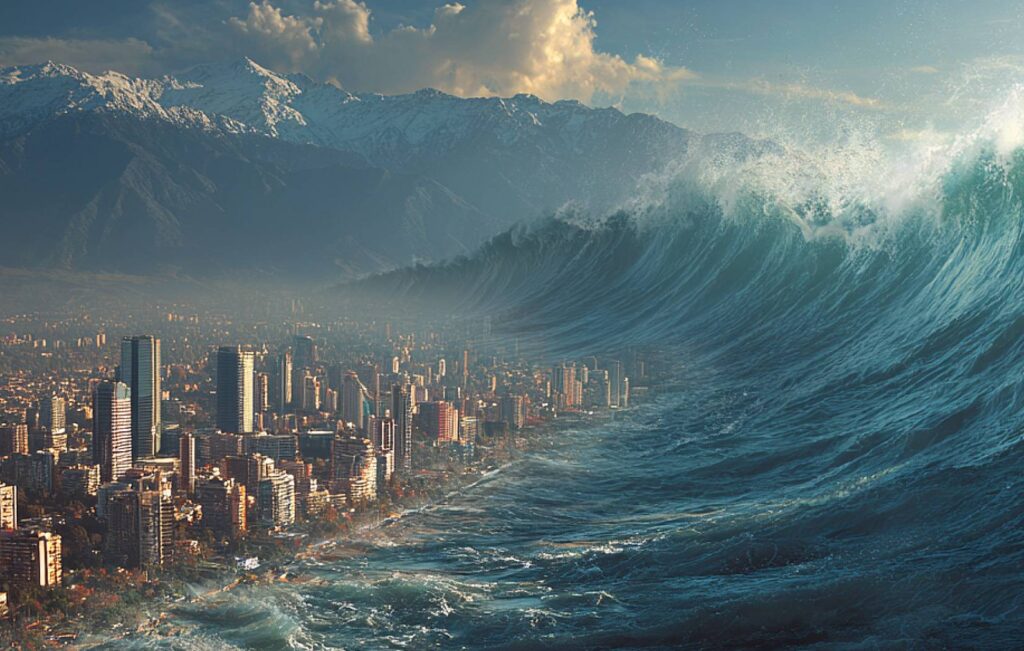
Coastlines would become disaster zones within hours. Entire stretches of ocean could retreat before surging back as colossal walls of water. Harbors destroyed, ports drowned, and coastal cities left with almost no time to react.
The land would not escape either.
Earth is far less solid than it looks. Its crust bends and flexes under gravitational stress, and with Saturn pulling on it, enormous earthquakes would tear through continents. Volcanoes would grow more active. Fault lines silent for centuries could rupture without warning.
Meanwhile the sky above would become unrecognizable. Saturn would swallow huge sections of the night, its rings stretching across the heavens in glowing arcs, so large the whole scene would look unreal.
And then a second problem arrives. Saturn does not travel alone.
Hundreds of moons surround the planet, some tiny, others large enough to rival planets in their own right. Move Saturn into the Moon’s position and every one of them comes along, destabilizing Earth further as some pass relatively close and add stress to oceans and continents already coming apart.
Even daylight would change. Saturn is enormous enough to cast vast shadows, leaving parts of Earth in extended darkness as sunlight is blocked. Temperatures would swing unpredictably and weather systems would spiral out of any recognizable pattern.
But the worst is still ahead, because every planet has a limit to how much gravitational stress it can absorb.
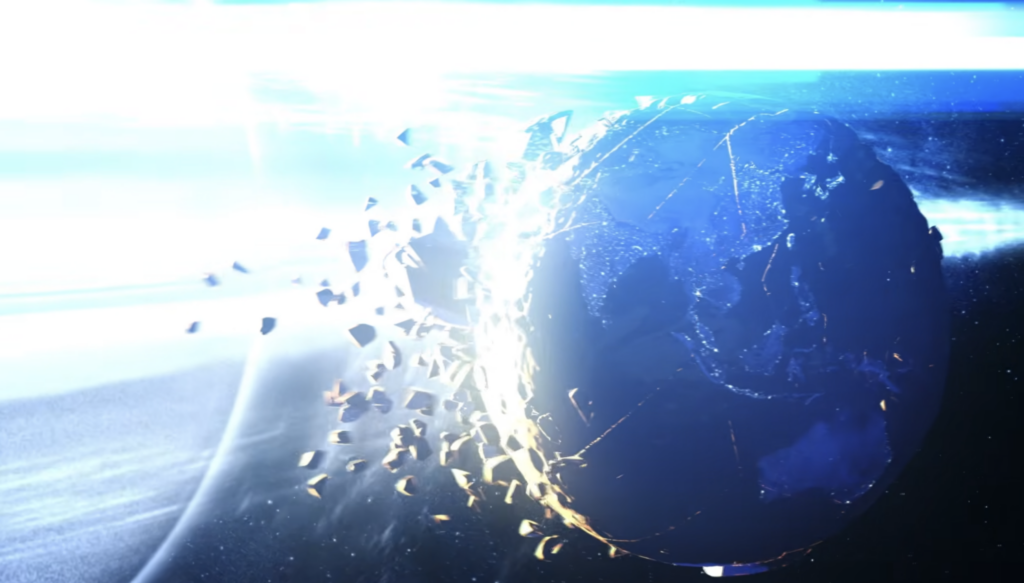
As Saturn kept pulling, the side of Earth facing it would feel a far stronger force than the opposite side, and that difference would keep growing until the forces holding our planet together started losing.
Earth’s shape would distort. The crust would crack and shift globally. Oceans and atmosphere would be violently redistributed as the structure of the planet was pushed past what it can survive.
At that point Earth would no longer be an independent world orbiting the Sun, but a captive of something far too massive sitting far too close.
For a short while, humanity would have the most spectacular view in history.
Then we would learn the lesson written into the whole scenario. Some things in the universe are beautiful only because they stay very, very far away.