Mount Hua, China
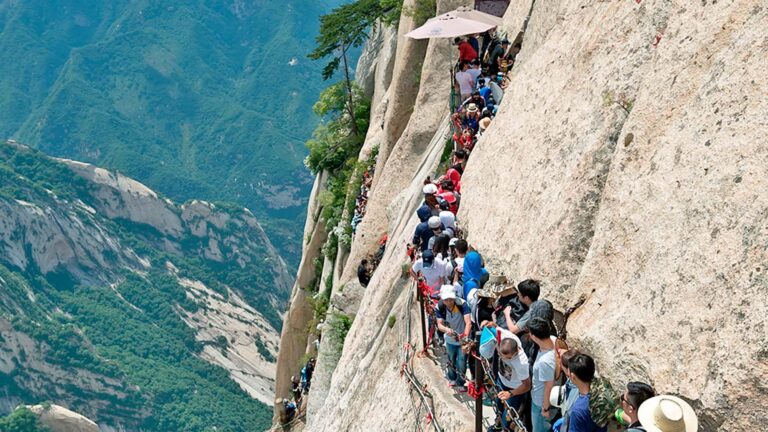
This hike leads to the South Peak of Huashan, one of the Five Great Mountains of China. Its summit stands at about 2,155 m (7,100 ft), and the infamous wooden plank walk that leads to it makes for a very uneven journey. First, you’ll need to climb down the steep cliff on metal rod stairs. Next, you’ll have to hook onto a chain and use a harness to traverse up and down the mountain.
The scariest part will be moving your carabiner clip over those of returning hikers passing the plank in the opposite direction. And yes, once you finish the trail, you’ll have to go back the same way. Patience and cooperation are essential for everyone to have a safe hike. Always keep your carabiner attached to the safety cable, especially if you want to take a photo. In 2019 a Chinese student fell to her death while taking a selfie. She was not wearing a harness.
The Maze, United States
This trail is located in the remotest region of Utah’s Canyonlands National Park. It takes marathon drives on dirt roads to get to the hike in the first place, and you usually need to go for a multi-day trip. The path will include steep drops and deep gullies where you could be at risk of rockfalls and flash floods. The Maze is full of dead ends and narrow passageways where you could easily get lost.
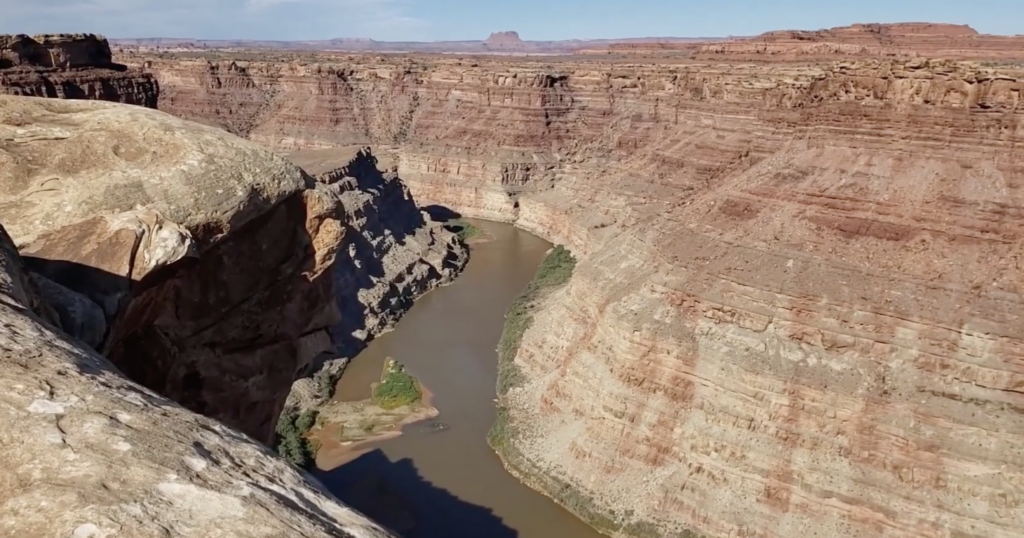
Before you go, make sure to tell people when you’ll be there. Also, chart your route with GPS, and don’t forget some old-school maps. Just in case. There aren’t many natural springs in the Maze, so bring enough water for the trip. Talk with the park rangers and let them know your itinerary. If you become lost, it could take rescuers up to three days to find you. If you fall and hurt yourself, try to set yourself up in an open area so you’re visible to any helicopters scouting for you.
Drakensberg Grand Traverse, South Africa
This epic 230 km (143 mi) hike can take up to two weeks to finish. You’ll begin by climbing up a set of chain ladders to reach the Drakensberg Escarpment. With no distinct pathway, you’ll need to use guides to help you get through the hike, which is filled with chain ladders. About 55 people died here leading up to 1985, which is when they stopped filing reports on trail casualties.
You should always go to the Drakensberg Traverse with at least one other person. Written guides and hiking maps are available for visitors. Use them. Don’t forget about the weather. The tall grass in the summer makes walking difficult, and the winter can be extremely cold. Your best bet is to go in the spring or fall.
Striding Edge, UK
This sharp mountain ridge leads to the summit of Helvellyn, which is the third-highest peak in the Lake District National Park. The hike is notoriously dangerous due to the incredibly fast-changing weather of the region. Thrillseekers walk directly on the ridge, but you can also hike along the paths on the side. There are several spots where you can easily slip and lose your footing. Make sure that you’re taking steady and careful steps.

Swirral Edge is an extremely slippery part of the path. Especially in the winter, when it’s often covered in ice and snow. In 2013, a married couple fell about 128 m (420 ft) from Swirral Edge. Luckily, a team of 13 rescue workers was training nearby and got to the scene within minutes. Miraculously, neither of the hikers had any life-threatening injuries.
Pacaya Volcano, Guatemala
This hike takes place on an active volcano that could erupt at any moment. It erupted in 2010 and 2013, and continuously spewed hot ash between eruptions. The ground surrounding Pacaya is so hot that it could melt the soles of your shoes. The hike can be extremely slippery when it rains, so you’re better off going in November, which is Guatemala’s dry season.
Bring your best hiking boots and wear layers, ’cause even though it’s a volcano, the winds can make it very cold. It’s recommended that you spend at least a week in the area to get used to the elevation and avoid altitude sickness. You’ll be able to toast some treats with the heat of the volcanic rock, so don’t forget to bring marshmallows.