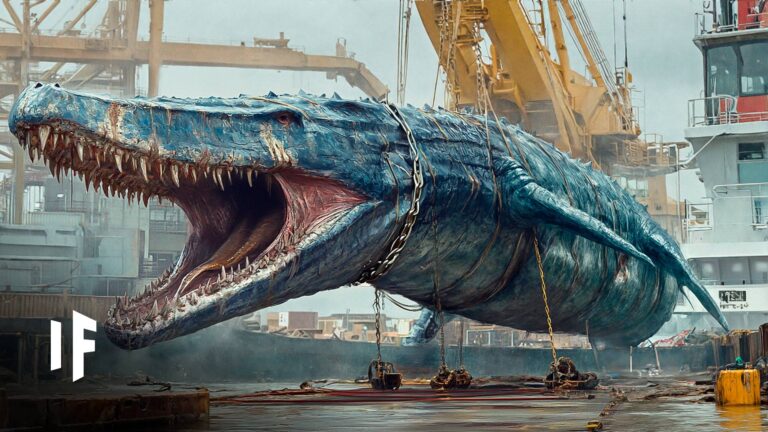
Imagine swimming in the open ocean and suddenly coming face to face with a monster larger than any shark alive today. Faster than a speeding boat and armed with crushing jaws filled with razor sharp teeth, the Mosasaurus was one of the most terrifying predators to ever exist.
Although it disappeared 66 million years ago, things could have turned out very differently. If evolution had continued shaping this giant marine reptile, it might still dominate Earth’s oceans today. With its immense size, powerful tail, and deadly hunting abilities, a modern Mosasaurus could have become the ultimate ocean predator.
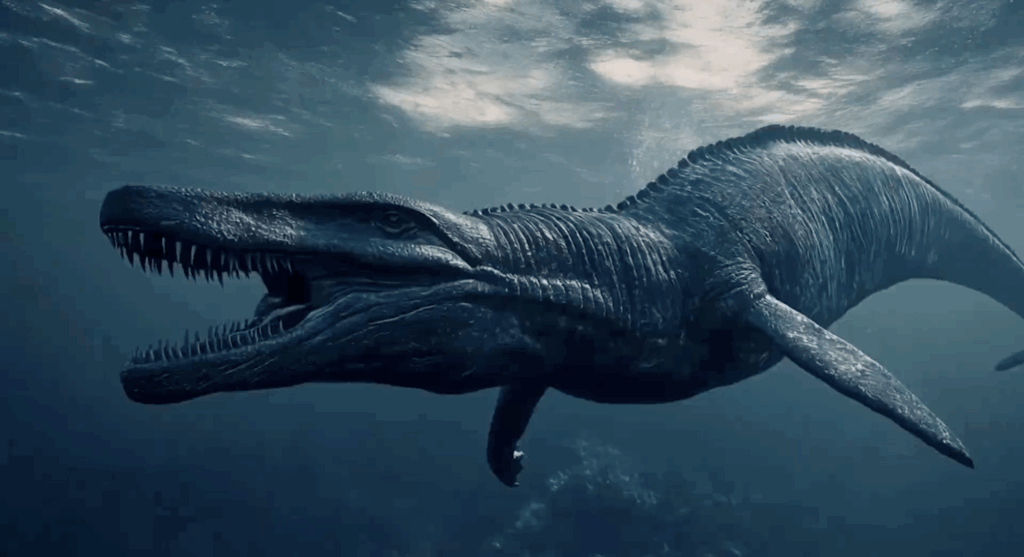
In a world where the Mosasaurus still existed, shark attacks would feel insignificant in comparison. This giant marine predator would hunt with terrifying speed and precision, striking before most swimmers could even react. Using sudden bursts of power similar to a crocodile, it could launch through the water at incredible speeds in just seconds.
Its enormous tail would drive it forward like a living torpedo, while its massive jaws lined with sharp teeth could crush or swallow prey whole. Built through millions of years of evolution, the Mosasaurus was perfectly designed to dominate the ancient seas and could have become even deadlier in the modern world.
98 Million Years Ago
The story of the Mosasaurus begins with the aigialosaurs, small monitor lizards that returned to the water. Measuring no more than five feet, these early ancestors eventually evolved into around forty different mosasaur species. Among them, Mosasaurus hoffmanni emerged as the largest and most fearsome, stretching 30 to 50 feet in length.
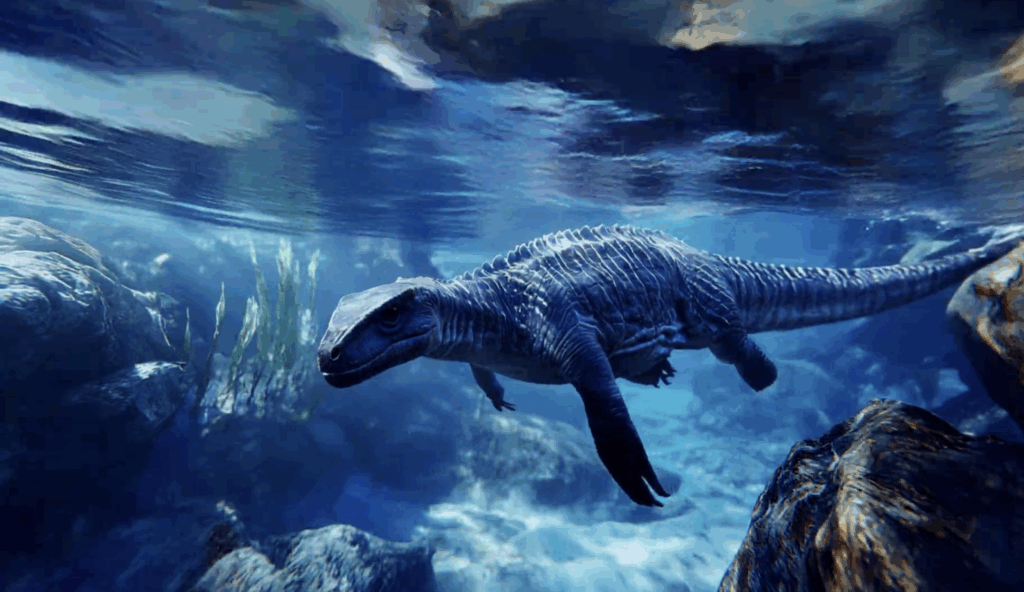
With powerful flippers similar to a whale’s and a sleek body designed for speed, the Mosasaurus ruled the ancient oceans as a top predator. It hunted sharks, sea turtles, fish, dolphins, and even other Mosasaurs when food was scarce. Its long forked tongue helped it sense chemicals in the water, allowing it to track prey and locate mates with remarkable accuracy. Whether near the surface or in shallow coastal waters, the Mosasaurus was a highly efficient hunter built for survival.
66 Million Years Ago
The extinction event at the end of the Cretaceous period, known as the K P G event, changed everything. A massive asteroid struck the Yucatán Peninsula, triggering tsunamis, showers of molten rock, and a global winter that lasted about a decade. With the collapse of the marine ecosystem and about 75 percent of ocean animals dying, the Mosasaurus could no longer find the large prey it needed to survive.
While some species such as sharks survived by moving to deeper or colder waters, the Mosasaurus remained mostly in shallow seas, which led to its extinction. Only adaptations that allowed it to hunt across a wide range of ocean depths could have spared it from this catastrophe.
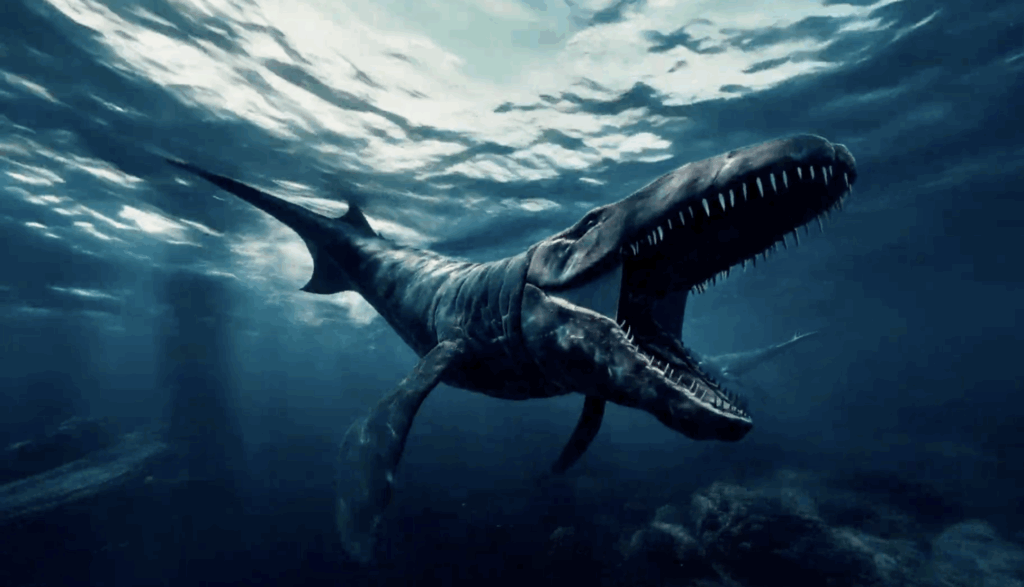
A Mosasaurus that evolved to survive would likely have developed a more tapered body for long-distance swimming, fin-like paddles for stability, and a swim bladder to regulate depth, similar to deep-sea sharks. Being warm-blooded, it could maintain its internal temperature in colder waters. Its sinuses might have moved to the top of its skull, like whales and dolphins, to withstand deep-sea pressures. Such modifications would have transformed the Mosasaurus into an almost invincible predator, capable of roaming all parts of the ocean while maintaining its lethal efficiency.
66 to 23 Million Years Ago (Paleogene Epoch)
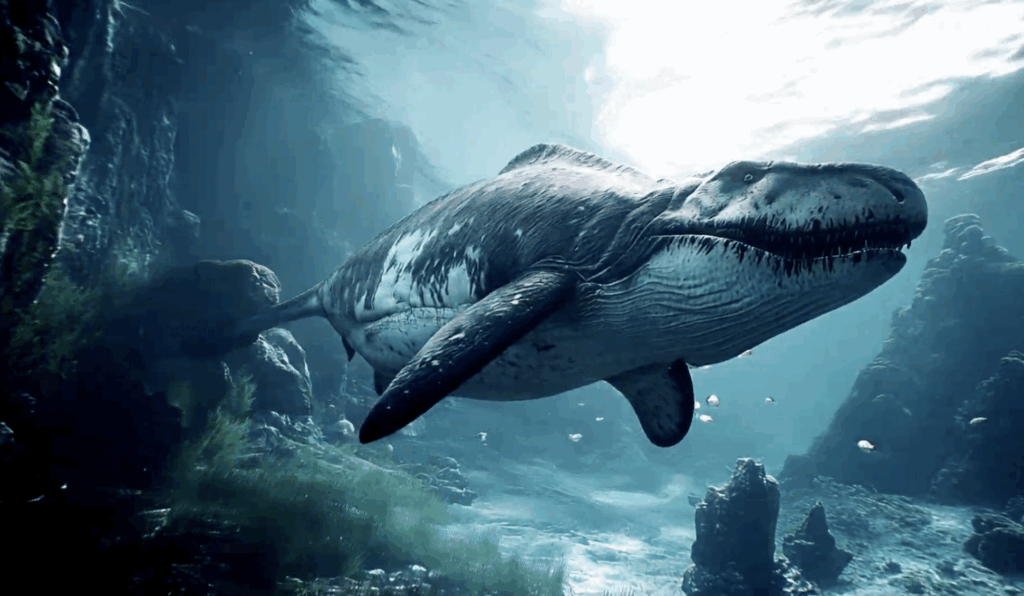
After the extinction event, some Mosasaurus may have adapted to smaller prey, giving rise to a second, gentler lineage. These individuals could have evolved filter-feeding adaptations, gradually losing the large, sharp teeth of their predatory cousins and developing skull shapes suited for sucking in smaller fish or plankton. This evolutionary path mirrors that of ancient whales, which transitioned from teeth to baleen as their diets shifted.
56 Million Years Ago (Paleocene-Eocene Thermal Maximum)
A dramatic spike in global temperatures challenged marine life once again. For the ferocious Mosasaurus, warmer waters could have fueled enormous growth, potentially reaching 25 to 30 meters in length and preying on turtles, sharks, and even alligators. Meanwhile, the gentler Mosasaurus adapted to rising temperatures and shifting ecosystems by specializing in plankton, using a sieve-like arrangement of teeth to feed efficiently on the microscopic sea creatures thriving in algal blooms.
Modern-Day Mosasaurus
The modern-day vision of the Mosasaurus, then, could take two forms: a colossal apex predator striking fear into every swimmer and diver, and a peaceful filter-feeder quietly grazing in coastal waters. Both versions, however, demonstrate the remarkable adaptability of life when challenged by environmental upheaval. The Mosasaurus’ story shows how a single species could evolve to dominate or coexist, depending on the pressures and opportunities of its era.
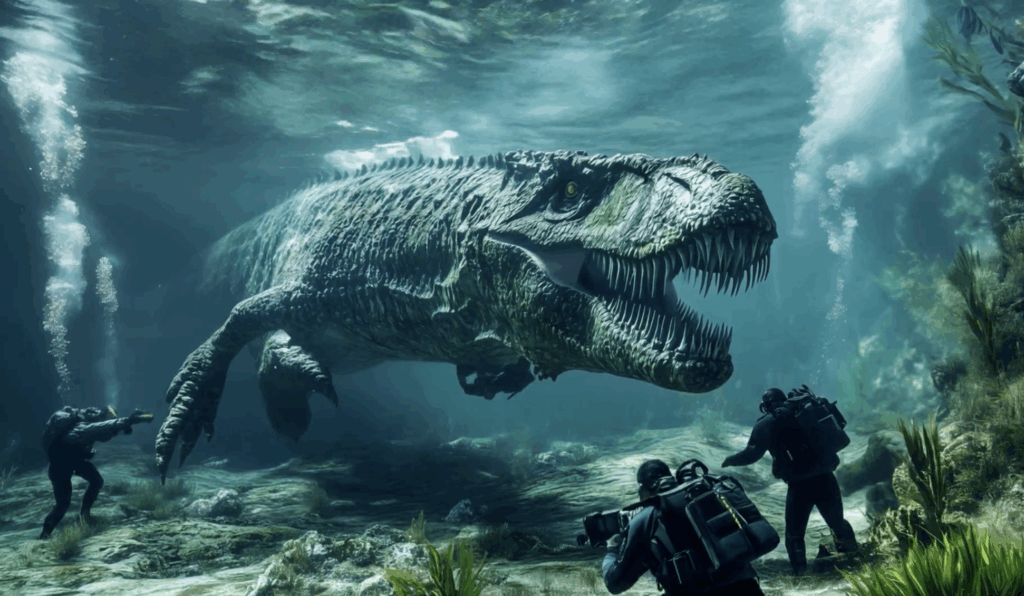
Today, humans live in oceans vastly different from those the Mosasaurus once ruled. But imagining a world where these massive reptiles survived reminds us of nature’s power and unpredictability. From ambush hunters to gentle giants, the Mosasaurus continues to fascinate scientists and thrill imaginations, proving that even creatures extinct for millions of years can still inspire fear, wonder, and endless speculation.