





Swipe Down for Full Video Story
Beneath Antarctica’s massive ice sheet lies one of the most mysterious and least explored landscapes on Earth. If all of this ice were to suddenly disappear, the consequences would be both dramatic and far reaching. Entire coastlines around the world would be reshaped, and sea levels would rise on a scale that would overwhelm many major cities.
At the same time, a hidden continent of mountains and valleys would be exposed, revealing an ancient world locked away for millions of years.
A Continent of Ice and Secrets
Antarctica, the frozen continent surrounding the South Pole, is larger than Europe and is almost completely buried beneath a massive ice sheet. Beneath this frozen world, seals, penguins, whales, and a small number of researchers continue to survive in one of the harshest environments on Earth. However, the most important part of Antarctica is not what lives on top of it, but the ice itself.
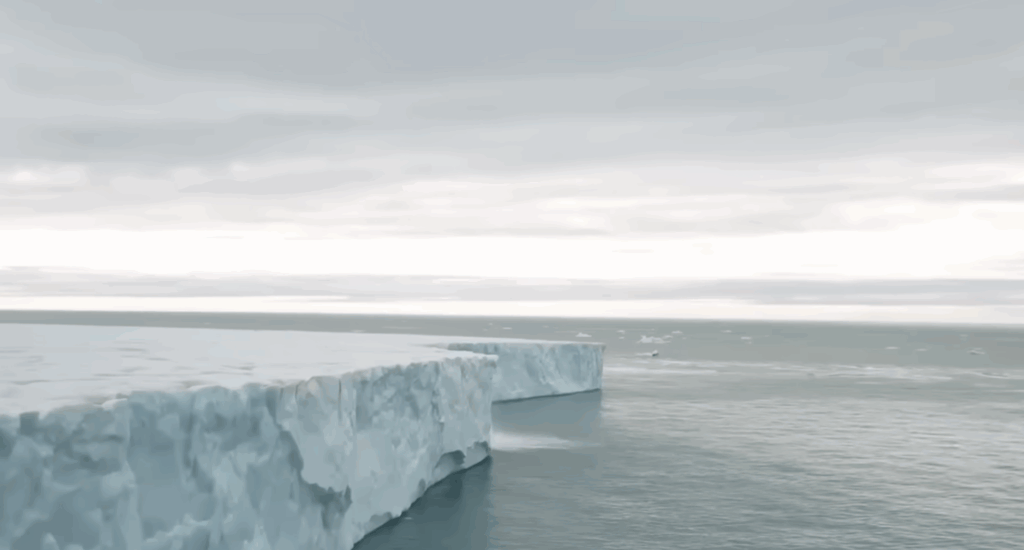
One of the most closely watched areas is the Thwaites Glacier, a massive ice flow stretching around 120 kilometers across. Often called the “Doomsday Glacier,” it is already melting at a worrying speed, dumping about 50 billion tons of ice into the ocean every year and playing a major role in rising sea levels. Scientists warn that if this trend continues, the glacier could collapse in just a few decades instead of centuries.
If all of Antarctica’s ice were to vanish in a matter of seconds, the impact would be instant and extreme. Sea levels would surge worldwide, and coastal cities such as San Francisco, Miami, and New Orleans would be rapidly flooded, with waters rising by nearly two feet almost immediately. Entire coastlines would be redrawn in moments, permanently changing the shape of the planet.
The Hidden Forces Beneath the Ice
The Thwaites Glacier does not melt in isolation. Beneath it lies a powerful subglacial river system, driven in part by geothermal heat rising from Earth’s interior. This heat slowly weakens the ice from below, making it more unstable and leading to large sections breaking away in a cascading effect.

But Thwaites is only one part of a much larger hidden world. Antarctica conceals an entire landscape beneath its ice, where about 98 percent of the continent sits on solid land and deep under parts of it, sealed off ocean systems still exist. These isolated waters may contain unusual life forms, including newly discovered types of anemones that move across the seafloor, feeding on plankton, organic debris, and material that has been preserved for millions of years.
A Rising Tide: Cities Underwater
The Antarctic ice sheet is enormous, covering around 14 million square kilometers and reaching an average thickness of about two kilometers. It contains roughly 60 percent of all the fresh water on Earth, locked away in frozen form. If it were to melt completely, global sea levels would rise by more than 70 meters, permanently redrawing the planet’s coastlines.
As this vast ice mass disappears, the effects would not be evenly distributed. In areas close to Antarctica, sea levels could actually fall slightly due to the loss of the ice sheet’s gravitational pull on the surrounding ocean. However, much farther away, oceans would surge upward dramatically.
Major coastal cities such as Boston, New York, Miami, Shanghai, and Mumbai would be submerged, while ports, farmland, and freshwater sources would be overwhelmed. Saltwater intrusion would contaminate drinking water supplies and devastate global agriculture, creating a crisis that would reshape human civilization.
Ancient Microbes and Modern Threats
The ice also traps ancient bacteria, some of which could pose serious risks if released into modern environments. These microorganisms may carry traits such as antibiotic resistance, potentially triggering new and difficult to control public health challenges.
At the same time, they could also be scientifically valuable, preserving biological information that might lead to breakthroughs like new antibiotics or advanced biodegradable materials. Studying them could even help scientists better understand how life survives in extreme conditions.

Disrupted Oceans and Climate Chaos
Melting glaciers do more than raise global sea levels; they also interfere with the planet’s ocean circulation systems. Under normal conditions, dense salty water sinks while warmer surface water rises, driving a global “conveyor belt” that distributes heat and nutrients across the oceans.
However, large amounts of fresh water from melting ice can disrupt this balance, slowing or even blocking these circulation patterns and potentially causing major climate shifts.
In extreme cases, changes in ocean currents could lead to regional cooling events that resemble small scale ice age conditions in certain areas. At the same time, shifts in nutrient flow could temporarily boost biological activity, triggering large phytoplankton blooms around Antarctica before the ecosystem adjusts to the new conditions.
Revealing Earth’s Ancient Wonders
With the ice gone, Antarctica’s hidden landscape would be revealed, exposing vast canyon systems that rival and even exceed the scale of the Grand Canyon, along with deep subglacial lakes such as Lake Vostok that have remained sealed off for millions of years. Entire ecosystems that evolved in complete isolation could suddenly come into contact with the outside world, offering rare insights into how life survives in extreme conditions.
These discoveries could significantly reshape our understanding of Earth’s biological history, but they also raise concerns about exposure to ancient microorganisms that modern life has never encountered. In addition, scientists would gain a once in a lifetime opportunity to study a lost world that has been preserved beneath the ice for ages.
Humanity in Crisis
At a global scale, more than 3 billion people live in coastal regions, making them highly vulnerable in a sudden ice melt scenario. In such an event, entire cities, homes, and critical infrastructure would be lost almost instantly, leaving governments overwhelmed and unable to respond effectively.
Clean drinking water would become increasingly scarce, while major urban centers along coastlines would disappear beneath rising seas. As a result, inland regions would quickly become essential refuges, and the massive displacement of populations could drive severe humanitarian crises and heightened geopolitical tensions worldwide.
Beyond Antarctica: The Domino Effect
Even after all the ice has melted, Earth would still face another major threat: thawing permafrost. Locked away in frozen ground for tens of thousands of years, it holds enormous amounts of carbon dioxide and methane. As it begins to thaw, these greenhouse gases would be released into the atmosphere, accelerating global warming and further destabilizing the planet’s climate system.
This feedback loop could make temperature rises even harder to control, even if human emissions were reduced.