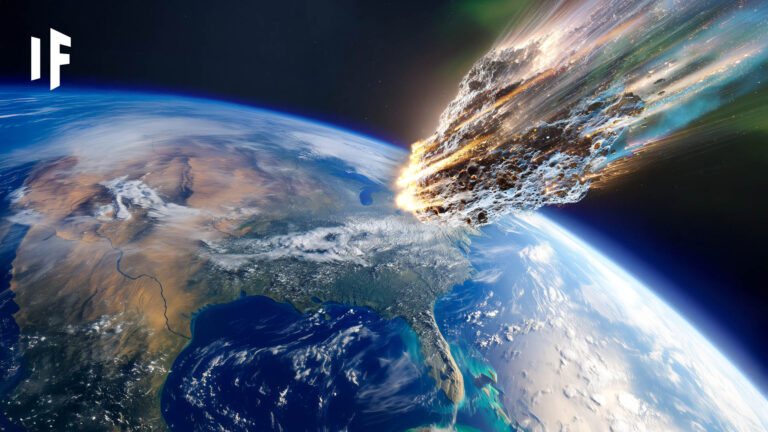
A rare interstellar visitor known as comet 3I Atlas is currently drifting through our Solar System.
At first glance, it might look like just another icy rock in space. But in a worst case scenario thought experiment, an object like this could carry enough energy to trigger consequences similar to the asteroid impact that occurred 66 million years ago, the event that ended the age of the dinosaurs and wiped out most life on Earth. If something like 3I Atlas ever struck our planet today, the result would not be local damage. It would be an extinction level disaster.
To understand why scientists find objects like this so fascinating, it helps to compare 3I Atlas with another famous interstellar traveler, Oumuamua.
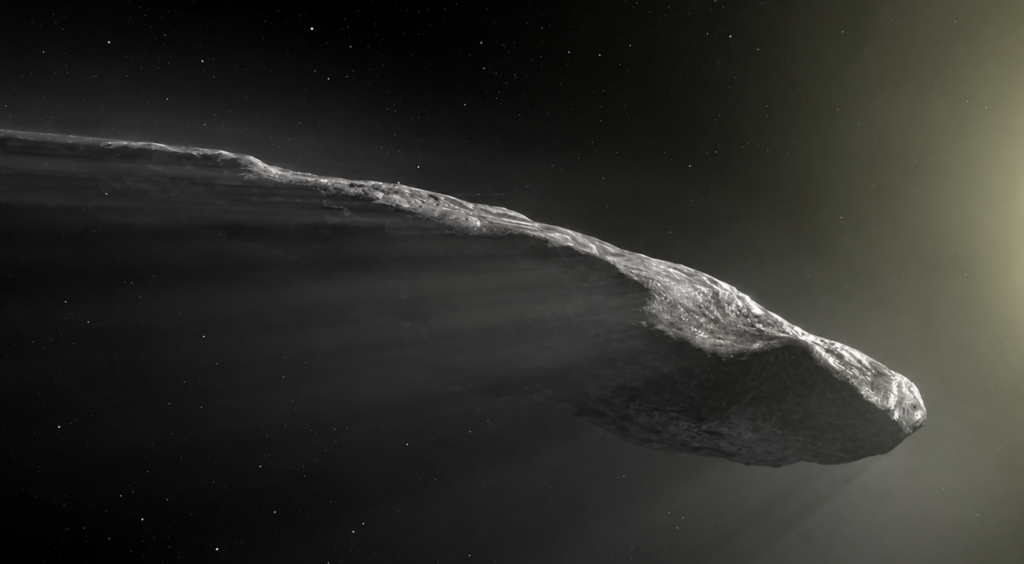
Oumuamua was the first confirmed object ever detected passing through our Solar System from interstellar space. Its name roughly translates from Hawaiian as “a messenger from afar arriving first,” a fitting description for something that originated beyond our cosmic neighborhood. Unlike fictional threats, Oumuamua posed no danger to Earth and simply passed through the Solar System before continuing its journey into deep space.
3I Atlas belongs to the same category of interstellar objects, but it appears to have a very different origin story. Evidence suggests it may have come from the Milky Way’s thick disk, a region filled with some of the galaxy’s oldest stars. If this is true, then 3I Atlas could be older than our own Solar System, which formed about 4.5 billion years ago. Some estimates even suggest it could be several billion years older, making it one of the most ancient natural objects ever observed passing through our cosmic neighborhood.
Despite its age and mystery, one important fact remains clear. It is not going to hit Earth.
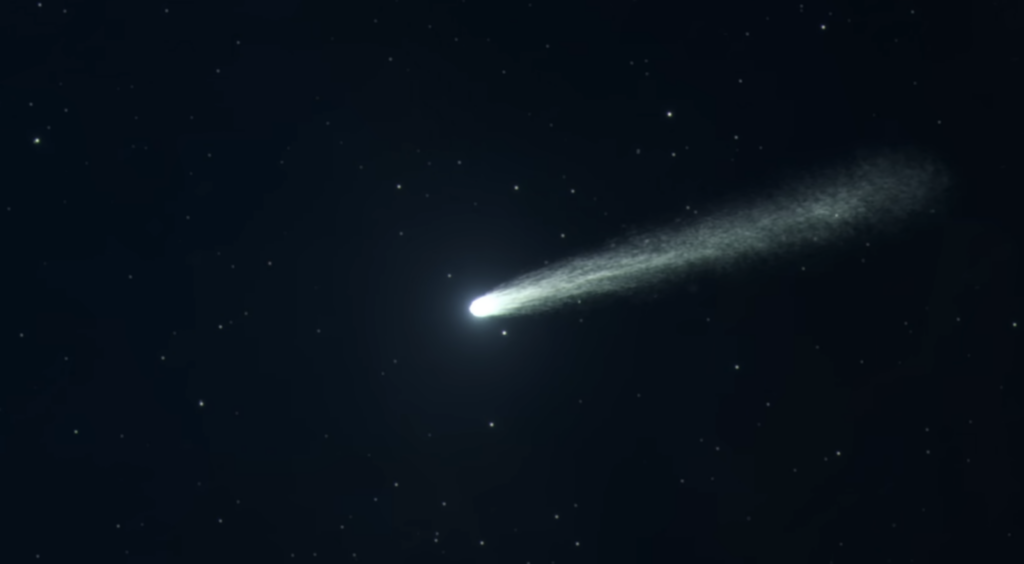
During its closest approach 3I Atlas will still remain about 1.8 astronomical units away from Earth. That is roughly 270 million kilometers, or about 170 million miles. In space terms, it is not a close call at all. Even at its nearest point, it will pass safely within the inner Solar System without threatening our planet. It will come closer to Mars than it does to Earth, but still remain tens of millions of kilometers away.
So if it is not a threat, what makes it so interesting?
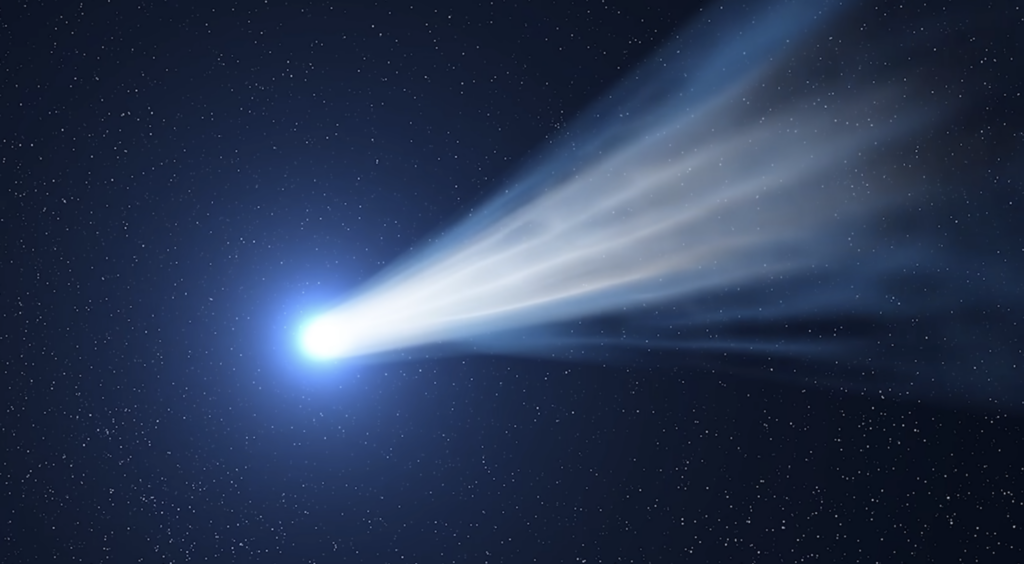
The answer is speed, composition, and origin. 3I Atlas is not just a rock. It is a high speed interstellar comet, likely made of ice, dust, and ancient carbon rich material that formed in a completely different environment from anything in our Solar System. It is essentially a time capsule from a distant region of the galaxy, carrying clues about how planetary systems form elsewhere in the universe.
Now let us shift into a hypothetical scenario, purely for understanding impact physics. What would happen if an object like 3I Atlas actually collided with Earth?
The energy released would be beyond human comprehension. Even a relatively modest comet moving at cosmic speeds would strike with force far beyond any nuclear weapon ever built. A direct impact would instantly vaporize everything at the collision site and send shockwaves outward across thousands of kilometers.
If it struck an ocean, the impact would generate mega tsunamis capable of crossing entire continents. If it hit land, the blast would produce winds exceeding 1,000 kilometers per hour, flattening forests, cities, and entire ecosystems in moments. The impact would eject enormous amounts of molten rock and debris into the atmosphere, some of which would circle the planet before falling back down as superheated fragments.
In the hours following the impact, the devastation would spread globally. Earthquakes stronger than anything recorded in human history would ripple through tectonic plates. Volcanoes across the planet could be triggered almost simultaneously, filling the skies with ash and blocking sunlight.
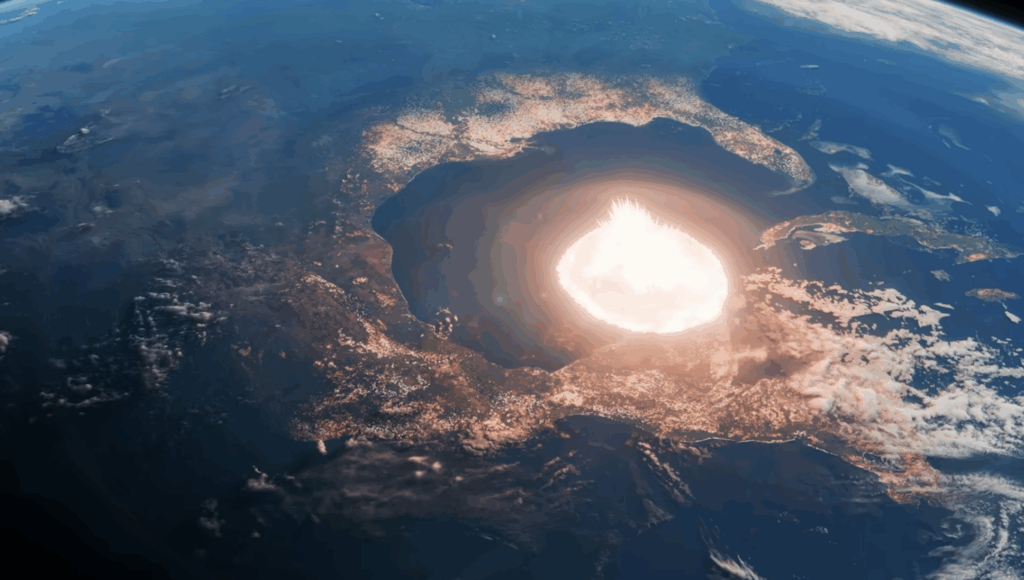
The atmosphere itself would become toxic. Dust, soot, and heavy metals would rain back down, contaminating land and oceans. Wildlife populations would collapse rapidly, and ecosystems would unravel on a planetary scale.
But the damage would not stop there.
In the aftermath, Earth would enter a prolonged climate disruption. At first, the planet would likely experience an impact winter. Thick clouds of debris would block sunlight, causing global temperatures to drop sharply. Crops would fail, and surviving life would struggle in near darkness.
Then, as the dust begins to settle, a second phase would begin. Many comets like 3I Atlas contain large amounts of frozen gases such as carbon dioxide. As this material vaporizes after impact, it would significantly alter Earth’s atmosphere. Instead of cooling, the planet could swing into a long term greenhouse effect, trapping heat and pushing global temperatures upward.

This violent shift from freezing conditions to extreme warming would make recovery incredibly difficult for any surviving life forms. Most complex ecosystems would likely never fully recover.
In short, a direct impact from an object like 3I Atlas would represent a global extinction event, reshaping Earth’s surface and atmosphere for millions of years.
Fortunately, this is only a theoretical scenario. 3I Atlas is not on a collision course with Earth, and it will pass safely through our Solar System without incident. In fact, its greatest value is not as a threat, but as a scientific opportunity.
Because objects like this are incredibly rare, studying them helps scientists better understand the history of our galaxy. Unfortunately, observing it is not easy, since its position near the Sun makes ground based telescopic viewing difficult.
Still, even from a distance, 3I Atlas offers something remarkable. It is a visitor from another star system, carrying ancient material that may predate our own Solar System, quietly passing by as it continues its endless journey through the Milky Way.