What if the brightest explosion in the Universe was heading straight toward Earth? Would humanity have time to prepare, or would the event happen so quickly that there would be nothing we could do?
Most people think supernovas are the most powerful explosions in existence. But they are not the brightest. Gamma ray bursts are far more intense, shining hundreds of times brighter than a supernova and releasing more energy in just a few seconds than the Sun will produce during its entire lifetime.
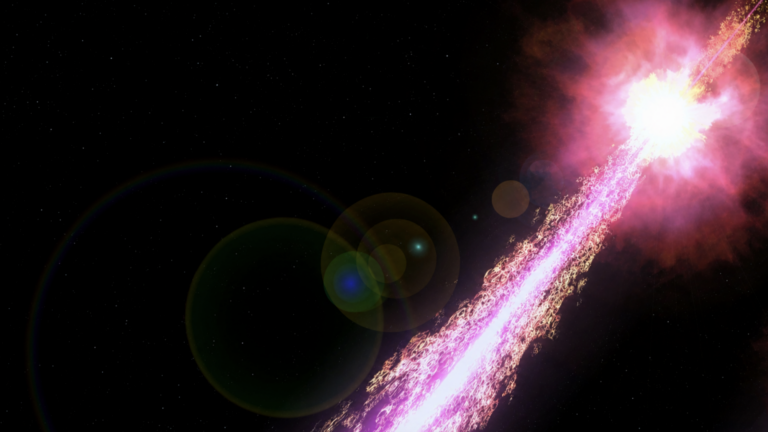
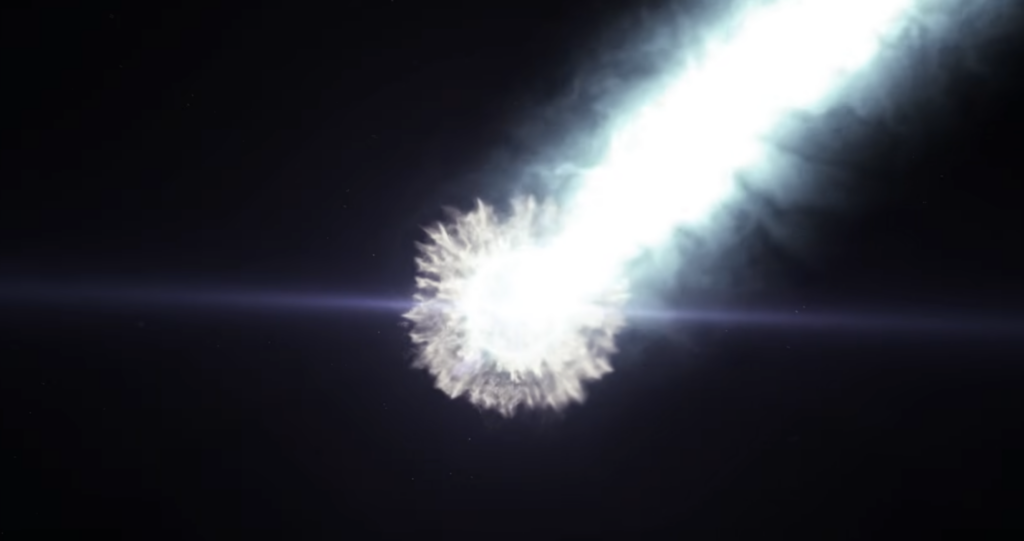
These cosmic explosions are among the most violent events in the Universe. A gamma ray burst, or GRB, happens when two neutron stars collide and form a black hole, when a black hole consumes a neutron star, or when a massive star reaches the end of its life and explodes as a supernova.
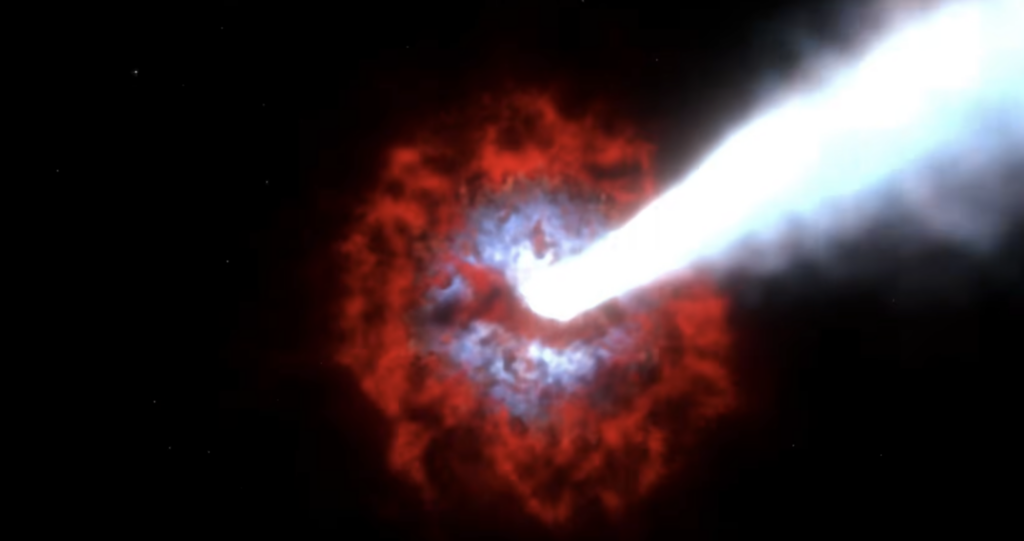
The strange thing is that you would not actually see a gamma ray burst coming. These bursts do not produce visible light that human eyes can detect. They exist outside the spectrum of visible light, meaning the explosion could be traveling through space without anyone looking up and noticing.
But if one reached Earth, we would definitely feel its effects.
Scientists believe that a gamma ray burst may have already caused one of Earth’s largest extinction events. Around 450 million years ago, long before dinosaurs existed, a powerful burst from space may have damaged the planet’s atmosphere and contributed to the destruction of many species.
So what would happen if one hit Earth today?
The outcome would depend entirely on how close the explosion was.
If a gamma ray burst happened somewhere between 3,000 and 12,000 light years away, Earth would likely survive with limited damage. Our atmosphere would absorb much of the radiation, protecting life on the surface.
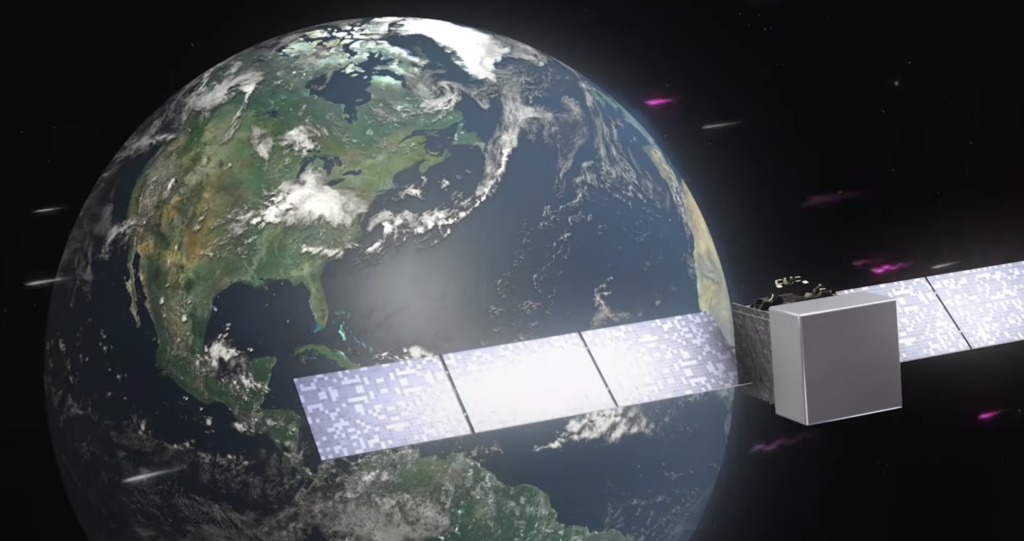
However, our technology would not be so lucky. Satellites could be damaged or permanently disabled by the intense radiation. Communication systems could fail temporarily, causing problems with internet connections, GPS, and other services that rely on space technology.
But if the same explosion happened much closer, around 500 light years away, the situation would become far more dangerous.
A burst this close could destroy Earth’s ozone layer. Without this protective shield, dangerous ultraviolet radiation from the Sun would reach the surface at much higher levels.
Plants would suffer first. Many species would struggle to survive because increased radiation would damage their ability to perform photosynthesis. As plant life declined, animals that depend on them for food would begin to disappear.
The effects would spread throughout the food chain. Herbivores would starve, predators would lose their prey, and ecosystems around the world would collapse.

Humans might try to survive using artificial shelters and protective equipment, but maintaining civilization in such conditions would be extremely difficult.
A closer gamma ray burst would be even worse.
If Earth received a direct hit from a powerful burst inside our galaxy, the damage could be comparable to a planet changing catastrophe. The radiation would begin affecting Earth’s atmosphere almost immediately.
The ozone layer would be destroyed, leaving the planet exposed to intense ultraviolet radiation. Oxygen molecules in the atmosphere would be broken apart by the radiation, creating complex chemical changes around the planet.
A strange cloud of photochemical smog could form in the atmosphere, while cosmic radiation would reach the surface and damage living organisms.
Electronic systems would also be heavily affected. Satellites could fail, communication networks could collapse, and modern technology could become useless.
The result would be another mass extinction event, with many species unable to survive the sudden changes.
Fortunately, there is some good news. Gamma ray bursts are extremely narrow beams of energy, meaning a burst could pass near Earth without directly hitting us. The chances of Earth being perfectly aligned with one are incredibly small.
Scientists also have tools watching the sky. NASA’s Fermi Gamma ray Space Telescope helps detect these powerful explosions and study their behavior.
A direct hit from a gamma ray burst inside the Milky Way would be one of the most destructive events Earth could ever face. But researchers believe the chances of such an event happening anytime soon are extremely low.
By the time a dangerous burst becomes a real threat, humanity may have advanced enough to find ways to protect itself, or perhaps even move beyond Earth entirely.
For now, the most powerful explosions in the Universe remain far away, reminding us just how small our planet is compared to the forces that exist beyond it.