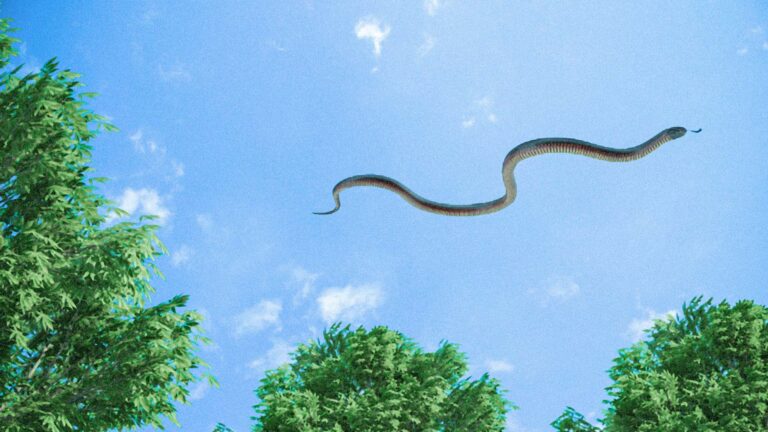
What would you do if you grabbed a tree branch and suddenly realized it was not a branch, but a snake? Now imagine that snake launching itself directly toward you through the air.
It sounds impossible, but one group of snakes has learned how to do something no snake should be able to do. They can glide between trees like a flying animal.
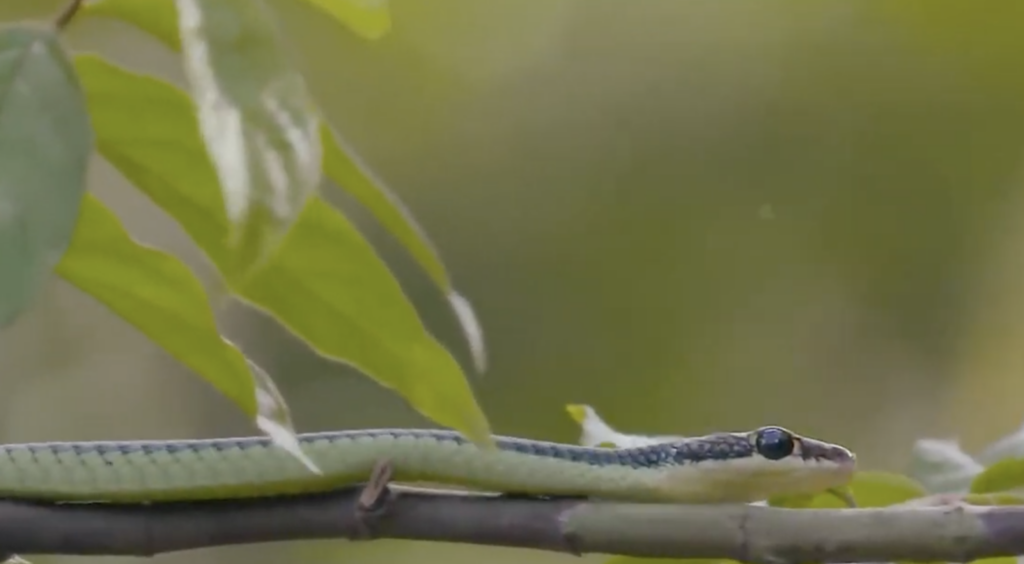
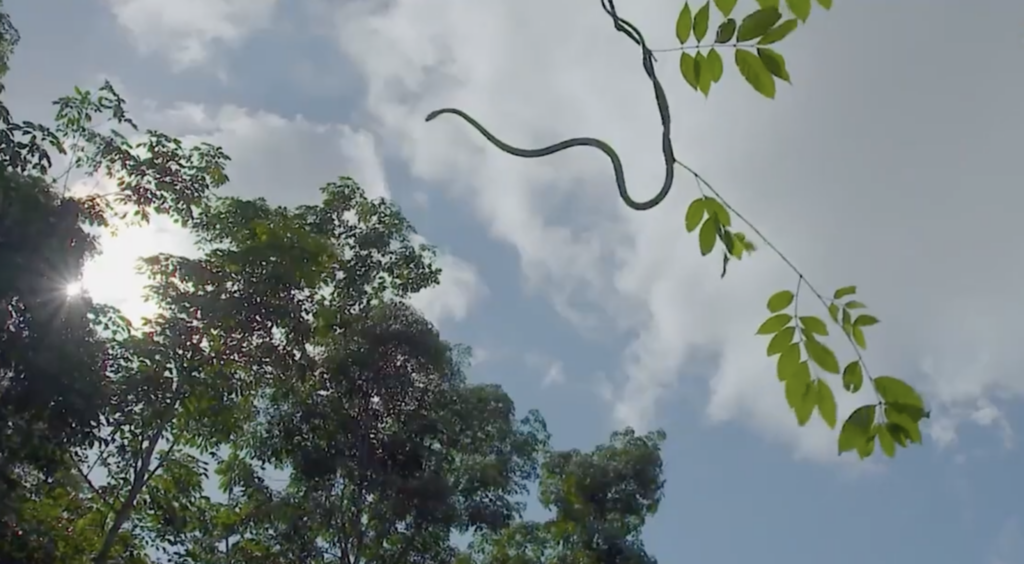
Known as flying snakes, these unusual reptiles are found in the forests of South and Southeast Asia. They are the only known limbless vertebrates capable of controlled aerial movement.
But how can a snake without wings or legs travel through the air? Why would a snake evolve the ability to glide? And could one of these flying snakes actually be dangerous to humans?
There are five known species of flying snakes belonging to the genus Chrysopelea. Four of these species have developed the ability to flatten their bodies into a shape that allows them to glide from tree to tree.
These snakes can grow up to around 1.2 meters long and spend most of their lives high above the forest floor. They hunt birds, lizards, bats, and other small animals, making their homes among the branches where they are much harder to spot.
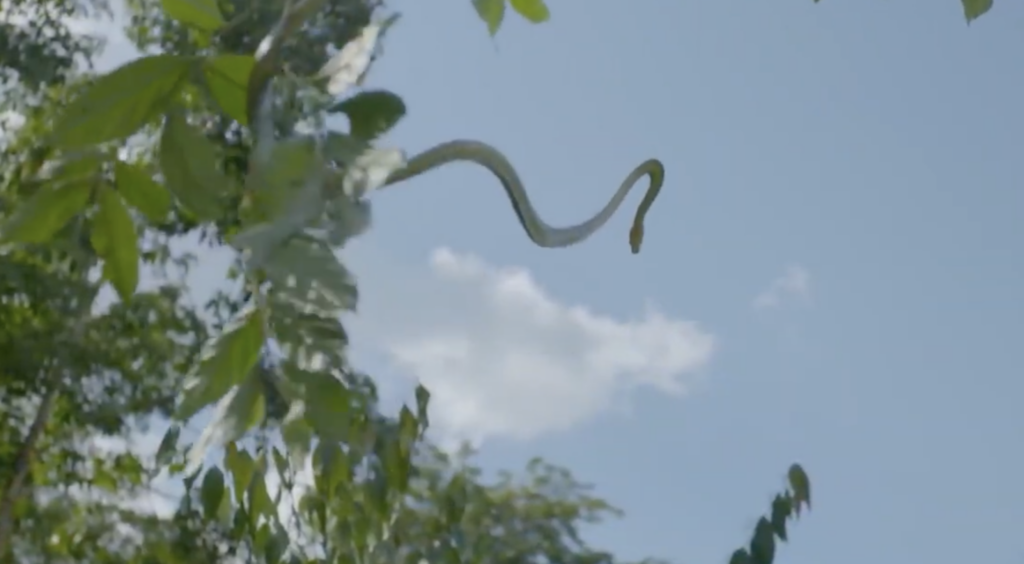
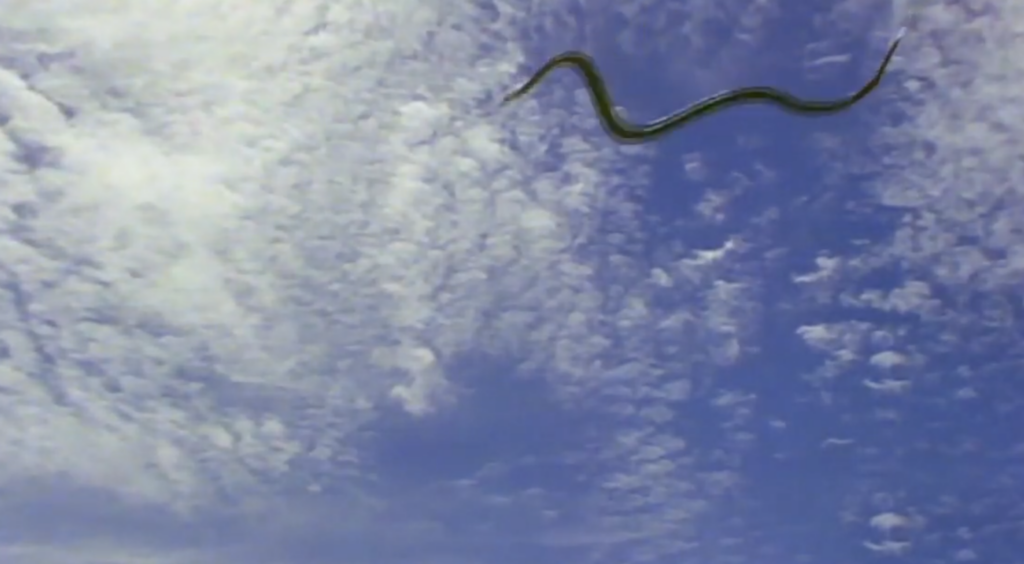
Despite their name, flying snakes do not truly fly. They do not generate their own lift like birds or insects. Instead, they glide through the air by using gravity, body movement, and their unique shape.
The distance they can travel depends on how high they launch from. A flying snake can glide around 7 meters when jumping from a branch about 75 meters above the ground. During these movements, they can reach speeds of around 10 meters per second.
The secret behind their ability is their incredible body transformation.
A normal snake has a long, narrow body that would not be very effective for gliding. To solve this problem, flying snakes move their ribs forward and backward, flattening their bodies into a wide, ribbon like shape.
This transformation makes the snake’s body almost twice as wide. The flattened shape allows air to flow beneath it, creating enough lift to keep the snake moving through the air.
If you looked closely at a flying snake during this process, you might even notice the outline of its heart beneath its stretched skin. In some cases, undigested food can also create visible bumps along its flattened body.
While the middle of the snake becomes wide and flat, the tail remains rounded. This helps it maintain a strong grip on the branch before launching into the air.
The takeoff itself is a carefully controlled movement.
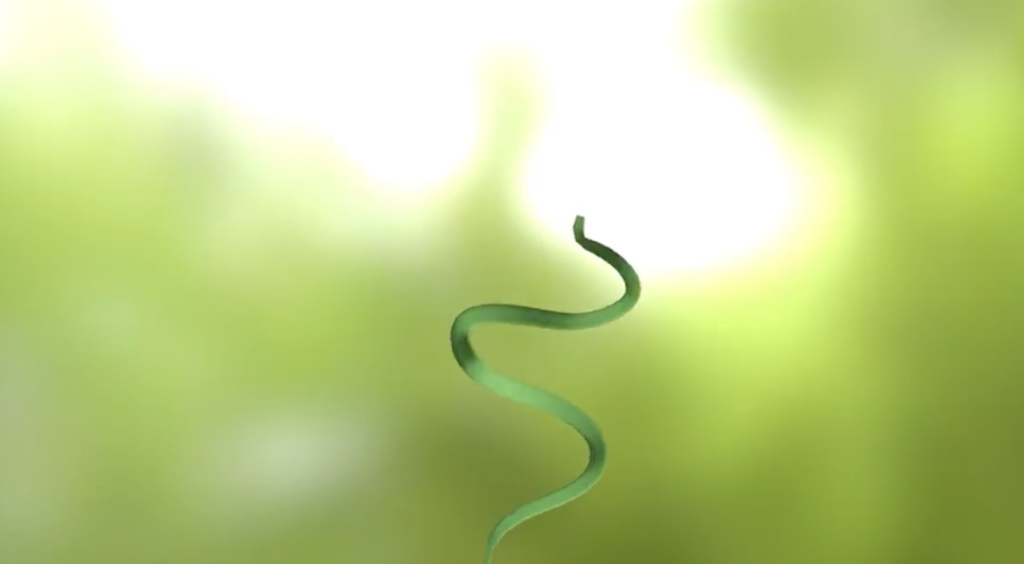
The snake begins by positioning its body near the edge of a branch. It pushes forward, drops its head downward, and then curves its body upward before releasing its grip. Once airborne, it rotates its body so its flattened underside faces downward, allowing it to glide forward.
However, not every launch is graceful.
When escaping predators, a flying snake may simply throw itself off a branch and dive downward. This emergency escape method is faster but produces a less controlled flight and shorter distance.
Staying in the air requires another special ability. While gliding, the snake moves its body in waves, similar to how it moves across the ground.
But unlike normal movement, flying snakes create waves in both horizontal and vertical directions. These movements help stabilize their bodies and allow them to travel farther through the air.
Scientists are still not completely sure why flying snakes developed this unusual skill. However, the reasons are likely similar to other gliding animals.
Living high in trees comes with challenges. Moving between branches by gliding is faster and safer than climbing down to the ground and back up again. It also helps these snakes escape predators and reach prey more efficiently.
But could a flying snake attack a person from above?
Fortunately, the answer is no.
Among flying snakes, Chrysopelea ornata is considered the most defensive and may strike when threatened. However, no flying snake has ever been known to kill a human.
People who have been bitten usually experience mild symptoms such as pain, tiredness, or headaches and typically recover within a few days.
There are also no confirmed cases of flying snakes intentionally landing on people’s faces or attacking humans from the air. In fact, biting a person could even put the snake at risk because it could damage its teeth or develop an infection.
Although they are not dangerous to humans, flying snakes have inspired scientists and engineers. Their unique movement is helping researchers design small flying robots and advanced machines.
Robotics experts are studying how flying snakes combine horizontal and vertical body movements to create robots capable of climbing walls, moving through difficult environments, and helping during search and rescue missions.
A snake that can flatten its body, launch from trees, and glide through the air sounds like something from science fiction. But in the forests of Asia, these incredible reptiles have been doing it for millions of years.
Their ability to turn their bodies into living wings is one of nature’s strangest adaptations, proving that even snakes can do things we never thought possible.