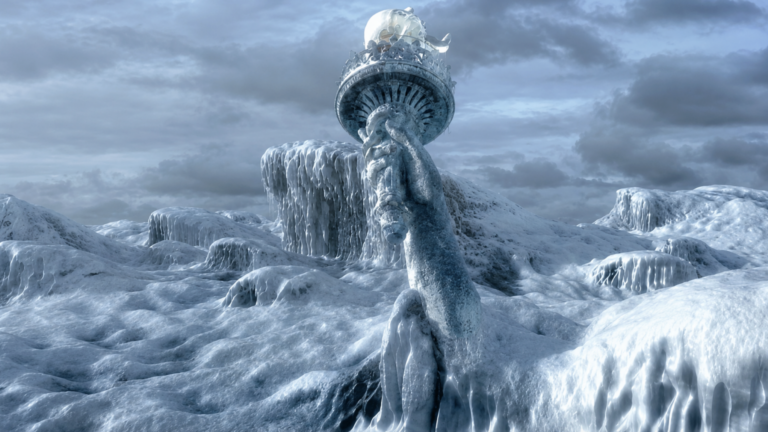
Right now, a wall of ice nearly two miles thick is covering the land where Chicago used to be. And it has been moving across the continent for 20,000 years without ever stopping.
At the peak of the last glacial period, massive ice sheets covered almost a quarter of Earth’s land surface. Sea levels were around 400 feet lower than they are today, completely changing the shape of the planet.
The North American coastline looked nothing like it does now. And you could walk from Siberia to Alaska across dry land.
But that is only the beginning.
Here is where things get strange.
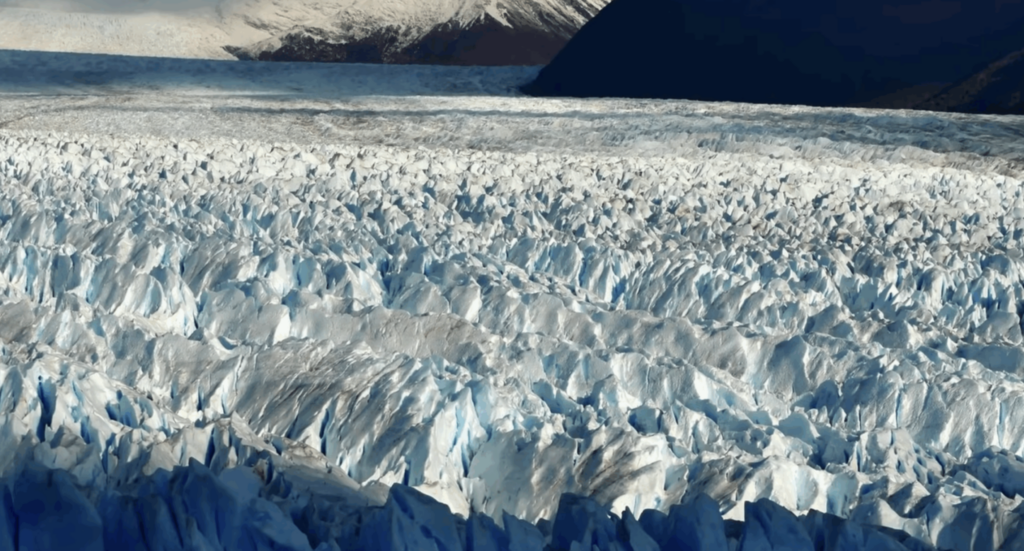
Scientists studying ancient climates discovered that the world during the last ice age was extremely difficult for agriculture. The environment was colder, drier, and far more unpredictable. Plants also had access to less carbon dioxide, making it harder for crops to grow.
The entire foundation of human civilization depends on the stable climate that began around 11,700 years ago.
Take away that warmer period, and there is no Mesopotamia, no ancient Egypt, no Roman Empire, and possibly no modern humans as we know them today.
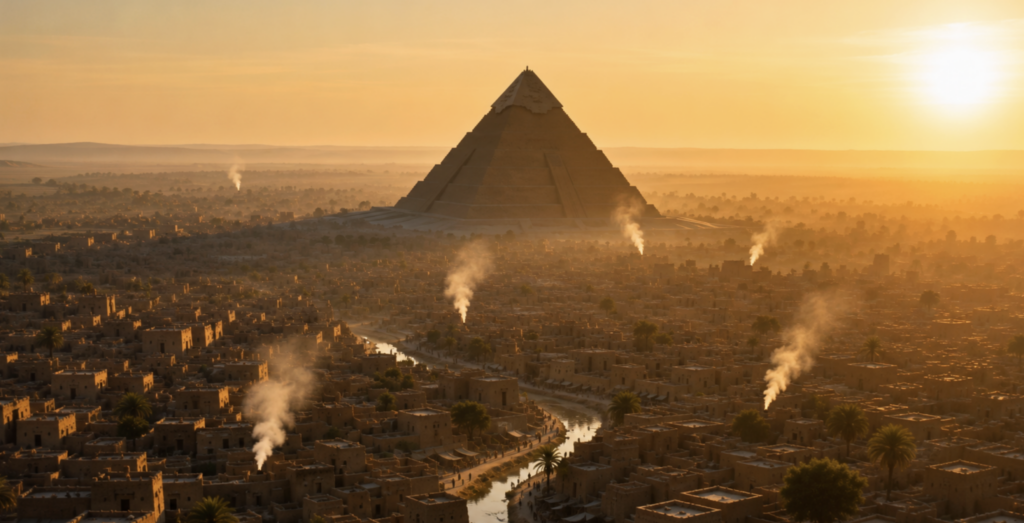
But the ice would not only destroy cities.
Around 30% of the world’s remaining farmland is located in temperate regions that would have been buried beneath massive glaciers. The areas that remained ice free would be a narrow band closer to the equator.
If the last ice age never ended, these regions would be colder, drier, and packed with whatever life managed to survive.
And the ice itself would make the problem even worse.
Ice reflects sunlight back into space. As more ice covers the planet, less heat from the Sun reaches Earth’s surface. This causes temperatures to fall even further, creating a cycle where more cooling creates more ice, and more ice creates even more cooling.
This is known as a feedback loop. So Earth would not simply remain frozen. It would continue becoming colder.
But imagine a small group of humans somehow survived near the equator. After thousands of years, could they adapt and build a new civilization in a frozen world?
And if the end of the ice age gave humanity everything we have today, what would happen if those climate changes never occurred?
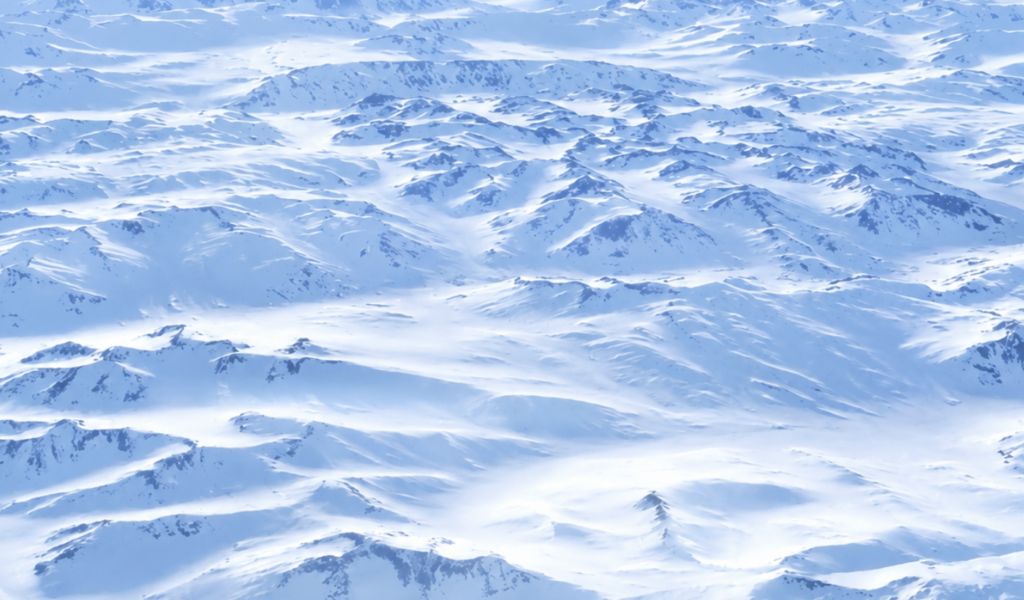
More than a century ago, scientist Milutin Milankovitch proposed that changes in Earth’s orbit, the tilt of its axis, and the direction of its rotation create long term climate changes.
These patterns are now known as Milankovitch cycles. They help create the natural climate shifts that influence ice ages and warm periods.
But what if Milankovitch cycles never existed? Without them, Earth would look completely different.
There would have been no major ice ages at all. That means no giant glaciers carving valleys, creating lakes, and shaping many of the landscapes we see today.
It also means Earth’s plants and animals would have followed a different evolutionary path.
Grass existed before the first ice ages, but it truly spread as the planet became colder and drier. Grasslands, tundras, and savannas expanded across the world, replacing many forests.
Without those cooling periods, grasses may never have dominated the planet.
Animals that depend on open grasslands would have had fewer places to evolve and survive. Horses, giraffes, cows, gazelles, and many other grazing animals might have been far less common.
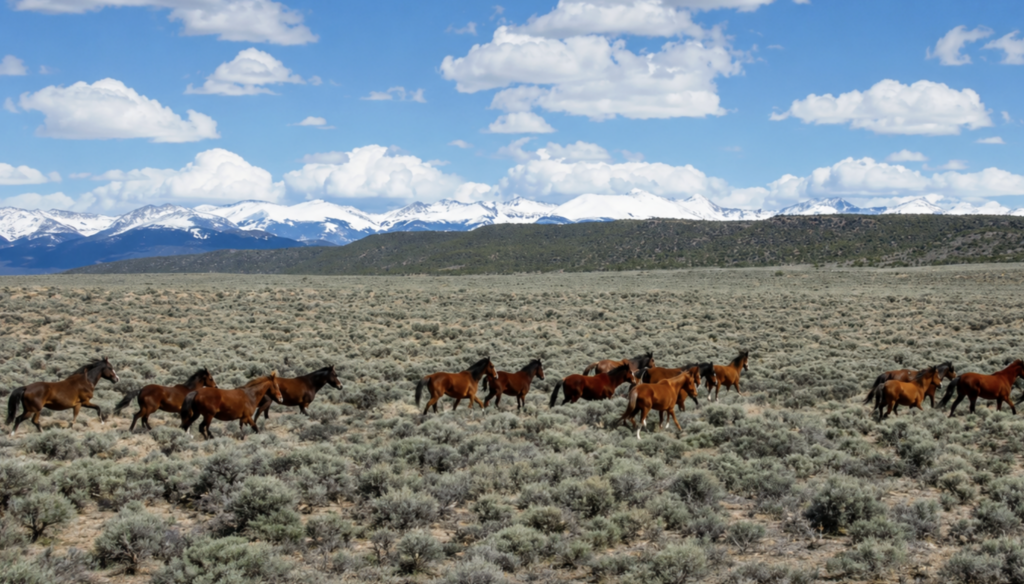
Instead, Earth would likely have been warmer, wetter, and covered with more forests. And what about the animals that lived during the ice ages?
We might never have known them.
Saber toothed cats, giant ground sloths, mastodons, and woolly mammoths may have never existed.
But the biggest question is what would happen to humans.
Homo erectus first appeared during the Pleistocene epoch, the same period when ice ages shaped the planet and woolly mammoths walked across frozen landscapes.
One theory suggests that harsh environments pushed early humans to adapt. They had to find new sources of food, develop better tools, and migrate to survive changing conditions.
These challenges may have helped increase intelligence and cooperation. Without the pressure of ice ages forcing adaptation, humans may have evolved very differently. And even if humans eventually appeared, our civilization would likely not look the same.
Many scientists believe agriculture was one of the biggest reasons humans were able to build cities and expand around the world.
Without the climate changes that followed the ice age, farming may have developed in a completely different way.

Instead of relying heavily on crops like wheat and oats, humans might have depended more on forest plants, fruits, and other sources of food.
The Earth we know today exists because of countless changes that pushed life to adapt. The end of the ice age created the conditions that allowed humans to build civilizations.
But the ice age itself also shaped the evolution of animals, landscapes, and ecosystems around the world. Without Milankovitch cycles and the ice ages they helped create, Earth would not simply be colder or warmer.
It would be a completely different planet. A planet where life followed an entirely different story.
And if you think that is strange, imagine what Earth would look like if it suddenly stopped orbiting the Sun.
But that is a story for another WHAT IF.