Physicists love asking questions that should never have answers. Questions like this one: what exactly happens to Earth if a black hole comes our way?
They ran the calculations. Not for one scenario, but for three, starting with a black hole so small it could rest on your fingertip and ending with a monster larger than our entire Solar System.
The results get worse at every step. Much worse.
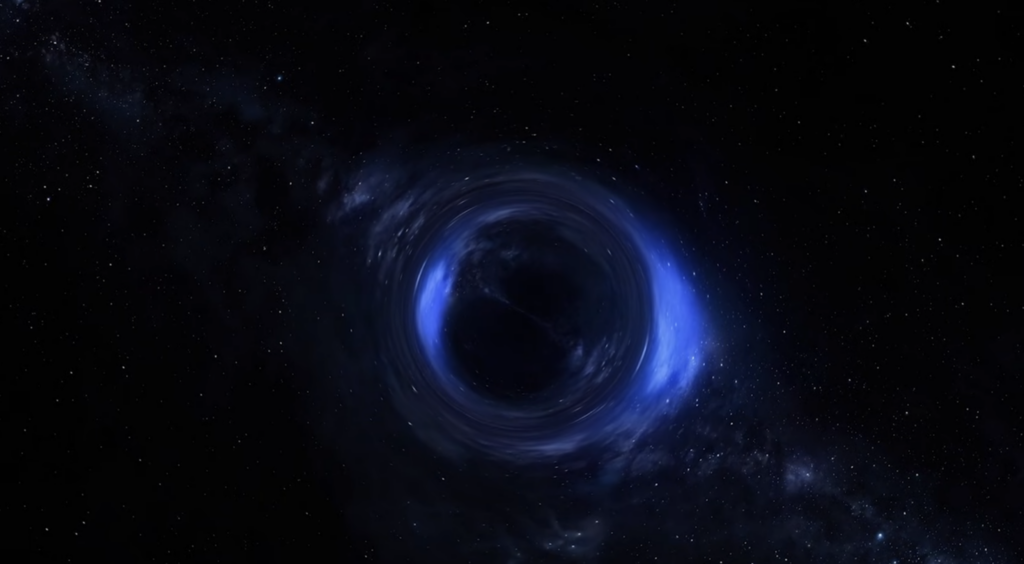
Let us start with the smallest contender, because it teaches the most disturbing lesson of all: with black holes, size is a lie.
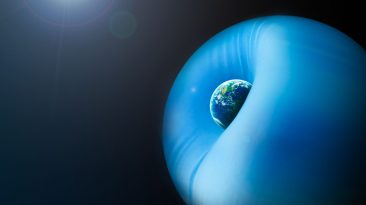
Picture a black hole carrying the exact mass of planet Earth. Nature could never place such an object beside us, but that is precisely why physicists love hypothetical scenarios. All of Earth, every mountain, every ocean, every city, compressed into something smaller than a marble.
Its gravity would be identical to the pull of our entire planet. Now send that marble screaming through space toward us at nearly the speed of light.
At that velocity, it would cross the width of Earth in a fraction of a second. Blink and the encounter is over.
But here is what the numbers reveal: it would not even need to touch us.
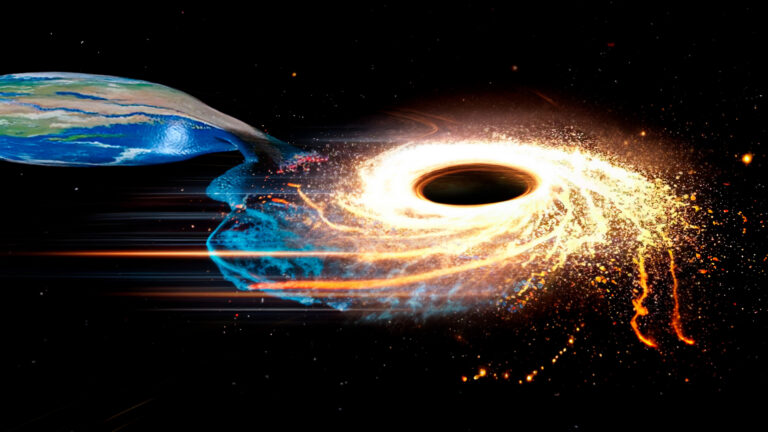
Gravity does not grip a planet evenly. The side of Earth facing the black hole would be pulled far harder than the side facing away. Physicists call these tidal forces, and they are strong enough to tear worlds apart.
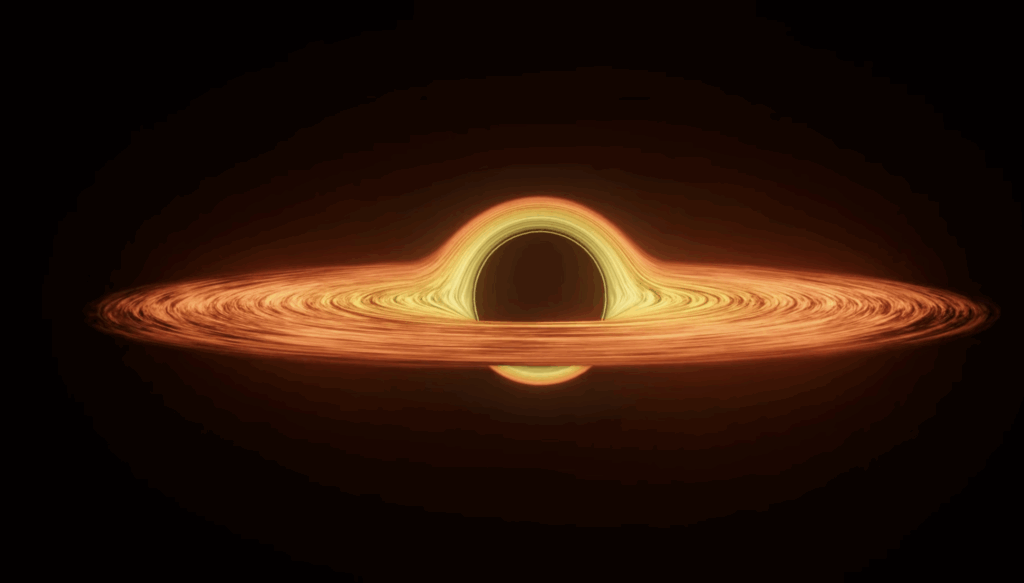
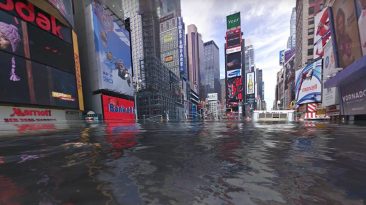
In the instant of the flyby, the crust of our planet would flex and split under the strain. Earthquakes would tear across every continent at once. Volcanoes silent for thousands of years would roar back to life. In the oceans, colossal tsunamis would rise and charge toward every coastline on the planet.
Total devastation, delivered by an object the size of a coin that never made contact.
And that was the gentle scenario.
Now upgrade the threat. Replace the marble with a stellar mass black hole holding the mass of ten Suns, the kind born when a giant star dies and collapses into a single point in space.
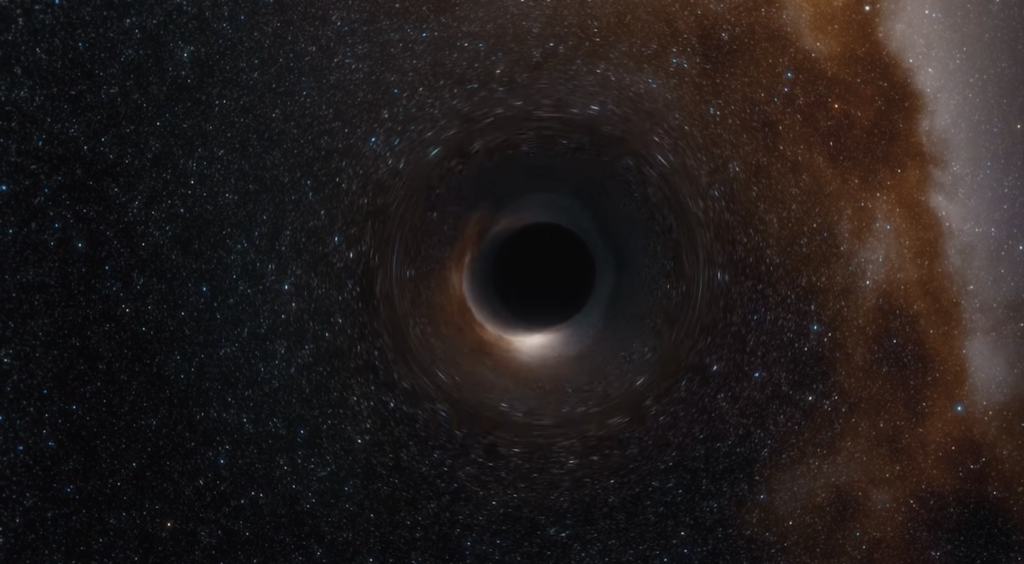
The moment this object crossed into the outskirts of our Solar System, every scientist on Earth would understand the same thing: the countdown had already started.
The Kuiper Belt would betray its presence first. Out beyond Neptune, dwarf planets, comets, and frozen debris would begin sliding out of their ancient orbits, tugged by something unseen. From that first warning, Earth would have mere hours.
Then the dominoes would fall inward. Neptune and Uranus would wobble off course. Saturn and Jupiter would follow. One by one, the clockwork of the Solar System would come undone, and by the time the intruder neared Earth, our planet would already be dying.
The orbit of the Moon could lurch violently, dragging tides higher than anything in recorded history. Earth itself might tip slightly on its axis, and with that tilt, global weather would descend into madness: hurricanes, superstorms, atmospheric chaos on every continent.
Then would come the part no engineering could survive.
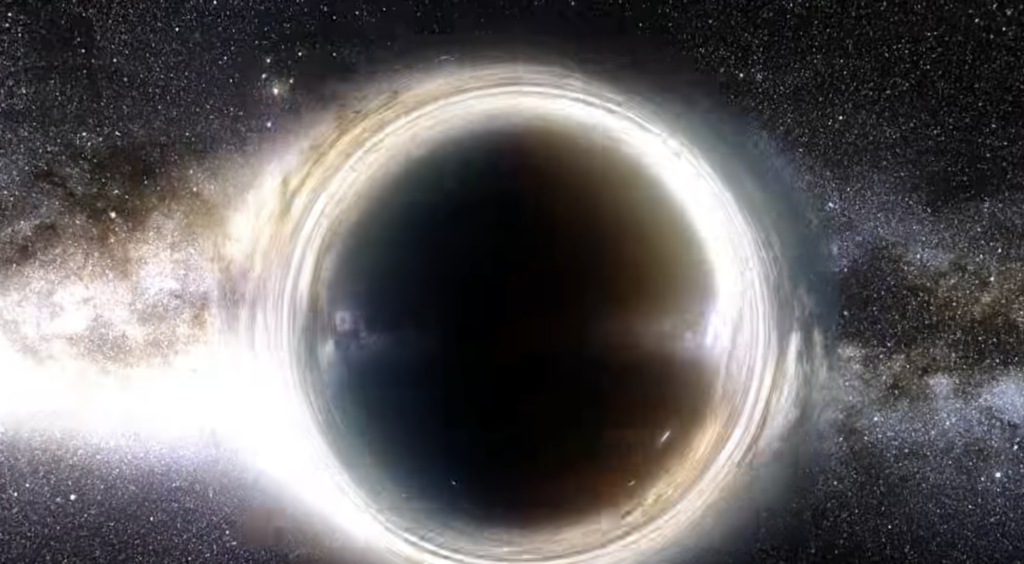
As the black hole warped the planet itself, the atmosphere would turn violent and unpredictable. Supersonic winds would scour continents, erasing cities in minutes. Satellites would rain from the sky, burning like meteors.
And then, one of the most surreal predictions in the calculations: for a brief, horrifying moment, gravity itself would waver. People, vehicles, and rubble could drift off the ground as the gravitational balance of the entire planet broke down.
Civilization would not decline. It would simply stop. Coastal cities swallowed by waves, inland regions shattered by quakes and fires, power grids dark, communications dead. From first warning to total collapse: hours.
Surely nothing could be worse than that. The numbers disagree.
Meet Phoenix A*, one of the most massive black holes ever discovered by science. It contains roughly 100 billion times the mass of our Sun, and its event horizon, the boundary of no return, stretches hundreds of billions of kilometers across.
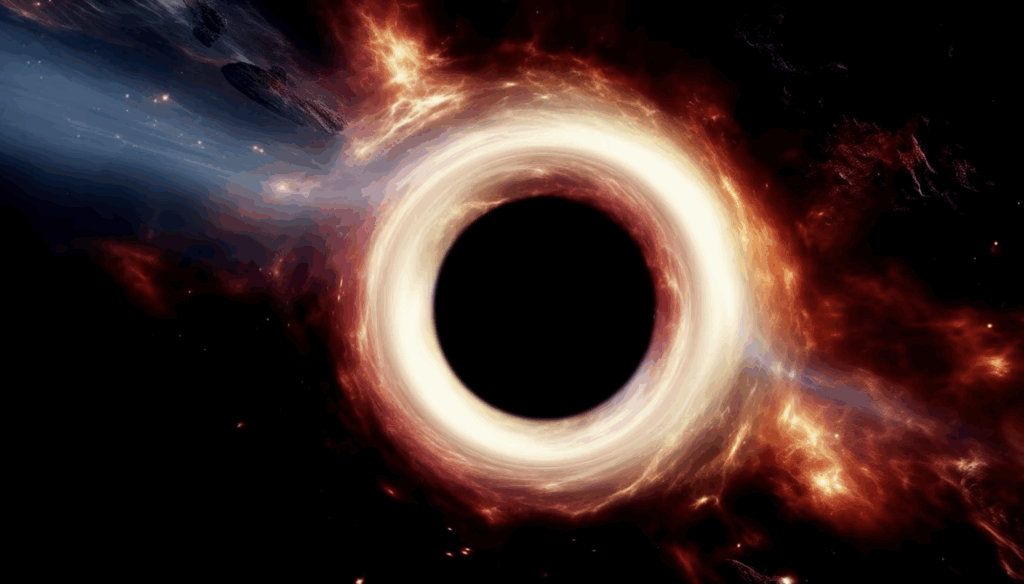
Read that again. This single object is far larger than our entire Solar System.
Against something like Phoenix A*, the question stops being what happens to Earth. It becomes whether the Solar System exists at all afterward.
Long before the giant arrived, its gravity would reach across space and take hold of everything we know. Planetary orbits would unravel like loose thread. Entire worlds would be hurled into the void or dragged toward the darkness. Earth might physically survive the encounter, but it would emerge as something else: a planet without a star.
Cut off from stable sunlight, the temperature would crash. Oceans would freeze solid. Plant life would die, and every food chain on Earth would collapse within months. Even humans sheltering deep underground would only be delaying the inevitable on a frozen world drifting alone through eternal night.
Now, before you check the sky, here is the reassuring part of the math: none of this is coming. No black hole has ever been detected heading toward Earth, and the odds of a close pass are vanishingly small.
But that was never the point of running the numbers. The point is what they expose about these invisible objects: gravity powerful enough to bend stars, shred planets, and reorganize entire galaxies. And if one ever did wander into our neighborhood, humanity would learn its final lesson in physics.
When it comes to black holes, size means nothing. The smallest one in the universe would still be more than enough.