Lava reaches 1,200 degrees Celsius. Liquid nitrogen sits at minus 210.
Put those two numbers side by side and the experiment writes itself. What happens if you dump one of the coldest liquids on Earth into the boiling mouth of a volcano?
Would the lava freeze solid? Would it detonate? Could you accidentally trigger a natural disaster?
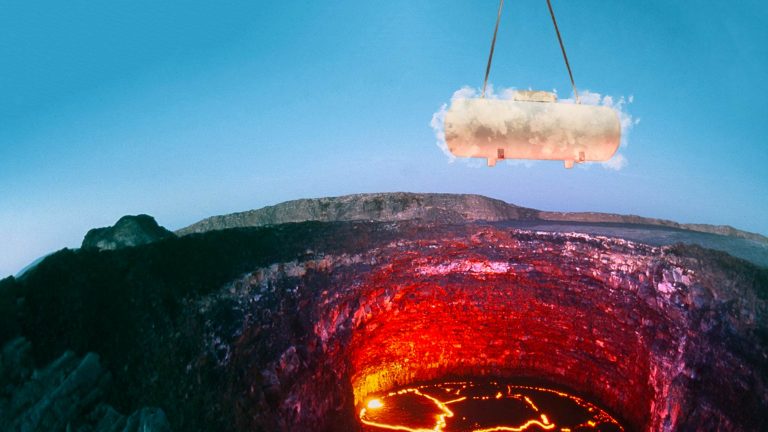
Start with the bad news. If your plan involves protective gear and a bucket, forget it. The liquid nitrogen would evaporate from the heat long before you got anywhere near the crater.
You need to be more creative than that. You need cannonballs.
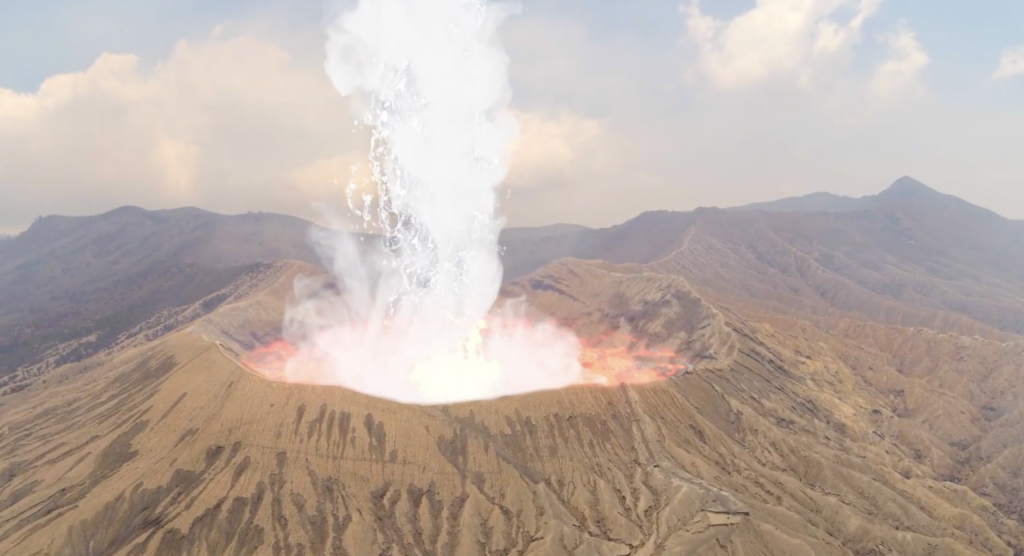
Fill a batch of them with liquid nitrogen and launch them all into the volcano at once. That would absolutely start a reaction down there, though you would not want to be standing nearby when it does.
Before mixing these two substances, it helps to understand both.
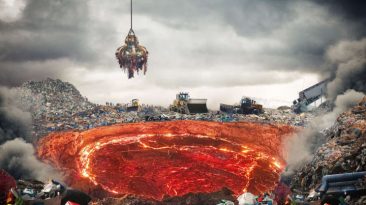
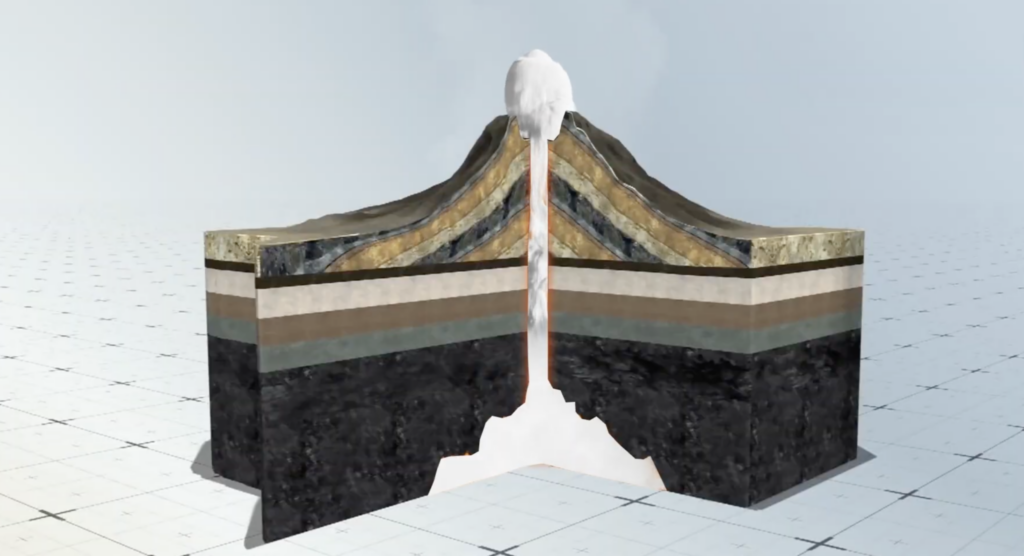
Volcanoes are essentially giant holes in Earth’s crust, filled with boiling magma that erupts outward as lava. Calling it boiling undersells things, since lava can climb to 1,200 degrees Celsius.
Liquid nitrogen is the smoky looking substance most people recognize without knowing much about it.
It can reach minus 210 degrees Celsius, and when it warms into a gas it expands to 175 times its original volume. To make any real impact on a volcano, you would need millions of liters.
That part is surprisingly achievable. Liquid nitrogen is produced commercially in large quantities, and moving it just requires vented, insulated containers to stop pressure from building up.
The hard part is delivery, which brings us back to the cannonballs.
Each one gets filled with liquid nitrogen and fired into the crater. The extreme heat melts the shell, releasing the nitrogen directly into the magma.
Yes, this is ridiculous. You knew that going in.
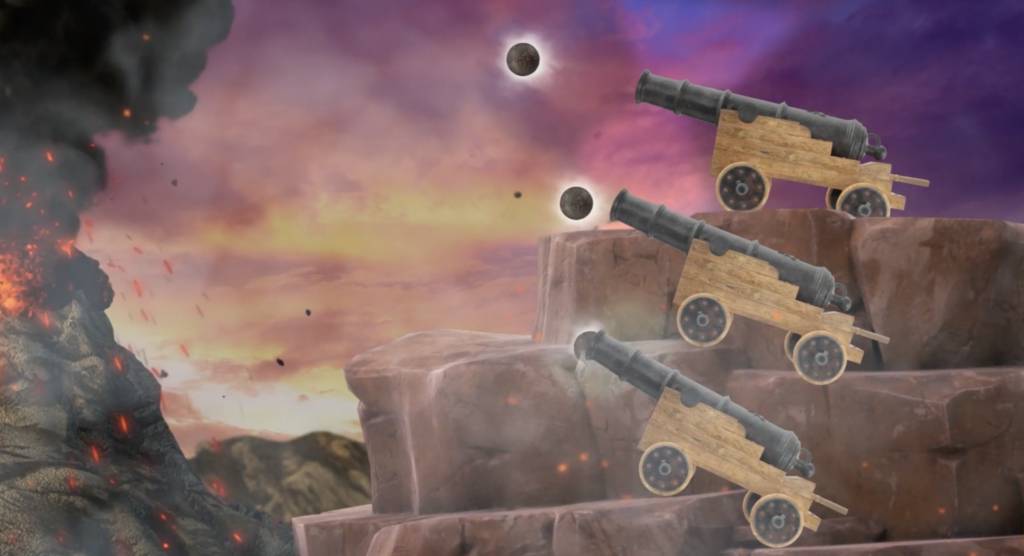
Once a few reach the magma, heated nitrogen gas begins rising out of the volcano, consuming the oxygen around it as it climbs. The nitrogen might freeze the surface lava fast enough to form a crust, but from outside the crater it would look like almost nothing happened.
So scale it up. Line up thousands of nitrogen cannons and fire continuously.
Now more than the surface starts freezing, and that is where the real danger begins. Beneath the crater sit kilometers of lava slowly pushing toward the surface, and the frozen layer above stops it dead.
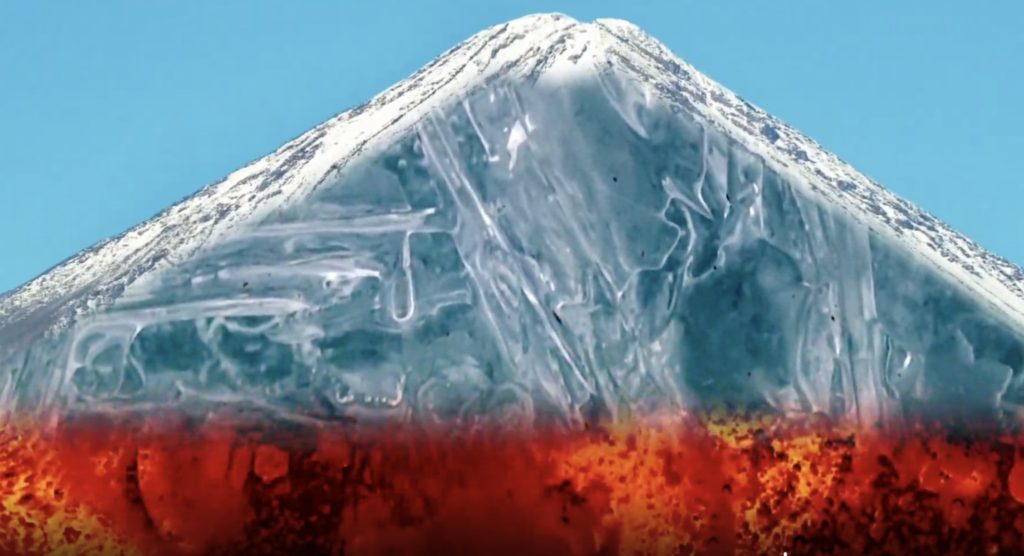
All that pressure needs somewhere to go. The surface would resemble a crumbling black sidewalk, rising steadily as lava pools underneath it.
Then the explosions start. The volcano erupts, throwing jets of atmospheric pollutants skyward that threaten anything living nearby. It might even blow apart entirely and trigger an earthquake.
What you have built is an induced eruption. Blocked vents are what cause volcanoes to erupt in the first place, except those blockages usually form naturally.
So maybe keep the liquid nitrogen away from volcanoes and stick to using it for culinary experiments.