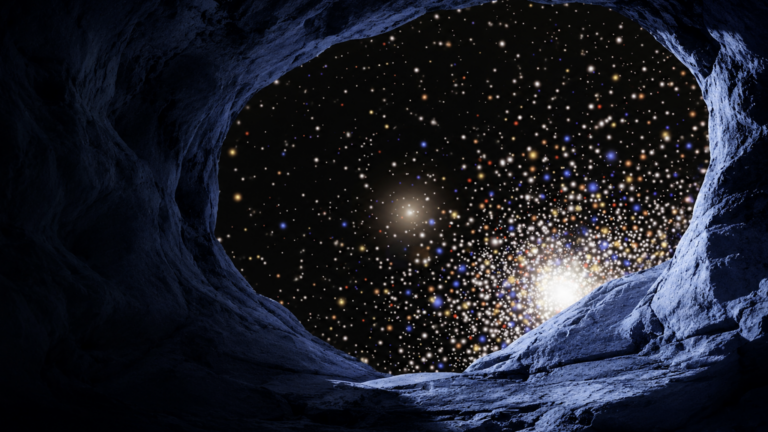
Imagine a night sky where the nearest star is close enough to actually visit.
Not 4.37 light years away like Proxima Centauri, but a short hop by cosmic standards, one of a million suns crowded into a space just 3.2 light years across.
Now imagine you cannot build the ship, because your planet has almost no metal in it.
That is the strange trap of living inside a globular cluster.
Take cosmic dust and gas, add billions of planets and a great many stars, then stir in enough gravity to hold it together and you get a galaxy. Some of those ingredients clump. Gas and dust merge into stars, and stars pack themselves into globular clusters.
Could a planet even exist somewhere that crowded?
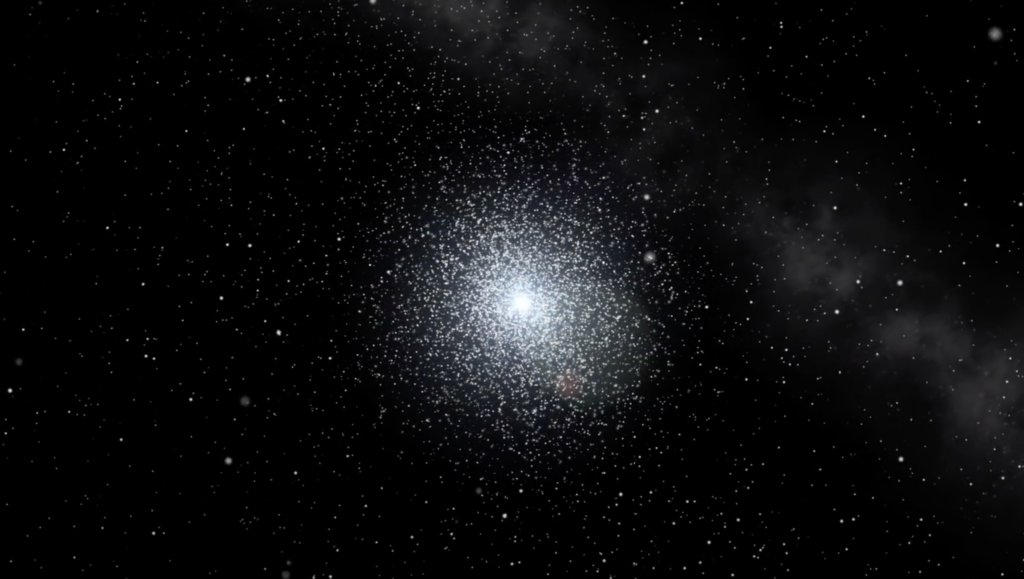
Start with the stars themselves, because they are nothing like our Sun. The Milky Way holds about 150 of these clusters, and in most of them star formation stopped over 10 billion years ago.
Think of it as a stellar retirement home. Next to those ancient suns, our 4.5 billion year old Sun is a teenager.
If humanity had evolved on an Earth like planet inside one of them, we would be an extraordinarily ancient and advanced civilization by now. The problem is that we probably never would have evolved there at all.
Old stars are also metal poor, and that matters enormously. Planets form from the leftovers of star formation, so inside a globular cluster there may simply not be enough building material to make a rocky world like Earth.
Even our Sun might have struggled to form under those conditions. And if it managed it, it would most likely have a stellar partner.
Binary star systems are common enough in the universe, but they are less likely to host planets we could live on. Then there is the density problem: pack stars that tightly and the odds climb that an alien star eventually collides with our own.

But let us get lucky.
Say our Sun formed inside the cluster anyway, and our planet formed with it, landing in a sweet spot where neighboring stars are not close enough to threaten us but not so far that we could never reach them. Say conditions were habitable enough for us to evolve.
We did. And we would not be the same species at all.
Without most of the metals we take for granted, how do you make your first tools? How do you build homes or invent technology?
We might be stuck in the Stone Age permanently, though we would have the greatest view in the galaxy, with thousands of brilliant stars burning overhead every night.
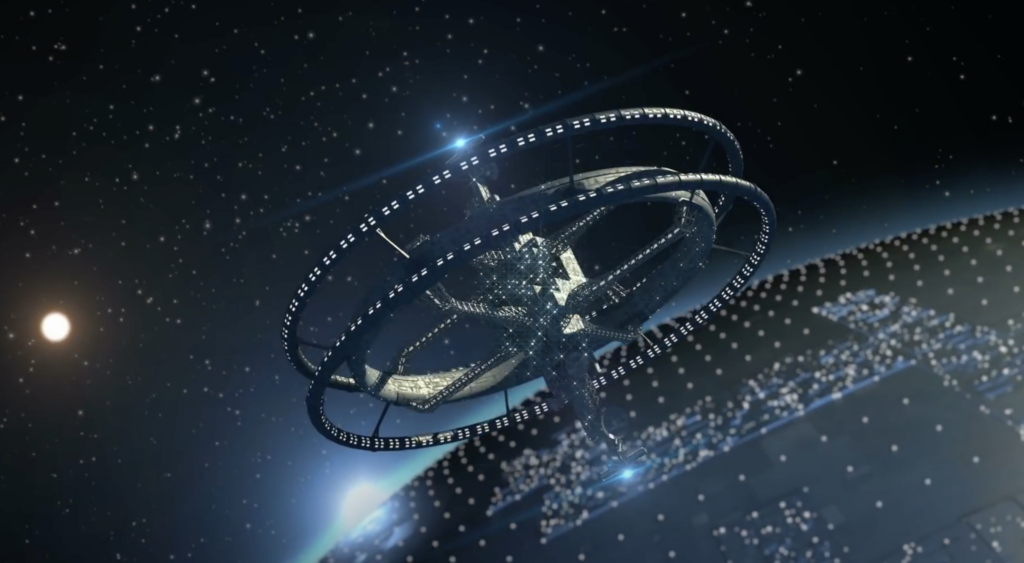
Unless we solved it. Figure out how to build rockets from rock, and those tiny distances between stars turn into an open invitation. Space travel would become our defining activity, spreading humanity across the entire cluster.
Assuming there were other planets to reach. Scientists still do not know how many planets can form inside these clusters, or whether life is possible in that stellar swarm at all.
They are looking, though. And it would be remarkable if they found an ancient alien civilization living inside one of the oldest star systems in our galaxy, out there among the crowded suns, close enough to touch each other and possibly with nothing to build with.