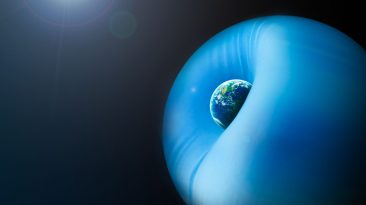
Ever imagined Earth swelling into a genuine giant among the planets, not modestly larger but scaled all the way up to Jupiter itself? Picture oceans, continents, and mountain ranges stretched to proportions far beyond anything familiar. What would that transformation actually do to life as we know it, and could anything living survive on a world like that?
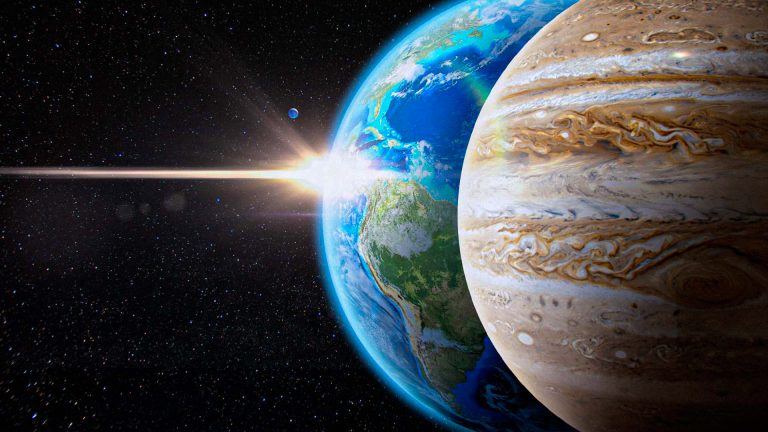
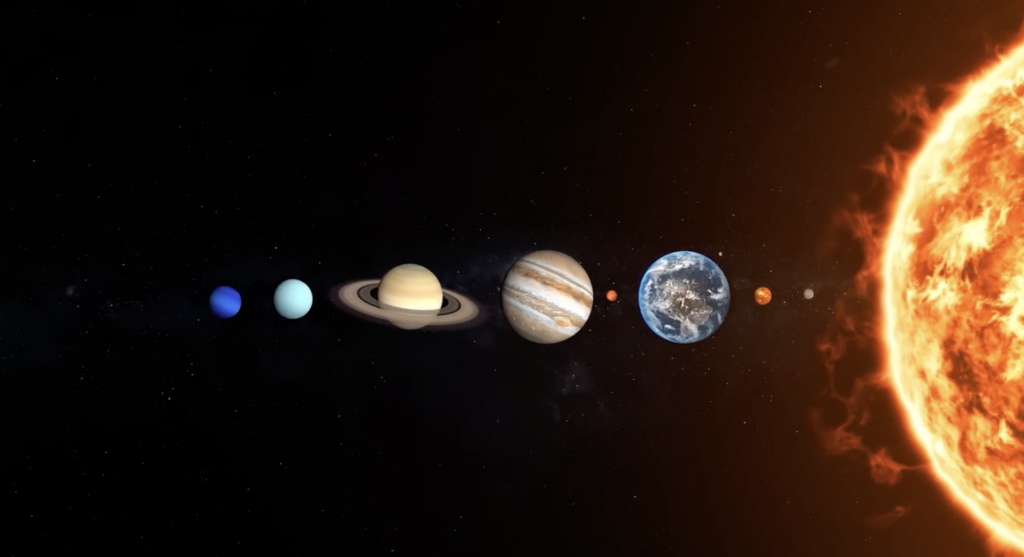
As things stand, Earth is a compact rocky world compared to Jupiter’s identity as a gas giant, with Jupiter measuring roughly 11 times wider and carrying vastly more mass overall. Should Earth somehow expand to match that scale, it would stop being the familiar planet we call home entirely, becoming instead something closer to a super Earth pushed well past ordinary planetary boundaries.
The most immediate consequence would show up in gravity itself. A planet built at Jupiter’s scale would likely produce surface gravity around 11 times stronger than what we currently experience, meaning every object and every person would suddenly feel roughly 11 times heavier than before.
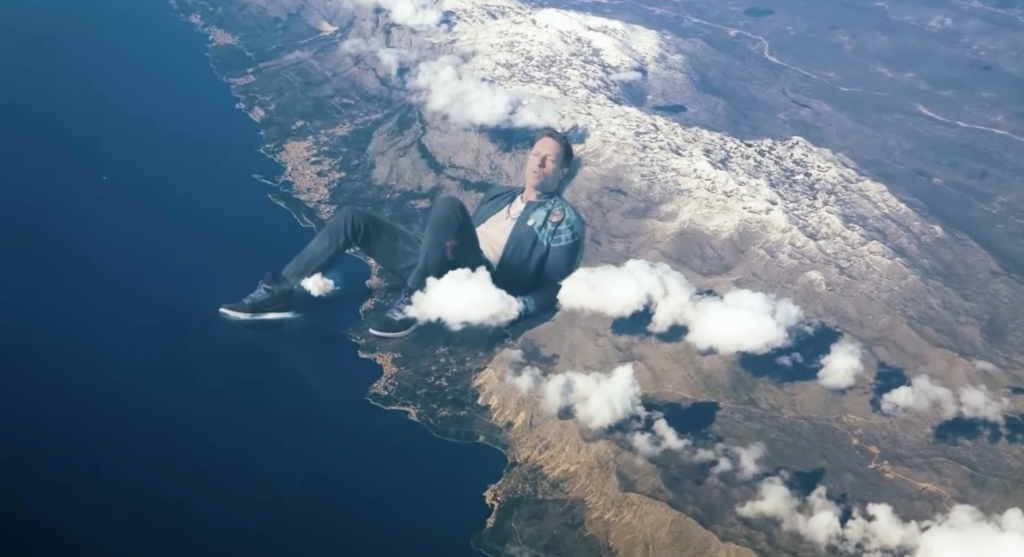
Someone weighing 70 kilograms would effectively carry the equivalent of 770 kilograms under that new gravity. Simply standing upright would become a genuine struggle, walking could turn nearly impossible, and lifting your own body might feel comparable to hauling a small vehicle. Human biology was never built to withstand pressure on that scale.
Researchers generally suggest the human body could tolerate only a modest multiple of Earth’s normal gravity before breaking down. Faced with something like 11 times that force, survival in our current biological form would almost certainly be out of reach, with bones, muscles, and even the heart pushed well past their limits.
Gravity of that magnitude would not stop at affecting people either, since it would reshape the surrounding environment just as dramatically. A field that strong would compress the atmosphere itself, thickening the air considerably and driving surface pressure upward, to the point where every breath would feel like the sky pressing down with real weight.
Water itself would behave completely differently under those conditions. Its boiling point would climb well above 100 degrees Celsius, while freezing would become considerably harder to achieve, leaving oceans, lakes, and ice formations behaving in ways nothing like what we know today.
Zooming out to a planetary scale, the consequences would grow even more dramatic. The Moon would face intense tidal forces from this newly massive Earth, and in some versions of this scenario, it could actually be torn apart, scattering into a ring of debris circling the planet and gradually turning the night sky into a glowing band of shattered lunar fragments.
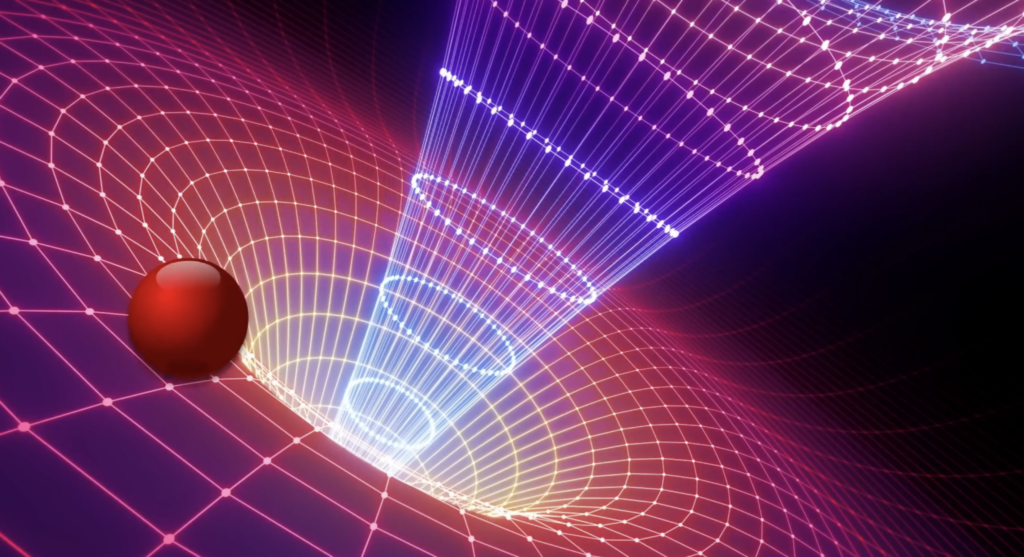
Even with the Sun holding vastly more mass than Earth ever could, a Jupiter sized version of our planet would still exert a meaningful gravitational pull on nearby objects, potentially bending the paths of asteroids and smaller bodies throughout the Solar System and raising the odds of collisions or disrupted orbits.
The Solar System as a whole would grow noticeably less stable in the process. Earth would not be pulling planets away from the Sun by any means, but its dramatically increased mass and size could still unsettle gravitational balances that have held steady for billions of years.
Impressive as a Jupiter sized Earth might sound on paper, it would ultimately prove to be a brutally hostile place for anything resembling life as we understand it, with gravity alone reshaping biology, geology, and the very structure of the atmosphere all at once.
Perhaps, then, Earth already sits at exactly the right size, large enough to sustain life comfortably, yet nowhere near large enough to crush that life before it ever gets the chance to evolve.