Imagine waking up one morning to discover that something invisible and incredibly dense was moving toward Earth. It would not be an asteroid, a black hole, or an exploding star, but a hypothetical form of matter that could completely change the substance of anything it touched.
Physicists call this strange matter, and under certain theoretical conditions, it could be remarkably stable. If a piece of it ever reached ordinary matter, the consequences could be unlike anything Earth has experienced before.
So what exactly would happen if our planet encountered strange matter? Would there be any way to stop it, or would Earth simply become another source of fuel?
Strange matter is a hypothetical state of matter that could potentially exist under the extreme pressures found inside neutron stars. It is associated with quark matter containing strange quarks, alongside the up and down quarks found in ordinary matter.
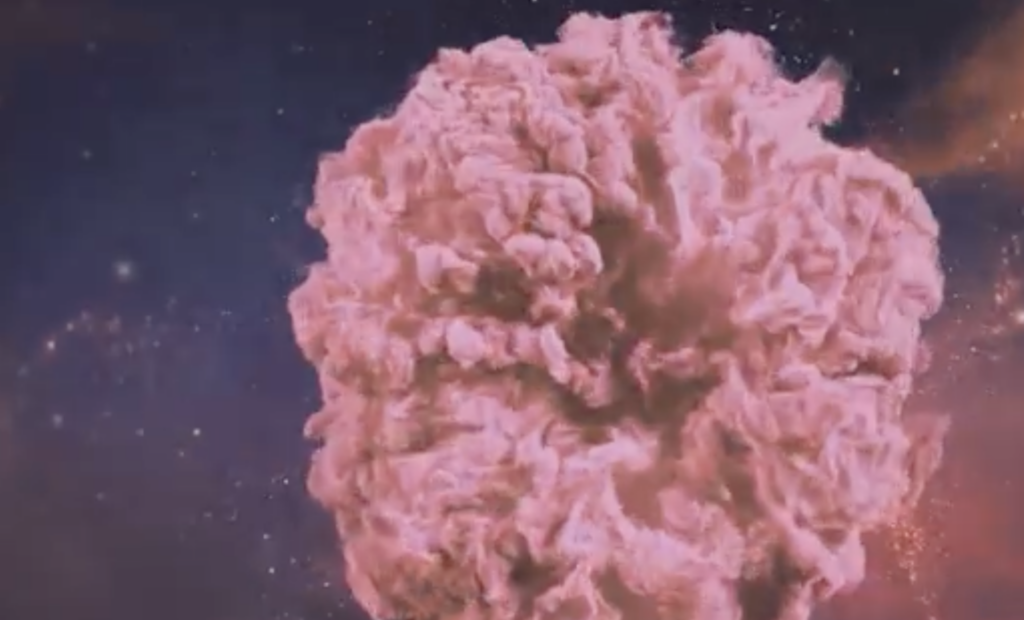
The theory becomes particularly frightening when scientists consider the possibility that strange matter could be more stable than normal nuclear matter. If that were true, a small piece called a strangelet could theoretically convert ordinary matter into the same state.
If one somehow reached Earth, the process could begin wherever it made contact. Rather than behaving like an ordinary object, the strangelet could interact with atomic nuclei and begin converting their matter into a denser form.
The transformation would potentially spread through the surrounding material. Soil, rocks, buildings, vehicles, and eventually the rest of the planet could become part of the process.
At the subatomic level, ordinary matter is built from particles called quarks. Protons and neutrons contain up and down quarks, while strange matter would also contain strange quarks. Under the hypothetical scenario, some of the ordinary particles could be converted into this lower energy state.
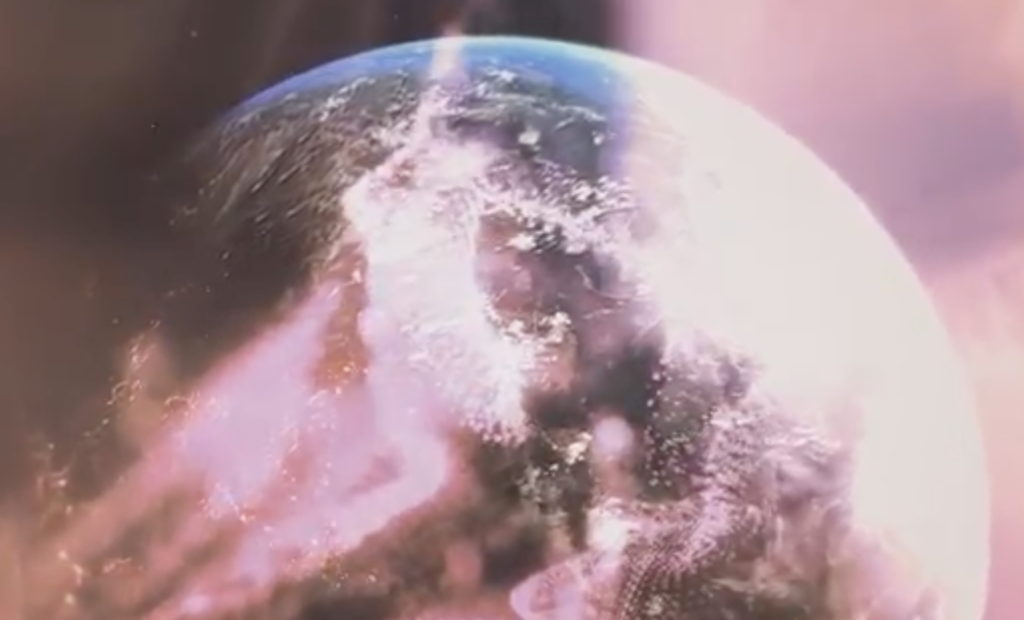
It would be less like an explosion and more like a chain reaction. As more normal matter became strange matter, the strangelet could grow, giving it even more material to transform.
Earth would have an almost unlimited supply of potential fuel. The oceans, atmosphere, crust, and everything living on the planet would all consist of ordinary matter that could theoretically be consumed.
Humans would have no realistic way to escape the process if it actually worked this way. The atoms making up our bodies would ultimately become part of the transformation, along with everything else around us.
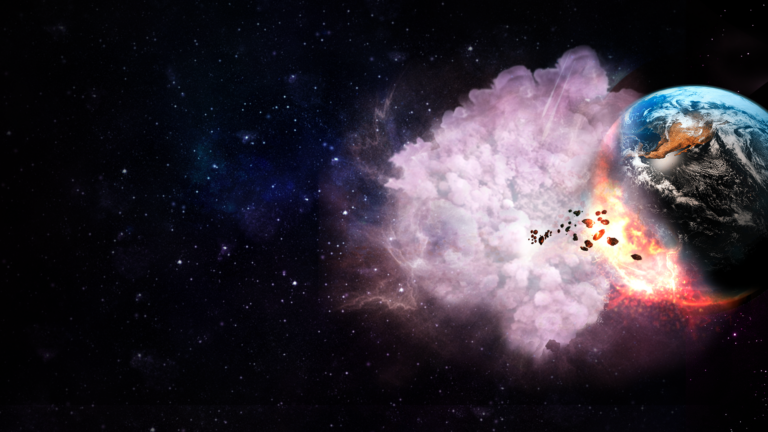
In the most extreme version of this scenario, Earth’s familiar structure could disappear entirely, leaving behind an incredibly dense object made of strange matter. The original script estimates that this could happen anywhere from roughly 10 hours to two years.
Fortunately, there is an enormous reason not to panic.
Strange matter has never been observed. Scientists have theoretical reasons to consider whether it could exist inside neutron stars, where pressures are unimaginably intense, but there is no confirmed evidence that dangerous strangelets exist in space or could survive outside such an environment.
That means Earth is not currently facing a cosmic substance waiting to consume it.
For now, strange matter remains an intriguing possibility in physics rather than an established threat. Still, the idea raises a remarkable question about the Universe: could matter exist in a state so stable that, under the right conditions, almost everything around it would become something completely different?