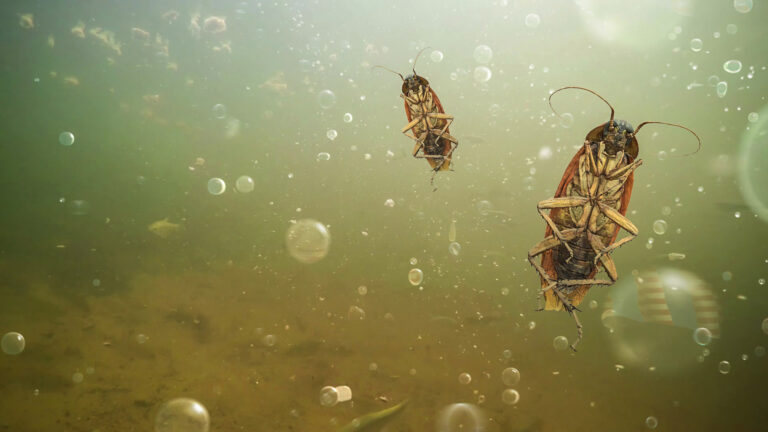
Here’s a nasty housemate we have all had the displeasure of knowing. Unfortunately, a remote Antarctic community might be the only place you could escape their slimy company.
If you’re like me, you’ve tried drowning, decapitating, squashing and even setting this nasty critter on fire. But nothing seems to do the trick.
Will cockroaches outlive us? Can they survive a nuclear explosion? Buckle up. It’s time to face one of your oldest enemies, the indestructible cockroach.
Cockroaches were on Earth long before the first humans showed up. For over 300 million years, they have adapted and survived everything nature has flung at them.
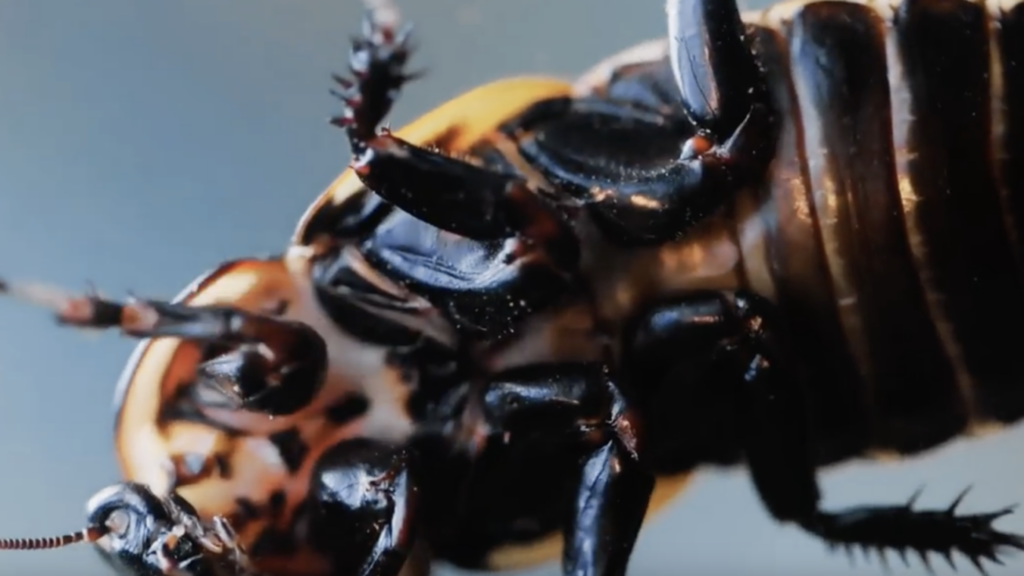
So it figures that they should be one of the most resilient creatures around. The idea that cockroaches could survive nuclear warfare started after the Nagasaki and Hiroshima bombings in 1945.
Curious researchers at Iowa State University tested German cockroaches to get to the bottom of that theory. They reported their results in rems, which measure the amount of energy from ionizing radiation in human tissue and its medical effects. It takes 800 rems to kill a human. But German cockroaches withstood up to 105,000 rems before they finally died.
American cockroaches were easier to kill, needing only 67,500 rems. So after a nuclear explosion, cockroaches would not be among the first life forms to die, assuming that they were not close to the explosion site. They can withstand higher radiation, but they are not explosion proof. So how can cockroaches survive so much radiation?
When animal cells are dividing, they tend to be more sensitive to radiation. Human cells are constantly changing and regenerating, but cockroaches have slower cell regeneration cycles.
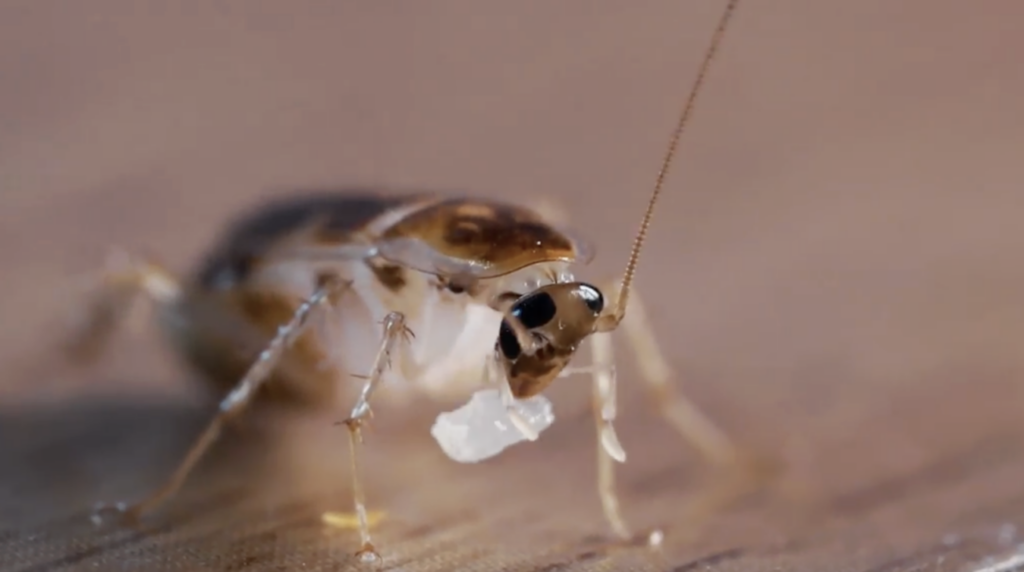
They molt every two weeks, and that’s their superpower. Well, it’s one of their superpowers. Cockroaches have a whopping 522 taste receptor genes, giving them a highly evolved palate. This ensures they don’t eat anything that could kill them.
Cockroaches have also developed strong immunity, and they can metabolize everything from cardboard to insecticides. They were thriving in filth and feasting on an incredible variety of toxins long before they encountered their first human.
So by the time we developed our lame insecticides, cockroaches were ready for us. Their ability to survive harsh conditions doesn’t stop there. You could behead the animal and it would live for well over a week. Can you guess how?
Cockroaches don’t have noses as we do. They breathe through tiny holes in their bodies, allowing them to take in oxygen without using their heads.
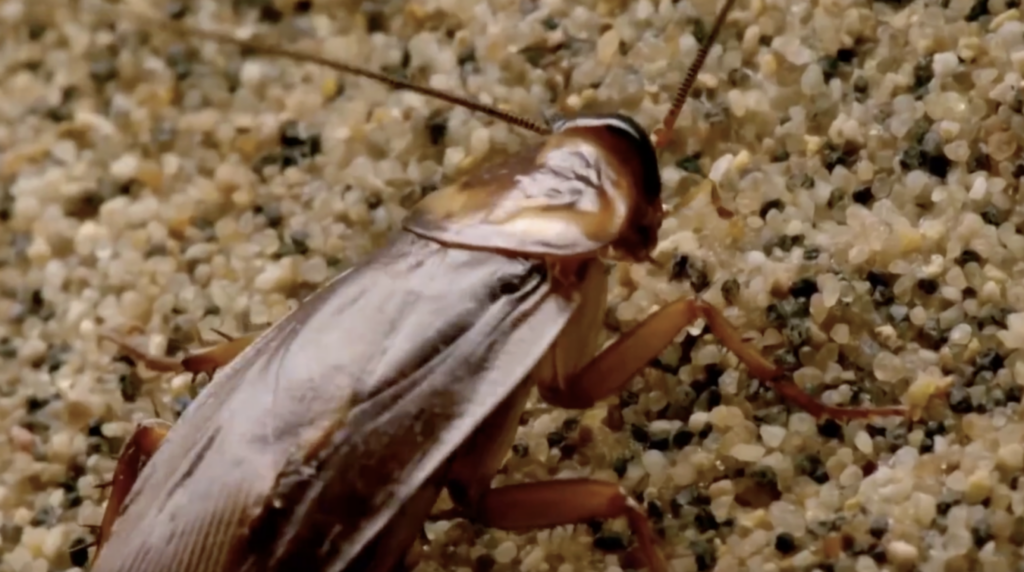
A cockroach’s brain doesn’t direct the oxygen flow to its body, and it has no circulatory system to speak of. A beheaded cockroach won’t bleed to death, either, because its neck will most likely clot and seal shut. A cockroach can hold its breath for as much as 40 minutes and stay underwater for a good 30 minutes. They typically pull this stunt to stay hydrated when it’s too dry outside for them.
Cockroaches need to stay hydrated, and without access to water, they won’t live past a week. However, they can do without food for a whole month.
Like many cold blooded animals, they don’t waste any energy regulating their temperatures. That means they can stay alive for a lot longer.
The earliest human record of a cockroach is a cave painting, and it’s 15,000 to 33,000 years old. So these clever critters started moving into our homes as soon as we had them.