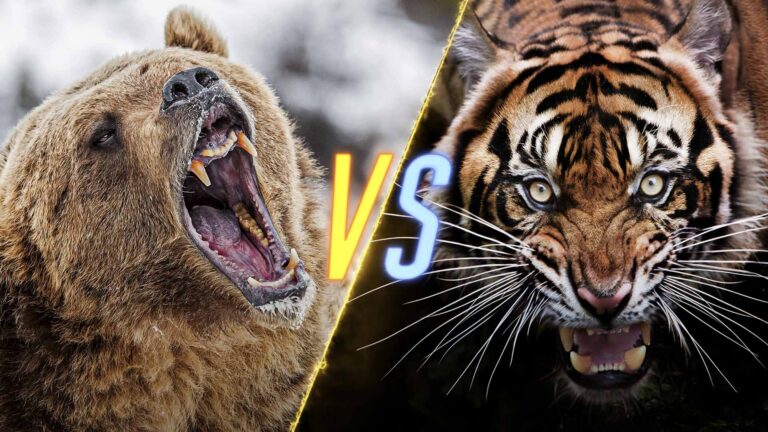
Two animals. One patch of territory. Neither has any interest in sharing it.
That’s the whole setup, and it’s not a hypothetical scenario dreamed up for entertainment. Both of these predators are fiercely territorial and both will fight to the death over ground they consider theirs.
So before anything happens, let’s look at what each of them brings.
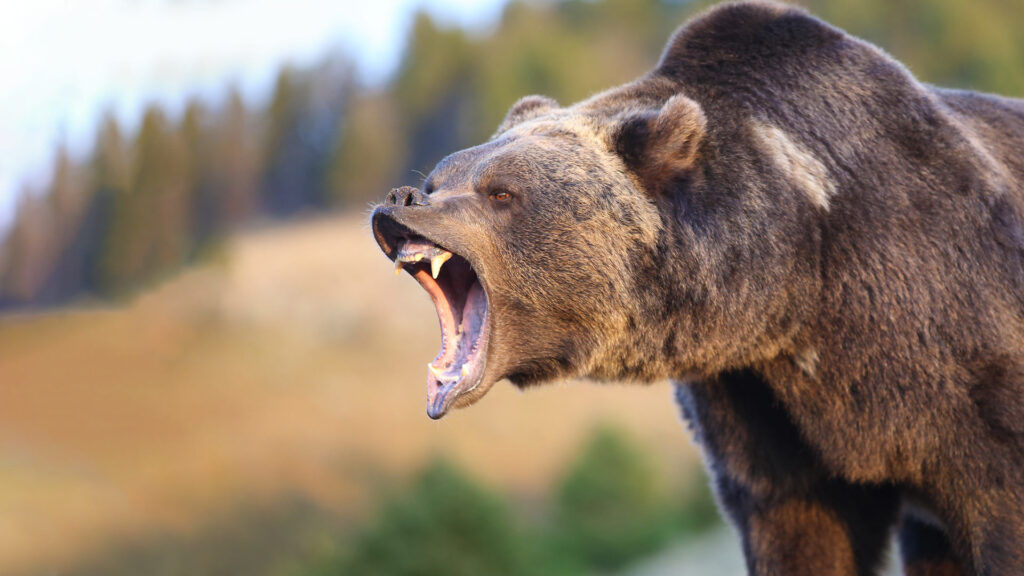
The North American grizzly bear weighs 770 kg. Its bite force exceeds 8,000 kPa, and its claws can send an adult boar flying 10 meters through the air.
Grizzlies are omnivores, which means they eat plants and, when the situation calls for it, whatever else turns up.
The really important thing about them is durability. Thick muscle and solid fat protect the arteries and trachea, so calling a grizzly resilient undersells the problem considerably. There is no easy target anywhere on that body.
Which hasn’t discouraged the challenger.
The Bengal tiger comes in from the forests of India at 260 kg, giving up a serious amount of weight to the bear.
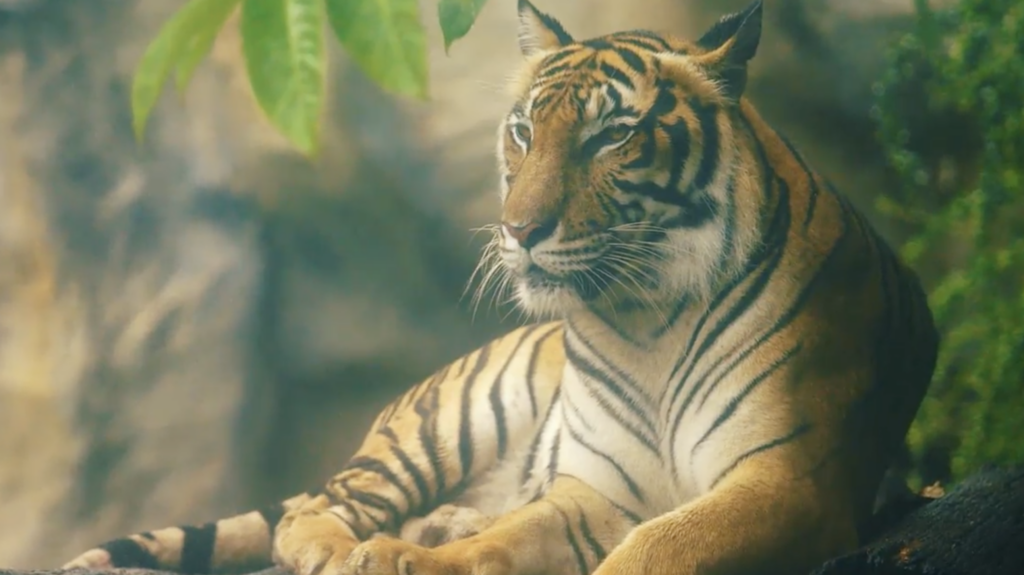
What it lacks in mass it makes up for elsewhere. A bite force over 7,000 kPa, a top speed of 65 km/h, and a lifetime of hunting behind it.
There’s also precedent worth noting here. Tigers have taken on bears before, and the grizzly’s relatives, the Himalayan bears, did not come out of those encounters well.
So how does it actually play out?
It starts before the bear knows anything is happening. Distracted by the smell of salmon, the grizzly never notices the tiger moving through the underbrush, holding position, waiting.
Then the tiger goes.
It lands on the bear’s back and tries to bite down, and this is where the size difference bites back, because thick muscle stops the jaws from reaching anything vital.
The bear rears up, towering over the tiger, and roars a warning.
The tiger doesn’t care. It circles, waits, and comes in again, slashing with a paw swing carrying 4,500 kg of force behind it.
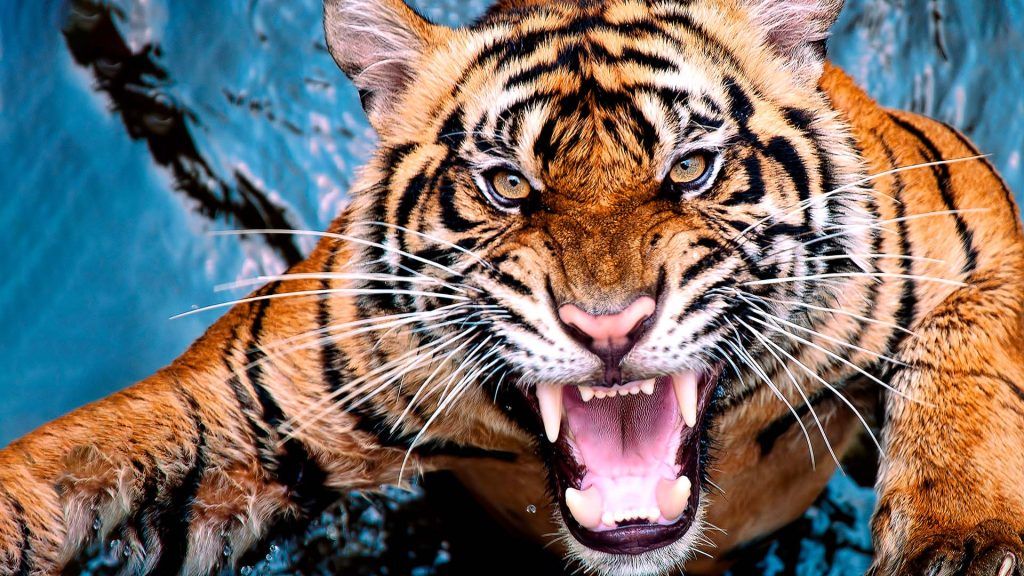
The grizzly answers, knocking the tiger back with its own claws, and for a while neither animal makes progress.
That’s the moment the fight turns, though the bear doesn’t realize it. The grizzly is a fortress in defense. The tiger doesn’t need to break through it. It only needs to keep going longer.
And bears tire.
Once the grizzly starts slowing, the tiger stops trading blows and starts hunting. It moves around the bear, pounces, and this time it goes for the neck.
That bite cuts to the bone. The bear goes down.
Which raises the question of why the smaller animal won, and the answer isn’t strength.
The tiger is a full carnivore that has spent its entire life killing things, and every instinct it has is built around finding the one opening that ends a fight.
The grizzly hunts salmon. Formidable, enormously powerful, and completely unprepared for something that patient and that strategic.
Strength lost to experience. Which makes you wonder how far back that pattern goes, and whether the ancestor of this animal, the saber toothed tiger, could have handled something like a woolly mammoth.