There are billions of planets drifting through the Milky Way with no star to orbit. No sun, no fixed path, nothing holding them anywhere in particular.
They were most likely thrown out of their original solar systems during the violent early stages of formation, and now they wander through interstellar space untethered to anything.
Almost all of them pass unnoticed. The interesting question is what happens if one of them doesn’t.
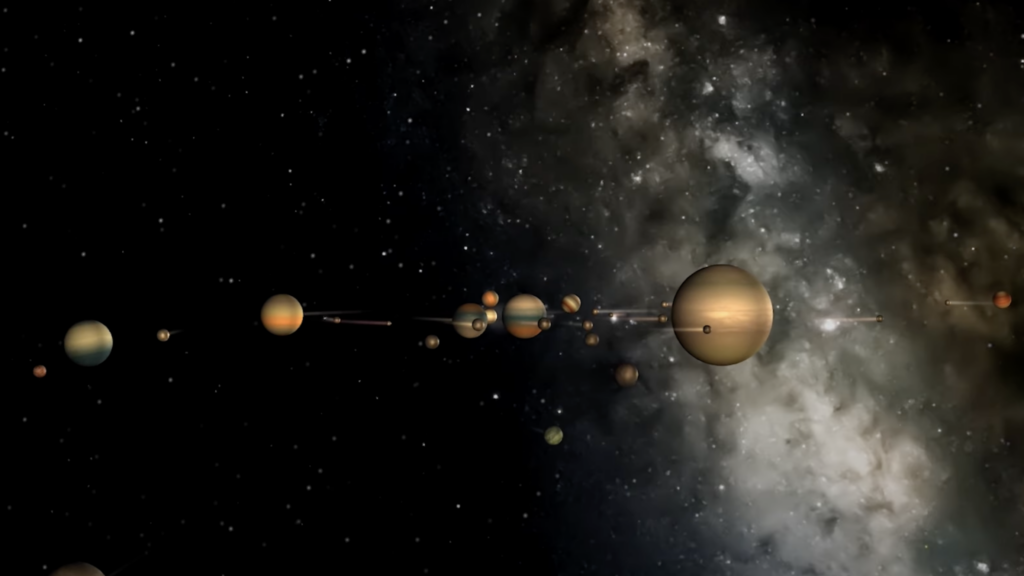
A rogue planet is defined simply as a planetary mass object that no longer orbits a star.
Some of them are far from small. Certain rogue worlds may carry extreme physical characteristics, including powerful magnetic fields and enough internal heat to generate faint auroras despite having no star anywhere nearby.
So picture one of these crossing into our Solar System.
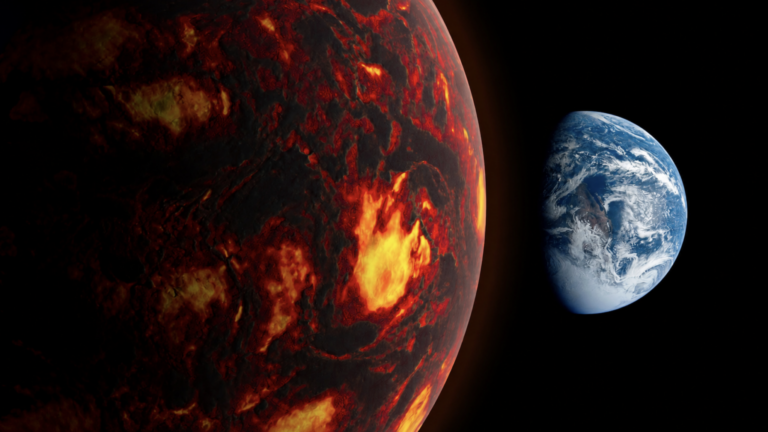
Everything about the outcome depends on its trajectory. Pass close enough to Earth and the gravitational forces alone would be catastrophic, and a direct collision would mean the complete destruction of the planet.
That’s the version nobody needs to worry about, though. The Solar System is enormous and mostly empty, which makes a direct impact statistically very unlikely.
The realistic scenario is a close flyby. Nothing hits anything, and it still causes enormous damage.
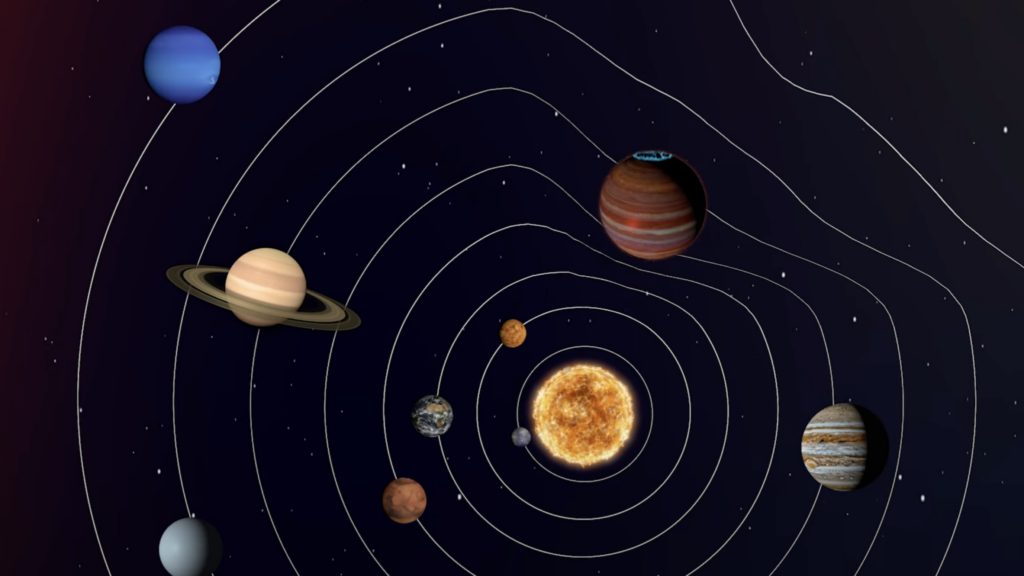
If the intruder were massive enough, possibly larger than Jupiter, its gravity would be sufficient to shift planetary orbits as it passed. Earth’s orbit, currently stable and close to circular, could be stretched into something elongated and unstable.
That’s where the actual threat lives.
Right now we sit inside the habitable zone, the band around the Sun where temperatures allow liquid water to exist. Not too hot, not too cold, which is the entire reason any of this works.
Change our orbit and that balance disappears.
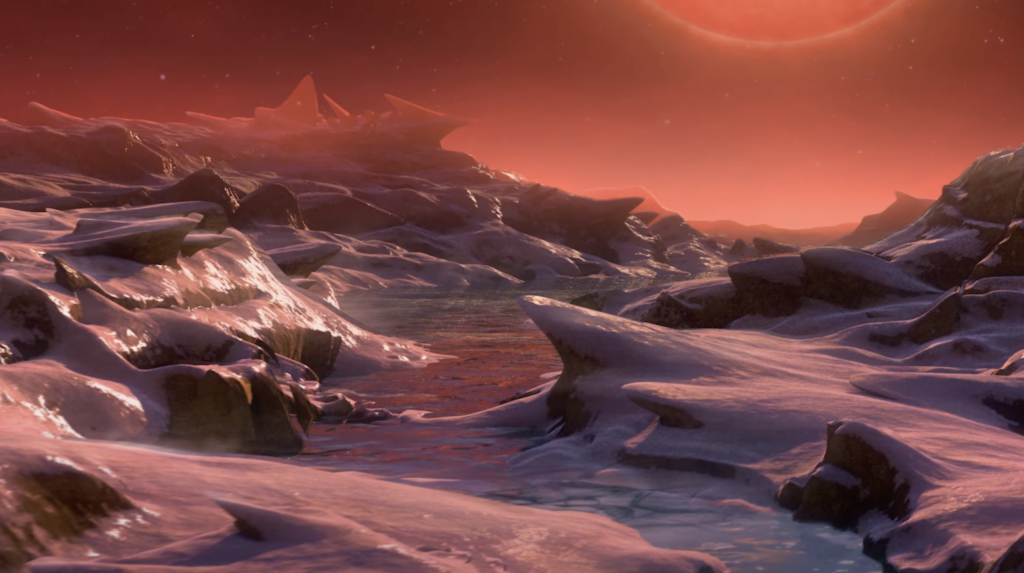
A stretched orbit would swing Earth closer to the Sun during part of its year, producing brutally hot and unstable summers, then carry it much further out for long freezing winters.
Seasonal swings on that scale would wreck ecosystems and destroy agriculture, and human civilization would struggle badly to function through it.
The more extreme version pushes Earth out of the habitable zone entirely.
Global temperatures would fall dramatically. The oceans would freeze over, ecosystems would collapse, and almost nothing living on the surface would survive.
Life might not vanish completely, though. Isolated geothermal environments deep in the oceans, heated from inside the planet rather than from above, could keep supporting limited organisms.

Given long enough, life might even adapt and evolve to suit the new frozen conditions. Civilization as we understand it would not be part of that.
Now the reassuring part, which is genuine.
Space is vast, and rogue planets are separated from star systems by distances that make an encounter extraordinarily improbable. The odds of one meaningfully disrupting our Solar System are very low.
But the scenario is worth thinking about anyway, because it exposes something we tend to forget. Everything about life here rests on Earth staying exactly where it is.
And nothing out there is obligated to leave us alone.