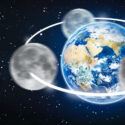
Earth occupies a remarkably convenient position around the Sun. We orbit within a region where temperatures can potentially allow liquid water to remain on a planet’s surface, creating one of the basic ingredients needed for life.
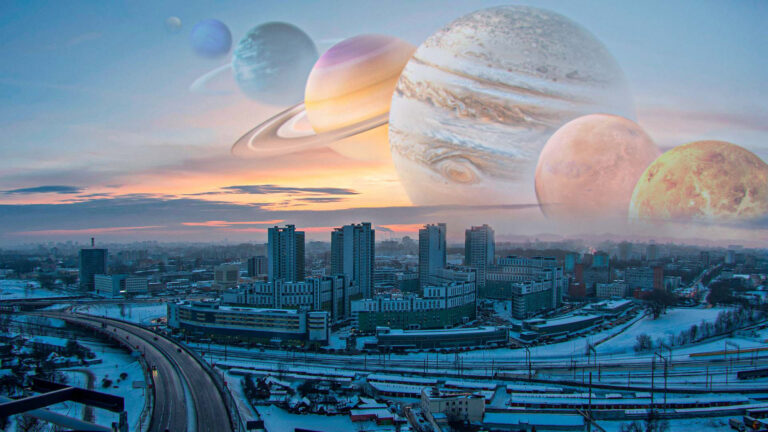
Now imagine moving every planet into that narrow region and giving them all a new home around the Sun. At first, the Solar System might seem like it had been redesigned for life.
But there is a major problem. Jupiter is so massive that moving it into this crowded neighborhood would dramatically change the gravitational balance, potentially sending planets and moons into completely different orbits.
The region around a star where liquid water could exist under suitable atmospheric conditions is known as the habitable zone. Move a planet too close to its star and water can evaporate, while moving it too far away can leave its surface frozen.
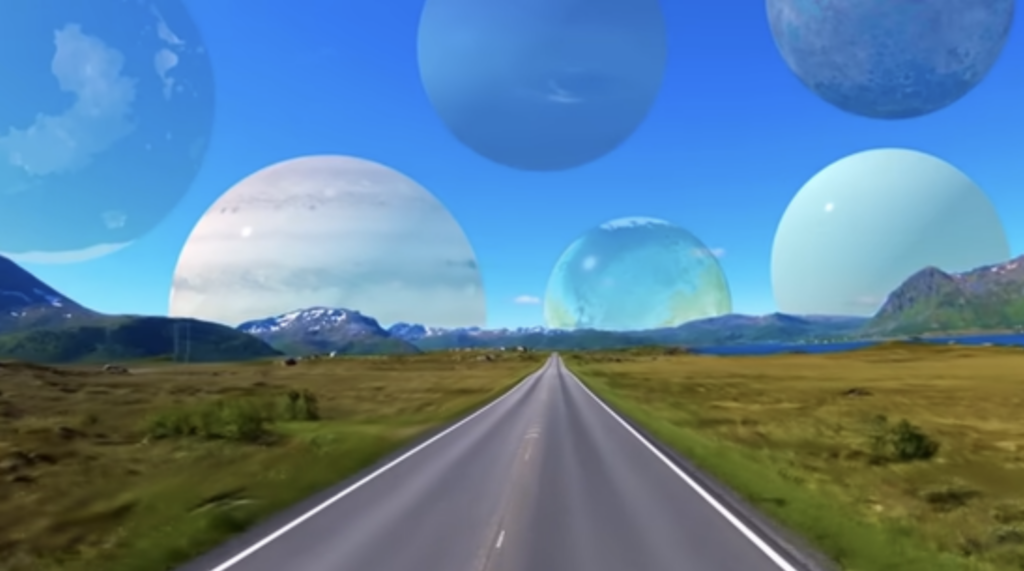
Exactly where this zone lies depends on the star’s brightness and temperature. Thousands of exoplanets have been discovered within or near potentially habitable regions, although being inside the zone does not automatically mean that a planet can support life.
For our Sun, estimates place the habitable region around the orbit of Earth, giving us a relatively narrow section of the Solar System to work with.
Mercury would have to move dramatically outward to reach the inner portion of this region. At roughly 0.9 AU, it would receive much less intense sunlight than it does today and would no longer experience the extreme heating associated with its current orbit.
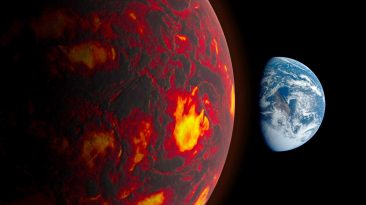
Venus would also need to move outward from its present position at about 0.72 AU. Interestingly, Venus may have experienced very different conditions billions of years ago, when the younger and dimmer Sun made the inner Solar System cooler.
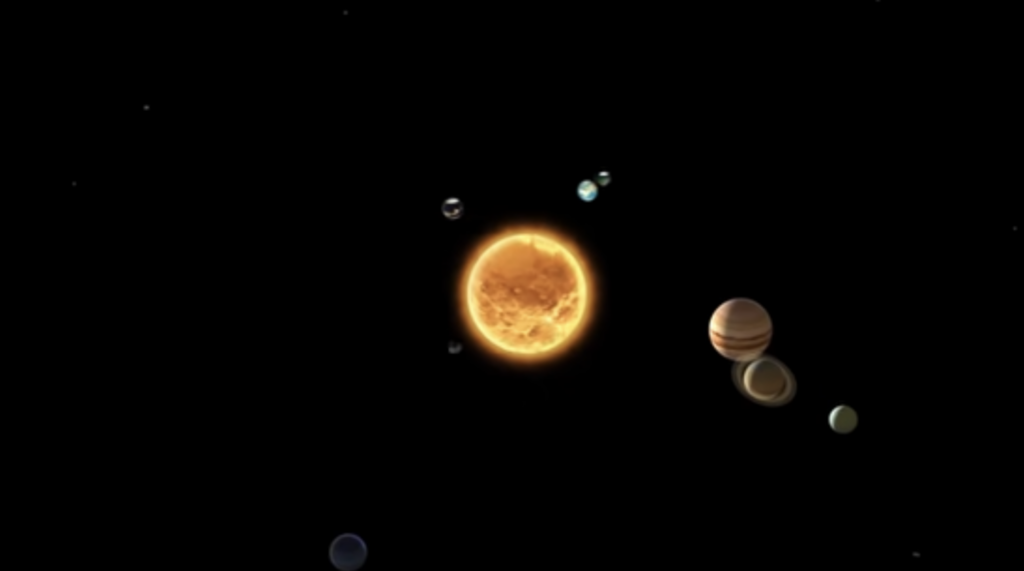
Some models suggest that ancient Venus could once have had liquid water. As the Sun became brighter, temperatures increased, and Venus eventually developed the extremely hot environment we see today.
Moving Venus farther from the Sun could therefore change its climate dramatically, although that alone would not guarantee that the planet became habitable.
Earth itself might need to shift slightly to make room for the other worlds. Even a relatively small change in our orbit would alter the amount of sunlight reaching the planet and could have major consequences for the climate.
Mars would be another interesting case. Putting it inside the habitable zone would provide it with more favorable temperatures, but sunlight alone would not solve its problems.
Mars has a very thin atmosphere and lacks a global magnetic field like Earth’s. Without major changes to its atmosphere and environment, simply giving Mars warmer conditions would not turn it into another Earth.
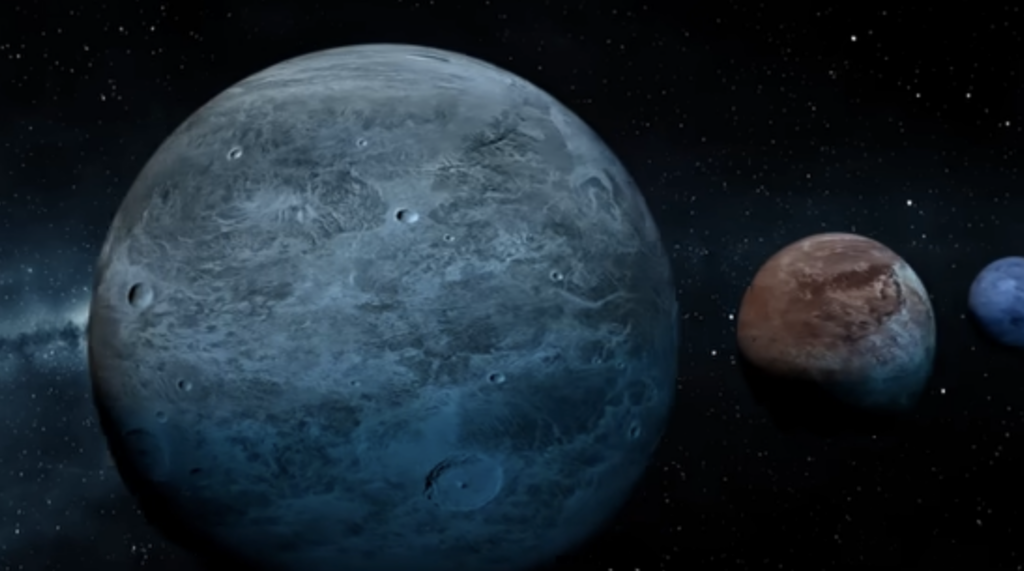
The giant planets create an even bigger problem. Jupiter and Saturn are gas giants with enormous atmospheres, pressures, and temperatures that make them unsuitable places for Earthlike surface life.
Their moons are more interesting. Europa, for example, is covered by a thick layer of ice above a suspected subsurface ocean. Moving it much closer to the Sun could dramatically alter that ice and potentially expose large quantities of liquid water.
There would also be practical advantages to having the planets much closer together. Traveling between worlds could become easier, while the planets and their moons could provide enormous quantities of raw materials and other resources.
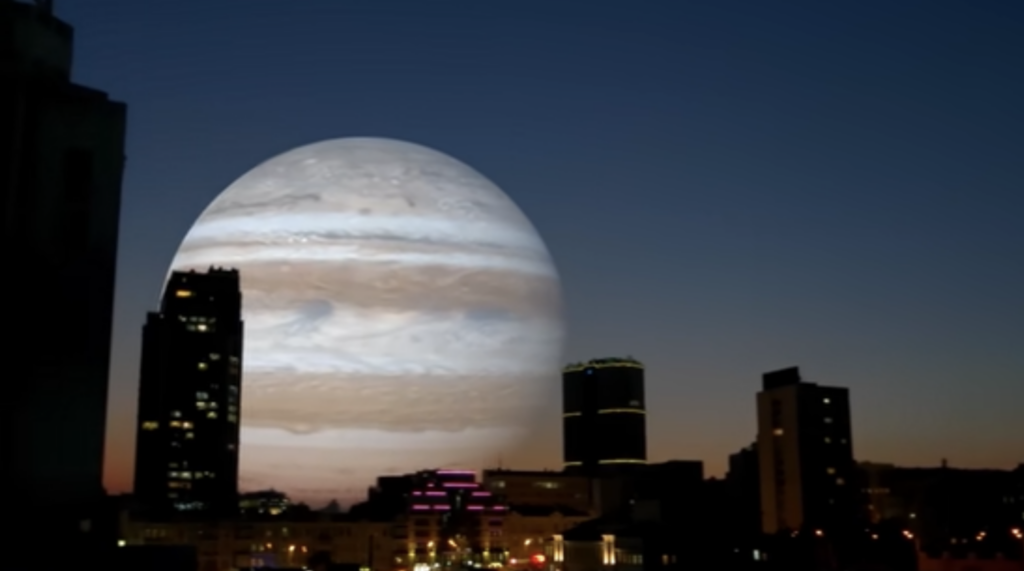
Jupiter and Saturn contain enormous amounts of hydrogen and other useful materials, while asteroids could provide metals needed for construction and advanced energy systems. A civilization spread across several nearby worlds could have access to resources far beyond those available on Earth alone.
But then comes the biggest problem: gravity.
Jupiter contains more than twice the mass of all the other planets in the Solar System combined. Placing such a massive object inside the relatively narrow habitable zone would dramatically disturb the gravitational relationships between the planets.
Scientists have modeled systems containing several Earth sized planets inside a habitable zone, and stable arrangements are possible under the right conditions. Jupiter, however, is vastly more massive than an Earth sized planet.
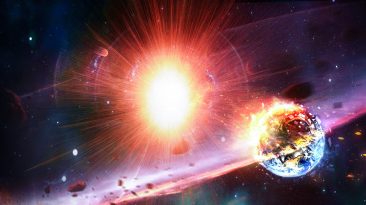
Its gravity could gradually alter the paths of neighboring planets and moons. Some worlds could be thrown into new orbits, while others might be ejected from the Solar System entirely.
Earth could also be affected. The same gravitational interactions that make the experiment interesting could eventually destroy the stable orbit that has allowed life to thrive here.
So moving every planet into the habitable zone sounds like an ideal way to create a Solar System filled with potentially livable worlds. In reality, packing these planets together could turn the entire system into a gravitational disaster.