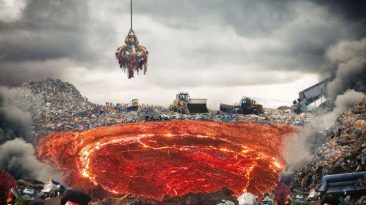
Imagine digging a hole straight through the Earth, all the way to its center. You might think it would be a simple matter of drilling through layers of rock. But the deeper you went, the more extreme things would become. Temperatures would reach thousands of degrees, pressure would become unimaginable, and eventually, you would encounter an ocean of molten metal.
So, how could you possibly reach the Earth’s core? And what would happen if you jumped into a tunnel that went straight through the planet?
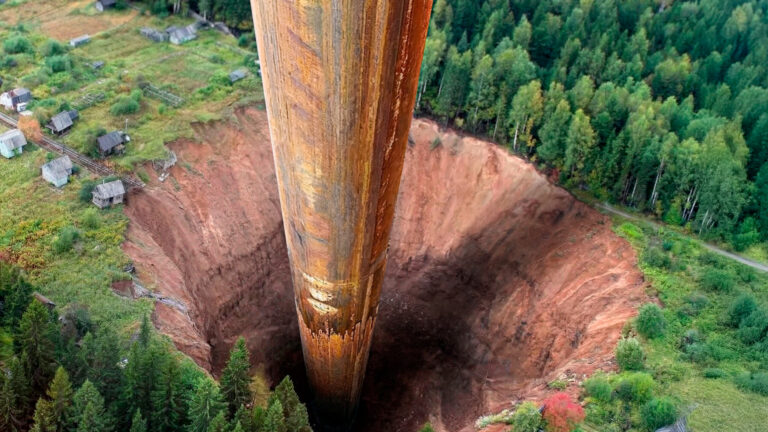
The first challenge would be getting through the Earth’s crust. Humans have attempted something similar before. In the 1970s, scientists began drilling the Kola Superdeep Borehole, eventually reaching a depth of 12.3 km (7.6 mi). That’s deeper than the Mariana Trench and even taller than Mount Everest. But after encountering extreme temperatures, softening granite, and constantly breaking drill bits, the project was abandoned in 1989.
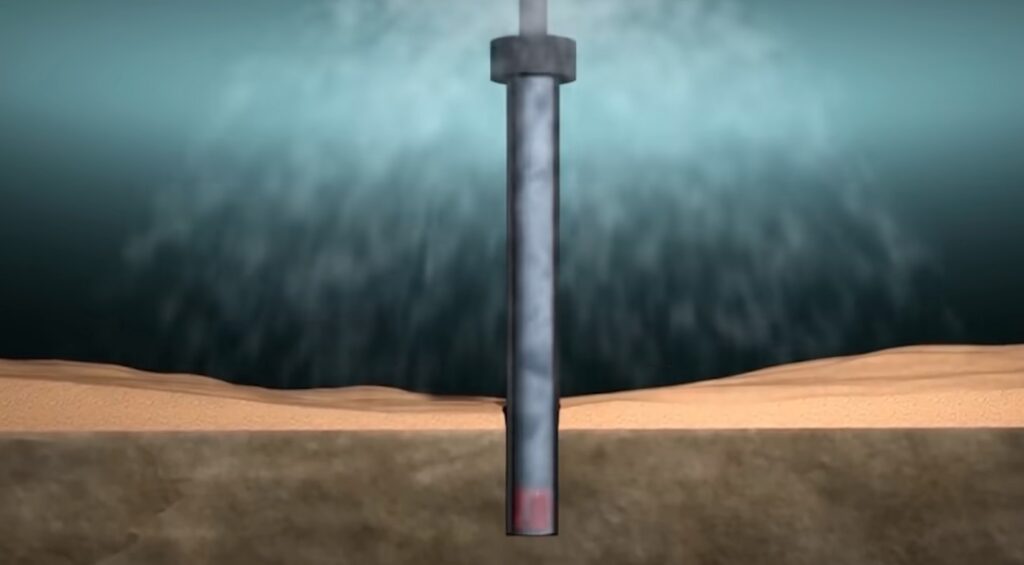
And that was barely scratching the surface. Earth’s radius is approximately 6,378 km (3,963 mi). To reach the center, you would have to drill more than 500 times deeper than the Kola Borehole.
Your best starting point would be somewhere near the North Pole. At the equator, Earth’s rotation would cause you to slam into the eastern wall of your tunnel because of the Coriolis effect. Near the poles, however, sideways rotation would barely be a problem. The Arctic Ocean would also offer a relatively thin crust, allowing you to reach the mantle much sooner.
But let’s imagine you started drilling in Colombia instead, where gold-rich rocks could help finance your incredibly expensive project.
At first, conventional diamond drills would get you through the crust. However, temperatures would eventually become so extreme that ordinary drilling equipment would melt. You would need something much more advanced, like millimeter-wave directed energy drilling. This technology would use powerful waves to heat and practically vaporize the surrounding rock.
Once you reached the mantle, things would become even more difficult. Temperatures in the upper mantle can reach around 1,500 °C (2,732 °F), and the rock would behave almost like thick peanut butter. As soon as you created a hole, the surrounding material would slowly squeeze it shut. You would somehow have to crystallize the tunnel walls as you drilled to keep the passage open.
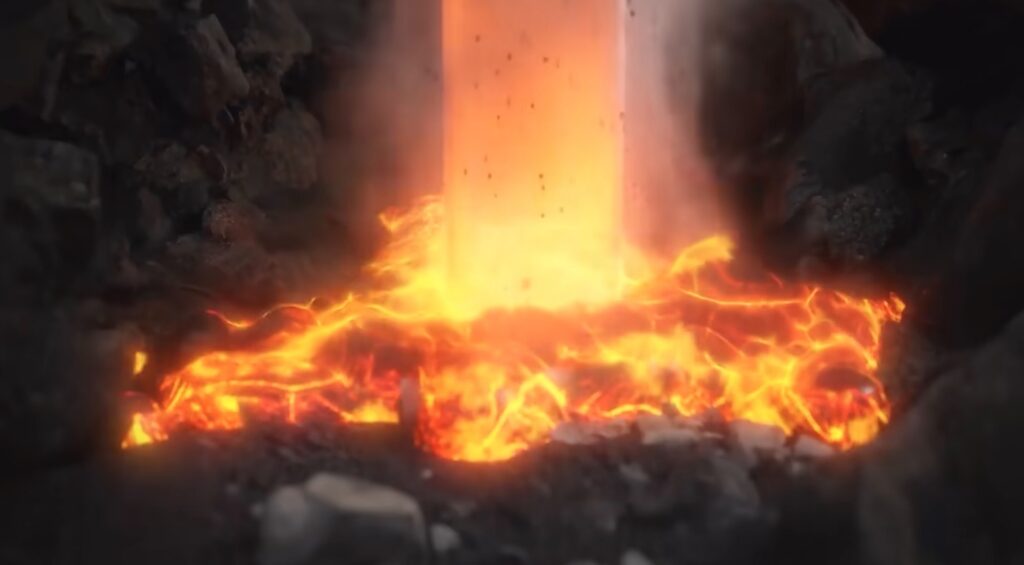
Deeper still, the lower mantle would expose you to temperatures reaching 3,700 °C (6,692 °F) and pressure more than a million times stronger than at Earth’s surface. Even with advanced cooling systems, surviving these conditions would be almost impossible.
After decades of nonstop drilling, you would finally reach the outer core. But instead of solid rock, you would encounter a gigantic ocean of liquid iron and nickel. Temperatures would range between 4,500 °C and 6,000 °C (8,100 °F and 10,800 °F). You couldn’t simply drill through this liquid metal. You would need an incredibly strong pipe that could withstand the heat and pressure while keeping the tunnel open.
Beyond it lies the inner core, a solid sphere of iron and nickel kept solid by enormous pressure. Temperatures could reach 6,000 °C (10,832 °F), while pressure would be millions of times greater than at sea level. If your laser drill somehow survived, you would need almost another 28 years to reach the exact center.
And then something surprising would happen. You would experience almost no gravity.
At the center of Earth, gravity from every direction would cancel out. The planet’s entire mass would pull on you simultaneously, but because those forces would balance perfectly, the net gravitational force would be zero.
Now imagine completing the tunnel all the way through the opposite side of the planet. You put on a heavily shielded spacesuit, remove all the air from the tunnel, and jump.
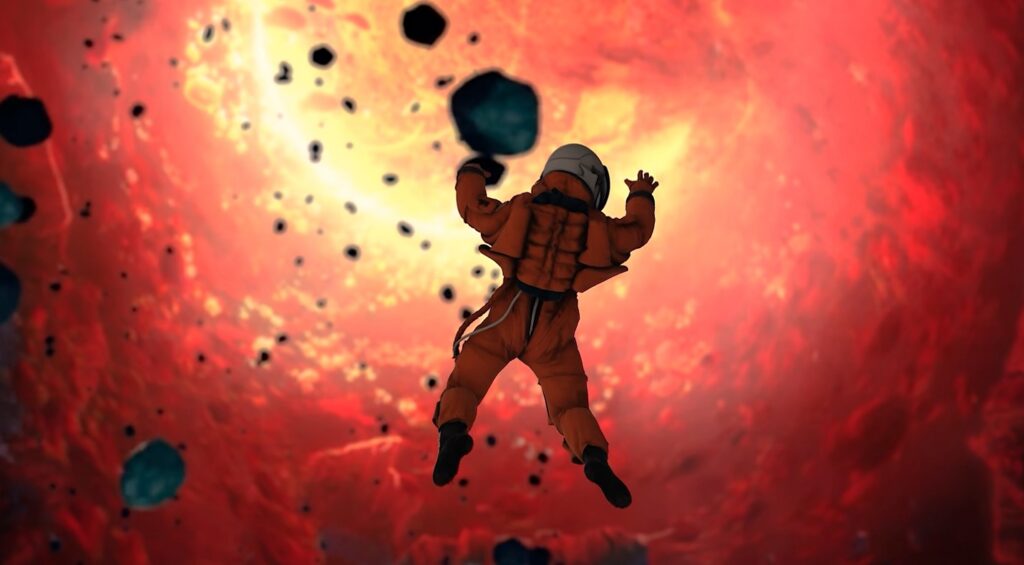
At first, you would accelerate just like a skydiver. But without air resistance, nothing would slow you down. Around 21 minutes after jumping, you would pass through Earth’s center at approximately 8 km/s (5 mi/s).
Gravity would then begin pulling you toward the center again, slowing you down as you approached the opposite surface. Exactly 42 minutes after your jump, you would emerge on the other side of the planet, somewhere in the Indian Ocean near Indonesia.
But there would be one final problem. If you didn’t grab onto something immediately, gravity would pull you back into the tunnel. You would fall toward the center, pass through it, and travel back toward the opposite side, repeating the journey over and over.
You would essentially be trapped inside Earth, falling back and forth forever.