Something out past Neptune is bending the orbits of everything around it.
Astronomers can see the effect clearly enough. What they cannot see is the cause, and one of the explanations on the table is considerably stranger than a hidden planet.
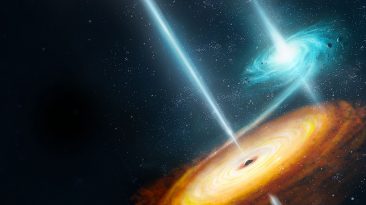
There may be a black hole out there, quietly circling our Sun, small enough to hold in your hands.
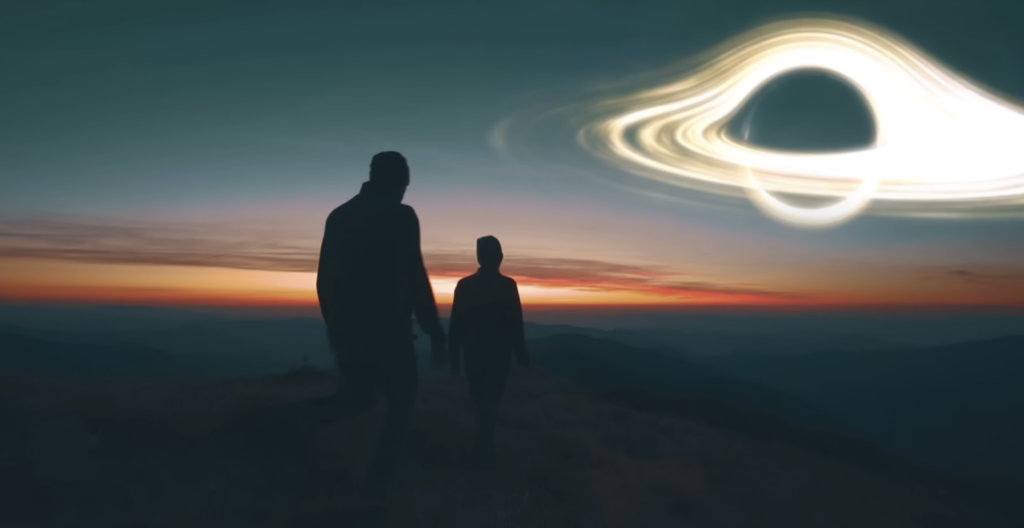
The mystery starts with trans Neptunian objects, or TNOs, which are small icy bodies orbiting the Sun far beyond Neptune.
Their orbits cluster together in a pattern that shouldn’t occur naturally. Something is arranging them that way.
Whatever it is would need to be at least 17 times more massive than Earth and sit roughly 10 times further from the Sun than Neptune does.
The obvious candidate is Planet Nine, the hypothetical world astronomers have been hunting for years. So far there’s no evidence backing that theory up.
Which leaves the other explanation. What if it isn’t a planet at all?
Picture a planet sized black hole and you probably imagine something enormous swallowing everything nearby. The reality is the opposite.
All that mass compressed into an extraordinarily dense point would produce an object no bigger than a grapefruit.
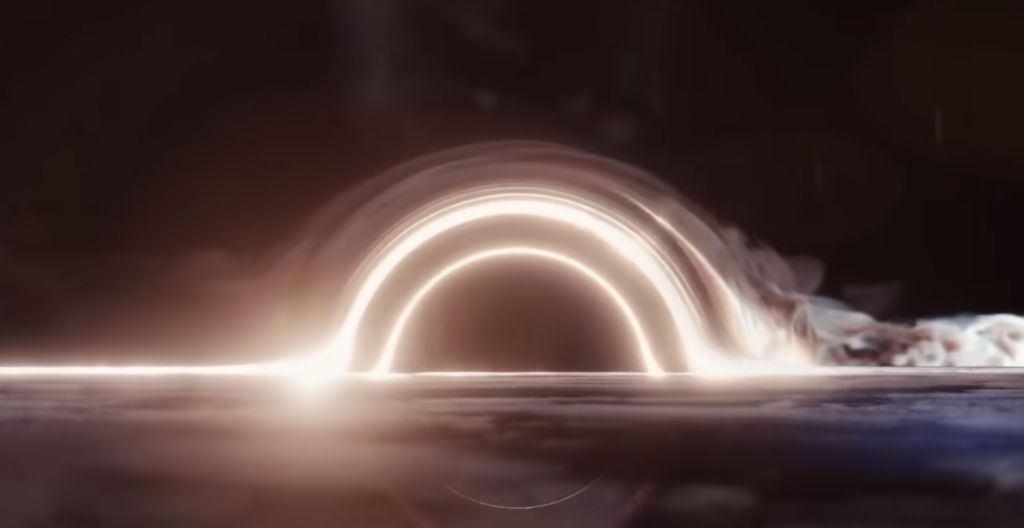
Black holes do come considerably larger, of course. Stellar black holes carry between 10 and 24 times the mass of our Sun, and astronomers estimate there could be anywhere from 10 million to a billion of them in the Milky Way alone.
For scale, if our own Sun somehow became a black hole, it would measure only about 5.8 km across.
Back to the small one hiding at the edge of the Solar System, though.
It would carry more than enough mass to disrupt those TNO orbits. And sitting that far away in a stable orbit around the Sun, it would have no effect whatsoever on your daily life.
Which is fine, but not especially interesting. So let’s destabilize its orbit and see what happens.
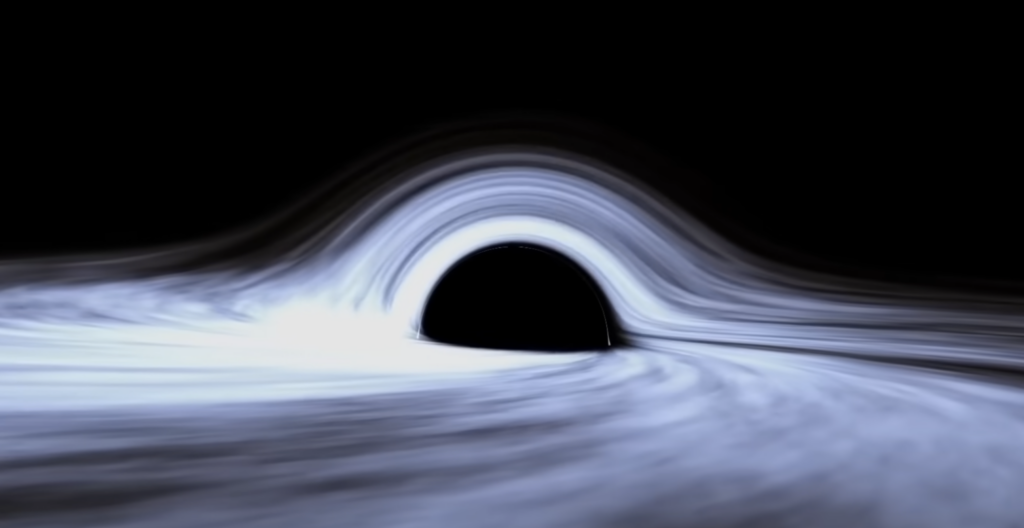
The genuinely extreme behavior of a black hole only shows up close to the event horizon, which is the boundary where escaping would require travelling faster than light.
The point of no return, in other words.
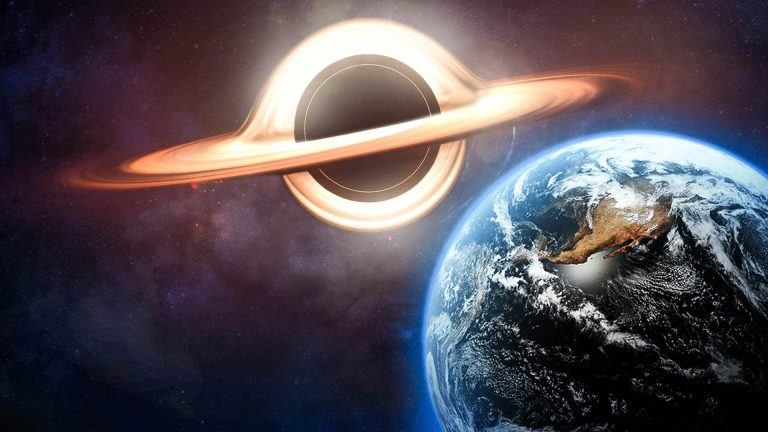
For this particular object to threaten Earth, its gravitational pull would need to be far stronger, strong enough to drag entire planets toward it.
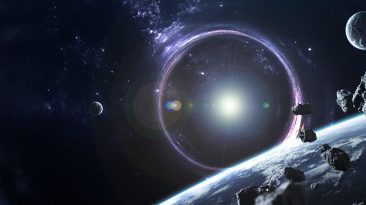
Give it that pull and an unstable orbit, and you have an invisible gravitational monster working its way inward through the Solar System.
Anything crossing the event horizon gets torn apart into subatomic components and compressed down to a single point.
From here we would watch it happen in order. Neptune first, then Uranus, Saturn, and Jupiter, each simply vanishing. Then Mars.
Then us.
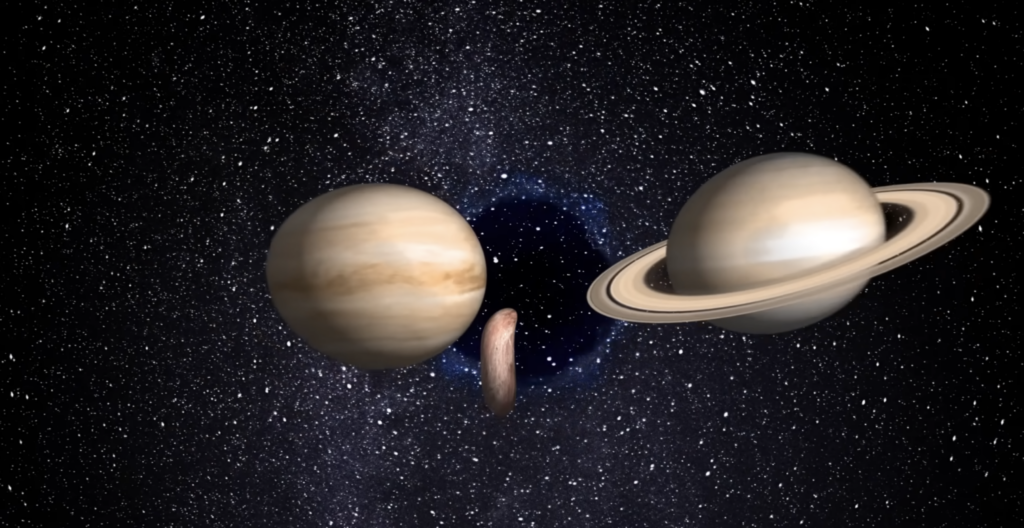
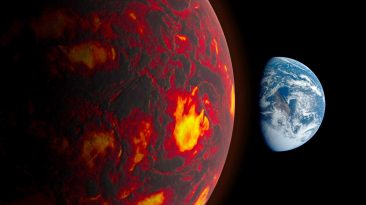
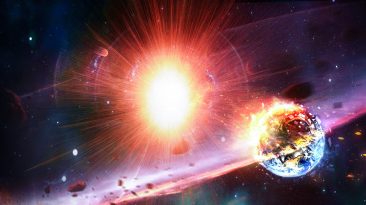
As it closed in, Earth would start to bulge under the gravitational strain, triggering enormous earthquakes, volcanic eruptions, and tsunamis worldwide.
Anyone still alive at that stage would not be for long. Closer in, the planet and everything on it would be stretched out and pulled apart, a process called spaghettification.
Realistically you’d die well before reaching the event horizon.
Eventually Earth would disappear entirely into something the size of a piece of fruit, leaving perhaps a trail of debris as the only sign we were ever here.
It wouldn’t be quick, either. In 2013, scientists watched a planet somewhere between 14 and 30 times the mass of Jupiter being consumed by a black hole, and the process took two to three months from first disturbance to total destruction.
Now the reassuring part.
Whatever is out there has held a stable orbit around the Sun for billions of years, which is a very good sign that nothing dangerous is developing.
The moment to start worrying is when other planets, moons, and asteroids begin behaving strangely. Until then, the thing at the edge of our Solar System is just an unsolved question.