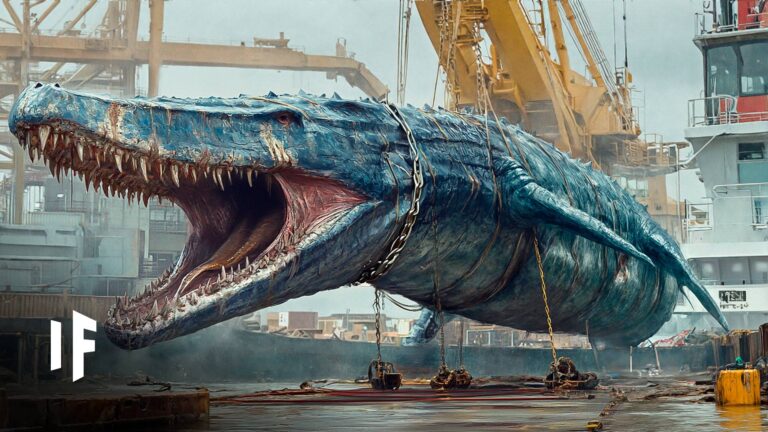
Zero to 48 km/h in a single second. Not over a hundred meters, not with a running start. One second, from a standstill, in water.
That is the ambush strike of a Mosasaurus, and its double hinged jaws were wide enough to swallow a human being whole.
Now imagine that animal in a modern ocean, and picture how quiet the conversation about shark attacks would suddenly become.
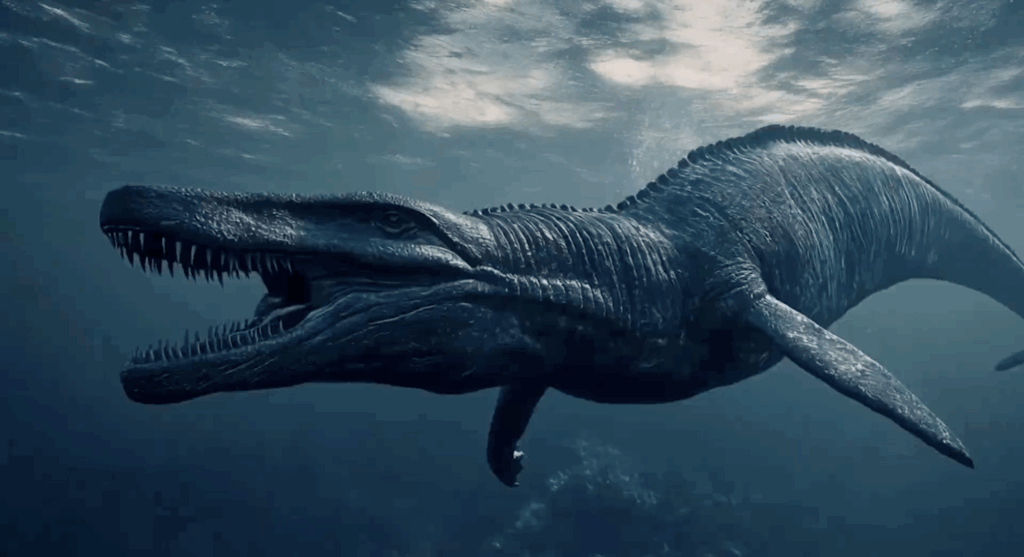
The Mosasaurus was a marine reptile that went extinct 66 million years ago. Larger than any shark alive today, faster than any human could ever swim, and built for one purpose.
It hunted like a crocodile, relying on explosive bursts of energy to ambush prey within roughly 30 meters. Its shark like tail fin drove it through the water at lethal speed, and those jaws finished whatever the acceleration started.
Had evolution taken a different turn, this design would still be operating today.
98 Million Years Ago
The story starts with the aigialosaurs, small monitor lizards that returned to the water. At no more than 1.5 meters long, they eventually gave rise to around forty different mosasaur species.
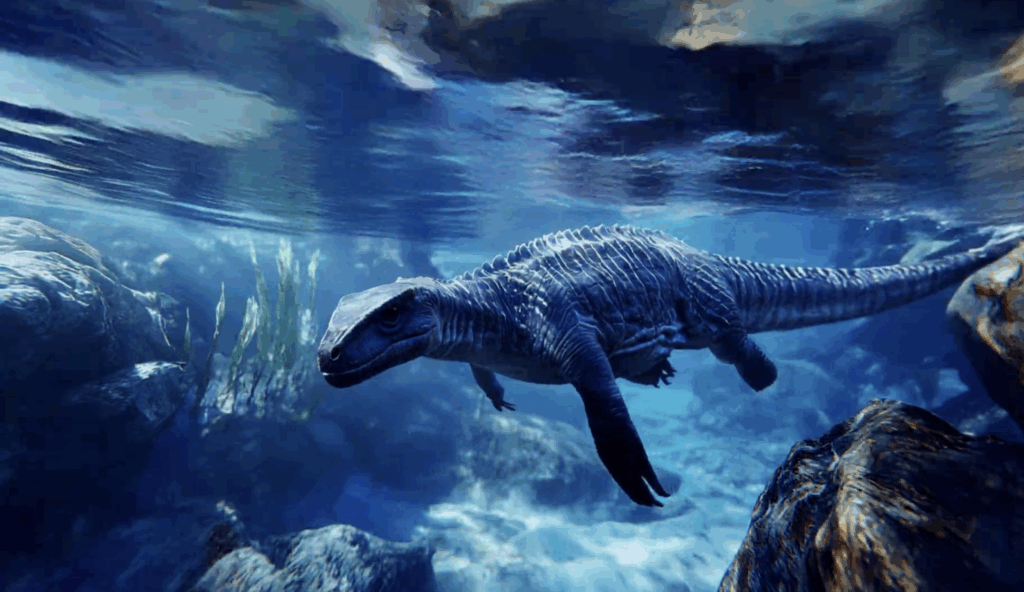
Among them, Mosasaurus hoffmanni became the largest and most fearsome, stretching between 9 and 15 meters.
It swam on whale like flippers with a streamlined body built for ambush, feeding on sharks, dolphins, turtles, and its own kind. Its forked tongue detected prey and potential mates through chemoreception, making it lethal from the surface down through the shallows.
66 Million Years Ago
Then the Cretaceous Paleogene extinction event ended everything.
An asteroid struck the Yucatán Peninsula, triggering tsunamis, showers of molten rock, and a global winter lasting a decade. Marine ecosystems collapsed and 75 percent of ocean animals died.
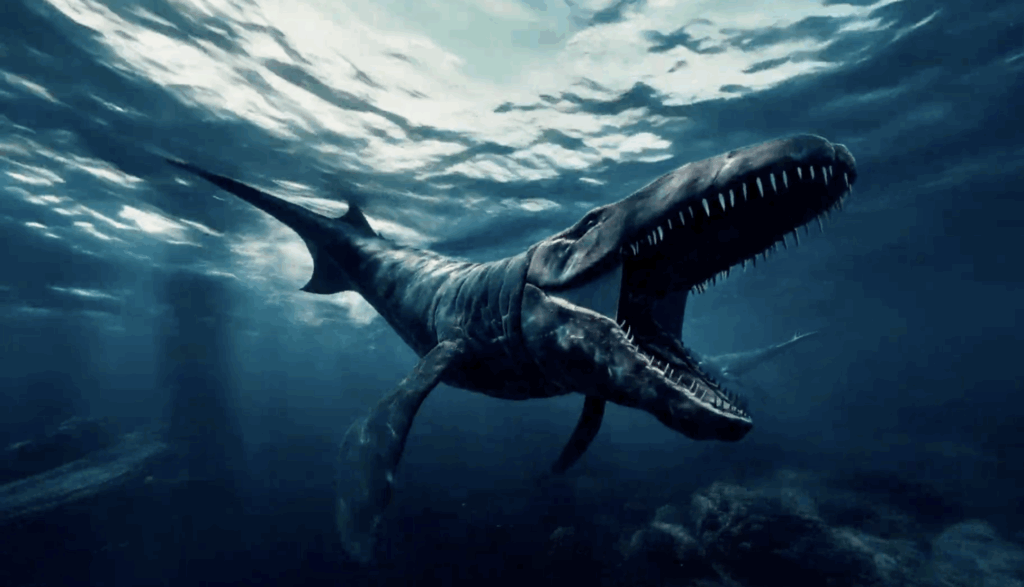
Sharks survived by migrating into deeper, colder water. The Mosasaurus stayed in the shallow seas where its large prey had vanished, and that specialization killed it.
Survival would have required a different body. A more tapered shape for long distance swimming, fin like paddles for stability, and a swim bladder for depth control the way deep sea sharks manage it.
Being warm blooded, it could already hold its internal temperature in cold water. Move its sinuses to the top of the skull, as whales and dolphins have, and it could handle deep sea pressure too. Those changes would have produced something close to unkillable, hunting at every depth in the ocean.
66 to 23 Million Years Ago
A second path existed as well. Some Mosasaurus could have adapted to smaller prey, producing a gentler lineage entirely.
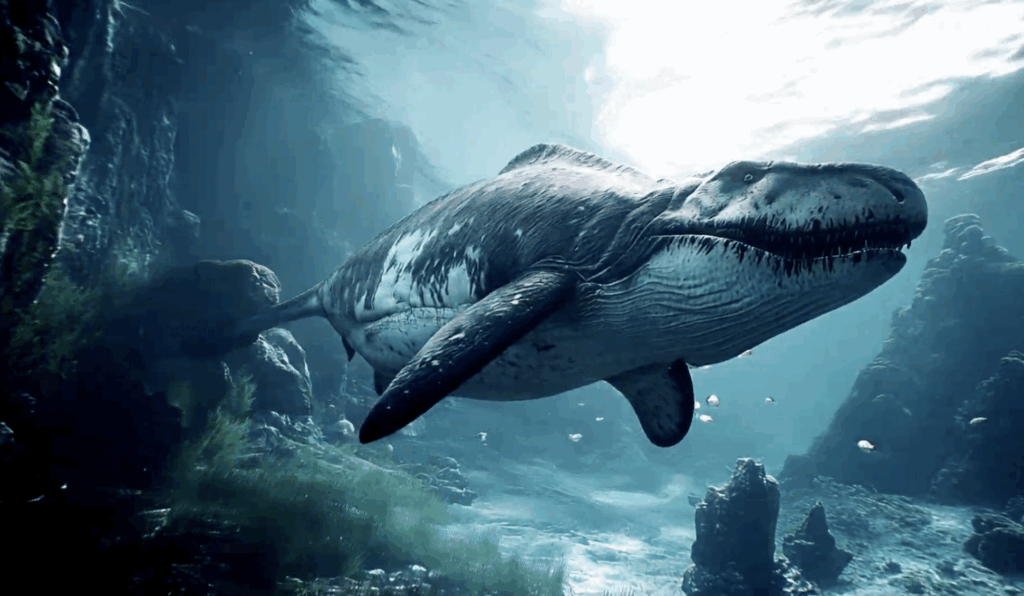
These animals might have developed filter feeding, gradually losing the large sharp teeth of their predatory cousins in favor of skulls built for sucking in small fish or plankton. Ancient whales followed exactly this route when they traded teeth for baleen.
56 Million Years Ago
The Paleocene Eocene Thermal Maximum sent global temperatures spiking, and the two lineages would have responded very differently.
For the predator, warmer water could have fueled enormous growth, potentially reaching 25 to 30 meters and hunting turtles, sharks, and even alligators.
The gentler version went the opposite direction, specializing in plankton and using a sieve like arrangement of teeth to feed on the microscopic life thriving in algal blooms.
The Modern Mosasaurus
So a surviving Mosasaurus could exist today in two completely different forms.
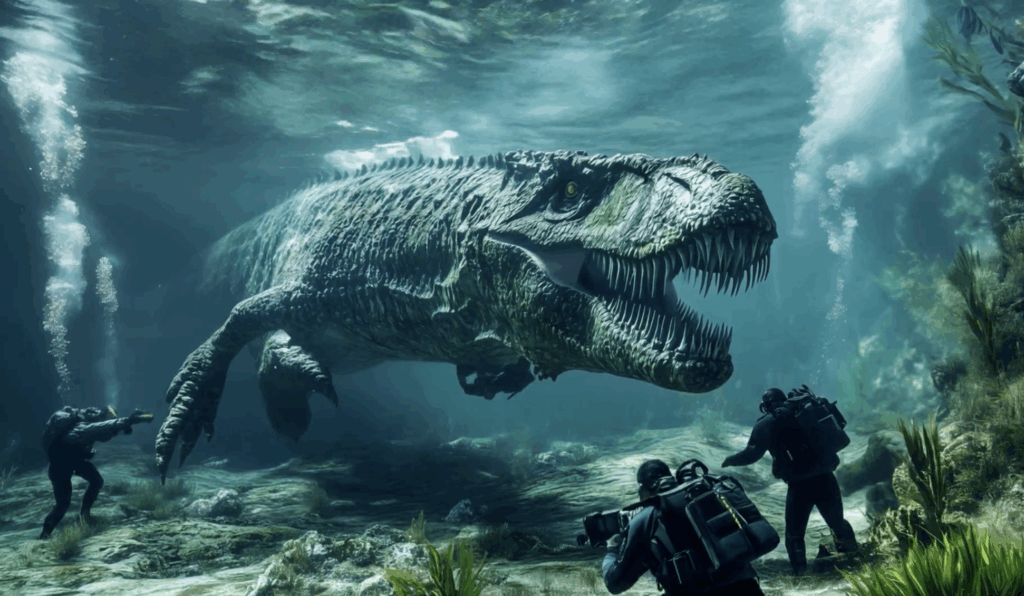
One is a colossal apex predator that would make every swimmer and diver rethink entering the water. The other is a peaceful filter feeder grazing quietly along the coast.
Both outcomes come from the same animal, which is the genuinely interesting part. Environmental pressure decides whether a species dominates or simply coexists.
We live in oceans nothing like the ones it ruled. But imagining it still out there is a decent reminder of how unpredictable nature is, and how something extinct for 66 million years can still be frightening to think about.