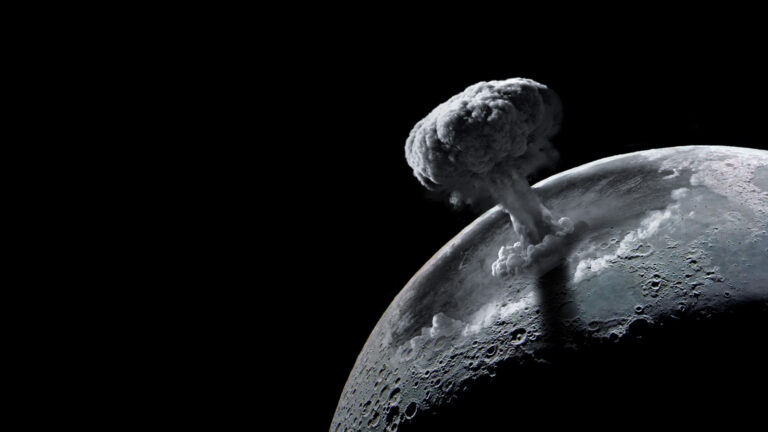
For thousands of years the Moon has fueled myths, guided ships across open water, and lit up night skies without fail. During one especially tense stretch of the Cold War, though, someone floated an idea far more extreme than storytelling, actually detonating a nuclear weapon on its surface.
Strange as it sounds, this was a genuine proposal rather than fiction. In the late 1950s, American officials were searching for a dramatic way to showcase technological power after the Soviet Union had taken an early lead in the Space Race, and one idea that surfaced was startlingly direct, set off a nuclear device on the lunar surface where the resulting blast could be seen from Earth.
Looking back at that idea now raises a genuinely interesting question, what would actually happen if a nuclear weapon really did explode on the Moon?
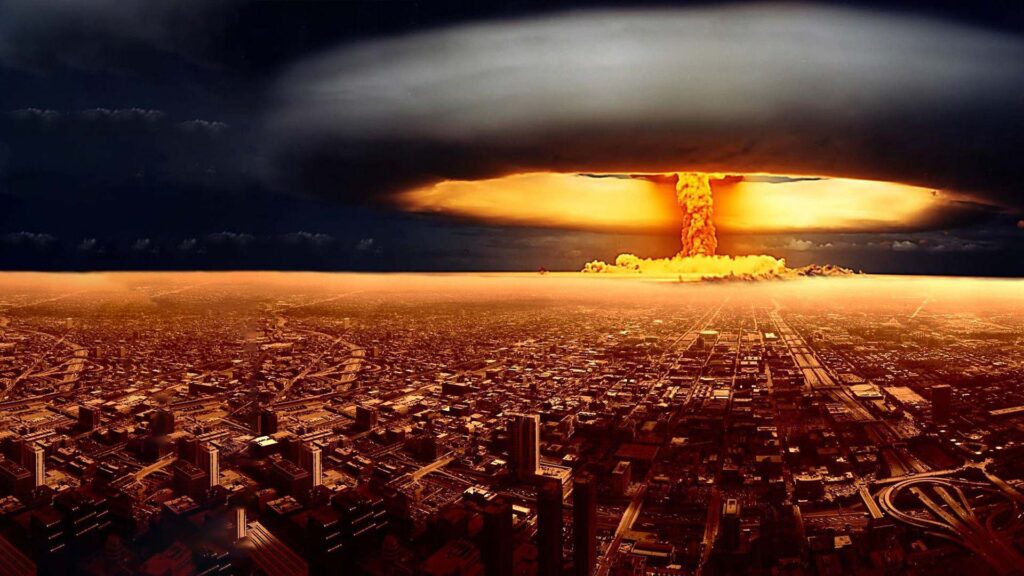
Most people’s first assumption is that the Moon would shatter into pieces, largely thanks to movies where enormous explosions casually destroy entire planets and moons. Reality turns out to be far less spectacular than that.
The Moon is an enormously massive body in its own right, holding roughly one eightieth of Earth’s total mass and spanning nearly 3,500 kilometers across. Even the most powerful nuclear weapon ever constructed would barely register against the sheer scale of energy needed to meaningfully damage something that size.
The single largest nuclear device ever detonated on Earth released energy equal to roughly 50 megatons of TNT, a staggering figure by any human measure, yet almost negligible when set against the Moon itself.
Practically speaking, no nuclear blast would split the Moon apart, send it hurtling toward Earth, or meaningfully shift its orbit in any noticeable way. It would simply continue circling our planet exactly as it has done for billions of years, since shifting that orbit significantly would demand an amount of energy so vast that our entire combined nuclear arsenal would not even approach it.
So if the Moon itself would remain essentially intact, what would an observer actually witness during such an event?
The visual result would look nothing like a nuclear detonation on Earth. Explosions here produce towering fireballs and mushroom clouds specifically because they interact with our atmosphere, and the Moon has essentially none of that atmosphere to work with.
Without air present, there would be no billowing smoke and no expanding wall of flame. Instead, witnesses would likely see a sudden bright flash followed by a burst of dust and rock ejected outward from the surface, ultimately forming a new crater. That might sound underwhelming, but the lunar surface is already covered in craters carved out by countless asteroid impacts across billions of years, so one more addition would hardly stand out visually.
Some of that displaced material could even be flung above the surface temporarily before eventually settling back down, and depending on how large the explosion was, researchers might actually gain valuable insight by studying that ejected debris to learn more about what lies underneath the lunar surface.
Radioactive fallout represents another common worry people raise. On Earth, nuclear explosions can leave dangerous contamination behind because radioactive particles get trapped in the atmosphere and carried across the globe by weather systems.
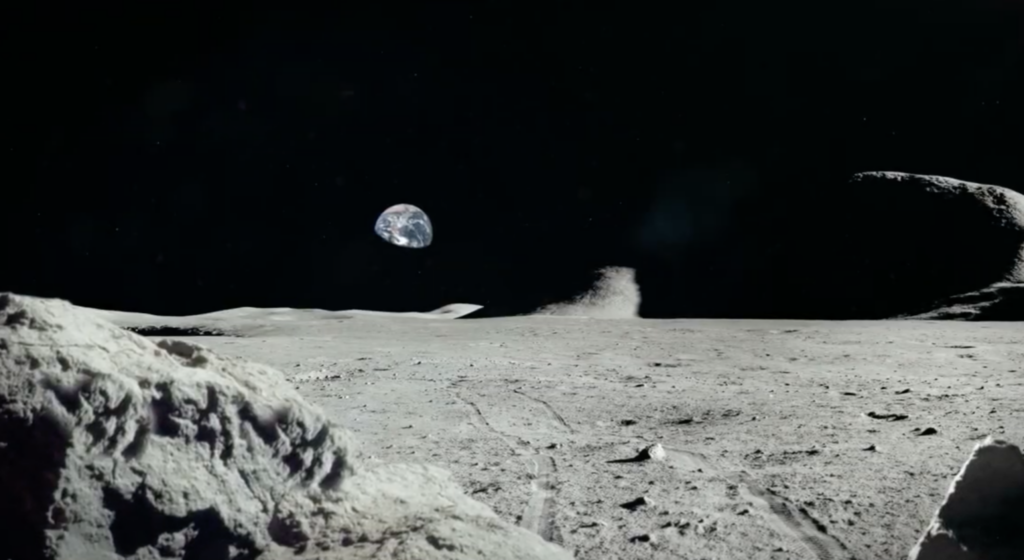
The Moon, however, presents a completely different environment altogether, with no weather systems and virtually no atmosphere to speak of. In fact, its surface already endures constant bombardment from cosmic radiation and energetic solar particles, meaning ambient radiation levels there already far exceed anything experienced on Earth.
Somewhat ironically, the radioactive material released by a single detonation would likely have minimal effect on the Moon’s overall radiation environment given how harsh it already is. That certainly does not mean radiation there is something to dismiss entirely, though.
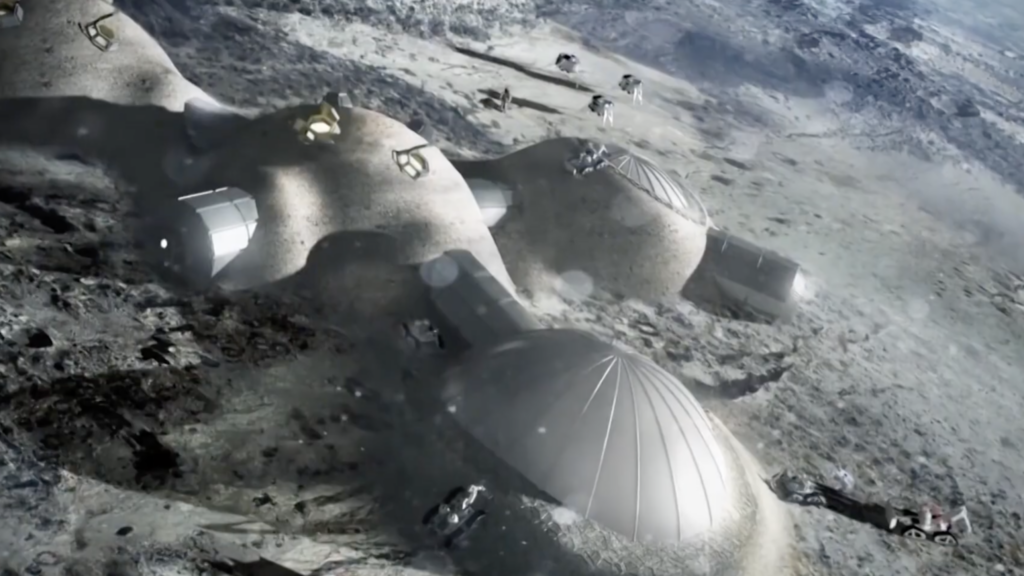
Protecting astronauts from prolonged radiation exposure remains one of the biggest hurdles facing future lunar missions. Space agencies are hoping to establish permanent lunar bases within coming decades, but surviving long term in such a punishing environment will demand serious shielding technology and careful planning.
Peaceful as it looks glowing in our night sky, the Moon is in reality an extremely unforgiving place.
Perhaps the most surprising takeaway from all of this is just how much humanity actually depends on the Moon’s presence. It helps keep Earth’s axial tilt stable as our planet spins through space, which in turn supports relatively consistent seasons stretching across enormous timescales. It also drives the ocean tides that shape marine ecosystems worldwide, and throughout Earth’s history it has helped create the very conditions that allowed life to flourish here in the first place.
It has also quietly absorbed an untold number of asteroid and meteoroid impacts across billions of years, with every crater scattered across its surface standing as a record of some violent event that once occurred somewhere in the Solar System.
For something so familiar hanging overhead each night, the Moon proves remarkably resilient. A nuclear detonation might produce a brief flash and leave behind one additional crater, but our closest cosmic neighbor would remain almost entirely unchanged. The real takeaway here is not that humanity has the power to destroy the Moon, but rather the opposite entirely, that the Moon is far larger, tougher, and more essential than most people ever stop to consider. Should such a detonation ever actually occur, the Moon would simply endure, adding one more small scar to a surface that has already been surviving cosmic violence for billions of years.