In 1981, a Soviet probe called Venera 13 touched down on Venus and kept working for just over two hours before the planet killed it.
That performance still ranks among the best anyone has managed. Not two weeks, not two days. Two hours, and it goes down as a triumph.
Which tells you almost everything about the world sitting next door to us.
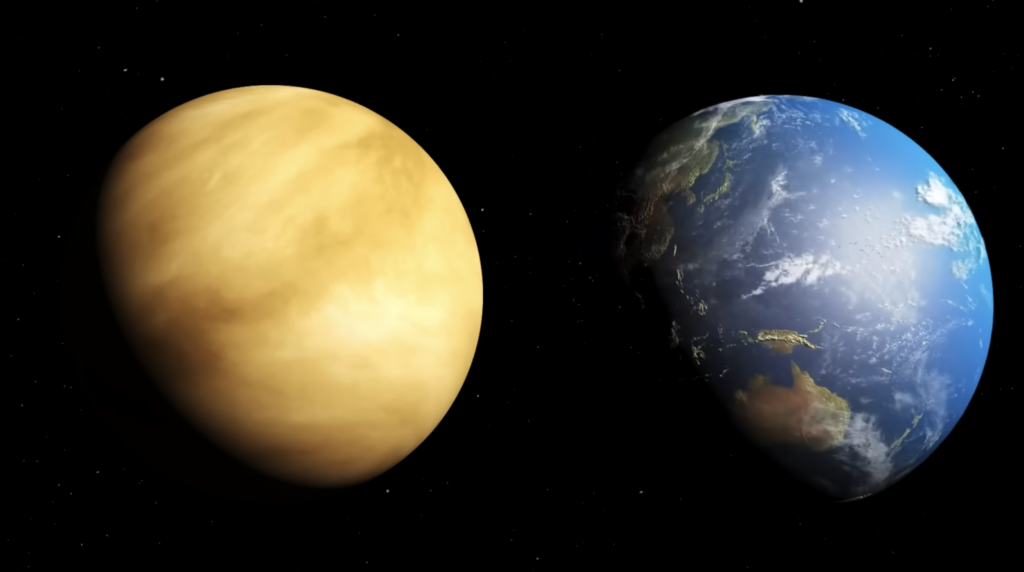
Venus is our nearest planetary neighbor, coming within roughly 40 million kilometers of Earth at certain points in its orbit. Close enough that a spacecraft could reach it in a few months.
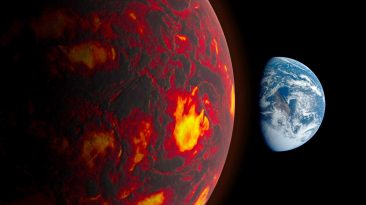
Both planets formed around 4.5 billion years ago in the same region of the Solar System. They share a similar diameter and comparable gravity, which makes them look like twins on paper.
In practice, Venus became one of the most extreme environments in the Solar System, and the question is not whether it is dangerous but how fast it destroys anything that arrives.
A Planet Hidden Behind a Thick Atmosphere
As a spacecraft descends, visibility collapses. Around 50 kilometers up, the environment turns into a dense haze where almost nothing can be seen clearly.

The atmosphere is so thick that sunlight struggles to penetrate it, leaving the surface permanently dim. It consists mostly of carbon dioxide, and that density drives a powerful greenhouse effect, trapping heat with no easy escape and turning the ground into a furnace.
Conditions shift from harsh to extreme long before you reach it.
The Surface Reveals a Hostile World
Lower down, the haze thins and the landscape appears: dry rocky terrain filled with mountains, plains, and volcanic structures, many believed to be active or recently active and constantly reshaping the surface.
Landing immediately creates problems, since dust and debris kicked up on arrival linger in the heavy atmosphere for minutes rather than settling.
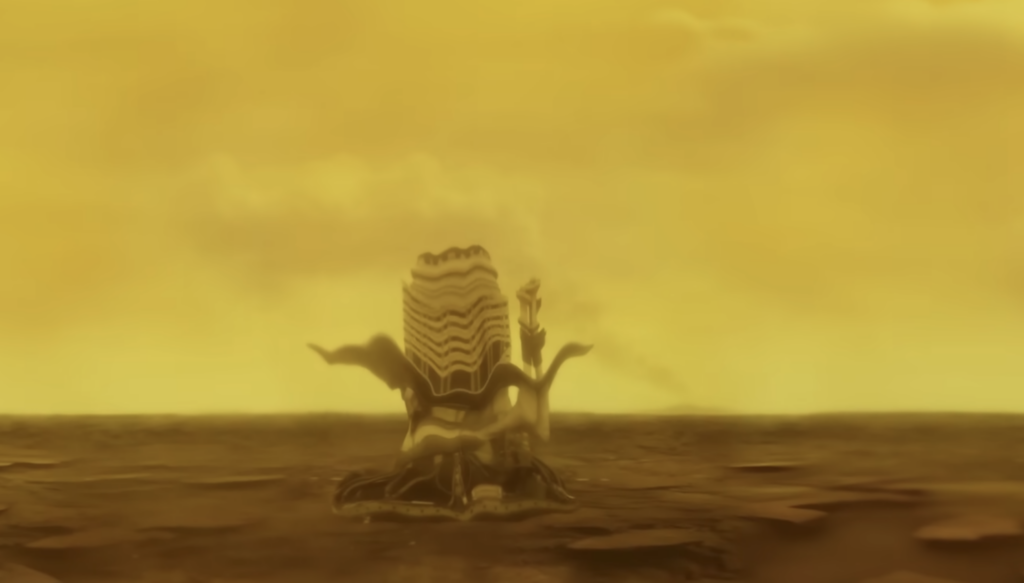
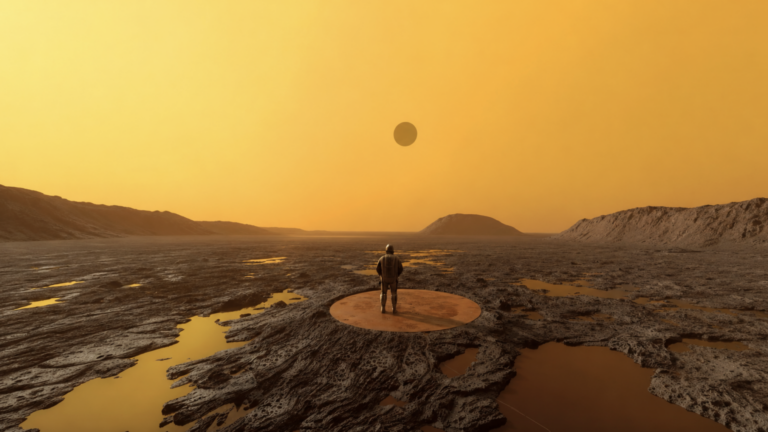
Once things calm, the sky still looks wrong. There is no bright Sun overhead, only a dim glow resembling a permanent sunrise, because roughly ten percent of sunlight is all that ever reaches the ground.
A Short Window of Survival
Now imagine a crewed mission somehow arriving intact. Stepping outside would feel less like exploration and more like walking into a machine built to destroy anything inside it.
Temperatures sit around 475 degrees Celsius, hot enough to melt many metals. The atmosphere presses down with nearly 90 times the force of Earth’s, comparable to being deep beneath a heavy ocean.
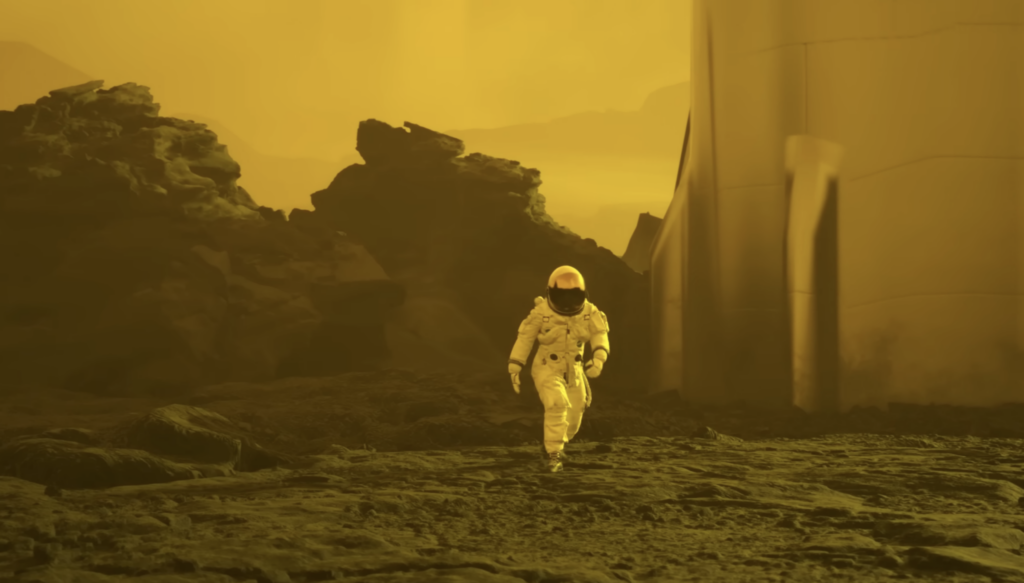
A protective suit would be the only thing between life and instant failure, because without it the environment overwhelms a human body almost immediately.
When Everything Goes Wrong
Even with advanced protection, survival depends on absolute system integrity, and one failure could end everything.
A ruptured suit means the pressure change alone would be devastating, with the atmosphere crushing the body from every direction while stripping away oxygen at the same time.
Any breath taken would not be air but a searing corrosive mixture that damages tissue instantly. Retreat would have to be immediate, since survival would be counted in seconds rather than minutes.
Venera 13 managed two hours with no lungs, no skin, and armor built specifically for the job. That is the benchmark, and it is the reason Venus turns proximity into danger and curiosity into genuine risk.