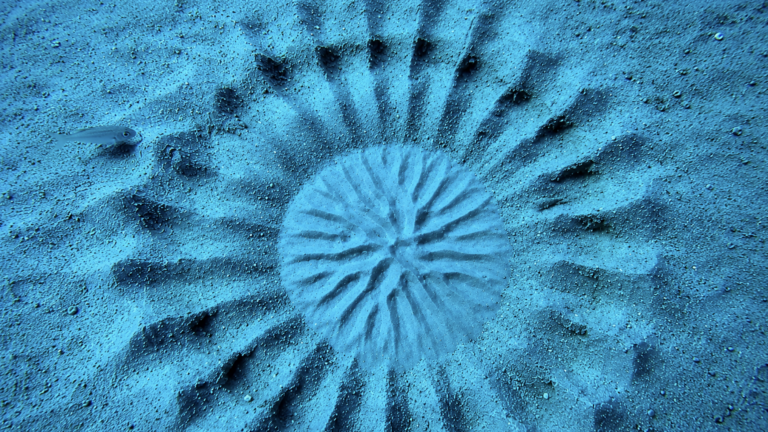
Somewhere off the coast of Japan in 1995, divers found something on the seafloor that should not have been there.
A perfect circle, roughly two meters across, carved into the sand. Intricate ridges radiating outward. Geometric symmetry so precise it looked measured. Decorative fragments placed around the edges like someone had finished the piece deliberately.
It looked designed. It looked human.
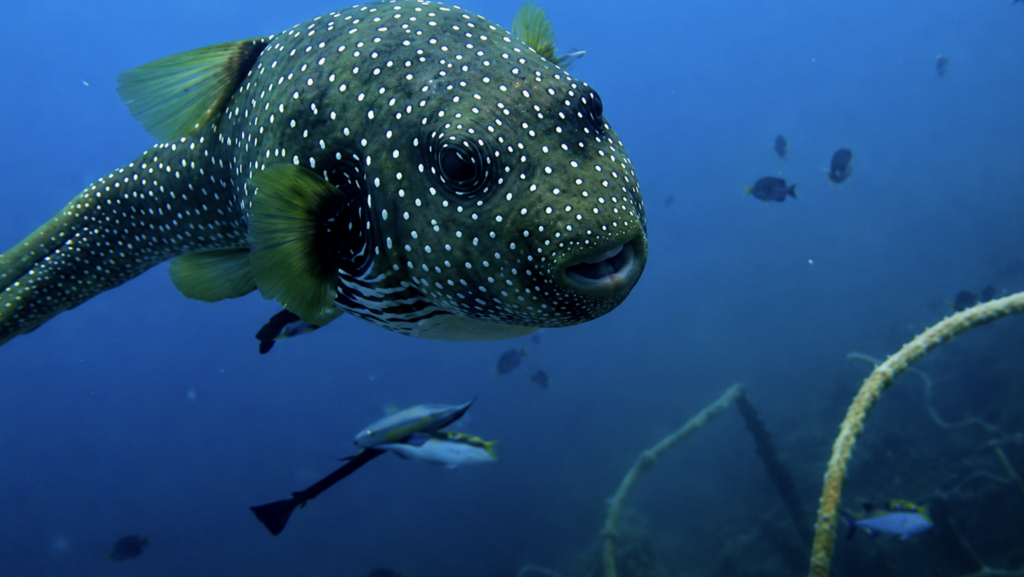
Nobody could explain it. Some scientists proposed strange geological activity, some unknown process shaping the sand into flawless patterns. Others joked about extraterrestrials, because at least that theory acknowledged how impossible the thing looked.
And then the years passed. The circles kept appearing on the seabed, and the mystery kept refusing to break. For nearly two decades, one of the ocean’s strangest phenomena had no explanation at all.
Until researchers finally caught the artist mid creation.
It was a fish. A small white spotted pufferfish, working alone in the sand.
Nobody had guessed it because the numbers make no sense. This tiny creature builds structures reaching almost two meters wide, many times the length of its own body. And it does it with nothing but its fins and an absurd amount of stubbornness, working continuously for as long as ten days to complete a single circle.
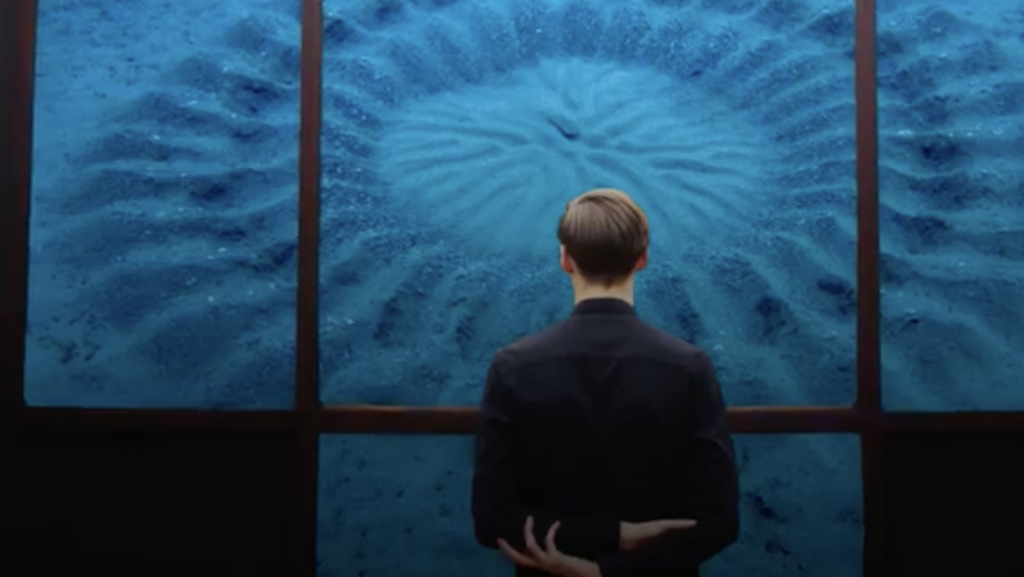
Watch him work and the process looks almost obsessive. He swims back and forth across the seafloor, using his pectoral, anal, and tail fins to push sand into precise ridges and valleys. Then comes the finishing touch that convinced everyone this was art: he decorates the structure with small shells and fragments of coral, placing them along the design.
The result is so intricate it seems impossible that a fish produced it.
And here is the part that makes the whole thing feel almost tragic. The ocean will erase it. Currents will smooth the ridges, scatter the shells, and eventually leave nothing at all. Ten days of relentless work, gone without a trace.
So why does he do it?
Because every breeding season, this circle is his entire argument for existing. Females arrive to inspect the finished nests, and the quality of the work determines whether a male gets chosen. If she approves of what she sees, she lays her eggs in a specially prepared area right at the center of the circle.
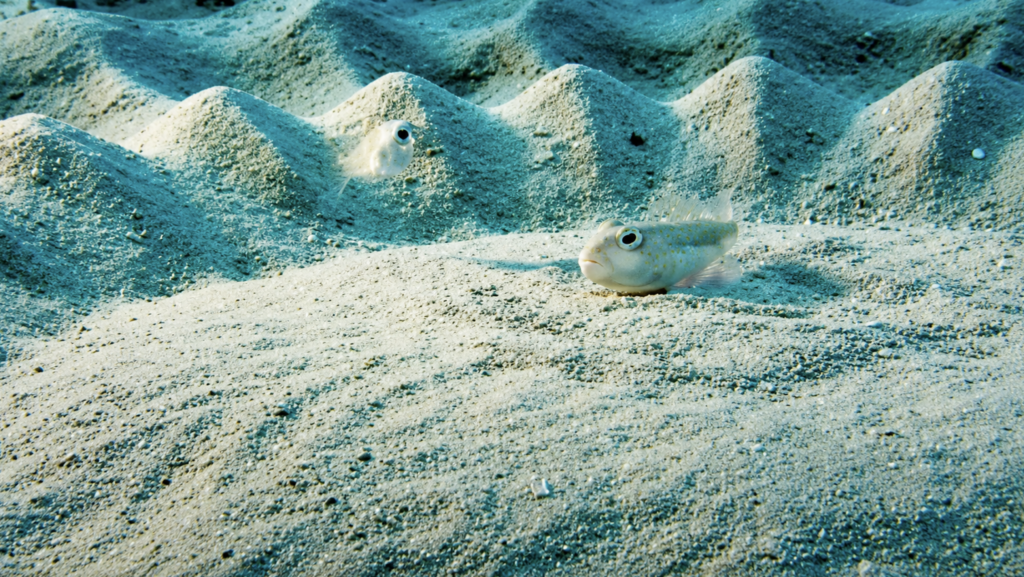
Then she leaves. The male fertilizes the eggs and stays behind alone, guarding them until they hatch. Only after that does he abandon his masterpiece and let the sea reclaim it.
Plenty of animals build to impress. Bowerbirds famously assemble decorative structures and gather colorful objects to win over females. But the pufferfish belongs in a different category entirely, because scientists discovered his circle is not just beautiful.
It is engineering.
Those ridges and grooves are not decoration. They are a machine. Instead of hauling fine sediment to the center himself, the male shapes the structure so that ocean currents do the labor for him, channeling water in a pattern that naturally deposits fine sand exactly where the eggs will go.
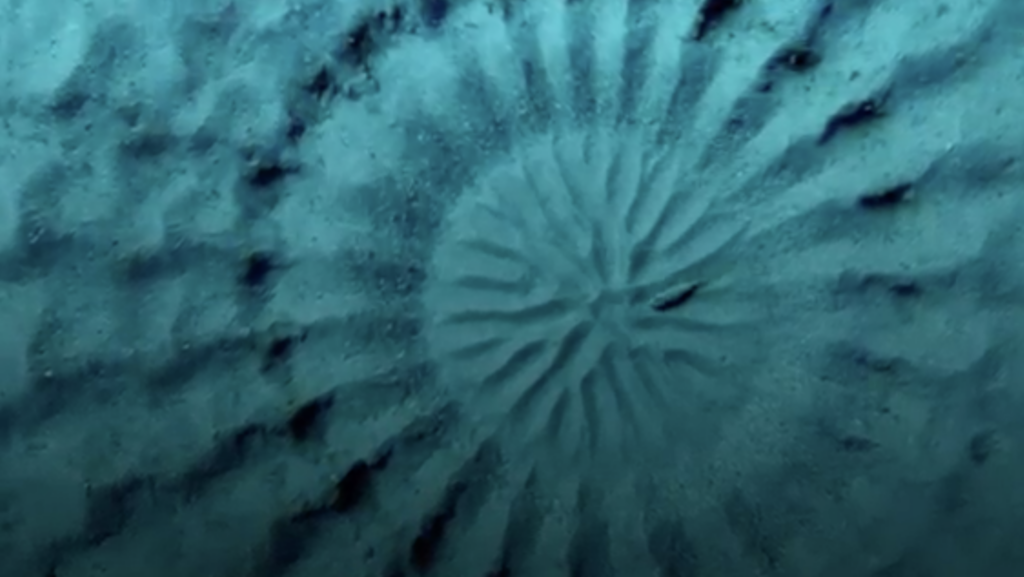
The design protects the eggs too. Those peaks and valleys around the rim slow the water moving through the center by as much as 25 percent, creating a calm pocket where the developing offspring are far less likely to be swept away by strong flows.
Even the sheer size may be intentional. Down there, visibility is poor and individual fish can be separated by long stretches of empty seabed. A structure this large might simply be the most effective way to be found, a signal broadcast across the ocean floor.
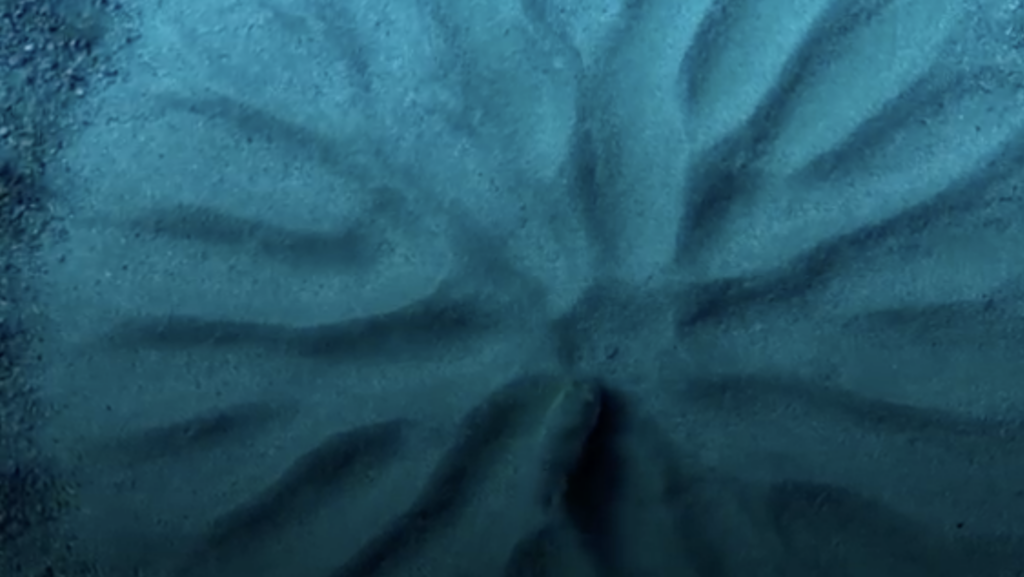
Yet even now, the mystery is not fully solved. Scientists still cannot say what a female is actually judging when she inspects a nest. Is it the symmetry? The craftsmanship? Or does she care only about the quality of the fine sand gathered at the center?
Current evidence leans toward the sediment mattering more than the artistry, which is a slightly deflating answer for such a beautiful creation.
But it changes nothing about what this fish accomplishes. Hidden beneath the waves, a creature small enough to hold in your hand turns plain sand into geometric masterpieces that fooled human scientists for years.
Divers found the art in 1995. It took far longer to find the artist. And when they finally did, the answer was stranger than aliens: nature’s greatest artist turned out to be its most skilled engineer as well.