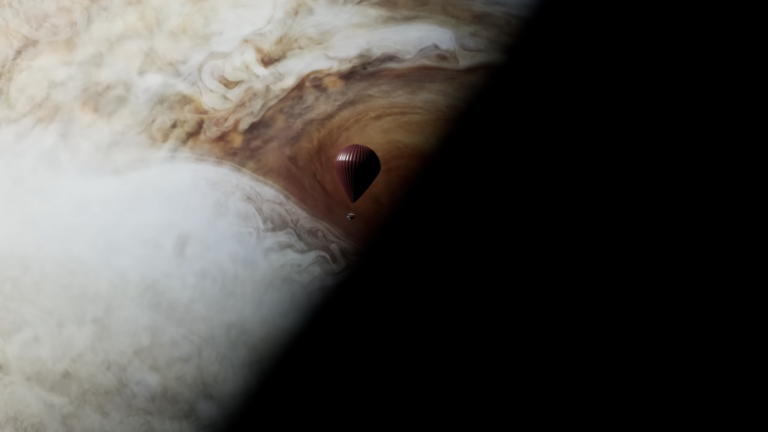
Jupiter is the largest planet in our Solar System, and it is also one of the most extreme places humans could ever encounter. This massive gas giant is filled with powerful storms, crushing pressure, and deadly conditions that would make survival impossible.
If you somehow traveled to Jupiter and tried to land on it, you would quickly discover something strange. Unlike Earth, Jupiter does not have a solid surface. There is no ground to stand on. The planet is made mostly of hydrogen and helium, meaning you would simply continue falling deeper into its atmosphere.
At first, the experience might not seem as terrifying as expected.
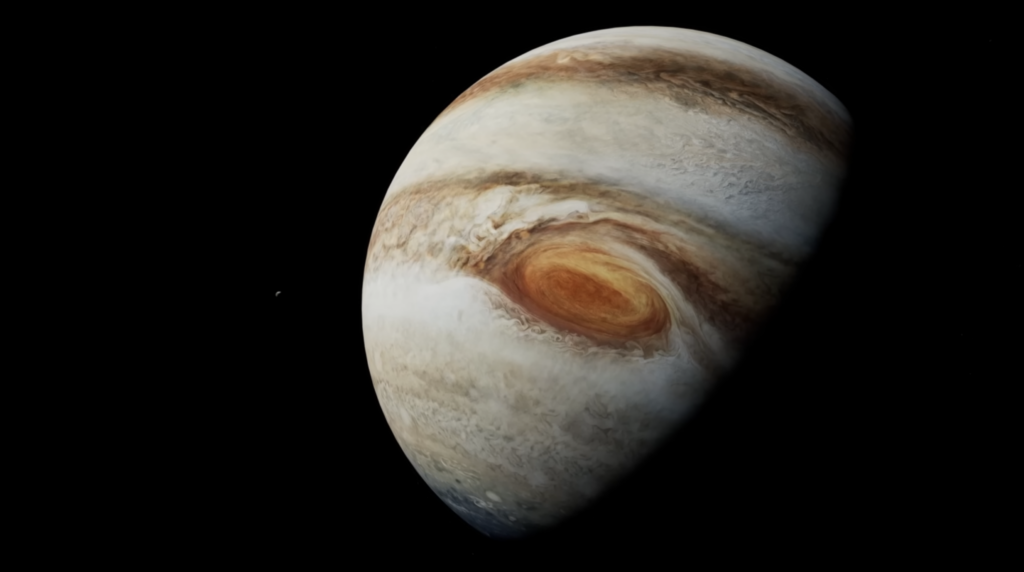
High above Jupiter, the upper atmosphere is surprisingly calm. The pressure would actually be lower than what you feel on Earth, and your spacecraft could remain stable for a short time. However, the temperature would already be a serious problem, dropping to around -145 °C (-234 °F).
Your protective capsule would keep you alive, but as you descended deeper into the planet, Jupiter would begin revealing its true nature.
Around 50 km (31 mi) below the cloud tops, the conditions would start changing rapidly. The atmosphere would become more chaotic, and powerful winds would begin shaking your capsule. These storms can produce winds reaching up to 360 km/h (224 mph), creating violent turbulence unlike anything experienced on Earth.
But the wind would not be your biggest problem.
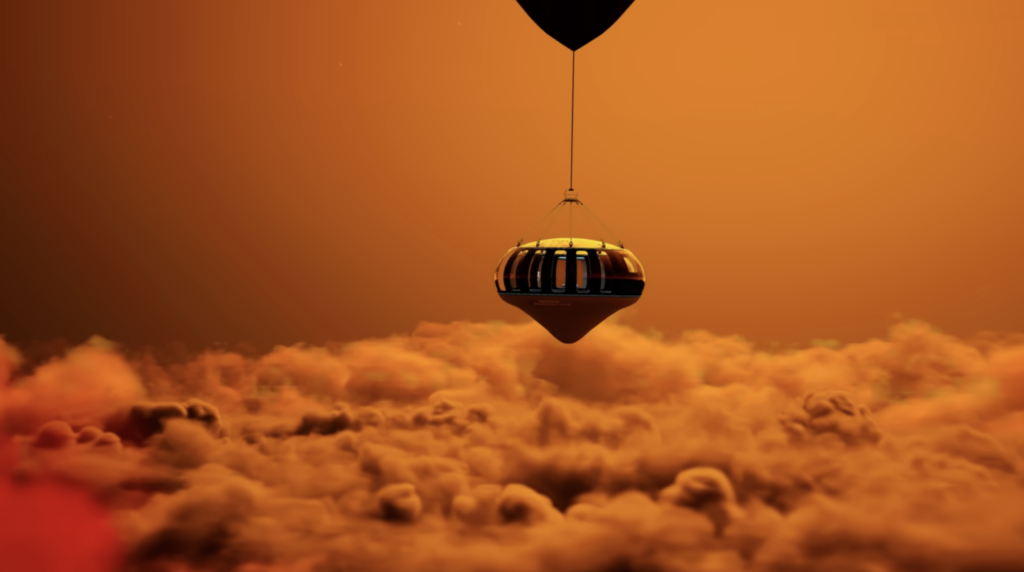
Jupiter is home to some of the most intense lightning storms in the Solar System. While the upper atmosphere may appear quiet, deeper inside the clouds, enormous electrical charges build up as violent storms rage around the planet.
Suddenly, your spacecraft would be surrounded by a dangerous electrical environment. Lightning strikes would become more frequent, flashing through the thick clouds around you.
Then, disaster would strike.
A powerful lightning bolt could hit your capsule directly. The energy released by these storms is enormous, with some lightning strikes on Jupiter producing enough power to supply electricity to entire cities on Earth.
For your small spacecraft, however, it would be catastrophic.
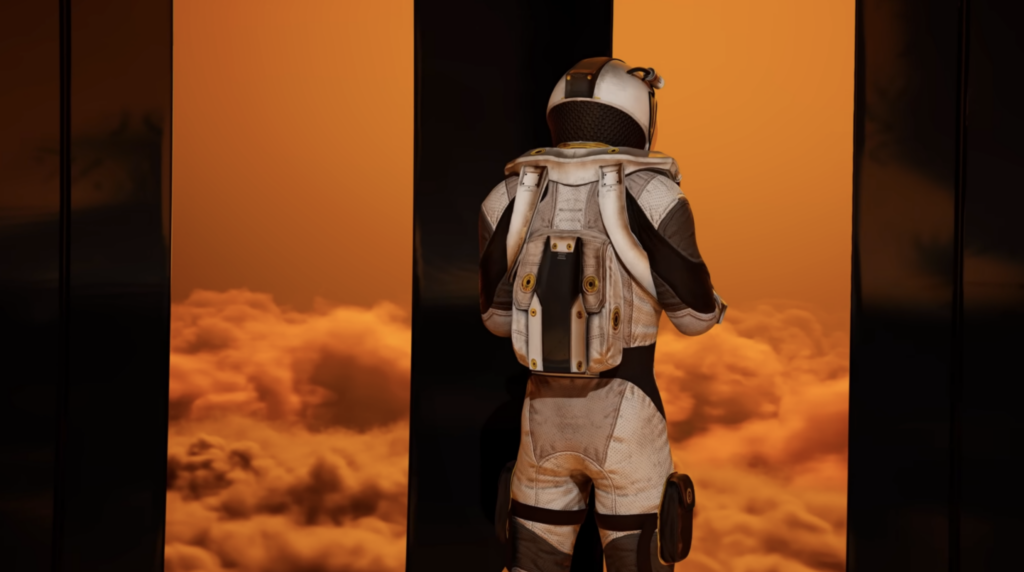
The electrical systems would fail, communication with the outside world would disappear, and the life support systems could shut down. Without working oxygen supplies or heating, the temperature inside the capsule would quickly fall.
You would become trapped inside a powerless spacecraft, falling deeper into Jupiter’s atmosphere while surrounded by freezing temperatures, extreme winds, and endless storms.
But the worst is still ahead.
As you continue descending, the pressure would become unimaginable. Jupiter’s atmosphere becomes so dense and compressed that the spacecraft would eventually be crushed by the planet’s immense force.
There would be no dramatic impact because there is no surface to hit. Instead, you would disappear deeper into the gas giant, where pressure and heat would continue increasing until nothing could survive.
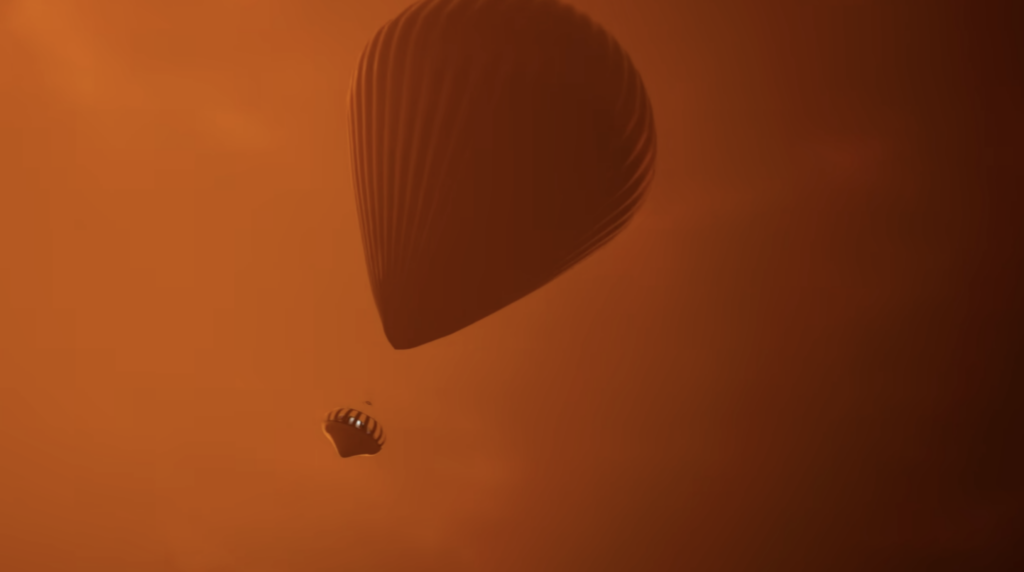
Jupiter is not a planet you could ever explore like Earth. It is a world of endless storms, crushing pressure, and extreme conditions that make it one of the most hostile places in the Solar System.
So, what would happen if you died on Jupiter?
You would freeze, lose your life support, be destroyed by the crushing atmosphere, and eventually become part of the giant planet itself.
Jupiter may be the king of the planets, but it is also a place where humans would have almost no chance of survival.