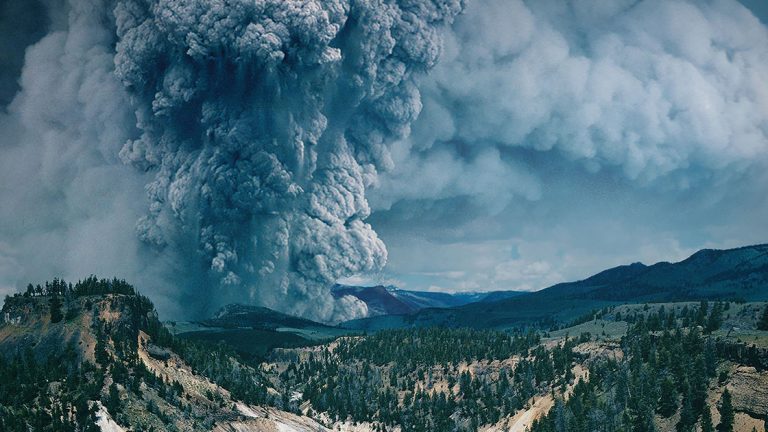
The scenery at Yellowstone did not form gently. Those valleys, ridges, and wide open basins were carved by explosions, and the most recent one happened roughly 640,000 years ago.
Before that came eruptions around 1.3 million and 2.1 million years ago. Every visitor photographing the landscape today is standing inside the wreckage of the last one.
And the system that made it is still down there.
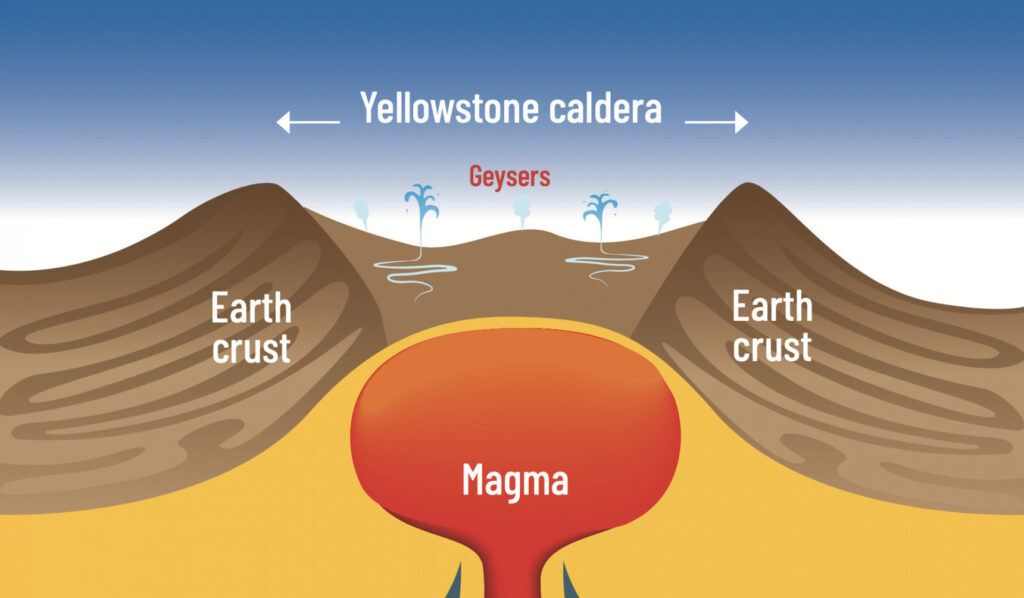
Yellowstone is not a typical volcano perched on a mountain peak. It is a supervolcanic system, capable of eruptions on a scale beyond anything in recorded history.
Ordinary volcanoes produce lava flows and localized explosions. A supervolcano can affect an entire continent. Beneath the calm surface in Wyoming sits an enormous reservoir of magma that has been reshaping the region for millions of years.
So what happens if it goes again, not in some distant future, but now?
The First Hours
There would be almost no time to react, and it would not begin as lava spilling across the ground. It would start as an explosive release of pressure from deep underground.
Most of the material would never stay molten. It would shatter into vast volumes of ash and rock fragments blasted high into the atmosphere at extreme speed, and that ash would not be soft or harmless. It would be sharp, hot, pulverized rock.
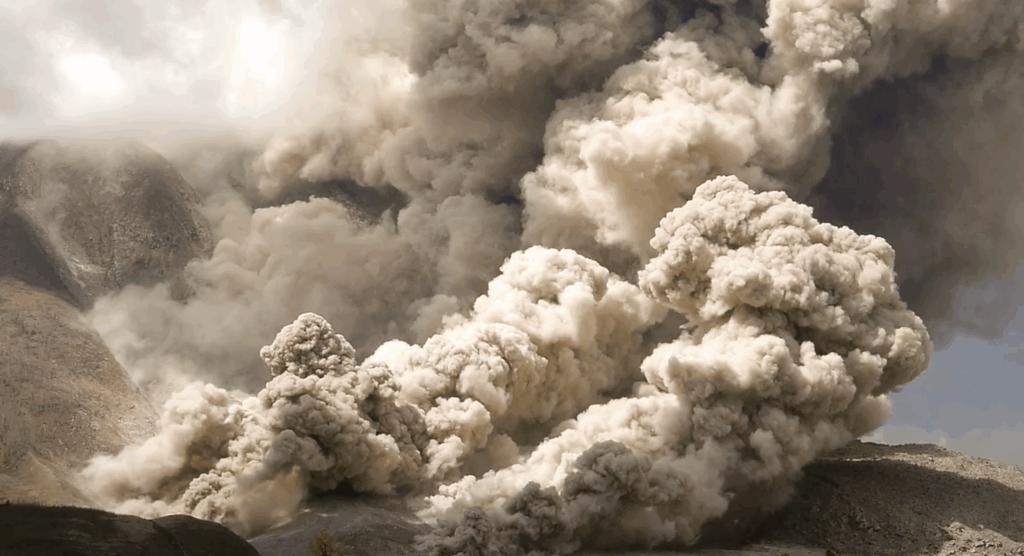
Nearby areas would be devastated almost instantly, with infrastructure collapsing under the weight of falling ash and the air itself turning lethal as fine particles filled it.
A Continent Covered in Ash
The ash would spread far beyond Wyoming, blanketing large portions of the United States, with heavy accumulation even hundreds of kilometers away.
In the worst zones, ash could pile deep enough to collapse buildings and make travel impossible. Breathing it would be extremely dangerous, since the particles damage the respiratory system and block airways.
Distance would not guarantee safety either. Layers only a few millimeters thick still disrupt transportation, contaminate water supplies, and destroy machinery and power systems.
Global Consequences
North America would not contain it. Ash injected into the upper atmosphere would circle the globe on wind currents over weeks and months, reaching distant continents as fine volcanic dust.
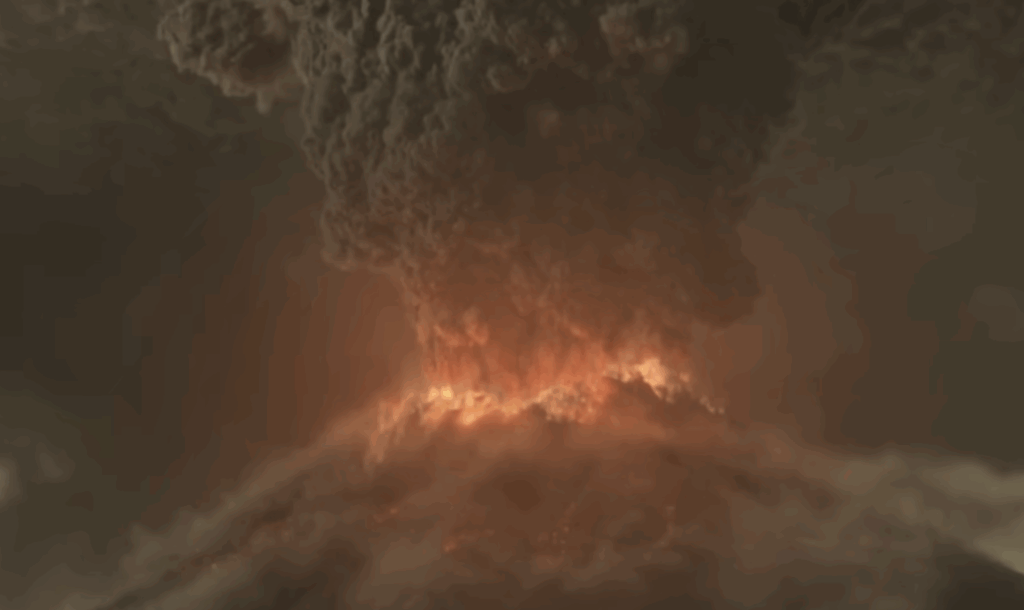
The atmosphere itself would change. Sunlight would be partially blocked by the cloud of ash and aerosols, dropping global temperatures noticeably.
This is what scientists call a volcanic winter, and it could last for years, shortening growing seasons, disrupting agriculture, and straining food supplies worldwide.
Earth would not become uninhabitable, but living here would get considerably harder. Transportation struggling under fallout, farming crippled, and many regions facing shortages and economic damage long after the eruption itself ended.
How Likely Is Any of This
Here is the reassuring part. A Yellowstone supereruption is considered extremely unlikely in the near future, since geological evidence shows these events are separated by hundreds of thousands of years or more.
What Yellowstone actually produces far more often are smaller hydrothermal explosions and lava flows, dangerous locally but nowhere near supervolcanic scale. Modern monitoring shows no sign that a large eruption is coming, and it remains one of the most closely studied volcanic systems on the planet.
So the distinction worth keeping is between possibility and probability. This is a system capable of immense destruction that has stayed quiet for hundreds of thousands of years.
It built the landscape people travel across the world to photograph, and it works on geological time rather than human lifetimes