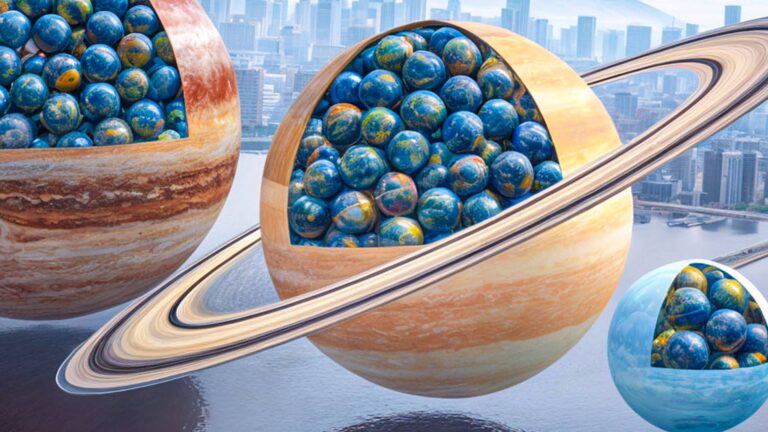
Take Earth, the entire planet with every ocean, mountain, and city on it, and treat it as a unit of measurement.
Jupiter could hold 1,321 of them.
Then take Jupiter, the largest planet in our Solar System, and set it against the Sun. Our star could swallow 988 Jupiters, or 1,305,693 Earths.
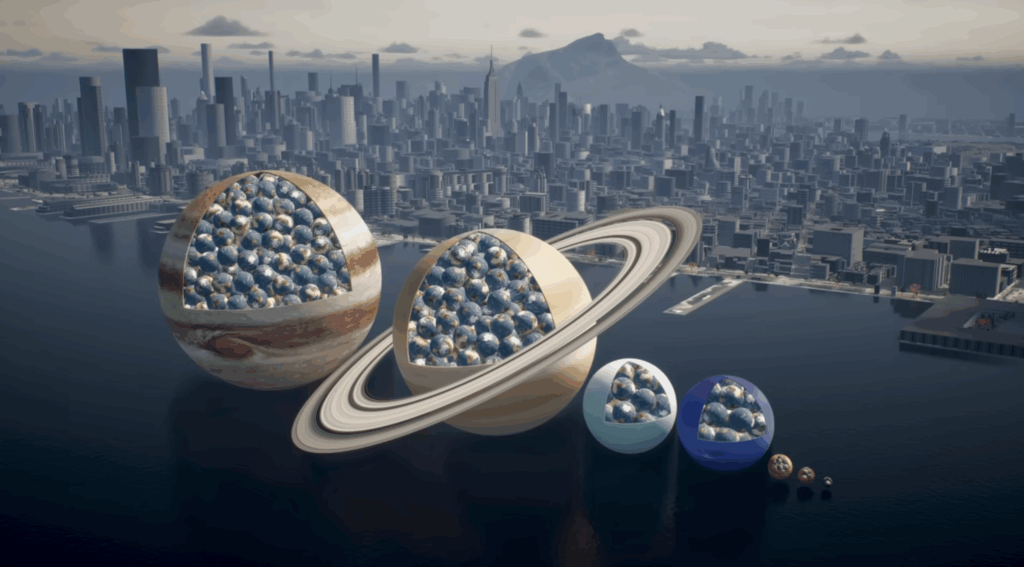
The Solar System holds an extraordinary range of worlds, from tiny rocky planets to enormous gas giants. Running the comparisons is the only way to properly see how far apart they really are, and the numbers climb faster than most people expect.
Let us start at the bottom.
Mercury: The Smallest Planet
Mercury is so small it cannot fit even one Earth inside it. What it can hold are moons: almost two Moons, or three Europas, or eight Plutos, or 29 Titanias, a moon of Uranus.
Enceladus, a tiny Saturnian moon just 500 kilometers across, would need 906 copies to fill Mercury. Even the smallest planet already deals in hundreds.
Mars: The Red Planet
Mars is roughly half the size of Earth and could fit two Mercuries inside its volume, along with seven Moons and a surprising number of Plutos.
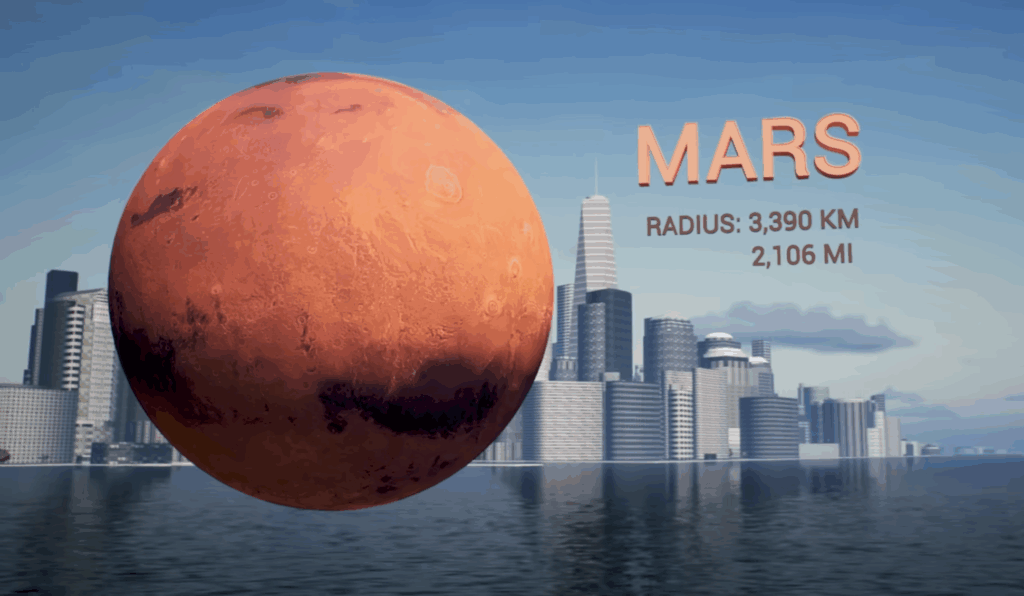
Smaller than Venus or Earth, but still far larger than Mercury, and a useful reminder that even modest planets are enormous by human standards.
Venus: Earth’s Twin
Venus is almost identical in size to Earth, which is where the twin nickname comes from. It could fit five Marses inside, or 15 Mercuries, or 42 Moons, and it would even accommodate Ganymede, the largest moon of Jupiter.
Earth
Our own planet could hold 49 Moons inside its volume.
Against the giants further out, that makes Earth look modest, yet it is large enough to sustain complex life and hold a unique atmosphere. It also serves as the baseline everything else gets measured against.
Neptune: The Smallest Ice Giant
Neptune may be the smallest ice giant, and it still dwarfs everything rocky. It could hold 67 Venuses, 380 Marses, or 1,027 Mercuries, and 57 Earths would fit inside its volume.
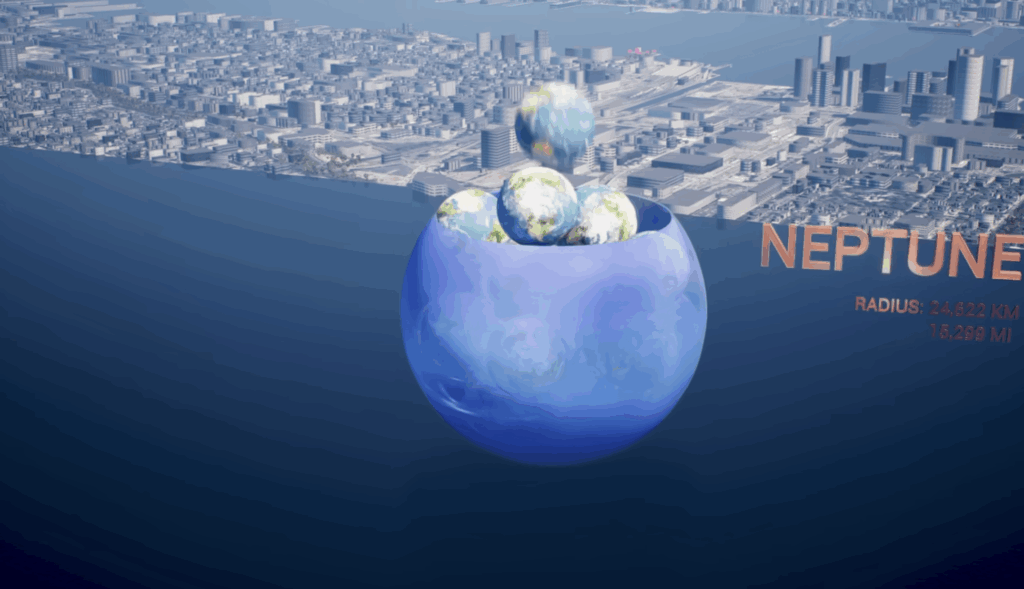
This is where the scale starts escalating sharply beyond the inner planets.
Uranus
Uranus is only slightly larger than Neptune, but it fits one Neptune plus 63 Earths inside it, and nearly 10,000 Plutos.
A genuine giant of the outer Solar System, and still smaller than the two that follow.
Saturn: The Ringed Giant
Saturn moves things onto another level entirely. Twelve Uranuses would fit inside, along with slightly more Neptunes.
In Earths, the figure is 763. Add 890 Venuses, 13,000 Mercuries, or over 100,000 Plutos. The rings get all the attention, and the planet underneath them is the real spectacle.
Jupiter: The Largest Planet
Jupiter could contain an entire Saturn, or 20 Uranuses, or 22 Neptunes.
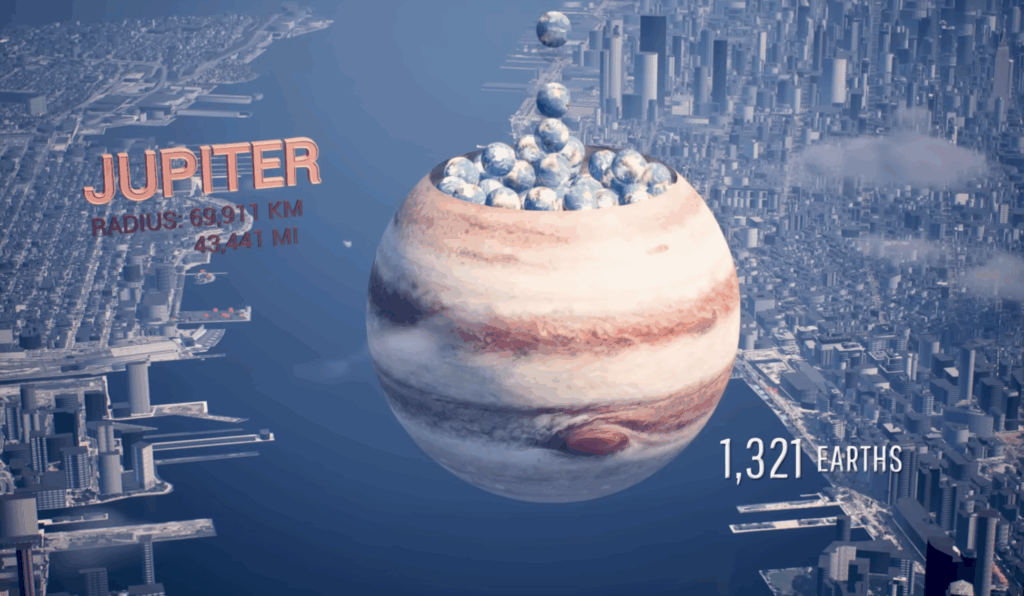
Against the rocky worlds the numbers turn absurd: 1,321 Earths, over 20,000 Mercuries, and 203,000 Plutos, all inside a single planet.
The Sun: The True Giant
And then even Jupiter shrinks.
Our star could hold 988 Jupiters, which works out to 1,305,693 Earths. That number is difficult to picture at all, and the Sun dominates this system in gravity and energy just as completely as it does in size.
From Mercury, barely large enough for a few moons, to a star that could swallow more than a million Earths, the contrast is genuinely humbling.
It is also a reminder of how much variety orbits one ordinary star, and how unusual our own small planet turns out to be.