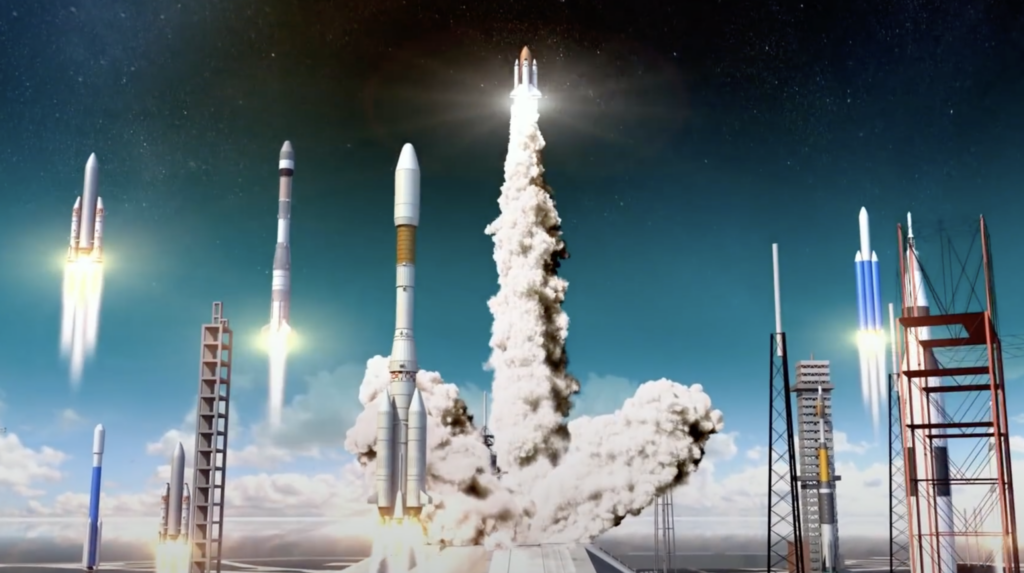
Every rocket we launch brings us one step closer to being locked on this planet permanently.
That sounds backwards. Sending things into space should open it up, not close it. But there is a scenario with a name, Kessler syndrome, where our own debris seals the door behind us, and generations of humans never get to leave.
Almost everything we launch either falls back and burns up in the atmosphere, or gets caught in Earth’s lower orbit for thousands of years.
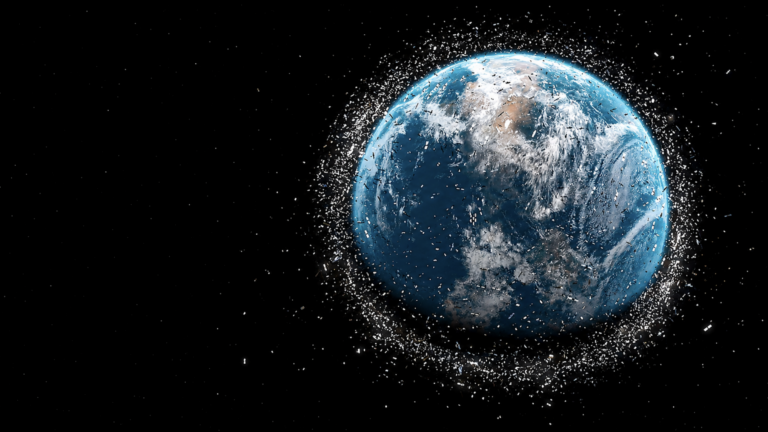
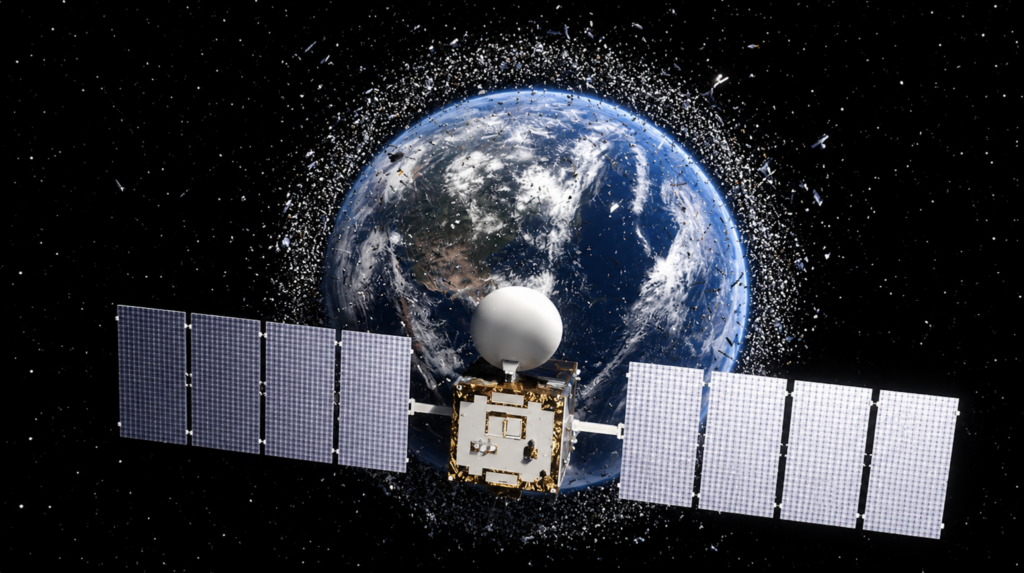
Right now that lower orbit holds just 200 kg of small rocky debris in the form of natural meteoroids. It also holds a belt of roughly 3 million kg of space junk that we put there.
That includes 20,000 pieces the size of a softball, 500,000 pieces larger than a marble, and many millions too small to track at all. Together they are turning the space around us into an impassable junkyard.
So what makes fragments of old satellites and spent rocket bodies so dangerous? Speed.
This junk travels at 8 km per second. At that velocity, a single small bolt carries enough energy to shatter a working satellite into hundreds of pieces.
And that is where the real problem begins. The more uncontrolled junk we leave up there, the harder it becomes to avoid being hit.
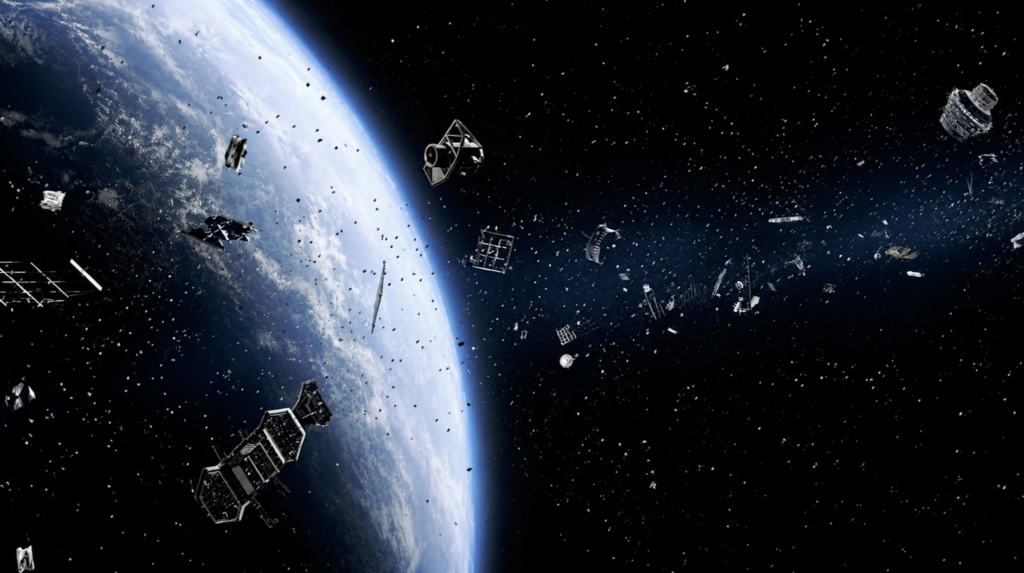
Debris is already colliding with debris, breaking apart and multiplying the number of objects flying through orbit. Some of it is hitting working spacecraft too.
Eventually, enough satellites could be struck to trigger an unstoppable chain reaction.
That cascade is Kessler syndrome. Collisions create fragments, fragments cause more collisions, and the process feeds itself until no active spacecraft remain and Earth’s orbit becomes a wall of celestial scrap.
Near Earth space would simply stop being usable. No rocket could launch safely until the orbit was cleared, which means every mission paused and humanity grounded for generations.
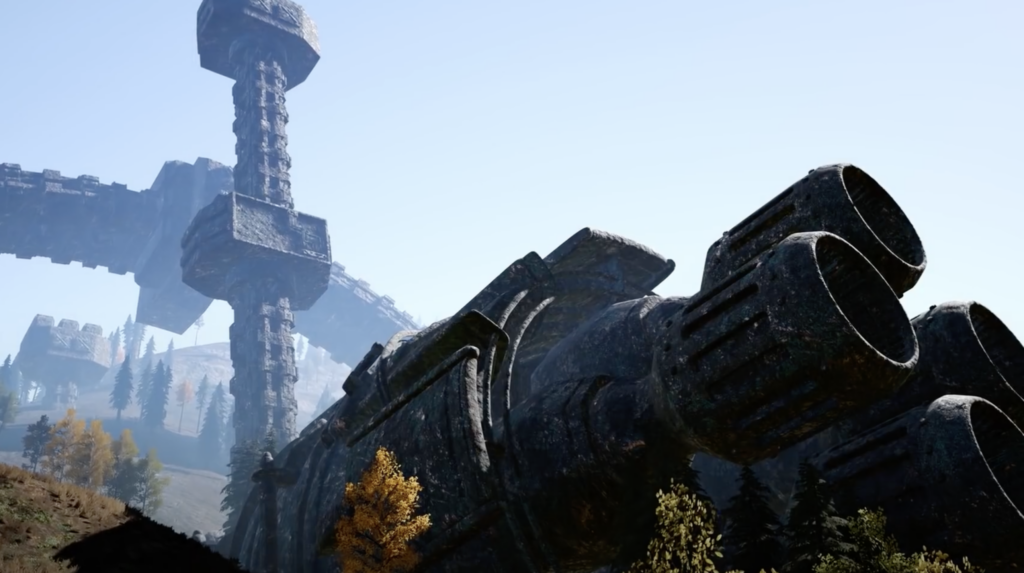
Life down here would change in stranger ways than you might expect.
The debris belt would not rain destruction onto the surface, since space rubbish disintegrates in the atmosphere before reaching the ground. But all those collisions would generate enormous amounts of dust.
Sunlight catching that dust would create a permanent twilight across the planet. A form of light pollution so total that you would forget what a real night looked like.
Worse, every satellite network would go dark. No satellite communications, no GPS navigation, no weather data, and no way to conduct science in orbit at all.
Paper maps come back. Cash comes back. Welcome to the 1970s.
There is good news, though. Scientists have already proposed ways to clean up the mess, including capturing debris with nets or harpoons and vaporizing smaller fragments with lasers.
Whichever approach we choose, the timing matters. Every year we wait adds more junk to the pile, and the window for launching humanity toward Mars stays open only as long as we can still get off the ground.