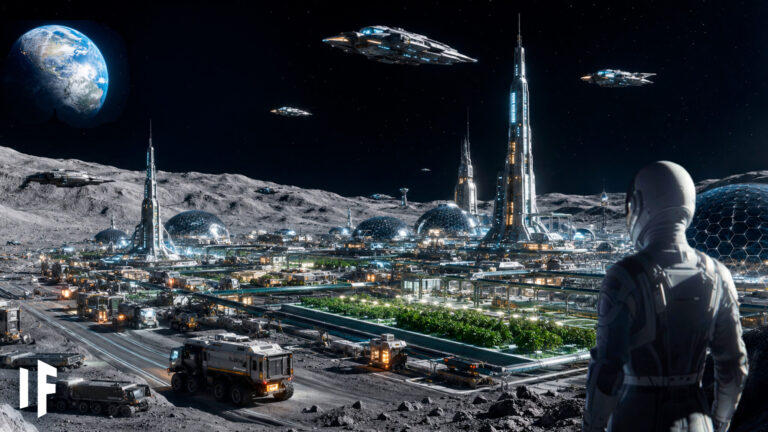
Everything you take for granted has a price on the Moon.
Air is manufactured. Water is mined and recycled endlessly. Warmth is engineered. Even a walk outside requires planning worthy of a military operation, because a single mistake in a vacuum offers no second chances.
Welcome to the year 2126. Through your window, Earth hangs silently above the lunar horizon, a view once reserved for a handful of astronauts. Now it is the everyday backdrop for thousands of residents of Luna Prime, the first permanent city NASA and its international partners have built beyond our planet.
The city is real. The technology works. But make no mistake, living here demands payment every single day, and the currency is vigilance.
Because compared to the Moon, even Antarctica feels like a beach resort.
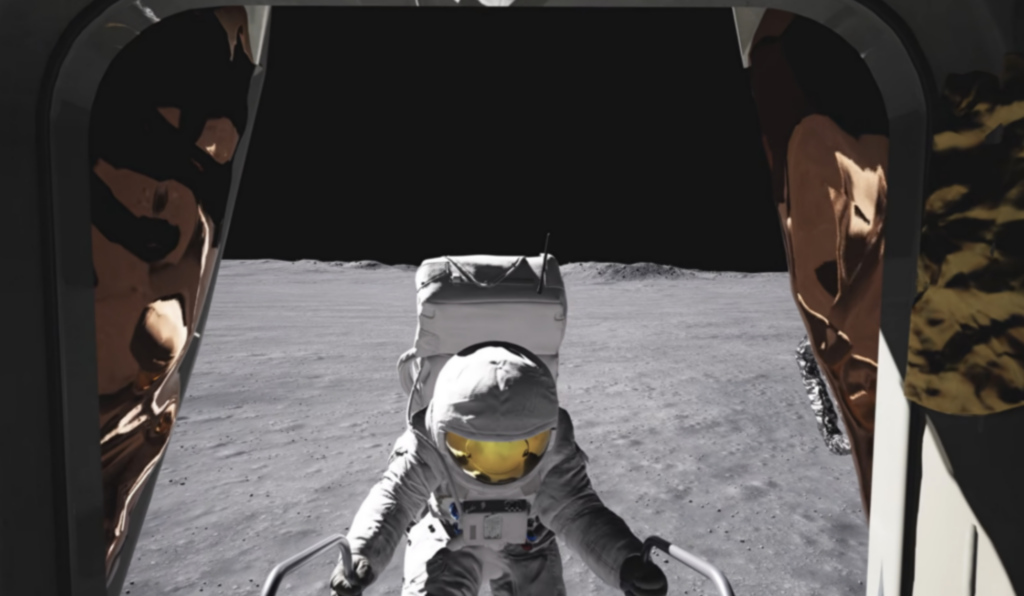
So what does an ordinary day actually look like in a place that wants you dead?
Yours begins on an automated transit line gliding toward the vast solar farms outside the city. Electricity is not a convenience here. It is the bloodstream of everything: every habitat, every greenhouse, every laboratory, every antenna pointed back at Earth.
Your assignment today is routine, inspecting solar arrays and checking the heating systems that keep equipment alive inside permanently shadowed craters. But the word routine means something different on the Moon.
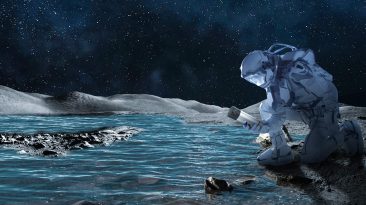
Stepping outside is the first cost.
Fragments of space debris streak across the lunar surface at staggering speeds, and out here there is no atmosphere to burn them up. Something as small as a grain of sand can pierce a spacesuit, cripple machinery, or knock out the life support keeping an entire habitat breathing.
Then there is the environment itself, which never stops trying to kill you.
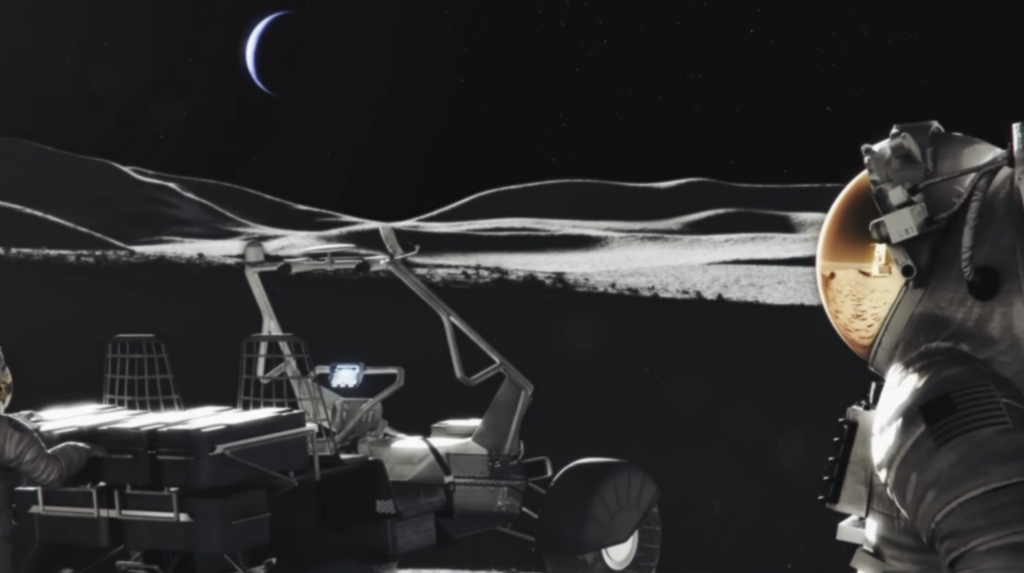
A single lunar day drags on for almost a full month by Earth time. Near the equator, that means roughly fourteen days of relentless sunshine followed by fourteen days of unbroken night. Under the sun, the surface bakes at more than 127 degrees Celsius. When darkness falls, it plunges below minus 170.
No atmosphere softens those swings. No air to breathe. No weather. No magnetic field standing between your body and the radiation pouring off the Sun. When a powerful solar storm erupts, anyone caught outside without shielding has minutes, not hours.
Humanity pays these costs through engineering. Reinforced habitats, radiation barriers, thermal systems, and life support machines that never sleep, all of it standing between thousands of people and instant catastrophe.
Which raises the obvious question: why pay any of this at all? Why build a city in a place this hostile?
The answer is written in physics.
Escaping Earth is brutally expensive because of its gravity. Nearly the entire mass of a rocket at launch is just fuel, burned for the sole purpose of tearing free from our planet’s pull.
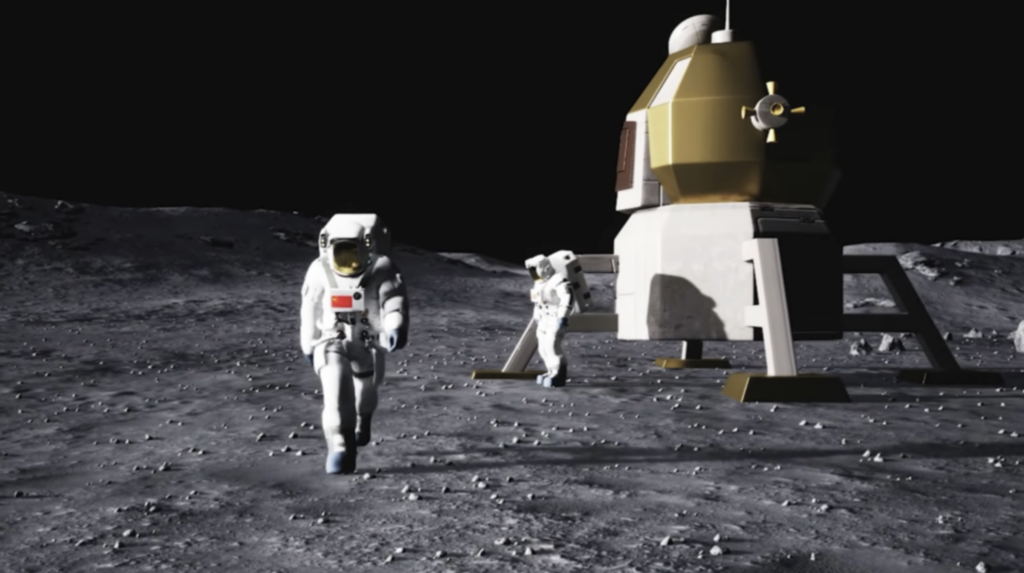
The Moon flips that equation.
With gravity only one sixth as strong and essentially no atmosphere in the way, launching from the lunar surface is dramatically cheaper and easier. That transforms the Moon from a destination into something far more valuable: a gateway.
Ships bound for Mars, the asteroid belt, and the outer planets could all depart from lunar spaceports. Engineers have even designed electromagnetic launch systems that could hurl cargo into space without conventional rockets at all.
And Luna Prime itself resembles no city ever built on Earth.
Here, everything is connected to everything else. Oxygen is generated, recycled, and monitored around the clock. Water is captured and purified in an endless loop. Food grows inside sealed climate controlled farms. Enormous computer systems balance temperature, pressure, and power distribution every second of every day.
That interdependence is another hidden cost.
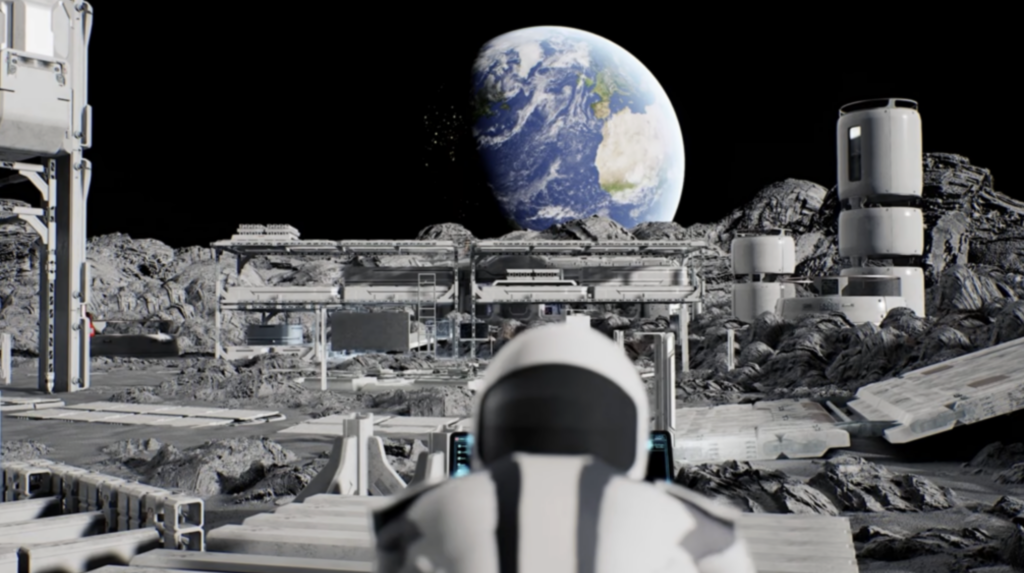
One failed component could cascade through the entire settlement like falling dominoes. That is why nearly every critical system exists in duplicate or triplicate, ready to take over the moment something breaks. On the Moon, redundancy is not caution. It is survival.
But machines are only half the battle. The heaviest price may be the one paid inside the human mind.
Living hundreds of thousands of kilometers from home creates an isolation unlike anything in human history. Residents spend months or years sealed inside the same walls with the same small circle of people. Long duration isolation studies have shown exactly what that does: rising stress, growing conflict, and creeping mental exhaustion when left unmanaged.
So the designers of lunar cities fought back with architecture. Recreation zones, green spaces, gathering places, and carefully structured schedules all exist for one purpose, keeping minds as healthy as bodies.
Crossing the city, you pass a strange monument: the preserved shells of the very first lunar habitats, dwarfed by the giant domes that now surround them.
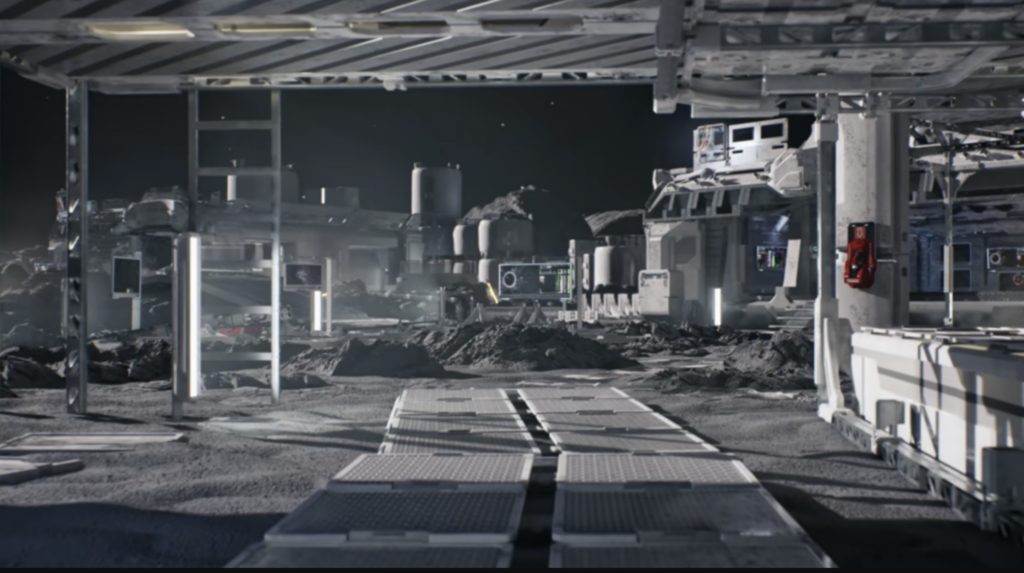
Those cramped outposts were born from a single discovery that changed everything: confirmed water ice near the Moon’s south pole. Water meant something to drink. It meant oxygen to breathe. It meant hydrogen for rocket fuel. In one stroke, permanent settlement went from fantasy to engineering problem.
The building methods evolved just as fast. Instead of hauling every brick from Earth at astronomical expense, engineers learned to build with the Moon itself. Using 3D printing and high powered lasers, they fused lunar regolith, the fine gray dust blanketing the surface, into tough construction material that shields residents from radiation and micrometeorite strikes.
Research stations grew into bases. Bases grew into neighborhoods. Neighborhoods became a city.
And the location was no accident. Luna Prime stands near the south pole because certain elevated ridges there catch sunlight almost year round, feeding the solar farms nearly without interruption. Just next door, permanently shadowed craters hold vast reserves of frozen water, arguably the most precious substance beyond Earth.
Energy, water, and communications, all concentrated in one region. That is what made the south pole the address of humanity’s first extraterrestrial city.
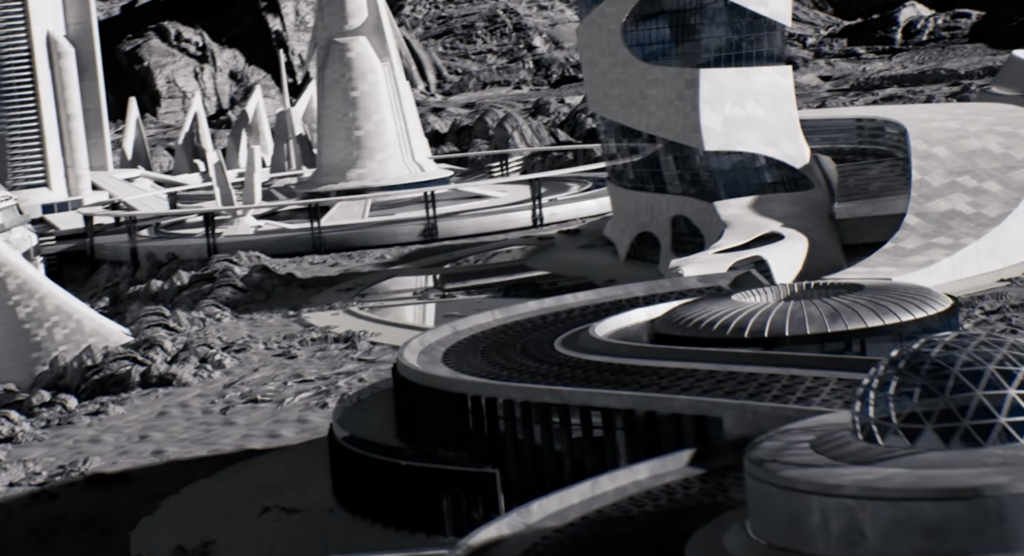
Your shift ends, and you step outside one last time. Above you stretches a sky of absolute black, filled with stars that burn steadily without a single twinkle. There is no air here to blur their light.
In the distance floats Earth, blue and white and impossibly bright, the place where every human story began.
This is the final accounting of life on the Moon. Every breath runs on technology. Every trip outside is a calculated risk. Every day must be earned.
And yet Luna Prime is worth every cost, because it is more than a city. It is proof, humanity’s first permanent foothold beyond its home world. If people can build thriving communities in a place this lethal, then Mars, the moons of Jupiter, and perhaps worlds far beyond our Solar System stop being dreams.
They become the next addresses on the map.