There would be no flash in the sky. No sirens. Nothing on the news telling you to take cover.
A black hole does not announce itself. It gives off no light, no heat, no signal of any kind. It simply arrives.
And the one worth fearing most might be small enough to hide in your hand.
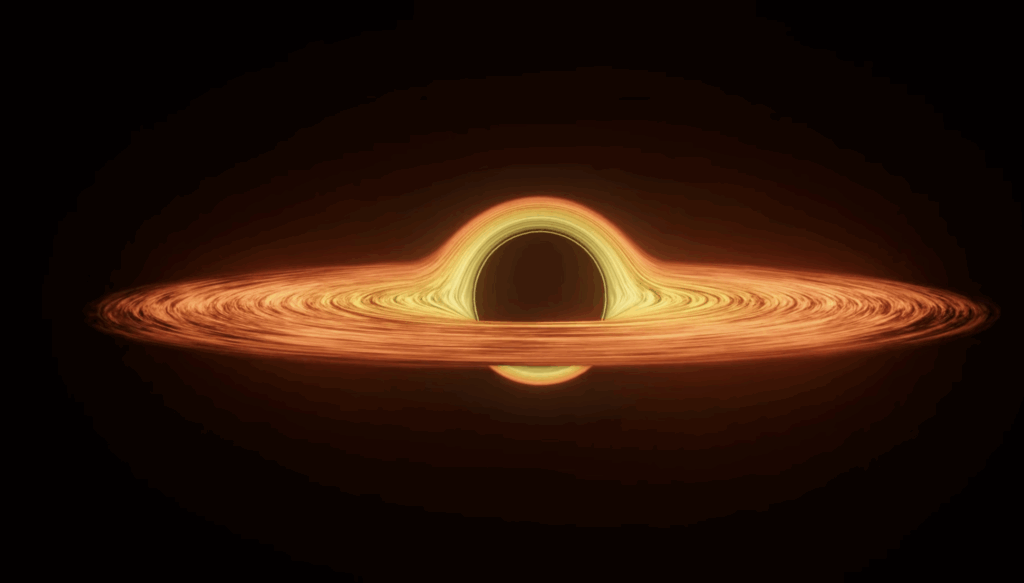
We usually picture black holes as monsters lurking in deep space, swallowing stars and bending light. But imagine one smaller than a coin, carrying the entire mass of Earth compressed into something you could barely see.
Now send that cosmic bullet racing toward us.
At first nothing seems wrong at all. Then everything changes.
As it approached, its gravity would start pulling on our planet, with the near side feeling a far stronger force than the far side. Scientists call these tidal forces, and the effects would be devastating.
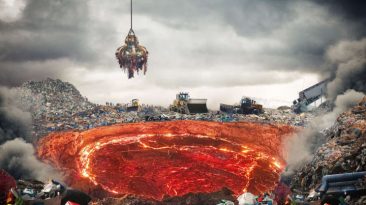
The crust beneath your feet would flex and shift. Earthquakes would erupt along major fault lines. Volcanoes silent for centuries could wake. Enormous waves would race across the oceans as coastlines buckled under sudden gravitational change.
Then it reaches us.
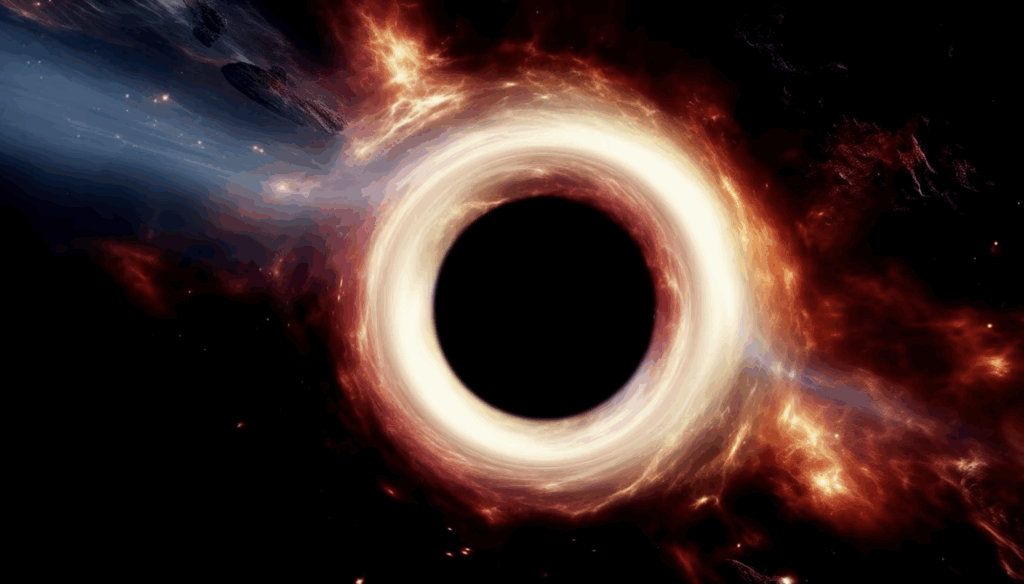
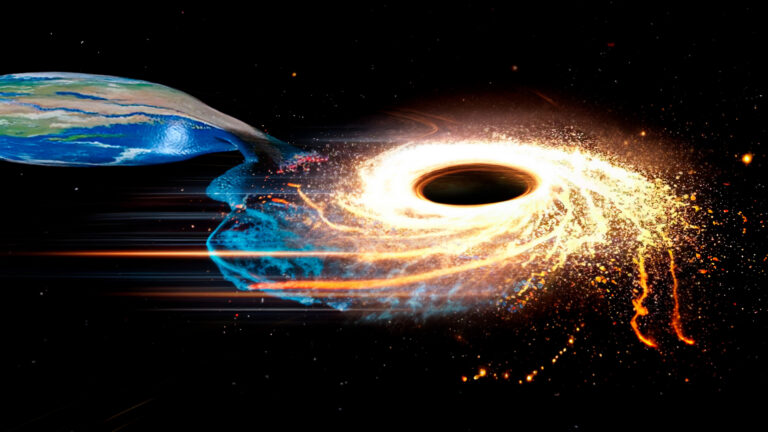
Moving at extraordinary speed, it would not linger and devour the planet the way films imagine. It would punch straight through us almost instantly.
Travelling through Earth, it would drag matter toward itself with incredible force, superheating rock and metal along its path and briefly carving a narrow tunnel of destruction deep inside the planet.
When it emerged on the far side, the damage would keep unfolding. More earthquakes, more volcanic eruptions, tsunamis spreading across the oceans, and dust and debris climbing into the atmosphere.
Yet remarkably, Earth itself might survive that.
Now imagine something considerably worse. Instead of a black hole with Earth’s mass, picture a gigantic one entering our Solar System.
Long before reaching us, its gravity would disturb the planets, pulling outer worlds off their normal paths and flinging comets and asteroids in entirely new directions.
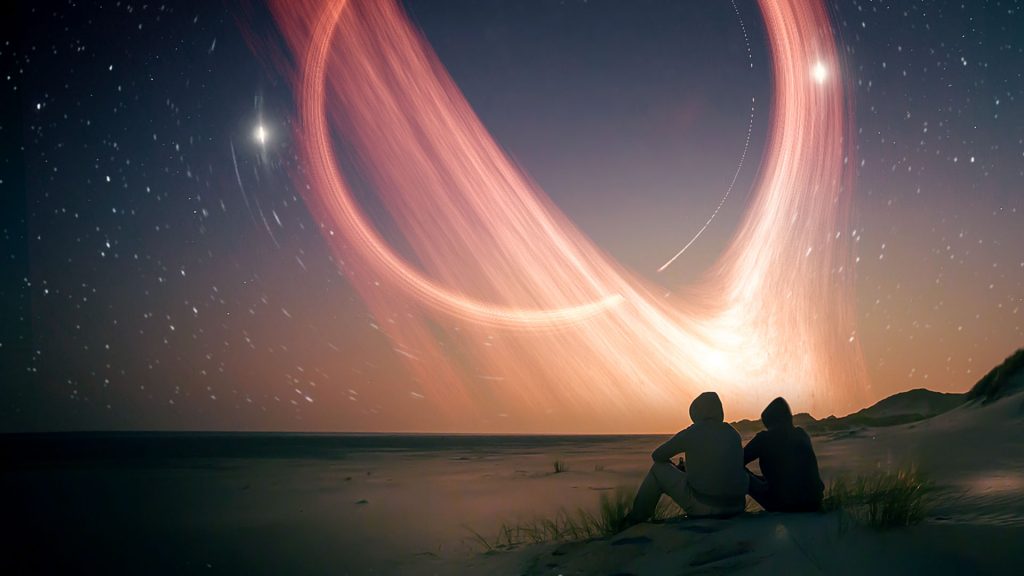
Eventually the inner Solar System would feel it. Earth’s orbit around the Sun could change. The Moon might be dragged away or shifted onto a new path. Satellites would destabilize, and the sky would fill with glowing streaks as debris fell back toward the surface.
The atmosphere would struggle too, with powerful winds sweeping continents and weather systems collapsing into chaos.
Strangest of all, gravity itself would feel wrong. Objects might seem lighter as Earth’s motion changed. Buildings would shake. Oceans would move unpredictably.
And if that giant black hole simply continued on through our neighborhood, Earth might not be destroyed at all. It could just be thrown into a completely different orbit.
That sounds gentler than an explosion. It is not.
Our climate depends entirely on a stable relationship with the Sun. Change that orbit and global temperatures transform, seasons turn extreme or vanish, agriculture collapses, and ecosystems everywhere begin to fail.
Which is the real lesson hiding in all of this. Black holes do not need to destroy what they touch.
Sometimes they only have to change the rules of gravity, and in a universe run by gravity, even a tiny one arriving without warning can turn an entire world upside down.