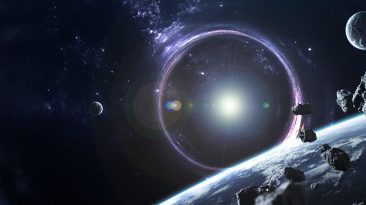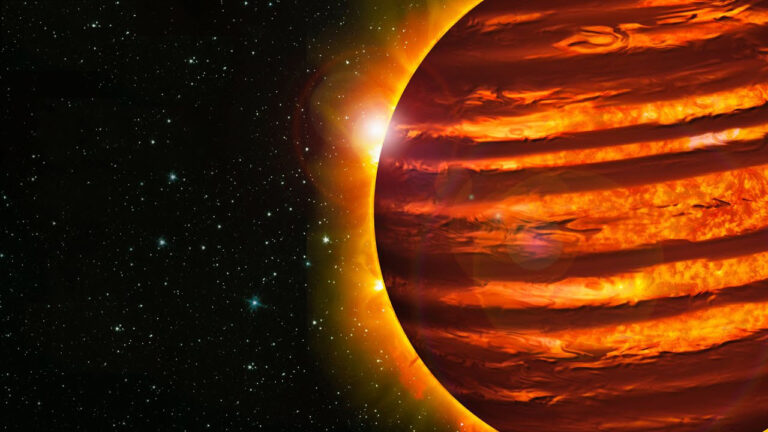
The recipe for a star is shockingly simple. Take hydrogen, add mass, and wait for the crush of gravity to ignite the fire.
Jupiter has the hydrogen. Jupiter has enormous mass. Jupiter is built from the same ingredients as the Sun itself.
Which means our Solar System came surprisingly close to having two suns, and Earth came close to living under a second light in the sky. So what stopped Jupiter from igniting? And what would our world look like if it had?
Time to light the fuse and find out.
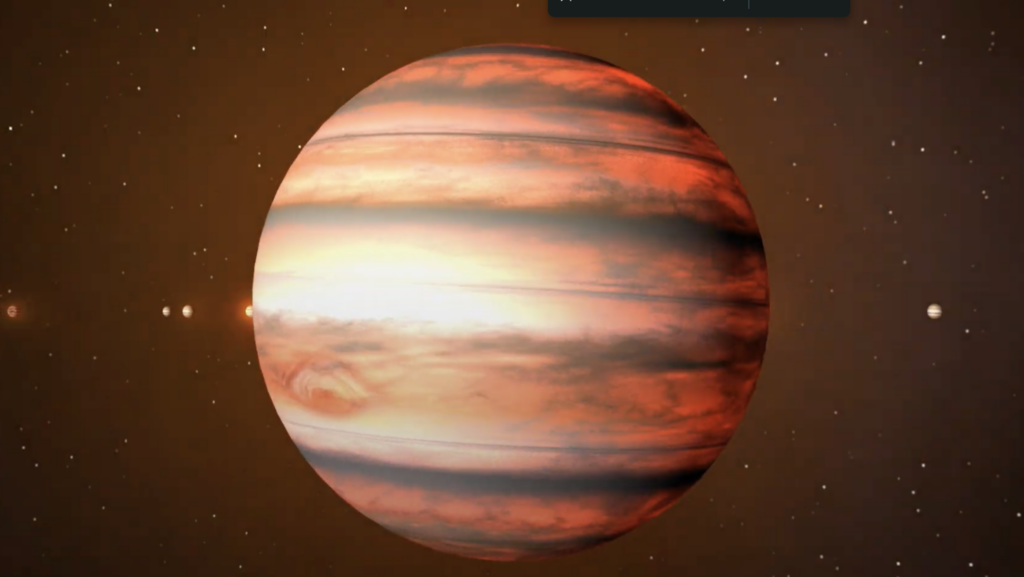
First, respect the candidate. Jupiter carries more than twice the mass of every other planet in the Solar System combined. It has no solid surface, just endless depths of gas, the same elements that fuel our star.
And yet it fails the entry exam. To join the star club, a body must squeeze its core hard enough to ignite fusion, and Jupiter simply does not have the mass. The shortfall is not even close. You could crash every planet in the Solar System into Jupiter and it would still fall short of stellar status.
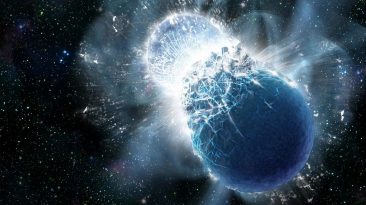
The real price of ignition? You would need to find 79 more Jupiters and slam them all into ours. Eighty Jupiters, fused into one.
Do that, and the fire starts. Earth gets its second sun.
But here is the first surprise: this new star would look almost nothing like you imagine.
Despite swallowing 80 times its original mass, the ignited Jupiter would grow only about 20 percent wider in diameter. All that extra material would not inflate it. It would compress it, packing the star into a furiously dense ball.
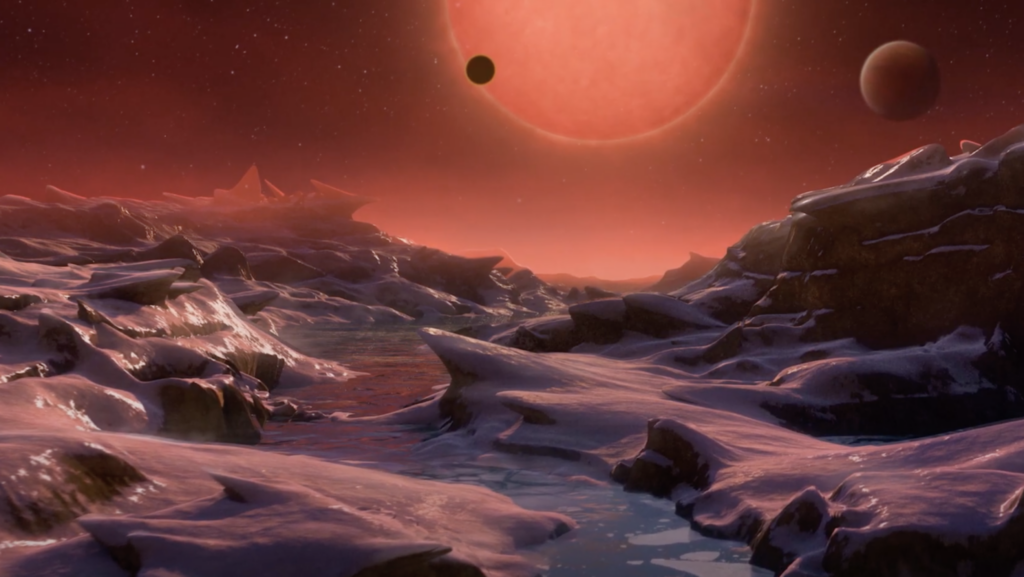
Our second sun would be a red dwarf, the smallest and coolest type of hydrogen burning star. And red dwarfs are famously dim. At its absolute best, the Jupiter star would shine with just 0.3 percent of the Sun’s luminosity.
Add the distance, 588 million kilometers from Earth, four times farther than the Sun, and the heat delivery becomes almost nothing. For life on Earth, temperatures would barely register the difference. Your weather forecast would not change.
But your night sky would change forever.
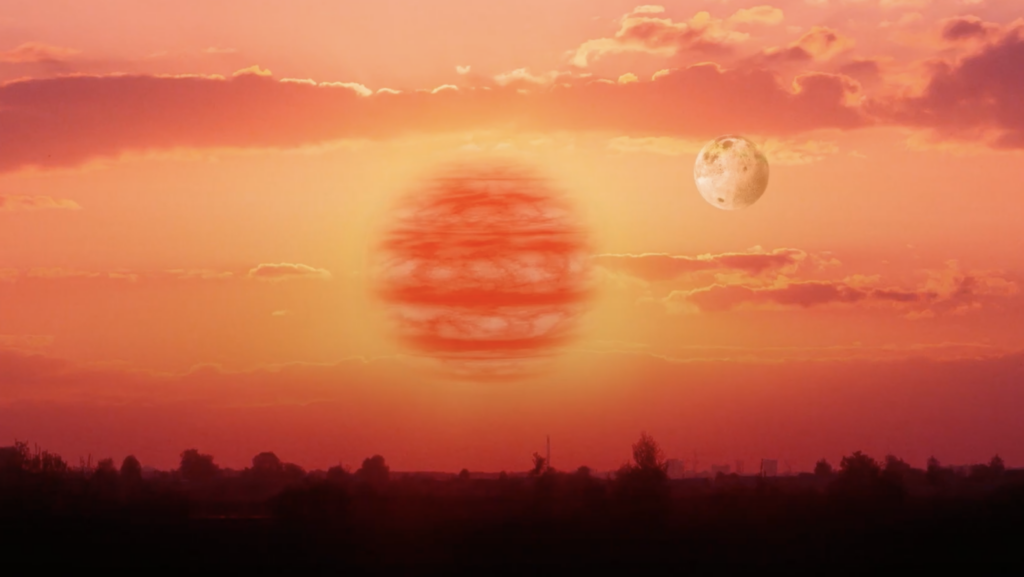
From Earth, the Jupiter star would glow a deep red, hanging in the darkness slightly brighter than the full Moon. A permanent crimson beacon, rising and wandering across the sky. Every culture in human history would have built myths around it.
Now for the question that decides whether anyone survives to enjoy the view: what does a second star’s gravity do to the Solar System?
Far less than you would fear. The newborn star would gently tug at the orbits of every planet, and even at the Sun itself, but not enough to hurl worlds into collision or eject them into deep space. The planetary clockwork would wobble, then settle.
Only one genuine threat would emerge from the change: the asteroid belt. A mightier Jupiter could start flicking space rocks inward, sending them toward Earth. Humanity would need to master detecting and destroying incoming asteroids, permanently.
Beyond that, life with a red second sun would be strangely calm. Almost disappointing.
So let us push the experiment to its breaking point. Forget the red dwarf. What if Jupiter gained 1,000 times its mass and became a true Sun like star?
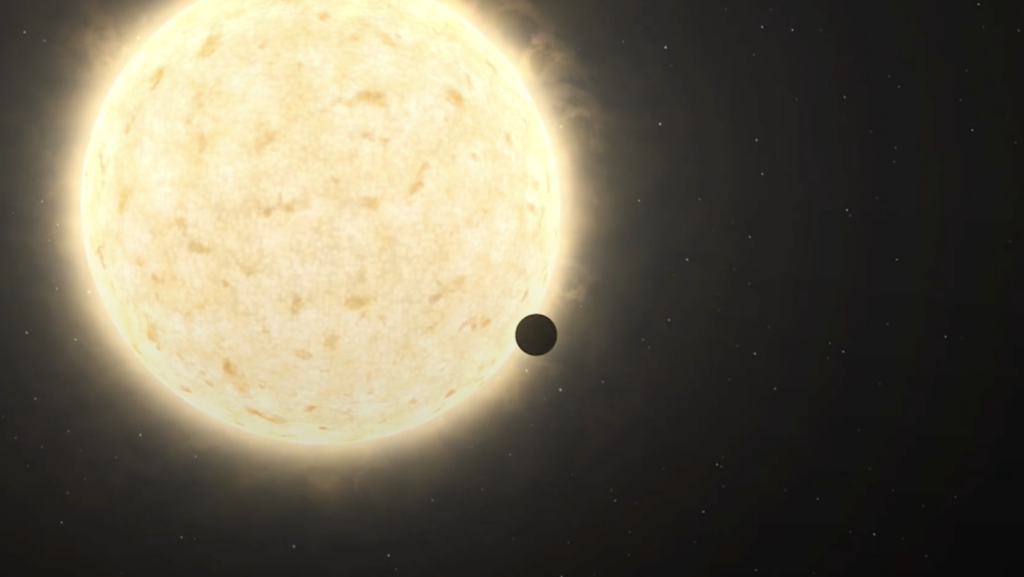
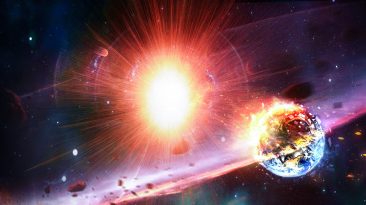
Now the Solar System goes berserk. Asteroids rain onto planets. Orbits twist and break. Entire worlds could be flung out of the Solar System into the eternal dark.
And Earth? In that gravitational chaos, our fate becomes a lottery of horrors. One ticket drags us too close to the new star and scorches the planet. Another tears us away from both suns and leaves us drifting frozen through the void. There is no version of that drawing where we win.
Which brings us to the quiet ending of this experiment. In the real universe, Jupiter missed stardom by a margin of 79 of itself, and it will remain a planet forever.
Look up at that bright point in the night sky and be grateful for its failure. The Solar System only needed one sun, and Jupiter makes a far better neighbor than it ever would a star.