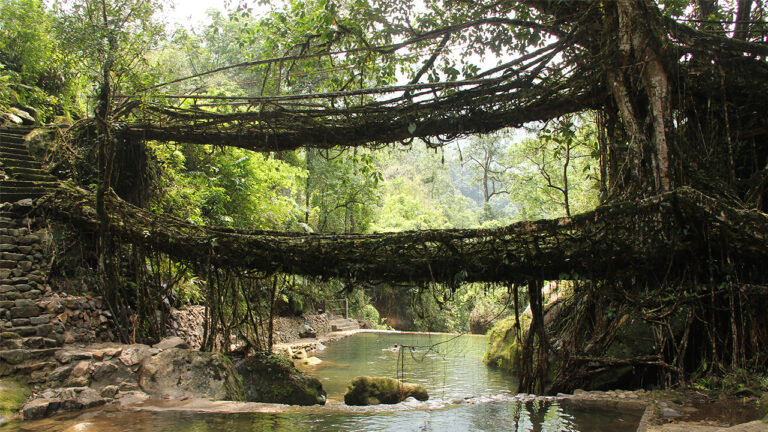
Hidden deep within the lush forests of northeastern India are bridges unlike any others on Earth. They aren’t built from steel, concrete, or wood. Instead, they are grown from living tree roots, and some have been carrying people safely across rivers for hundreds of years.
These remarkable structures are found in the Indian state of Meghalaya, a region famous for its dense rainforests and heavy rainfall. More than 70 living root bridges stretch across rivers and ravines, with some reaching up to 50 m (164 ft) in length. But their greatest secret isn’t just that they’re alive. It’s that they actually become stronger as they age.
Creating one of these bridges requires incredible patience.
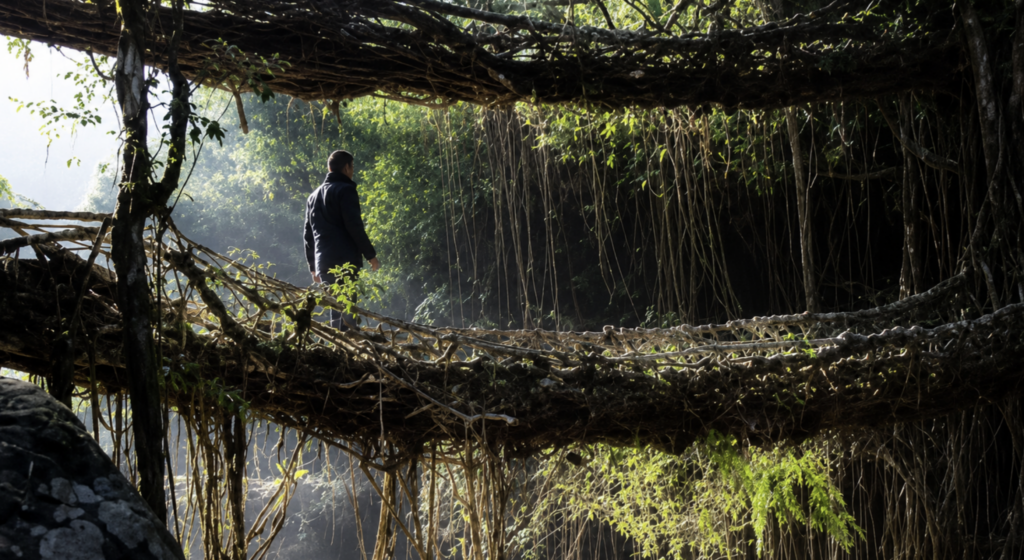
It all begins by planting a young rubber fig tree near the edge of a riverbank or steep ravine. As the tree grows, its long aerial roots are carefully guided across the gap using bamboo poles or hollow palm trunks. Over time, the roots continue extending toward the opposite side.
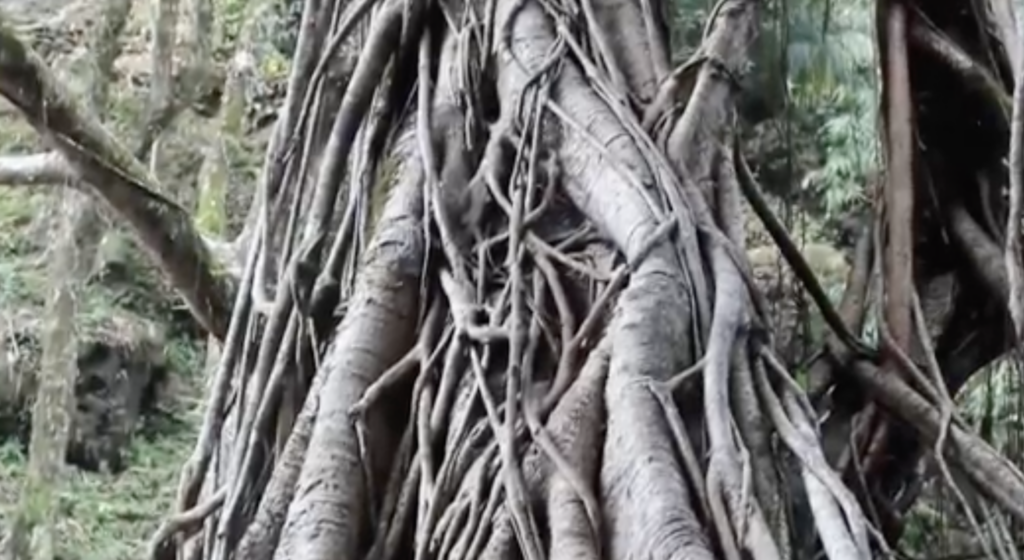
As they grow, smaller roots branch off and naturally weave together, creating an increasingly strong and stable network. Once the roots finally reach the opposite bank, they anchor themselves into the soil, locking the bridge firmly into place.
The entire process can take decades before a bridge is ready to support people. But unlike ordinary bridges that slowly deteriorate over time, these living structures continue growing throughout their lives.
That unique ability makes them perfectly suited for Meghalaya’s extreme climate.
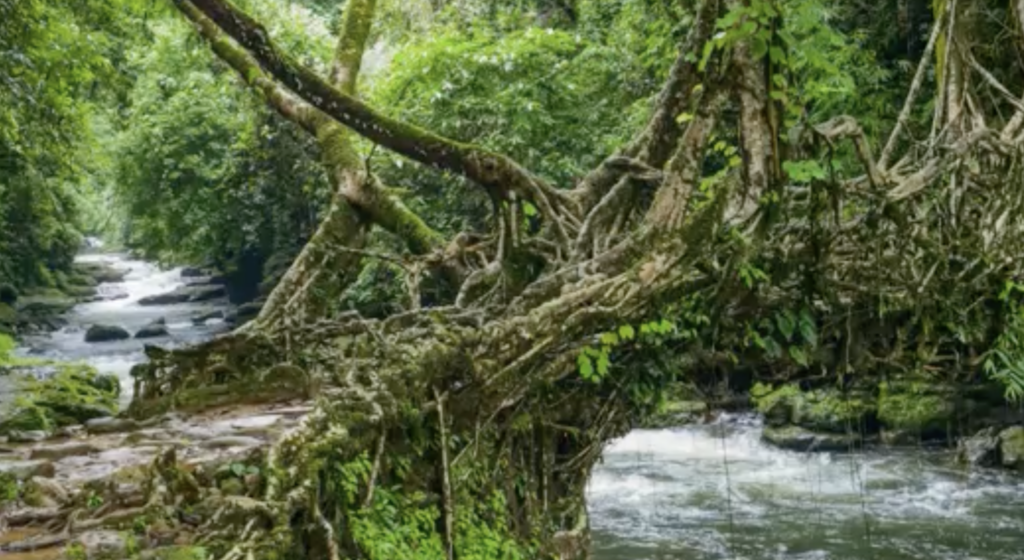
The region receives some of the heaviest rainfall anywhere on Earth. Wooden bridges quickly rot, while metal structures rust in the constant moisture. Living root bridges, however, thrive in these wet conditions. Every year the trees continue growing, making the bridges even stronger and more durable.
Some of these remarkable crossings have served local communities for generations, surviving floods and harsh weather that would destroy many modern structures.
Today, researchers believe the ancient technique behind these bridges could inspire future cities.
Instead of using concrete and steel alone, architects are exploring ways to grow living structures that provide natural shade while helping cool urban environments. Root canopies grown over sidewalks and public spaces could lower temperatures, improve air quality, and create greener cities without taking up valuable ground space.
While building living infrastructure requires far more time than traditional construction, the long term benefits could be enormous. These structures require little maintenance, absorb carbon dioxide, and become stronger rather than weaker with age.
For the people of Meghalaya, living root bridges are much more than an engineering achievement. They represent generations of knowledge passed down through local communities, proving that sometimes the strongest structures aren’t built at all. They’re carefully grown.
As cities around the world search for more sustainable solutions, these ancient bridges may hold the surprising secret to designing the future.