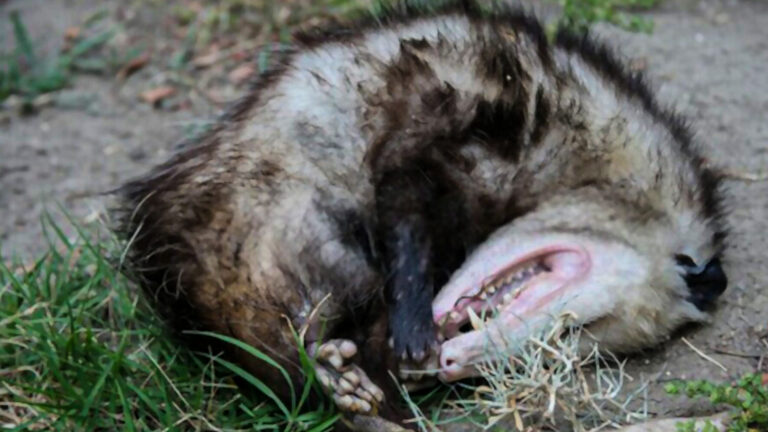
Imagine finding an animal lying completely motionless on the ground. Its body is limp, its eyes appear lifeless, and it seems as though something terrible has happened. Then, hours later, it suddenly gets up and walks away.
This incredible behavior belongs to the opossum, one of nature’s strangest survivors. When threatened by a predator, an opossum can enter a temporary state that makes it look completely dead.
But the surprising part is that the animal is not simply pretending. Playing dead is largely an involuntary reaction caused by extreme fear. Its body becomes limp, breathing slows dramatically, and it may even release bodily waste.

This makes the opossum appear less appealing to predators. Many predators prefer live prey, so encountering something that looks and smells dead may cause them to lose interest.
The opossum can remain in this state for several minutes or even hours. Once the danger has passed, it gradually returns to normal and continues on its way.
The tactic is not completely foolproof. While an opossum is playing dead, it does not actively defend itself, meaning a determined predator can still attack and injure it.
Opossums are sometimes mistaken for giant rats because of their pointed faces, exposed tails, and unusual appearance. However, they are not rodents at all.
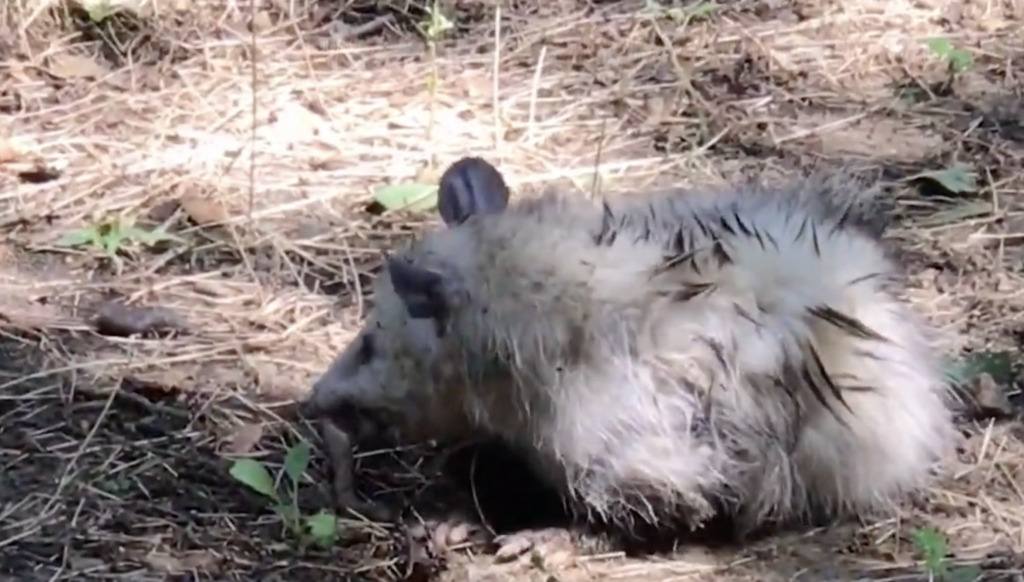
They are marsupials, making them more closely related to kangaroos and wallabies than rats or mice. Female opossums have pouches where their extremely underdeveloped babies continue growing after birth.
A mother can give birth to a surprisingly large number of babies, sometimes producing around 20 offspring. The young remain in the pouch for weeks before eventually climbing onto their mother’s back as they become stronger.
Opossums are mostly nocturnal and spend much of the night searching for food. They are extremely adaptable and will eat insects, fruit, small animals, carrion, and almost anything else they can find.
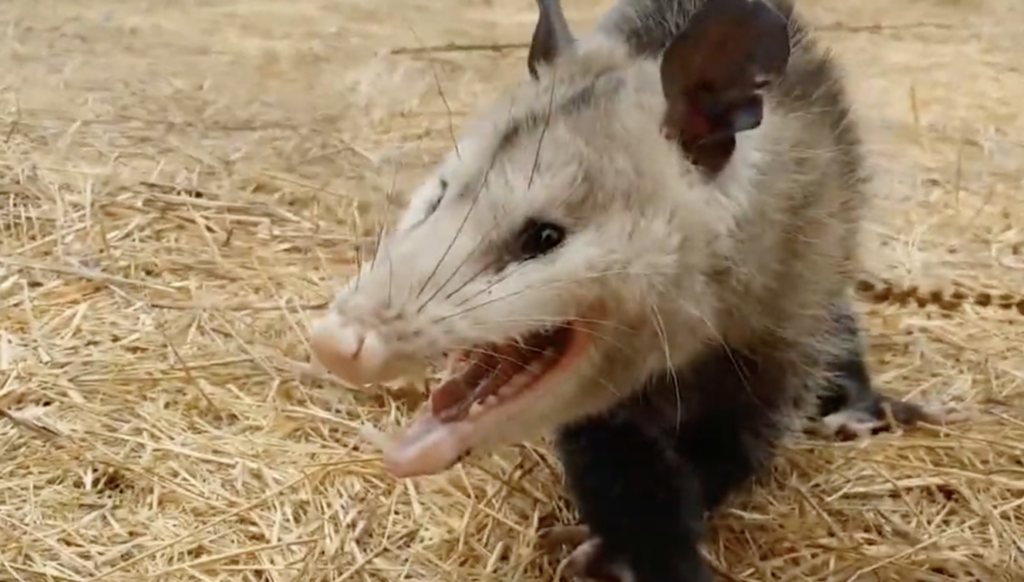
Despite having around 50 teeth, they generally avoid confrontation. When threatened, they may show their teeth to scare an attacker, but playing dead is one of their most unusual defenses.
Their strange eating habits also make them useful to the environment. Opossums consume dead animals, insects, and waste, helping clean up their surroundings and reduce certain pests.
They are particularly famous for eating ticks, with some estimates suggesting they can consume thousands during a season. However, their exact impact on tick populations and diseases such as Lyme disease is more complicated than popular claims suggest.
So the next time you see an opossum lying motionless, don’t immediately assume you have found a dead animal. It may be carrying out one of nature’s most convincing survival tricks.
The opossum does not need to defeat its predator.
It simply needs to convince the predator that it has already lost.