For decades, we believed our Solar System ended with Neptune, followed only by icy debris and distant dwarf planets. But recent observations hint that something much larger could be lurking in the darkness beyond everything we know. Astronomers have found strange patterns in the motion of faraway objects, leading many to wonder whether a hidden ninth planet has been waiting to be discovered all along.
The mystery becomes even more intriguing because the invisible object responsible may not be a planet at all. Some researchers have proposed an even stranger possibility that could completely change our understanding of the Solar System.
Unusual Motions Beyond Neptune
The Solar System stretches much farther than most people realize. Neptune circles the Sun at about 30 times Earth’s distance, but beyond it lies an enormous region known as the Kuiper Belt. This frozen expanse is filled with countless icy worlds, dwarf planets, and ancient leftovers from the birth of the Solar System.
While studying these distant objects, astronomers noticed something difficult to explain. Several of the most remote bodies appear to travel in similar elongated paths instead of being scattered randomly. Their orbits seem to be influenced by an unseen source of gravity.
The odds of this alignment happening naturally are surprisingly low, suggesting something massive may be hiding in the outer reaches of the Solar System.
The Search for Planet Nine
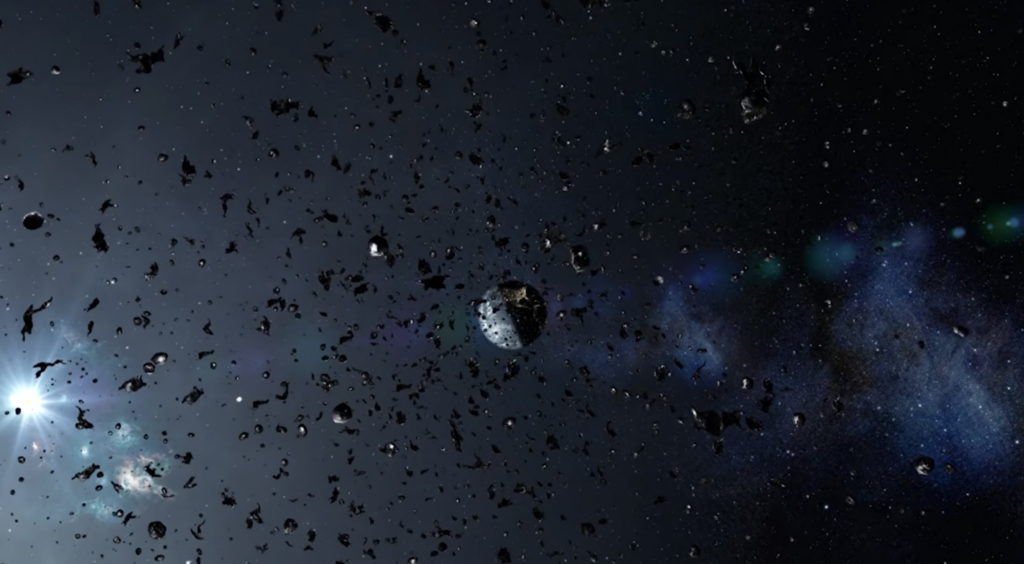
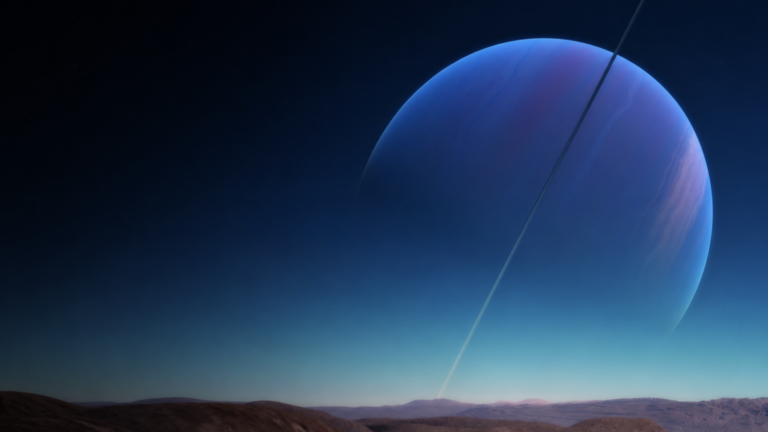
To explain these unusual orbital patterns, astronomers proposed the existence of a giant world orbiting hundreds of times farther from the Sun than Earth. This hypothetical object has become known as Planet Nine.
If it exists, scientists estimate it could contain several times Earth’s mass and follow an enormous orbit that takes thousands of years to complete. At such incredible distances, sunlight becomes incredibly weak, leaving even a large planet almost impossible to spot with ordinary observations.
Its faint glow would blend into the darkness of space, making direct detection one of astronomy’s greatest challenges.
What If It Is Not a Planet?
Although Planet Nine is currently one of the leading explanations, it is far from the only possibility.
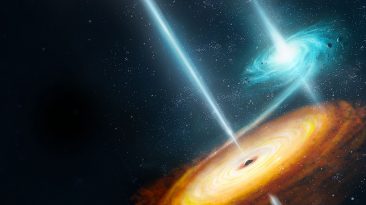
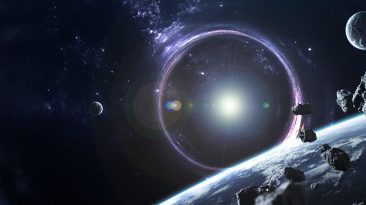
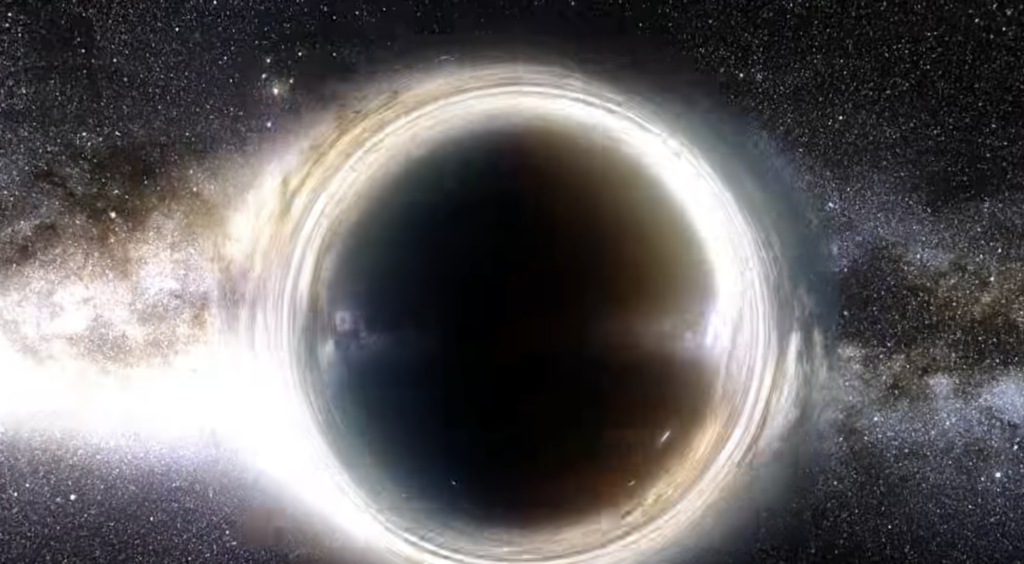
Some physicists suggest the mysterious gravitational pull could come from a primordial black hole. These theoretical objects may have formed during the earliest moments of the universe, long before stars and galaxies existed.
Unlike the enormous black holes found at the centers of galaxies, a primordial black hole could contain several Earth masses while being only about the size of a small piece of fruit. It would emit no light and reflect none from the Sun, making it effectively invisible except for the way its gravity affects nearby objects.
Following Gravity Instead of Light
Because the outer Solar System is so dark, astronomers often rely on indirect evidence rather than photographs. By carefully measuring the motion of distant icy bodies, they can calculate whether an unseen object is pulling on them.
This approach has succeeded before. Neptune itself was discovered after astronomers noticed unexplained changes in Uranus’s orbit and predicted where another planet should be located.
Researchers hope the same method will eventually reveal the true source behind today’s mysterious orbital patterns.
A Discovery That Could Rewrite Astronomy
Powerful new observatories are now scanning the sky with greater sensitivity than ever before. Their goal is to detect extremely faint moving objects or gather stronger evidence for an invisible source of gravity far beyond Neptune.
If Planet Nine is eventually found, it would become one of the most significant planetary discoveries in modern history, offering new clues about how our Solar System formed and evolved.
But if the hidden influence turns out to be something even stranger, such as a primordial black hole, the discovery would extend far beyond planetary science. It could provide rare evidence of conditions that existed shortly after the universe itself began.
For now, the edge of our Solar System remains one of the greatest unsolved mysteries in astronomy. Somewhere in that distant darkness, a hidden world—or something even more extraordinary, may still be waiting to reveal itself.