Some people alive today have implants that let them perceive sound. Others carry devices that let them sense changes in atmospheric pressure.
Now push that forward a few thousand years. At some point the line between a human and their equipment stops existing, and you get a being that does not carry technology at all.
It is technology.

Which leads to a strange possibility. What if you had a long lost relative, and that relative came from a distant planet, and that planet was home to billions of humans just like Earth?
Except these humans look nothing like us, because they are from the future.
Could aliens actually be future versions of ourselves? How far ahead would they be, how much would they have changed, and could we even understand each other?
Start with 1947, when a mysterious object crashed in the desert near Roswell, New Mexico. Everyone knows the story. Officially, the object was declared a US Army Air Force balloon.
Decades later, U.S. Navy Commander George W. Hoover, a man with top secret clearance, revealed something different. He said the crash involved time traveling humans, people who had solved the technological limitations that keep us stuck in our own era.
Some theories go further, suggesting these future humans travel back specifically to study their own biological past. And perhaps those same visitors helped our ancestors make enormous leaps in scientific and technological knowledge in surprisingly short periods.
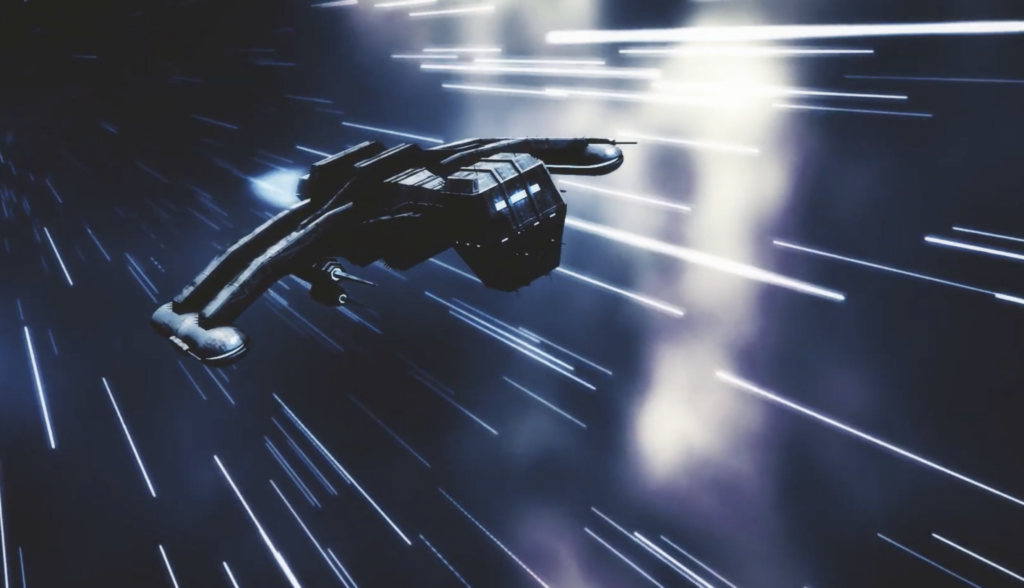
So if any of that is true, should we expect another visit? And what would walk out of the craft?
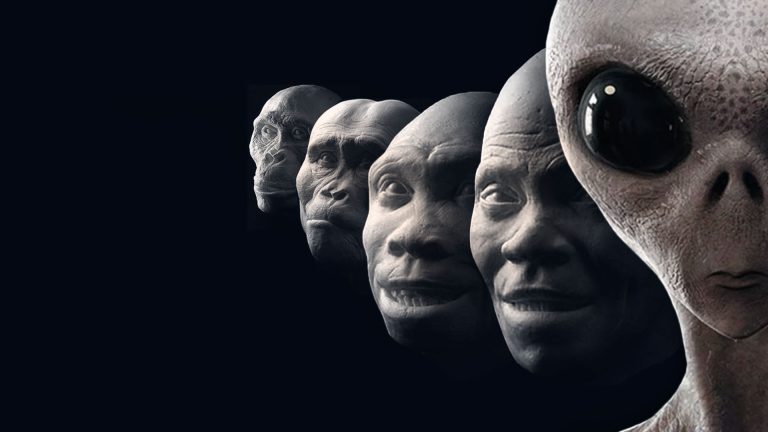
Probably something close to what films have always shown us. Still walking on two feet, but with noticeably larger heads and much bigger eyes.
That actually matches predictions about how humans will keep evolving. Our skulls are expected to grow rounder and larger to house bigger brains, and as civilization pushes toward interplanetary travel, our eyes would likely enlarge to see better in dim environments far from the Sun.
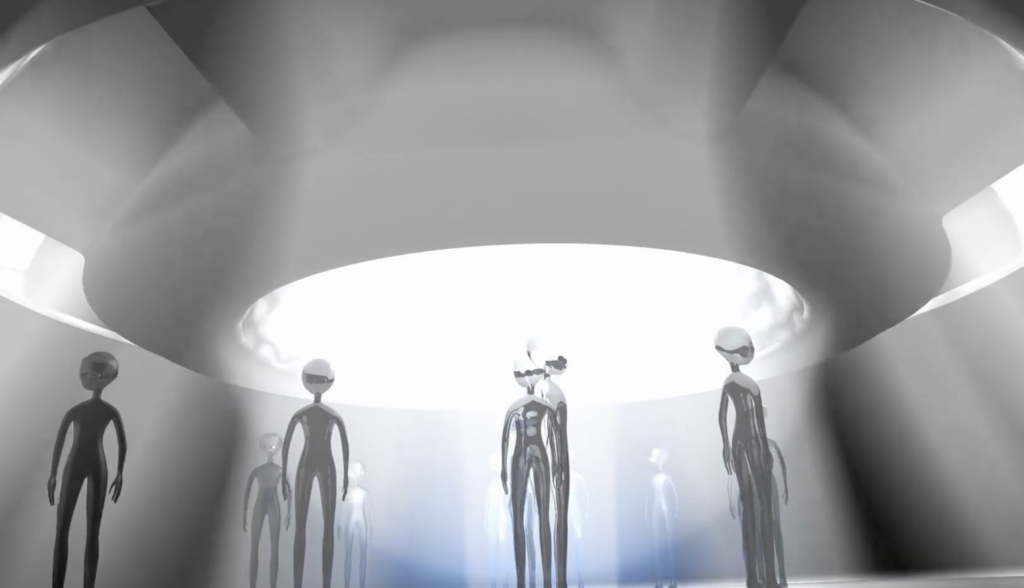
They may also have defeated aging, which changes everything about travel.
Consider a destination 60,000 light years away. With the right technology, the crew onboard experiences a 60 year flight. But when they return to Earth, 60,000 years have passed here.
Future humans would presumably solve that problem so travelers could actually come home and tell someone about the trip. Yet if people start living for thousands of years, does that create massive overpopulation on whatever world they inhabit?
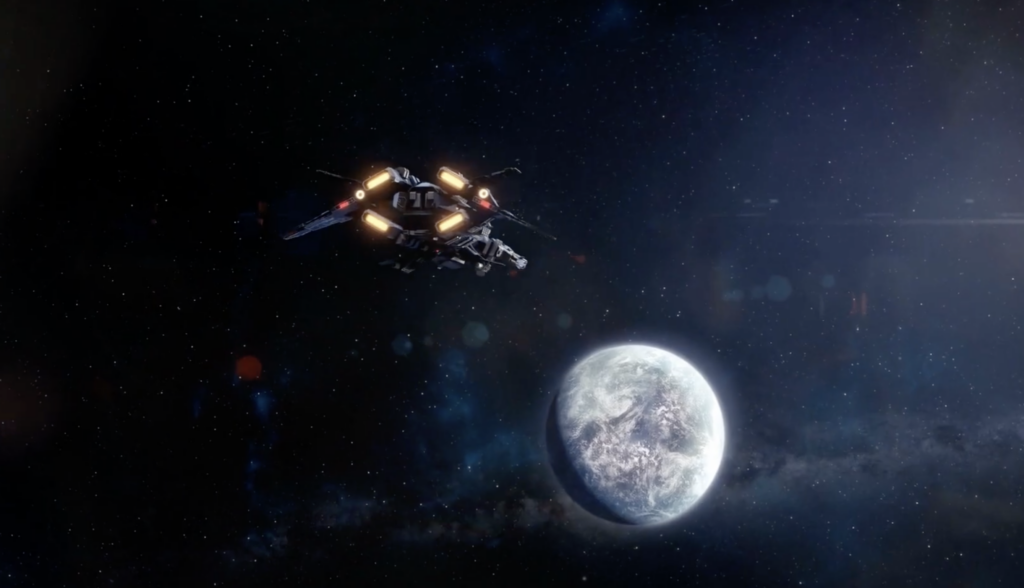
Most likely not, because a civilization capable of extending life that far would have optimized its existence long before reaching that point. Their society would be vastly more efficient than ours.
They could be centuries or even millennia ahead of us in evolutionary terms, smarter, better organized, capable of maximizing space and living in densely populated worlds without generating the pollution we produce on Earth.
Which brings us back to the implants.

Think about everything your phone currently does for you. Now imagine commanding all of it with thought alone, from a small chip inside your brain. Multiply that by dozens of integrated systems and you have a body that is part biology and part machine, with no clear boundary between them.
That idea also explains one persistent detail in alien encounter reports. Witnesses frequently claim the visitors spoke to them in their own native language.
An automatic translator implanted in the brain would do exactly that. Or perhaps future humans moved past separate languages entirely and settled on one universal tongue, something like Esperanto.
So if the visitors ever come back and you get one conversation with them, what would you ask first?
Whether time travel is possible? How they built the machine? Or the question underneath all of it, whether time was ever real to begin with?