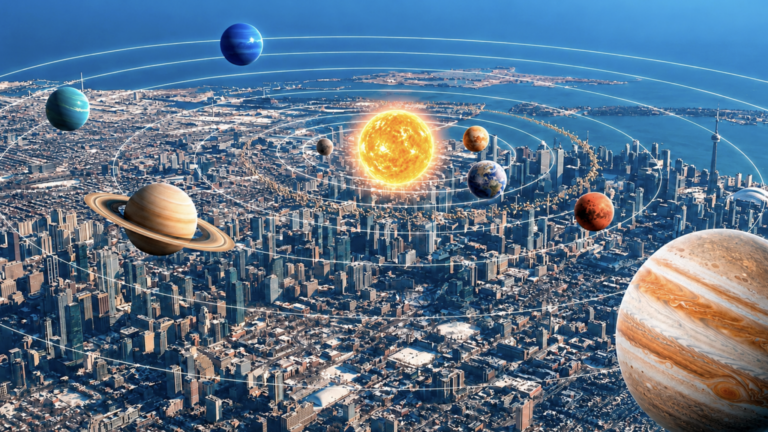
In a mind-bending exploration of cosmic proportions, we set out on a journey to walk the entire solar system within the confines of a single city. By shrinking the vastness of our celestial neighborhood down to a mere 10 kilometers (6 miles), we embarked on a fascinating adventure that revealed the true scale of our cosmic backyard.
Our journey began at the iconic CN Tower, standing tall as a representation of the Sun. As we ventured out, we quickly realized just how close the inner planets are to our central star. Mercury, a mere 75 meters from the tower, and Venus, just a short walk away, reminded us of the compact nature of the inner solar system.
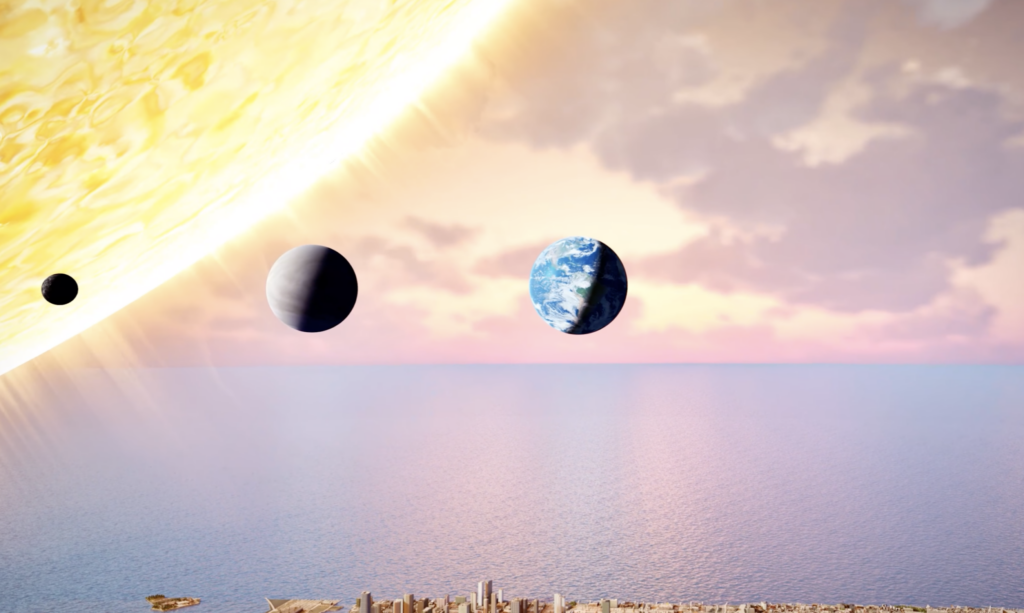
Earth, our blue marble, sat comfortably in the shadow of the CN Tower, a mere 235 meters (770 feet) away. It was a humbling realization to consider that every step we took equated to a staggering 502,000 kilometers (312,000 miles) in the real solar system.
As we pressed on, Mars came into view just outside Union Station, followed by the bustling Distillery District, where Saturn’s majestic presence could be felt. The towering CN Tower, now 2.4 kilometers (1.5 miles) away, served as a constant reminder of the Sun’s dominance.
The outer reaches of our solar system became increasingly apparent as we reached Uranus and Neptune, with the CN Tower fading into the distance. Finally, at the edge of the city, 9.3 kilometers (5.8 miles) from our starting point, we encountered the distant and diminutive Pluto.
However, as we basked in the satisfaction of our cosmic trek, a startling realization dawned upon us. We had not simply walked the solar system once, but twice. The truth behind this mind-boggling feat lies in the trick that made it all possible.
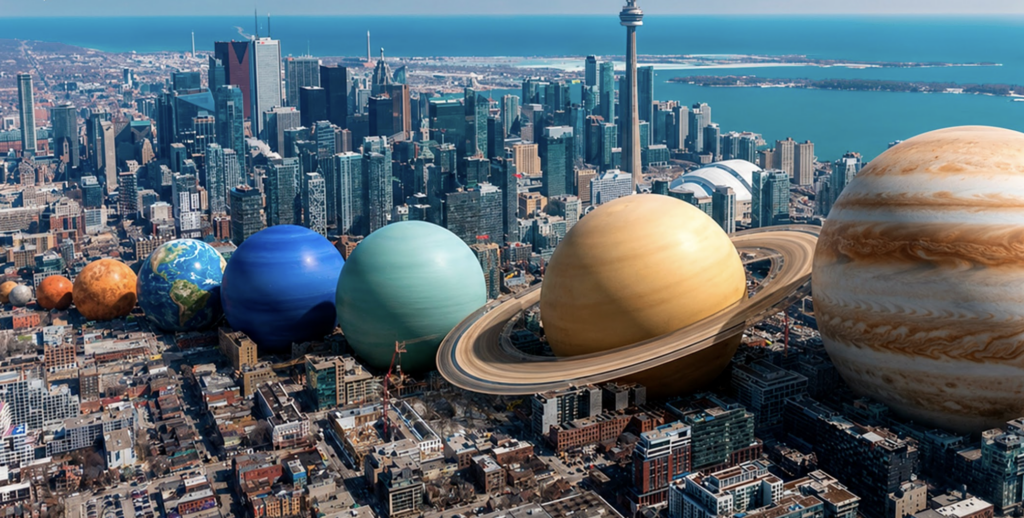
To create a walkable solar system, we had to cheat the scale. The CN Tower, while an impressive stand-in for the Sun, would have to be significantly smaller if we truly wanted to maintain the 10-kilometer solar system scale. In reality, the Sun would be a mere 2.4 meters (7.84 feet) tall, with the planets reduced to the sizes of fruits and vegetables.
Mercury, a chickpea; Venus and Earth, grapes; Mars, a kidney bean; Jupiter, a basketball; Saturn, a volleyball; Uranus, an orange; Neptune, a plum; and Pluto, a tiny 4mm peppercorn. The vast distances between these celestial bodies, even at this reduced scale, would require hours of driving to traverse.
The realization of the true scale of our solar system was both humbling and awe-inspiring. It reminded us of the immense emptiness that exists between the planets and the minuscule nature of our cosmic neighborhood in the grand scheme of the universe.
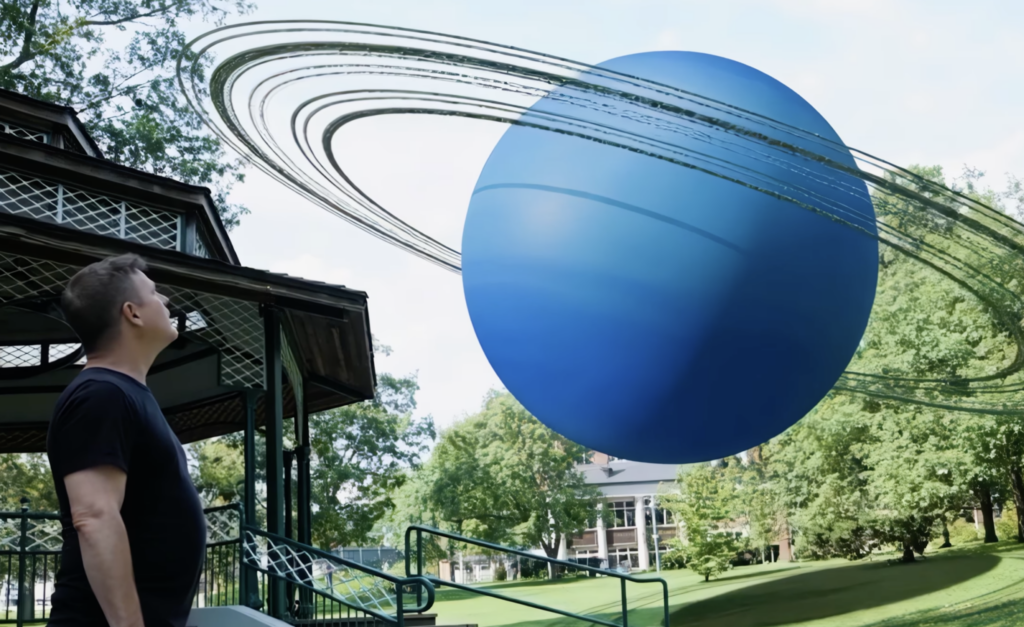
As we completed our journey, we were left with a newfound appreciation for the incredible distances and sizes that define our solar system. The trick that made our cosmic walk possible revealed the astonishing reality of the space that surrounds us, reminding us of our small yet significant place in the cosmos.