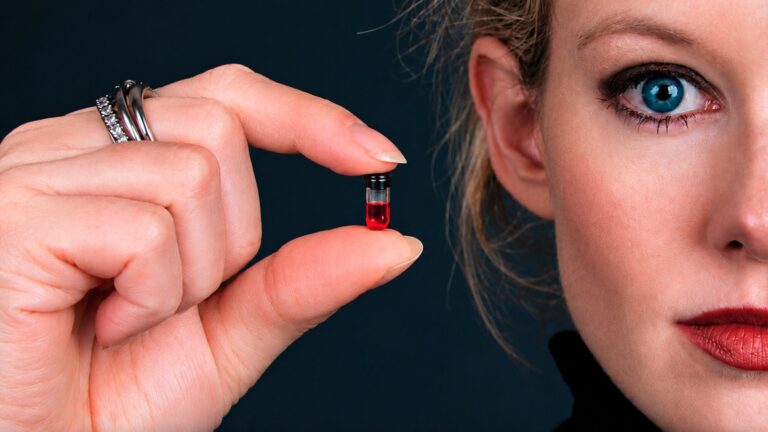
Elizabeth Holmes, the founder of Theranos, promised a portable blood testing machine capable of running hundreds of tests using just a few drops of blood. The machine she pitched never worked. Her false claims put patients’ lives in danger and cost investors hundreds of millions of dollars.
But what if some of her ideas weren’t as impossible as they seemed? Is a machine like this scientifically possible? The answer is stranger than you might think.
Theranos promised a few drops of blood from your fingertip, hundreds of tests, and a blood lab small enough to fit on a desk. Some of what Holmes claimed was frankly impossible because of long established scientific limitations. But surprisingly, some of the things she said may not be impossible anymore.
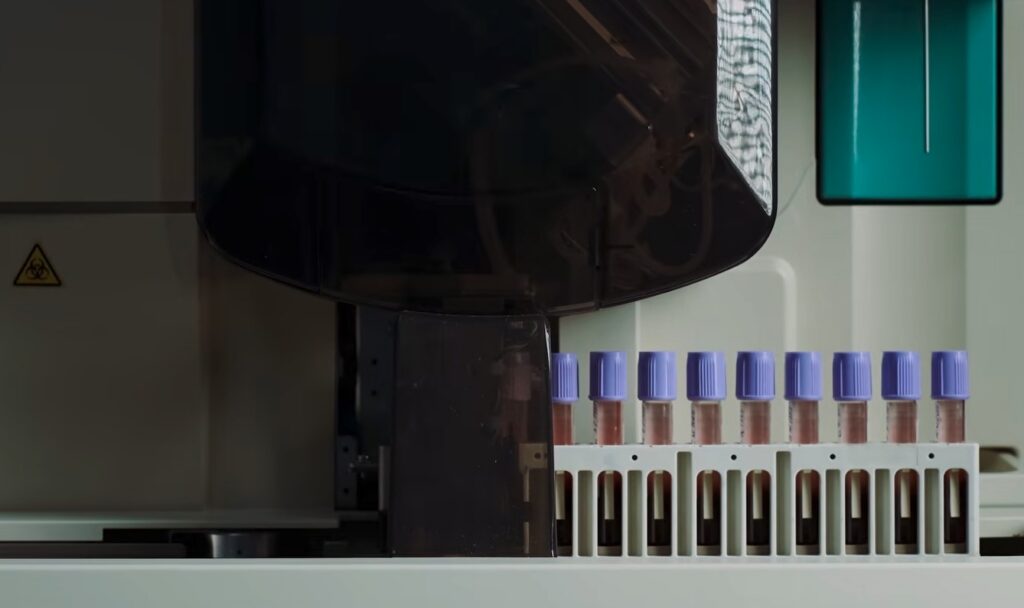
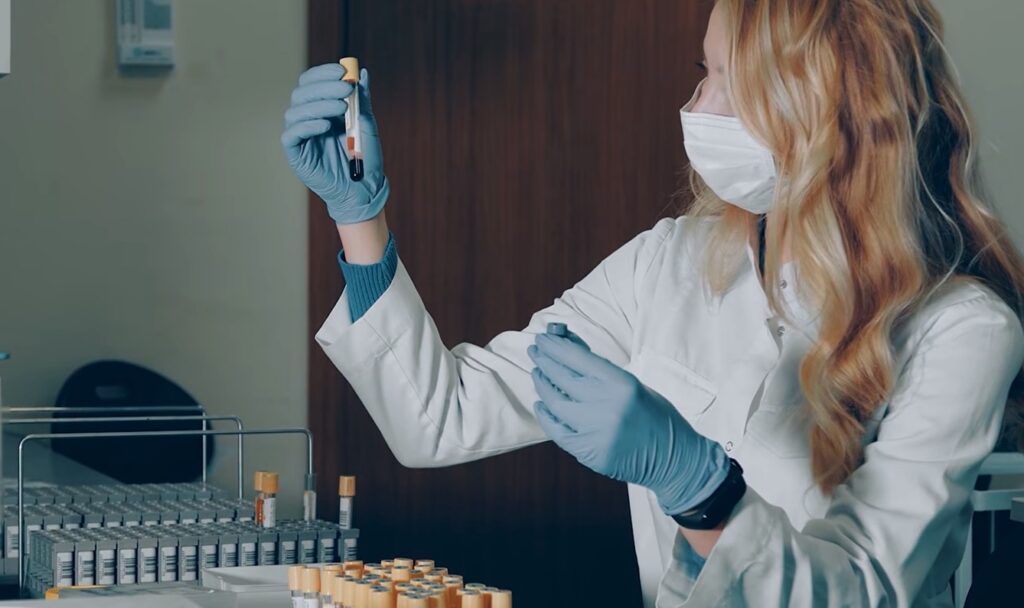
The first problem was the blood itself. A drop of blood from your finger is a mixture of blood and other fluids from around the cells of your finger. If you squeeze your finger to collect a sample, you can contaminate it with additional fluids and burst cells. One study found that finger prick samples contained, on average, 3.4 times as much hemoglobin, 5.7 times as many white blood cells, and four times as many platelets compared to blood drawn from a vein.
But that was only the beginning. A blood test isn’t just one test. Counting cells, measuring iron, tracking salts, and looking for antibodies all require different preparation methods. Some tests need additives that make the sample unusable for other tests. Modern diagnostic medicine also requires multiple sophisticated machines.
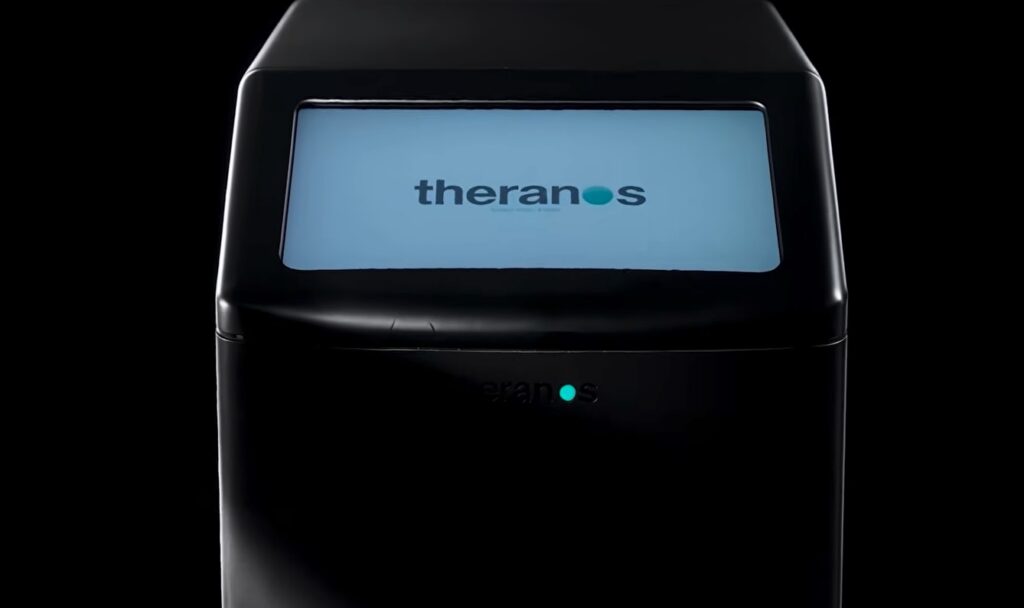
Theranos claimed it could do everything with one small desktop device. However, the company’s analyzer could only perform a small number of tests. Reporters eventually uncovered that Theranos was secretly using commercial Siemens blood testing machines to process patient samples. Staff even diluted the small samples to make them work with conventional equipment, creating unreliable results.
When whistleblowers finally looked inside the supposedly revolutionary machine, they found an eight channel pipette on a robotic arm. The remaining components were assembled from commercially available parts. There was no groundbreaking technology hidden inside.
Yet not everything Holmes imagined was impossible.
Today, small skin patches can continuously monitor glucose levels by sensing fluid beneath the skin and transmitting information wirelessly to an app. The monitoring technology is already here, although a patch that monitors everything and automatically delivers medication remains science fiction.
Finger prick testing has also advanced. In 2023, the FDA cleared a fingertip blood collection device for a limited range of tests, including cholesterol measurements and selected blood cell counts. Unlike Theranos, it collects a larger sample and sends it to a proper laboratory with validated equipment.
Other medical breakthroughs sound just as futuristic. CRISPR technology allows scientists to target specific sections of DNA and remove or modify them. The first CRISPR therapy for sickle cell disease was cleared in 2023, giving patients access to a treatment that can prevent their red blood cells from developing their characteristic sickle shape.
Meanwhile, smartwatches can measure blood oxygen levels using light, personalized vaccines are being developed to train the immune system to attack cancer cells, and the Galleri blood test is being investigated for its ability to detect multiple cancers by identifying DNA released into the bloodstream.
Researchers are even developing brain computer interfaces that can translate brain activity into speech. In one case, a woman who had been unable to speak for 18 years produced audible words in her own voice using a brain implant connected to a deep learning system.
And the possibilities don’t stop there. Scientists are exploring lab grown blood vessels, animal organ transplants, and nanobots designed to deliver medication directly to tumors. Some experimental nanobots have already demonstrated promising results in animals.
Imagine combining all these technologies into one person. Wearable diagnostics could constantly monitor your health, nanobots could deliver medication and destroy cancer cells, and lab grown organs could replace failing body parts. Even suspended animation, which sounds like pure science fiction, has seen promising experiments involving frozen rat kidneys and emergency procedures designed to buy surgeons more time.
These technologies are still at different stages of development, but they are based on genuine scientific research.
So, was Elizabeth Holmes simply a dreamer who was ahead of her time?
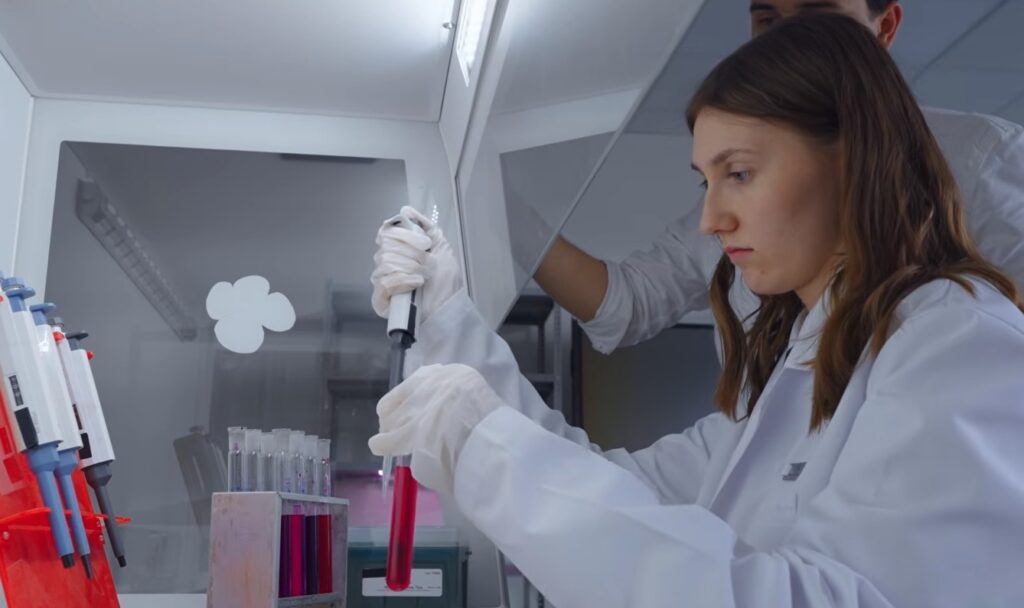
There was nothing wrong with wanting to create a full service blood laboratory the size of a desktop printer. The problem was selling a dream as fact, faking results, covering up failures, and exposing patients to unreliable technology.
Real medicine does the opposite. It publishes its successes and failures, allows scientific claims to be examined, and demands consistent, repeatable results.
Chasing seemingly impossible dreams is what drives human advancement. Today’s fringe science can become tomorrow’s innovation. But the thing that separates a visionary from a fraud, and science from a grift, is honesty.