Humanity has always looked up at the night sky and wondered what is hiding out there. Entire galaxies, black holes, strange planets, and maybe even alien civilizations could be waiting to be discovered. And now, we finally have a machine powerful enough to look deeper into the Universe than ever before. That machine is the James Webb Space Telescope.
Launched on December 25, 2021, the James Webb Space Telescope, often shortened to JWST, is one of the most advanced scientific instruments ever built. Designed as the successor to the legendary Hubble Space Telescope, Webb can see farther into space and further back in time than any telescope before it.
And what it may eventually uncover could completely change our understanding of the cosmos.
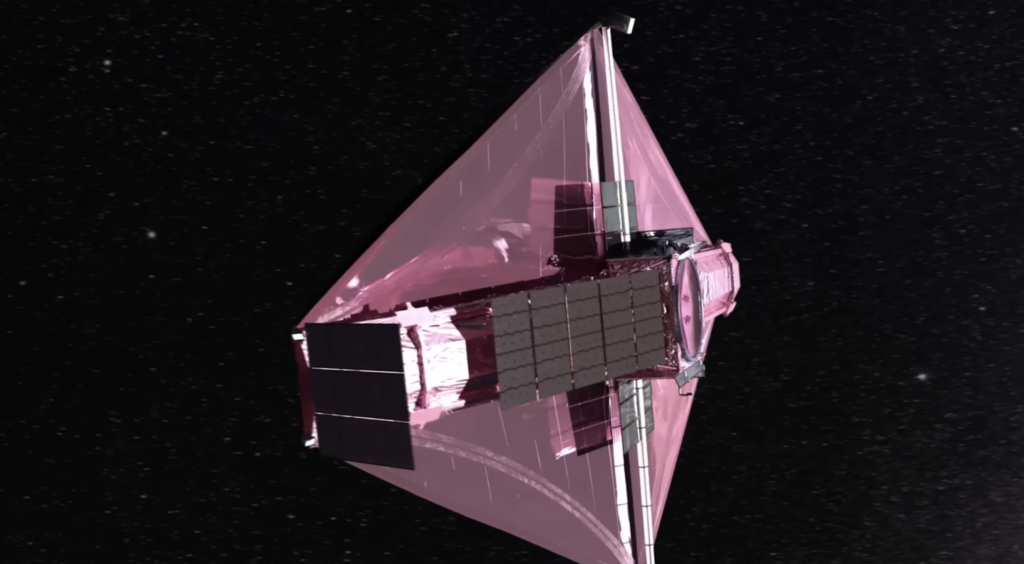
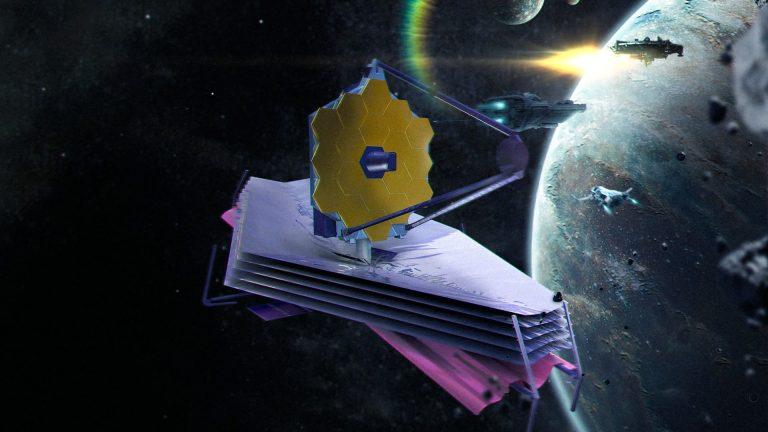
Unlike Hubble, which mainly observes visible light, Webb specializes in infrared light. This gives it the ability to peer through giant clouds of dust and gas that normally block our view of distant objects. With its massive 6.5 meter gold coated mirror made from 18 hexagonal segments, Webb collects enormous amounts of light from some of the faintest objects in existence.
That means it can study stars that formed shortly after the Big Bang itself.
Scientists believe Webb could help answer one of the biggest mysteries in astronomy: how the first galaxies formed. Because light takes time to travel across space, looking at extremely distant galaxies is like looking into the past. Some galaxies observed by Webb appear as they existed over 13 billion years ago, when the Universe was still in its infancy.
And Webb is already rewriting what scientists thought they knew.
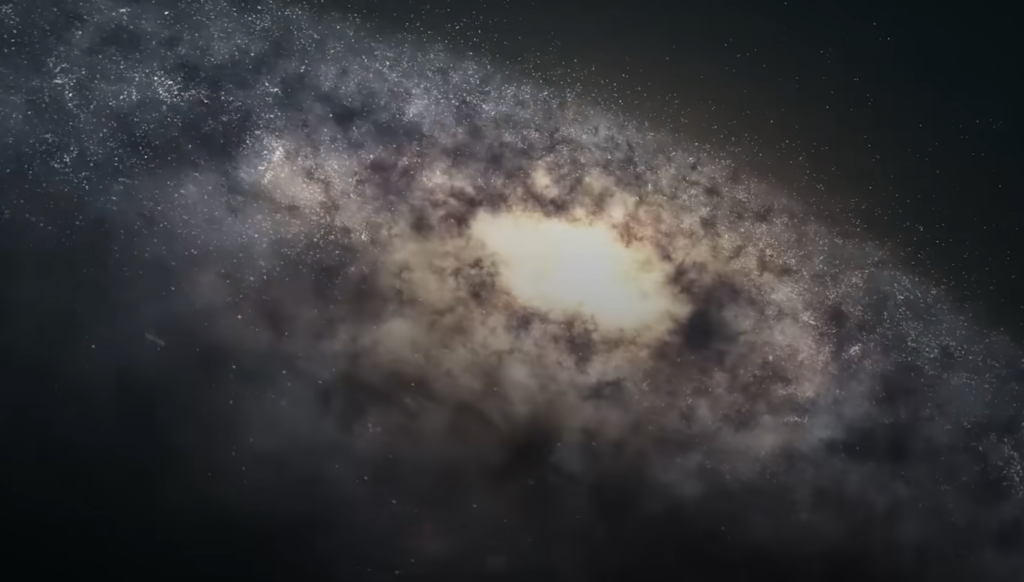
Astronomers expected the early Universe to contain small and chaotic galaxies. Instead, Webb discovered surprisingly large and mature galaxies that formed much earlier than expected. These findings have forced researchers to rethink some theories about how galaxies evolved after the Big Bang.
But distant galaxies are only part of Webb’s mission.
The telescope is also hunting for worlds beyond our Solar System. Thousands of exoplanets have already been discovered orbiting distant stars, but Webb can study these planets in far greater detail than previous telescopes. Instead of simply finding planets, it can examine their atmospheres.
This is where things get really interesting.
When a planet passes in front of its star, some of the star’s light travels through the planet’s atmosphere before reaching Webb. Different gases absorb different wavelengths of light, creating unique chemical fingerprints. By studying those fingerprints, scientists can figure out which gases exist in the atmosphere of that distant world.
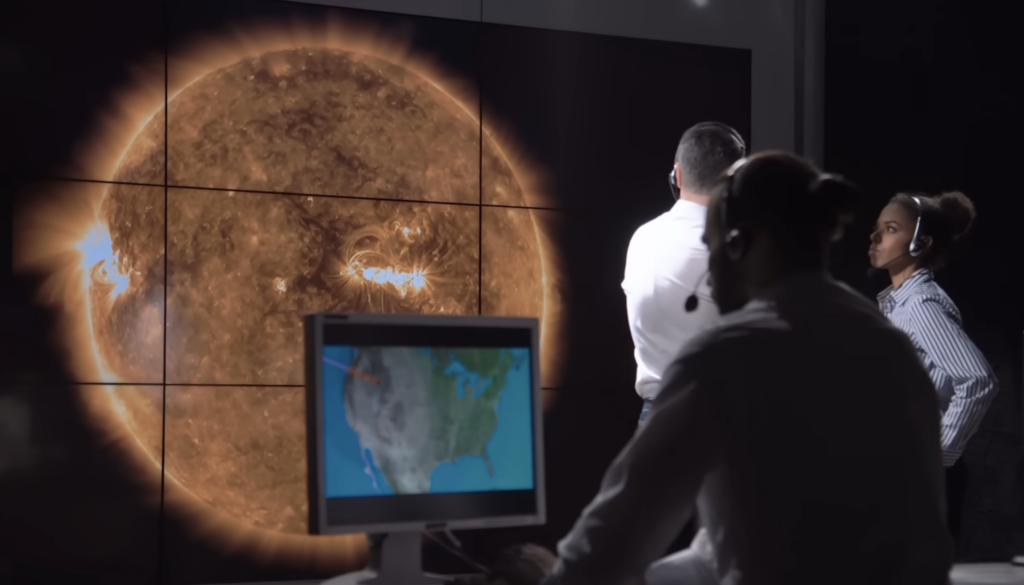
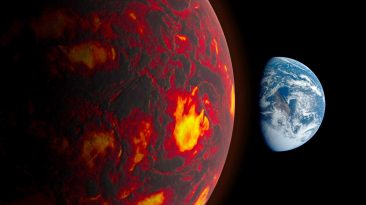
Webb has already detected water vapor, carbon dioxide, and methane on several exoplanets. Some of these worlds are scorching hot gas giants completely unsuitable for life. But others may be rocky planets located in the so called habitable zone, where temperatures could allow liquid water to exist.
One of the most fascinating systems under investigation is TRAPPIST-1, located about 40 light years away from Earth. This system contains seven Earth sized planets, several of which orbit within the habitable zone of their star. Scientists hope Webb may eventually determine whether any of them possess atmospheres capable of supporting life.
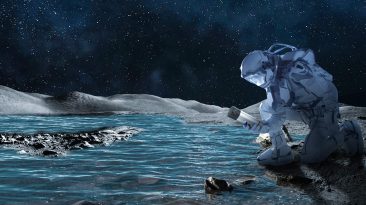
Of course, discovering alien life would not mean spotting spaceships or advanced civilizations overnight. Scientists would instead search for biosignatures. These are chemical clues that may indicate biological activity.
On Earth, oxygen and methane exist together because living organisms constantly replenish them. Without life, those gases would react and eventually disappear. If Webb discovered a similar combination on another planet, it could become one of the strongest hints yet that life exists elsewhere in the Universe.

Still, proving alien life would take years, possibly decades. Scientists would need repeated observations and overwhelming evidence before making such a historic claim. Extraordinary discoveries require extraordinary proof.
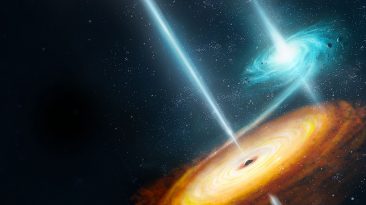
Webb is also helping scientists study black holes, exploding stars, and even objects within our own Solar System. It has captured stunning images of planets like Jupiter and Neptune, revealing details never seen before. Its infrared instruments can even analyze the chemistry of distant comets and icy moons.
In many ways, the James Webb Space Telescope is more than just a telescope. It is a time machine, a planet hunter, and possibly humanity’s greatest tool for exploring the unknown.
And this is only the beginning.
Over the coming years, Webb may uncover hidden planets, ancient galaxies, or evidence that life is not unique to Earth. Every new observation pushes the boundaries of what we know about the Universe.
Somewhere out there, a discovery capable of changing human history could already be waiting in Webb’s next image.