Imagine Jupiter suddenly lost control of all 79 of its moons. Instead of circling the giant planet, they would break free and begin traveling through space in independent orbits around the Sun. Would they still be considered moons, or would they become rogue celestial objects? Could any of them eventually crash into Earth? And might some of these wandering worlds become suitable places for extraterrestrial life?
Jupiter is the biggest planet in our Solar System, with a surface gravity roughly 2.5 times stronger than Earth’s. Its tremendous gravitational influence, along with its position far from the Sun, has allowed it to capture and maintain an enormous collection of moons. Their sizes vary dramatically, from tiny S/2010 J 2 to Ganymede, the largest moon in the entire Solar System, which is actually bigger than Mercury.

Europa is another remarkable member of Jupiter’s moon system. It is approximately the same size as Earth’s Moon, while both Europa and Ganymede are believed to contain enormous reservoirs of liquid water beneath their frozen outer layers. But what would happen if these icy worlds suddenly escaped Jupiter’s gravitational influence? Could they turn into scorching objects traveling through space, potentially threatening our planet?
There isn’t one universally accepted definition of a moon, but the general understanding is that it is a natural object orbiting a planet or dwarf planet. Once Jupiter’s satellites escaped their parent planet and started following independent paths around the Sun, they would no longer qualify as moons. Instead, they would become independent celestial bodies. Some of the biggest ones, including Ganymede, Callisto and Europa, might eventually find themselves traveling through the Solar System’s habitable zone.
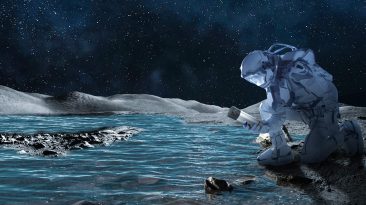
This region extends approximately 0.9 to 1.2 astronomical units from the Sun, covering the area where Earth currently orbits. Temperatures in this zone can potentially allow liquid water to remain on a planet’s surface, creating conditions that could support life. If one of Jupiter’s former moons managed to establish a stable orbit here, it might eventually become another possible home for extraterrestrial organisms. However, developing suitable conditions could take as long as a billion years.

Unfortunately, not every rogue moon would have such a promising future. Depending on its orbit and distance from the Sun, it could become either an extremely cold frozen world or an overheated environment incapable of supporting life. The thick layers of ice covering these objects would reflect much of the sunlight reaching them. This property, known as a high albedo, could trigger a continuous cooling process.
As temperatures dropped, additional ice would accumulate across the surface. The expanding icy layer would reflect even more incoming sunlight, preventing the moon from warming up. This would encourage further freezing and create a cycle that could turn these former moons into enormous frozen worlds. However, the opposite problem could also develop.

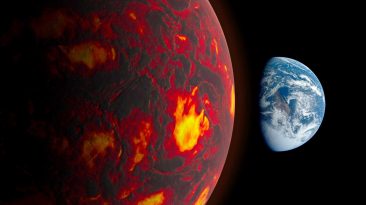
Water vapor acts as a greenhouse gas, trapping heat in an atmosphere in much the same way carbon dioxide does on Earth. If temperatures increased, more surface water could evaporate and enter the atmosphere. The additional water vapor would trap more heat, raising temperatures even further and accelerating evaporation. Without a stable climate, these worlds could quickly become unbearably hot.
To avoid freezing into lifeless ice-covered spheres, Jupiter’s former moons would need to receive between 10 and 40% more sunlight than Earth does. They might also require additional greenhouse gases, such as carbon dioxide, to maintain suitable temperatures. Volcanic activity could provide another source of heat and atmospheric gases. But there would be a serious risk of going too far. Excessive greenhouse warming could transform these potentially habitable worlds into scorching environments.
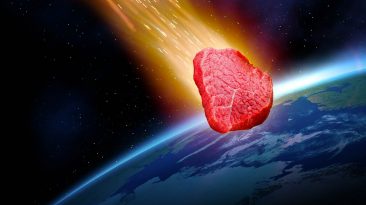
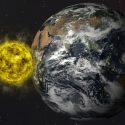
And if their new orbits became unstable, an even more terrifying possibility could emerge. Some of these 79 wandering objects might eventually cross Earth’s path. Even the smallest moon, S/2010 J 2, measuring approximately 2 km (1.2 mi) across, could cause catastrophic destruction if it struck our planet. A collision involving one of the larger moons would be far worse. According to estimates, an impact from an object approximately 96 km (60 mi) wide could eliminate all life on Earth. Unfortunately, several of Jupiter’s former moons are large enough to exceed that size.

There might be one possible alternative to a direct collision. Earth’s gravitational field could capture one or more of these wandering objects, forcing them into orbit around our planet. But having additional moons wouldn’t necessarily be good news. Their gravitational influence could make life on Earth extremely challenging, potentially disrupting the stability of our environment.
Coastal communities could face dramatically stronger tides, while enormous tsunamis might occur more frequently. The additional gravitational forces could also contribute to increased geological instability, including earthquakes and volcanic eruptions.
Massive volcanic explosions would release enormous quantities of ash, dust and toxic gases into the atmosphere. These materials could block incoming sunlight, potentially disrupting the climate and making survival increasingly difficult. Still, there would be one spectacular sight in this otherwise disastrous scenario. Looking up at the night sky, you might see several enormous moons shining above Earth instead of just one.