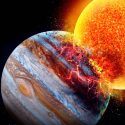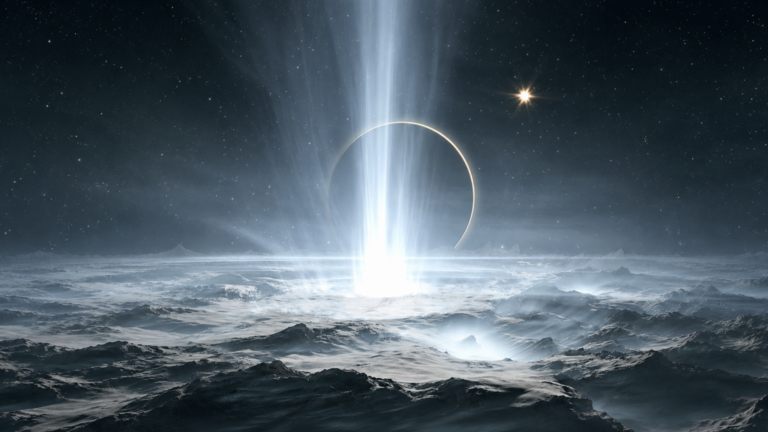
Jupiter is not just the largest planet in our Solar System. It is also surrounded by a vast collection of moons, dozens of them in total, each one shaped by extreme conditions and violent forces. Some are frozen worlds locked in deep space cold, while others are constantly torn apart by tidal energy from Jupiter’s enormous gravity.
If humanity ever tried to settle in this region, it would not be a simple expansion. It would be survival in some of the harshest environments ever discovered.
Let’s explore what life would really be like on Jupiter’s most famous moons.
Callisto: A Frozen and Silent Landscape
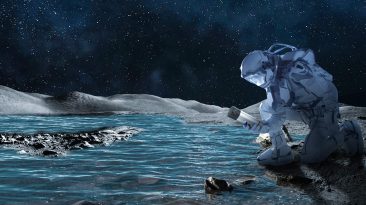
Far from Jupiter’s intense radiation zones lies Callisto, one of the most distant large moons in the system. It is heavily cratered and ancient, its surface unchanged for billions of years.
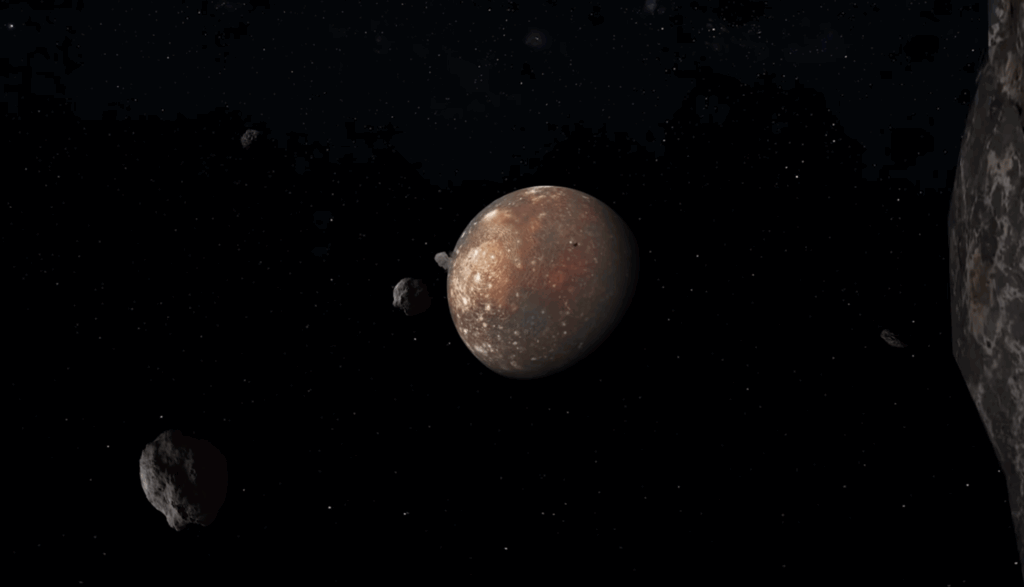
Gravity here is very weak, making movement feel almost weightless. A simple step could turn into a long floating jump across the icy terrain. But the beauty of Callisto ends there.
Temperatures drop to extreme lows, cold enough to freeze most known materials within seconds. There is no weather, no volcanic activity, and no geological movement. Everything is still.
Despite this harshness, Callisto is considered one of the more realistic candidates for future human bases. Its distance from Jupiter reduces exposure to deadly radiation, and underground shelters carved into rock could provide protection from the freezing surface. Life here would not be comfortable, but it might be stable.
Ganymede: A World With a Hidden Ocean
Ganymede stands out as the largest moon in the Solar System, even larger than the planet Mercury. Unlike most other moons, it has its own magnetic field, which helps shield it from some of Jupiter’s radiation.
Beneath its icy crust lies something extraordinary: a massive subsurface ocean. Scientists believe this hidden ocean could be more than 100 kilometers deep, containing more water than all of Earth’s oceans combined.
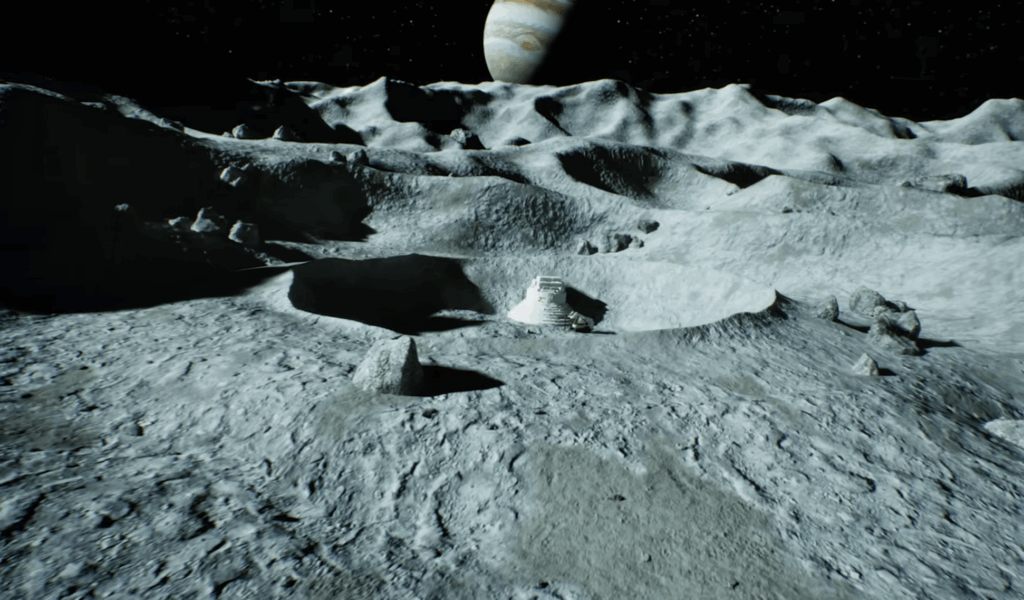
However, the surface is still brutally cold, and the ice is far too thick to access the ocean easily. Any future settlement would need to be built into the crust itself, protected from temperature extremes.
If humans ever managed to drill deep enough, this hidden ocean could become a source of water, energy, and possibly even unknown forms of life. Ganymede would be a world where survival depends on digging downward rather than expanding outward.
Europa: A Frozen Shell Over a Living Ocean
Europa is one of the most intriguing places in the Solar System. Its surface is a cracked, frozen shell of ice, but beneath it may lie a vast ocean kept liquid by tidal forces generated by Jupiter’s gravity.
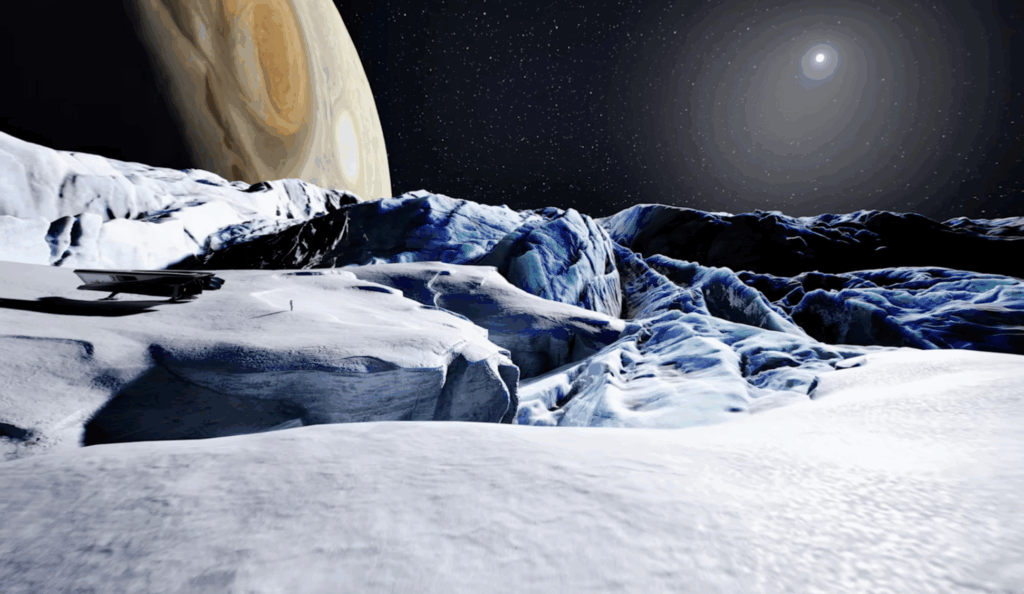
These forces constantly stretch and compress the moon, generating heat in its interior. This energy could also support chemical reactions on the ocean floor, potentially creating conditions suitable for life.
To survive on Europa, humans would need to tunnel through kilometers of solid ice before reaching the ocean below. Any base would likely be sealed within the ice itself, protected from radiation and extreme cold.
If life exists here, it would not be on the surface, but deep beneath it in a dark, hidden world of water.
Io: The Most Violent World in the Solar System
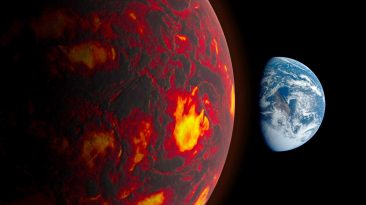
Io is the complete opposite of calm. It is the most volcanically active object in the Solar System, constantly reshaped by eruptions triggered by Jupiter’s immense gravity.
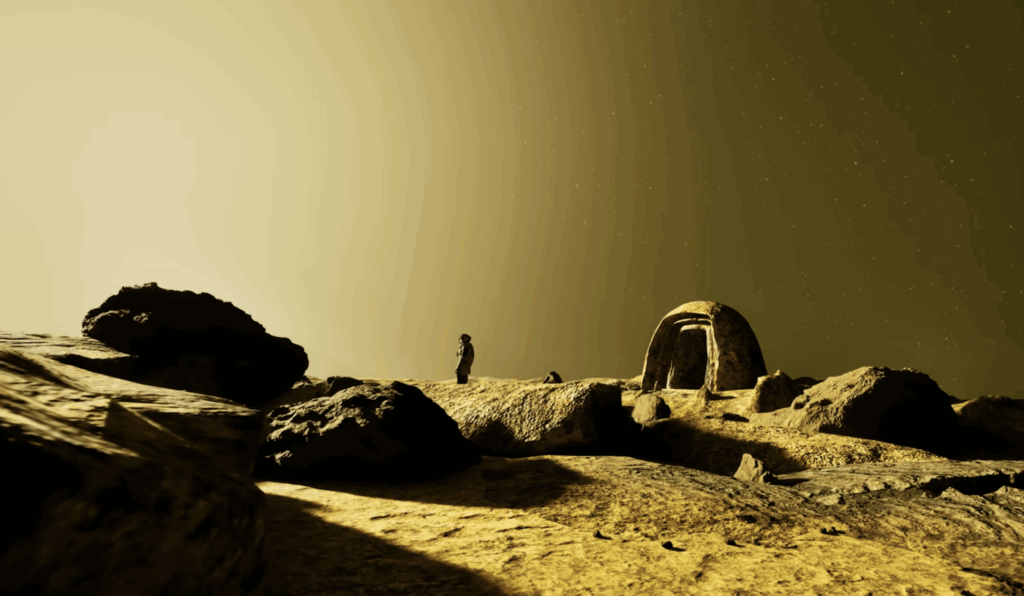
Its surface is covered in sulfuric plains and lava lakes, with volcanoes that can erupt hundreds of kilometers into space. The landscape is never stable, always changing, always breaking apart and reforming.
Temperatures swing between extreme heat near lava flows and freezing cold in shadowed regions. The thin atmosphere offers no protection, and radiation levels are dangerous.
Any attempt to build a settlement here would require underground shelters far from the surface, carefully positioned between shifting volcanic zones. Even then, survival would depend on constant adaptation to a world that refuses to stay still.