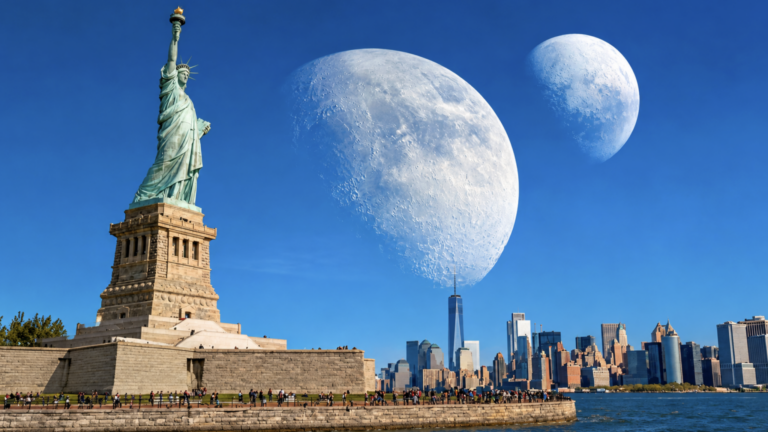
Envision yourself going outside at night and spotting something odd above you.
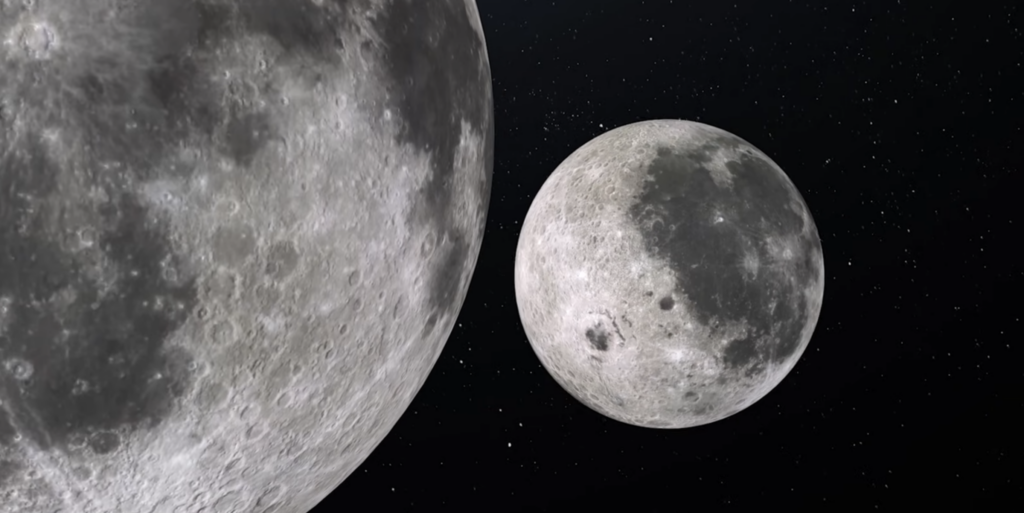
The Moon remains, but it is not now moving through space by itself.
There is a body which is considerably smaller orbiting it, with its orbit being around the Moon not around the Earth. That is to say, our natural satellite would have a satellite of its own.
Although it might sound as if the idea has been taken from a science fiction film, astronomers have genuinely thought about the possibility of such objects, sometimes referred to as sub moons or moon moons – existing under the right conditions.
So how could a small object remain gravitationally bound to the Moon? Would such an orbit be capable of lasting for millions of years or would it eventually become unstable? And if that small companion somehow escaped its orbit and moved towards Earth at 72,000 km/h, what would happen afterwards?
To understand how such an event could happen, we first need to look back billions of years to the violent birth of our own Moon.
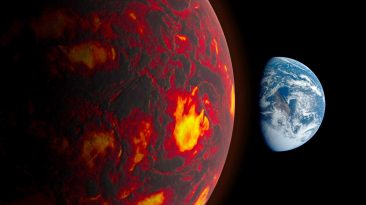
Around 4.5 billion years ago, Earth was still a young planet surrounded by chaos. Scientists believe another planet sized object called Theia collided with Earth in a massive impact.
The collision was so powerful that enormous amounts of material were blasted into space. Instead of escaping forever, this debris became trapped around Earth, forming a huge ring of molten rock, dust, and gas.
Over millions of years, gravity pulled this material together until it formed a single object.
The Moon.
But moons do not always form from giant collisions. Some are captured objects that are pulled into orbit by the gravity of a larger planet.
A famous example is Triton, Neptune’s largest moon. Scientists believe Triton may have originally been a distant object from the Kuiper Belt before Neptune’s gravity captured it.
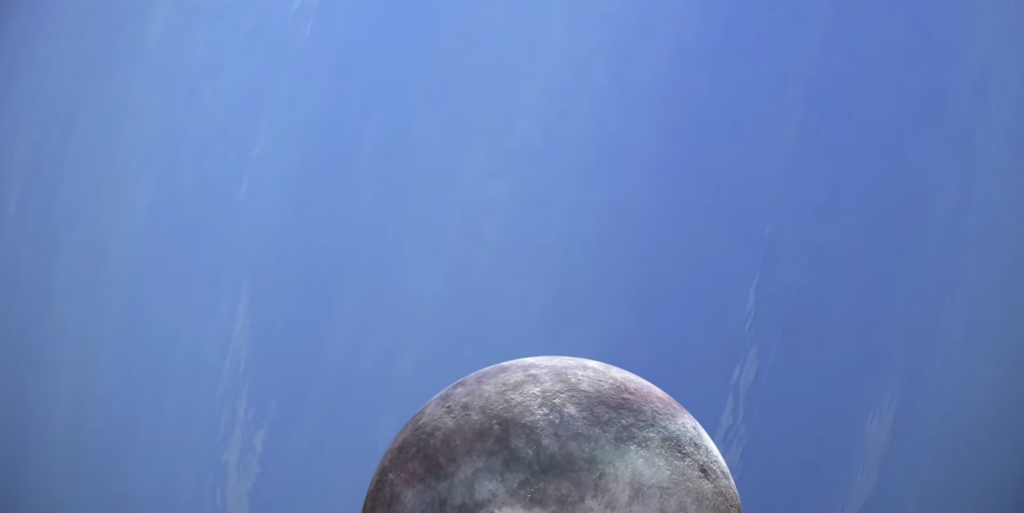
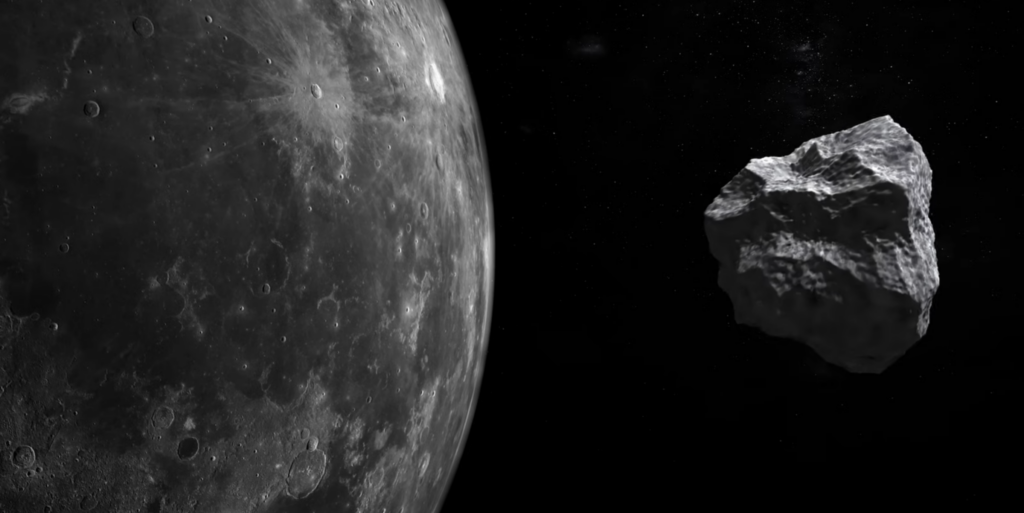
A similar process could theoretically create a moon moon. Imagine a small asteroid passing close to the Moon. If it moved at just the right speed and distance, the Moon’s gravity could capture it and place it into orbit.
But this would require extremely precise conditions.
The object would need to be large enough for gravity to hold it but small enough that it would not disrupt the Moon’s own orbit around Earth. According to some studies, a stable moon moon would likely need to be less than about 1 kilometer wide.
Even then, its existence would probably be temporary.
The object would constantly be pulled by the gravity of both Earth and the Moon. These competing forces would slowly change its orbit, eventually causing it to escape into space or crash into the Moon.
Its entire lifetime could last only years or decades.
While a moon moon would probably have little direct effect on Earth at first, it would completely change how we view the night sky.
Throughout human history, the Moon has inspired myths, religions, art, and countless stories. A second object orbiting it would create a new wave of fascination, scientific research, and even conspiracy theories.
Scientists would have a rare opportunity to study how small objects interact with gravity. Telescopes around the world would carefully observe the tiny companion, helping researchers better understand similar systems that may exist elsewhere in the universe.

But eventually, the fragile balance could fail.
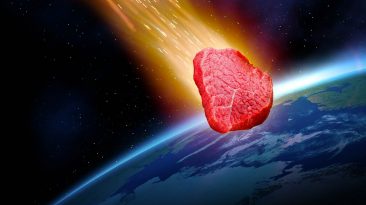
If the moon moon escaped its orbit and headed toward Earth, it would become a dangerous asteroid-like object. As it entered the atmosphere, friction would heat the surface to extreme temperatures.
Because of its small size, it would likely break apart before reaching the ground. However, if it survived the journey, the consequences could be devastating.
Traveling at approximately 72,000 km/h, the object would slam into Earth with enormous force. The energy released could equal thousands of megatons of TNT, creating a massive explosion and causing widespread destruction.
Thankfully, a moon moon appearing around our Moon is extremely unlikely.
But the idea reminds us of something important about space. The universe is constantly changing, and even the objects we see every night are part of a much larger and more unpredictable cosmic system.
The Moon has always shaped life on Earth.
A moon with its own moon would show us just how strange our universe can truly become.